









.png?width=292&height=292&name=Copy%20Link%20(1).png)

 SIGN UP FOR FREE NEWSLETTER

Image from ABC News
The latest conflict in the Middle East has sent global equity markets into a spin, as Iran retaliates against a host of regional countries, following military strikes by the United States and Israel.
Of most concern to markets is potential disruption to sea traffic in the Strait of Hormuz adjacent to Iran, through which 20% of the world’s oil supplies, plus significant amounts of LNG, fertiliser and raw plastics flow.
So, what’s the likely impact of war in the Middle East on the Australian property market?
Recent commentary suggests the conflict could pressure the Reserve Bank of Australia to keep interest rates higher for longer to tame imported inflation, which would reduce borrowing capacity for buyers and weigh on property demand and thereby home prices.
But, given the way the property market has performed in the wake of recent crises and the existing underlying shortage of housing in Australia, the impacts - if any - could be quite limited.
Energy and interest rates
Probably the most obvious channel linking conflict in the Middle East to Australia’s property market is energy prices and their impact on interest rates.
Disruption to oil flows has already pushed global crude prices higher, which will inevitably flow through to Australian petrol prices, increasing household cost pressures.
For every $US10 jump in the price of a barrel of oil, the NRMA motoring group estimates about 10c will eventually flow through to the price of a litre of fuel at the bowser in Australia.
While there’s a direct hip pocket impact for motorists, there’s potential for longer-term indirect pain.
Elevated fuel prices for an extended period of time could put upward price pressure on the cost of goods and services through increased transportation and energy input costs.
That widens inflation, directly affecting consumer confidence and discretionary spending.
This matters for housing because affordability depends on household budgets.
If consumers must spend more on essentials, they may delay or downsize housing decisions.
Higher inflation could also influence the Reserve Bank of Australia’s policy stance.
The central bank raised interest rates for the first time in more than two years in February 2026 in a bid to ease resurfacing inflation pressures.
With both headline CPI and underlying inflation measures currently at 3.8% and 3.4% respectively, well above the Reserve Bank’s 2-3% target band, it seems likely the RBA will raise rates again at least once during the remainder of 2026.
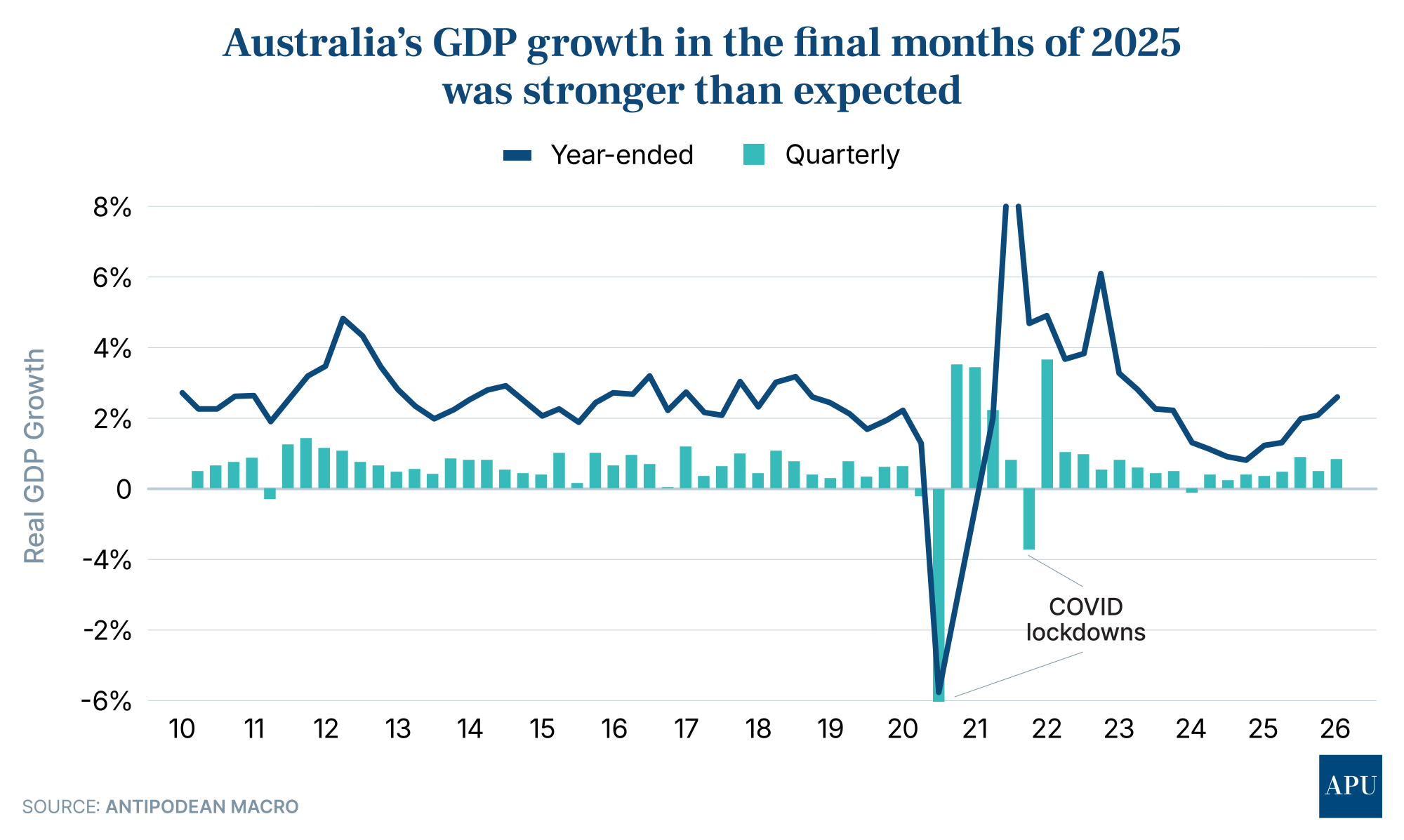
Growth figures released on Wednesday, the 4th of March, also showed Australia’s economy had grown more strongly than most pundits and the RBA itself had expected in the 3 months to the end of December last year.
GDP was 0.8% in the final quarter of 2025, giving an annual rate of 2.6% - well above the RBA’s 2.3% estimate.
Treasurer Jim Chalmers told a news conference in Canberra the strength of the Australian economy was good news, which means the country is “really well placed to deal with what’s coming at us from around the world.”
So, before the RBA’s monetary policy board even considers the implications of conflict in the Middle East, the economic baseline it is faced with is a hotter-than-expected economy with inflation stubbornly above target.
Nevertheless, at a business event on Tuesday, the 3rd of March, RBA Governor Michele Bullock said it was too early to surmise what conflict in the Middle East would mean for the Australian economy.
"A supply shock could, for example, add to inflation pressures and the potential implications for inflation expectations are something we are very alert to,” she said.
"But at the same time, a prolonged impact on energy markets could have adverse effects on global economic activity and result in downward pressure on inflation.
“It is not obvious how this might play out.
"So as much as I know the public would like more certainty about the direction of interest rates, it would be wrong for us to pretend to have greater certainty than we do."
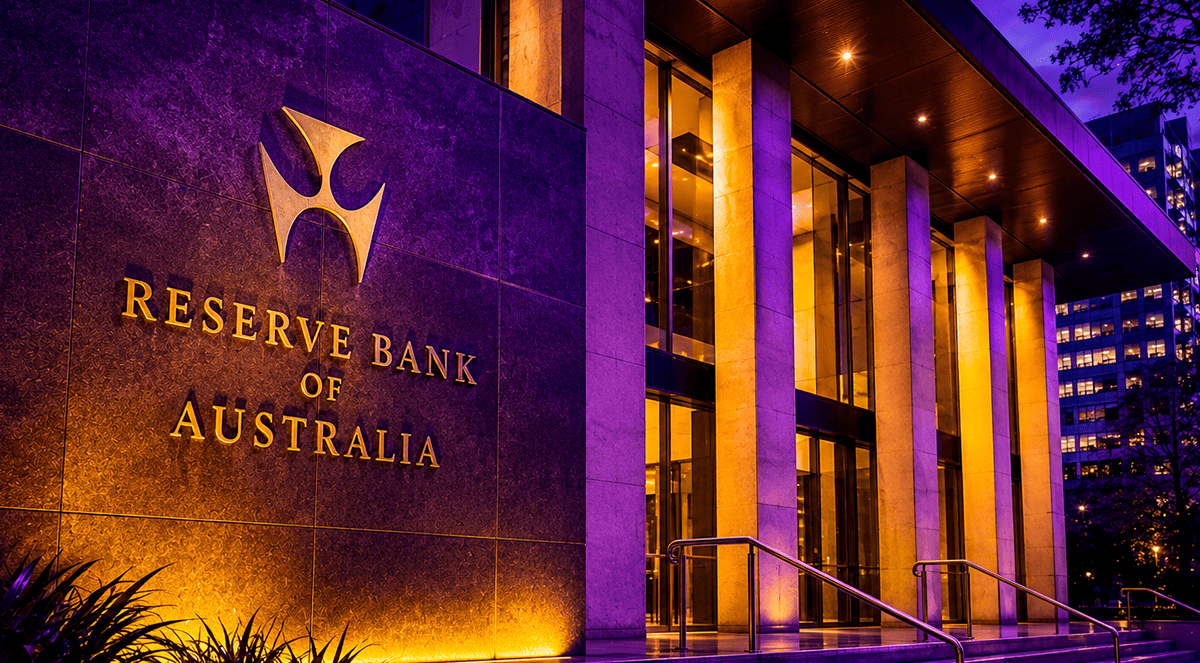
Pointedly, she refused to rule out the possibility of increasing the cash rate again at the RBA meeting on the 16th and 17th of March
Money markets have already priced in a 30% chance of a rate hike at that meeting, with an 80% chance priced in by May.
Interest rates and home prices
However, the prospect of higher interest rates is unlikely to be felt evenly across the property market.
Recent data from Cotality showed that home value growth actually accelerated in several cities around Australia, even as the Reserve Bank of Australia raised the cash rate in February 2026.
Price growth lifted in Perth, Adelaide, Hobart and Canberra in February, stayed at a steady pace in Brisbane and slowed in Sydney, Melbourne and the overheated Darwin market.
Significantly, none of the capitals saw negative price growth during the month.
Although the Sydney and Melbourne property markets are renowned for their sensitivity to interest rate movements, Cotality’s Research Director, Tim Lawless, puts the price growth divergence in February down to the availability of properties for sale.
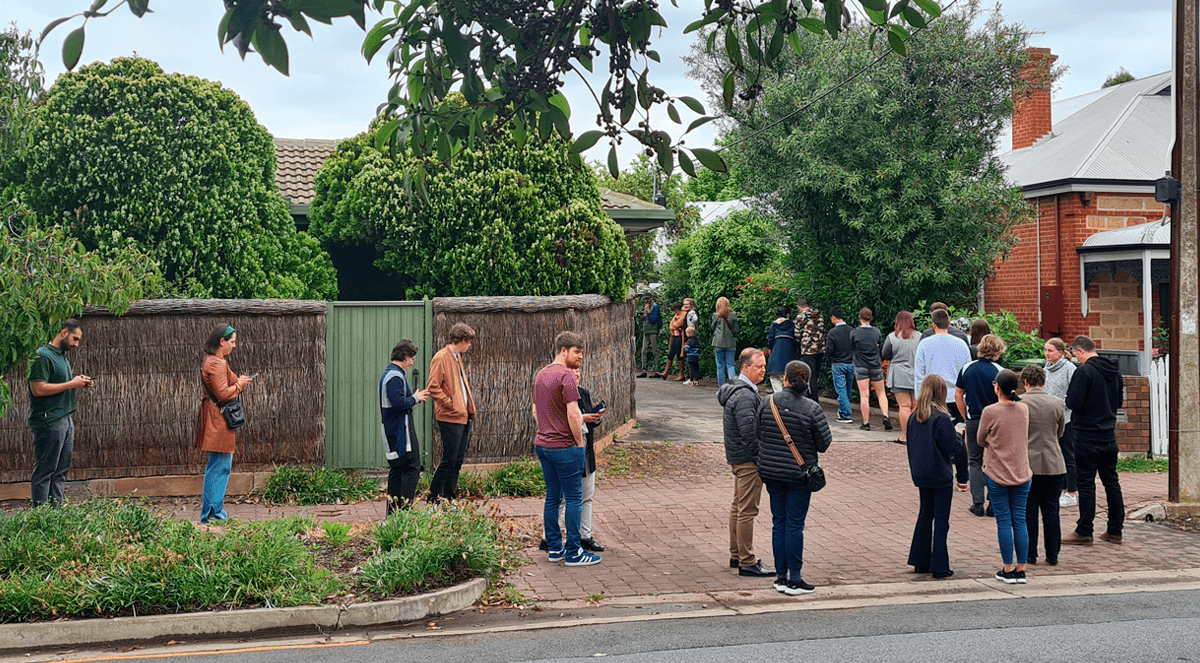
“The mid-sized capitals continue to see support from extremely low inventory levels, which is boosting the growth in values,” he says.
He also points to a pick-up in the number of properties for sale in Sydney and Melbourne, with freshly advertised stock 9.7% above the five-year average in Sydney and almost 12% higher than average in Melbourne.
“Vendors are looking more motivated in Sydney and Melbourne, possibly looking to beat a further softening in selling conditions as clearance rates ease and demand slows,” he says.
The once clear link between official interest rate movements and property prices was spectacularly severed at the end of the Covid-19 pandemic.
As the RBA hiked interest rates no less than 13 times from an emergency low of 0.1% to 4.35%, national property values fell by 7.5% from April 2022 to January 2023, before roaring back by 8.1% in just ten months, surpassing previous peaks to reach a new record high by late November 2023.
The rapid recovery was largely driven by an extreme imbalance between the low supply of housing and high demand from strong population growth from overseas migration, despite rising interest rates and low consumer sentiment.
While overseas migration has slowed, an in-built housing shortage (estimated at a cumulative shortfall of 1.3 million homes over the last 25 years by the Property Council of Australia) shows no signs of easing any time soon.
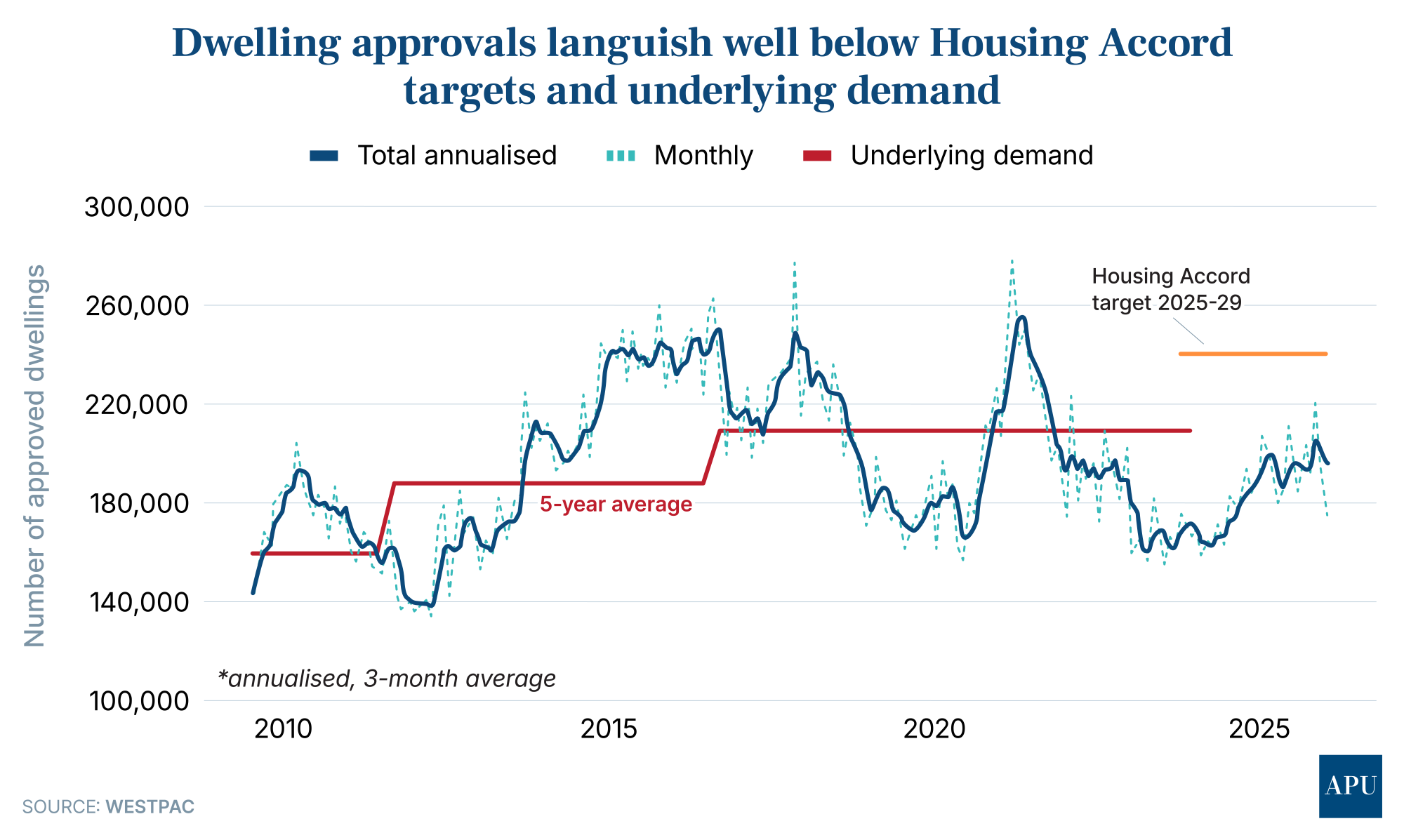
In fact, recent figures from the ABS show new home building approvals are at their weakest point since June 2024, with a 7.2% reduction during January 2026.
Predictions of doom and gloom
Inevitably, when a conflict breaks out or a seismic event like the GFC rocks the globe, predictions of gloom and doom for various asset classes usually follow.
Very few of these ever come to fruition.
Following the declaration of a global pandemic in March 2020, plenty of outlandish predictions were made about the Australian property market crashing, with even respected commentators like AMP’s Chief Economist Shane Oliver predicting price falls of up to 30%.
Investors who took notice of these predictions and sold out of property would have ended up missing out on some of the strongest growth in the past 50 years during the pandemic property boom.
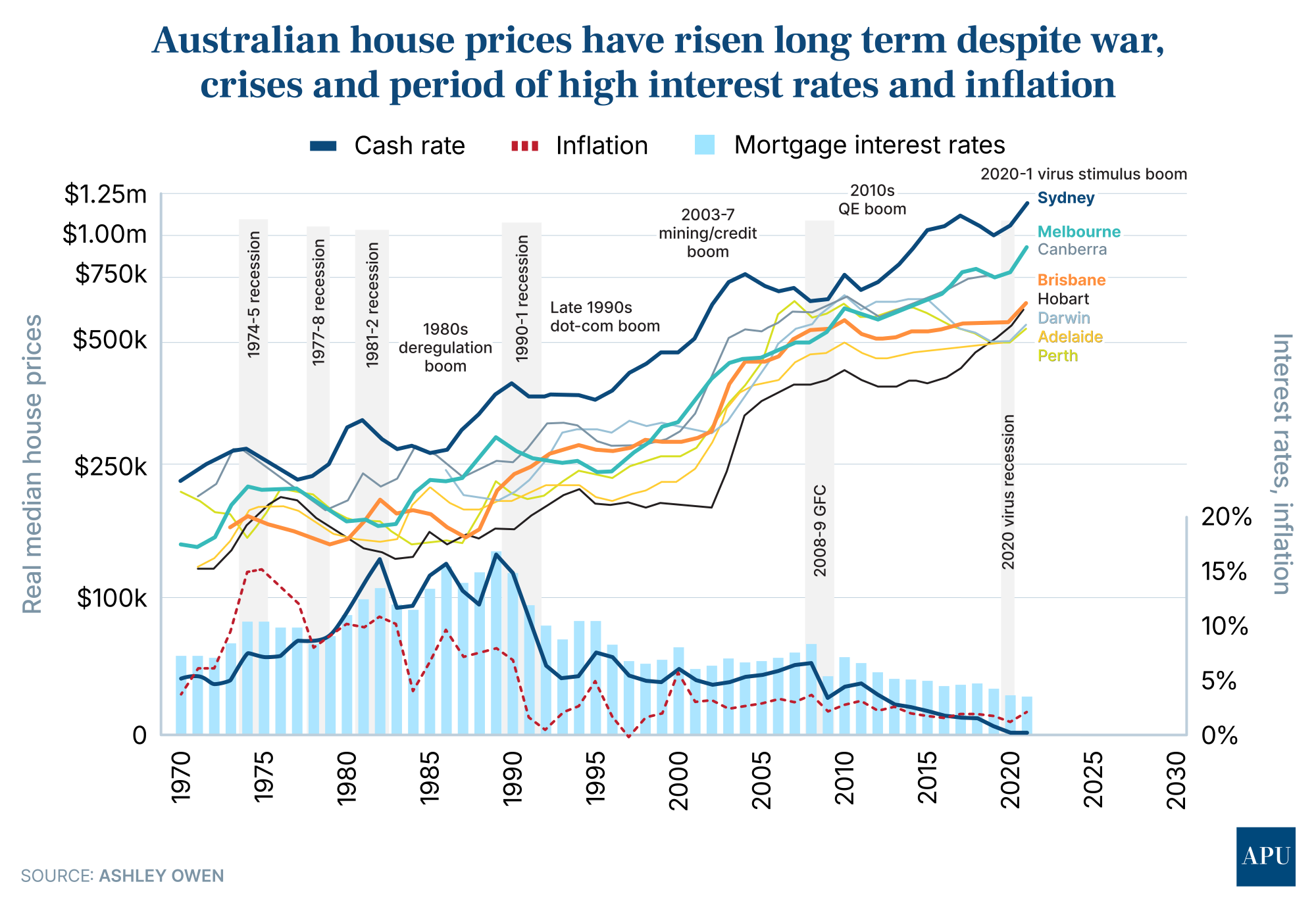
In fact, if you look at the real (discounted for inflation) returns for Australian residential property between 1970 and 2021, you can clearly see that the long-term gains for house prices in most Australian cities - with the possible exception of Perth - have been remarkably consistent, even in the face of wars, financial crises, high inflation and extreme interest rates.
When a global shock happens, markets often see an initial overreaction, followed by a sober reassessment when sanity returns and analysts again focus on the fundamentals.
In the case of the Australian residential property market, the fundamentals are this: a growing population (largely fuelled by overseas migration), a drift towards smaller household sizes (less people per home) and an entrenched shortage of housing in the places where Australians actually want to live.
Conflict in the Middle East, no matter how protracted, seems unlikely to change the fundamental pillars underpinning Australian residential property.






.jpg?width=1920&height=1080&name=WTF%20Is%20Happening%20To%20The%20Housing%20Market!%20$500%20Billion%20Wiped%20Out%20As%20Prices%20Fall%20Faster%20Every%20Month%20Scott%20Kuru%20YPU%20027%20(1).jpg)
%20Scott%20Kuru%20YPU%20025.jpg?width=1920&height=1080&name=This%20Is%20Worse%20Than%20A%20Recession%20RBA%20Admits%20Australias%20Wage%20Collapse%20Cant%20Be%20Stopped%20(Prepare%20Now)%20Scott%20Kuru%20YPU%20025.jpg)























.jpg?width=1920&height=1080&name=EXPOSED%20How%20The%20Govt%20Let%20These%20Oil%20Giants%20Get%20Away%20With%20Paying%20Zero%20Tax%20For%20Aussie%20Gas%20Scott%20Kuru%20DPU%20256%20(1).jpg)






%20Scott%20Kuru%20DPU%20248.jpg?width=1920&height=1080&name=Major%20Banks%20CAUGHT%20Preparing%20For%20Australia%E2%80%99s%20Biggest%20Housing%20Crash%20(Defaults%20%26%20Bankruptcies%20Coming)%20Scott%20Kuru%20DPU%20248.jpg)
%20Scott%20Kuru%20DPU%20247.jpg?width=1920&height=1080&name=This%20Is%20How%20Australia%20Gets%20Pushed%20Into%20the%20Next%20Big%20Reset%20(Trust%20Collapse%20Has%20Officially%20Begun)%20Scott%20Kuru%20DPU%20247.jpg)







%20Scott%20Kuru%20DPU%20239.jpg?width=1920&height=1080&name=URGENT%20Life%20In%20Australia%20Has%20Become%20Impossible%20For%20Millions%20Of%20Aussies%20(It%E2%80%99s%20About%20To%20Get%20Worse)%20Scott%20Kuru%20DPU%20239.jpg)










%20Scott%20Kuru%20DPU%20227.jpg?width=1920&height=1080&name=URGENT%20ALERT%20Australia%E2%80%99s%20Property%20Market%20Is%20Sliding%20Into%20Something%20Much%20Bigger%20(Prepare%20Now)%20Scott%20Kuru%20DPU%20227.jpg)