









.png?width=292&height=292&name=Copy%20Link%20(1).png)

 SIGN UP FOR FREE NEWSLETTER
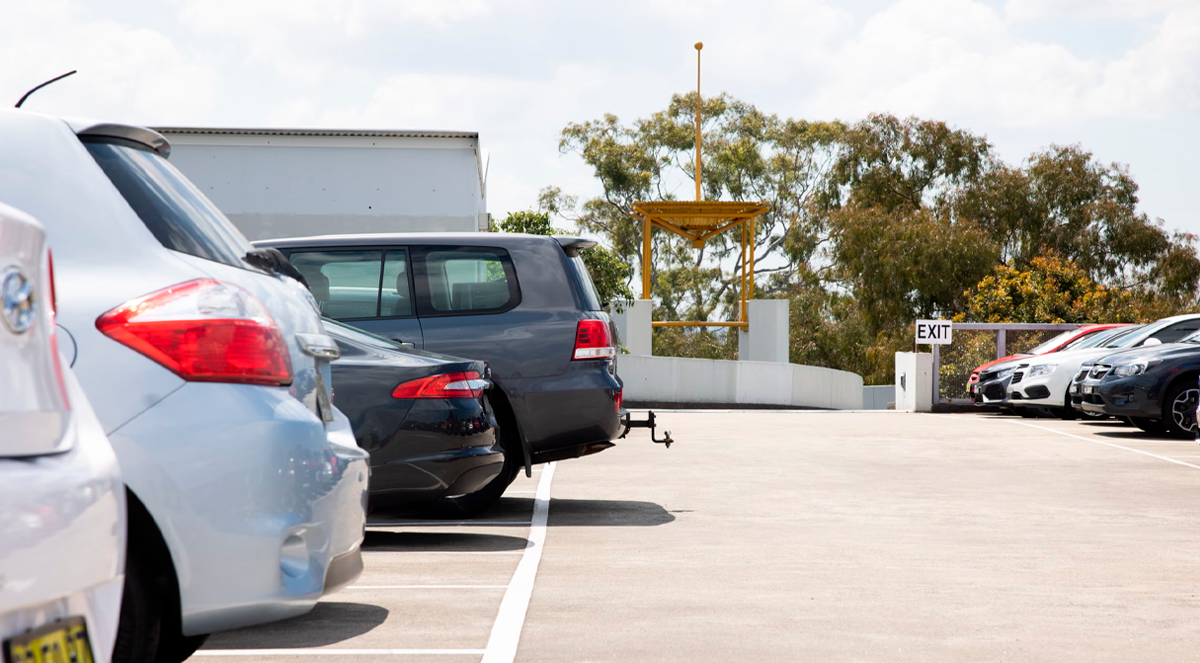
Image by Blake Sharp-Wiggins/The Guardian
Australia’s housing crisis is being worsened by mandatory car parking requirements that are forcing developers to build billions of dollars’ worth of parking spaces many residents neither want nor use.
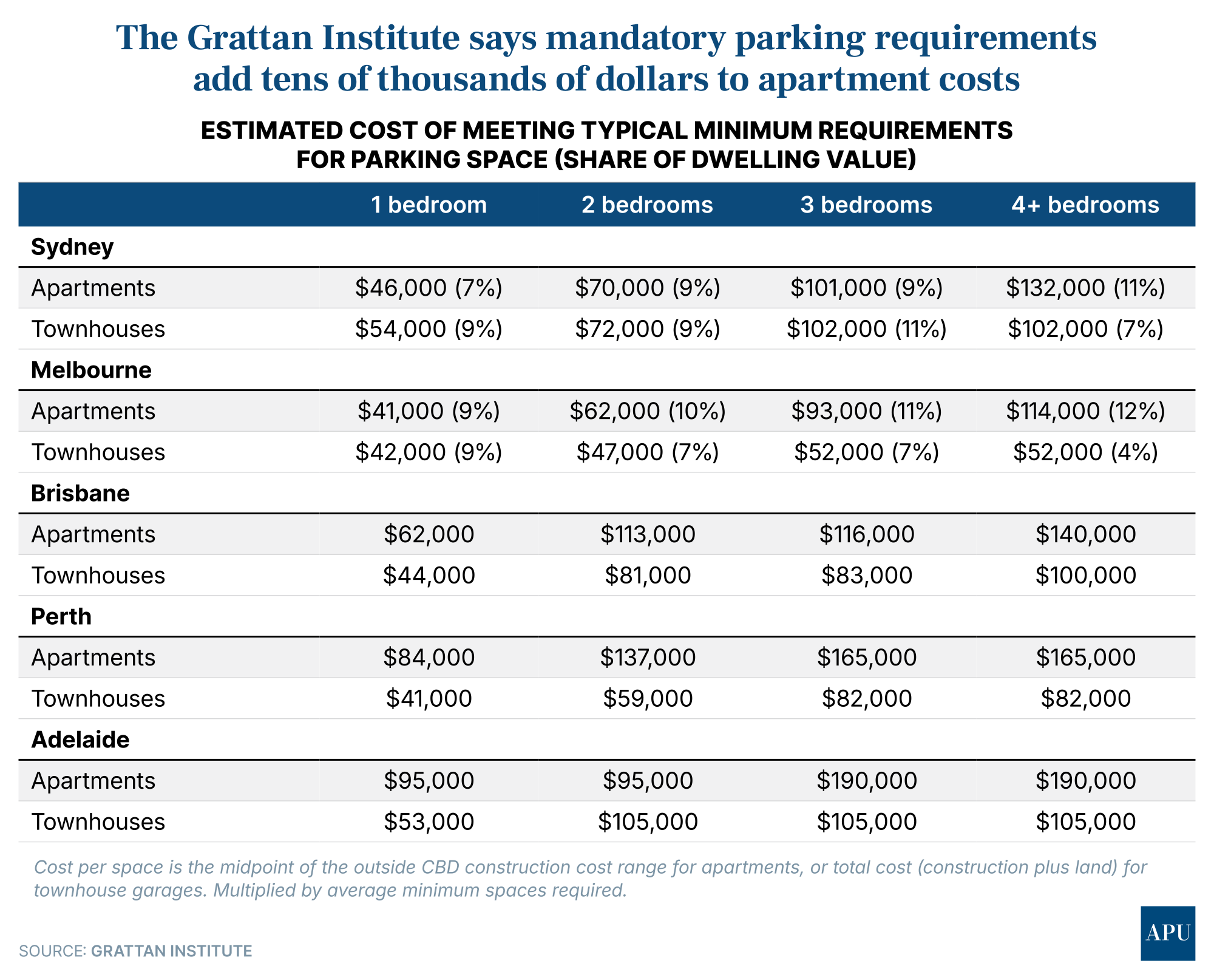
That’s the conclusion of a major new report from the Grattan Institute think-tank, which argues that minimum parking rules embedded in planning rules are adding as much as $137,000 to the cost of a typical apartment.
Car park building is also consuming construction capacity that could otherwise deliver thousands of additional homes.
The report estimates Australia is spending more than $1 billion a year building surplus parking, even as the country struggles with chronic housing undersupply, soaring rents and worsening affordability.
And perhaps most strikingly, researchers found that in many apartment buildings, up to 40% of parking spaces sit empty every night.
The details
While public debate around housing affordability tends to focus on taxation, zoning and planning bottlenecks, migration levels and construction costs, the Grattan Institute says one of the biggest hidden barriers to cheaper housing is hiding in plain sight - car parking.
State and local planning rules across Australia typically require developers to include a minimum number of off-street parking spaces in new apartment and townhouse projects, regardless of whether buyers or tenants actually want them.
The costs are enormous.
According to the report, these “parking minimum” regulations add about:
- $70,000 to a typical two-bedroom apartment in Sydney
- $62,000 in Melbourne
- $113,000 in Brisbane
- $95,000 in Adelaide
- $137,000 in Perth
For larger three-bedroom apartments, the added cost often exceeds $100,000.
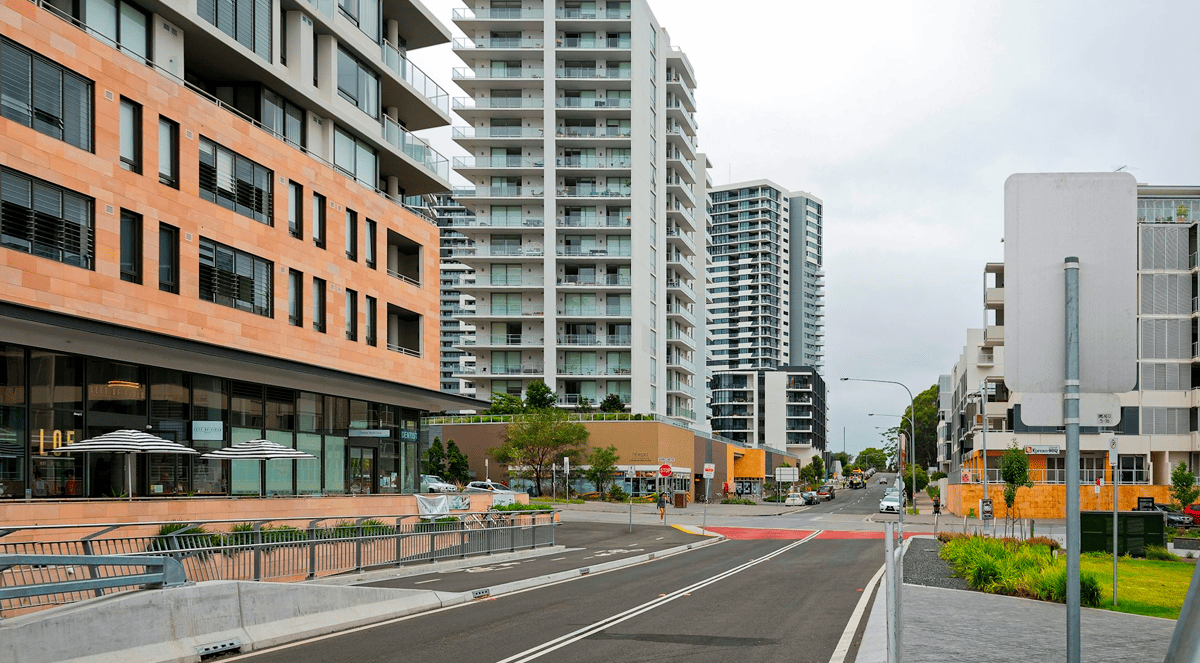
In dense inner-city areas, where underground basement parking is usually required, construction costs are even higher.
The report estimates basement parking costs between $92,000 and $125,000 per space in Melbourne and between $55,000 and $110,000 in Sydney.
“The economics often simply don’t stack up,” the report says, warning that developers are frequently being forced to build parking spaces buyers value at far less than the actual cost of construction.
The Grattan Institute says Australia’s planning system is still effectively designed around assumptions from the 1950s, when car ownership was rapidly expanding and cities were built around driving.
But household behaviour has changed dramatically, particularly in apartment-heavy areas close to public transport.
The report found around 40% of households living in studio or one-bedroom apartments across Australian capitals do not own a car at all.
Among two-bedroom apartment households, nearly one in five have no vehicle.
Despite that, planning rules often require every apartment to be allocated at least one dedicated parking space.
The result is what researchers describe as a massive oversupply of underused parking.
“In aggregate, there are more apartment parking spaces than cars owned by apartment residents in most Sydney and Melbourne suburbs,” the report says.
Audits cited in the report found 30% to 40% of spaces in Melbourne apartment buildings sit vacant overnight, while a 2021 survey of almost 2,500 Brisbane apartments found parking occupancy rates of only about 60%.
That means roughly four in every ten spaces were sitting empty.
The report argues the biggest consequence is not wasted concrete, cost or building effort, but fewer homes.
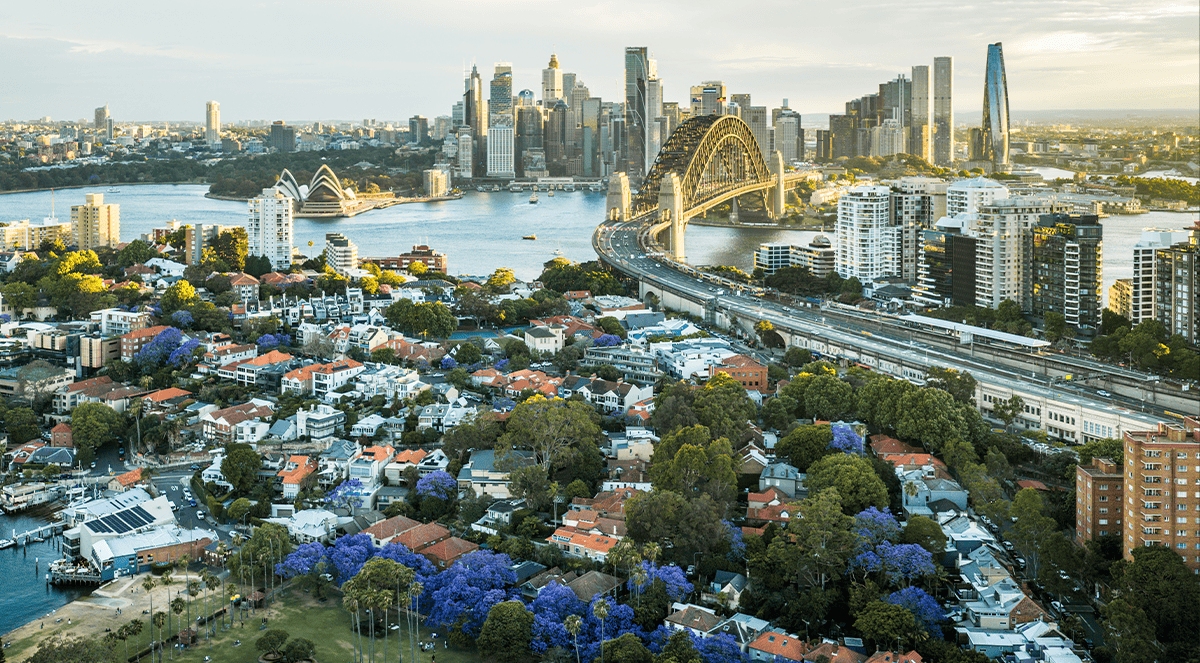
According to Grattan’s modelling, removing mandatory parking requirements could make around 140,000 additional dwellings commercially feasible in Sydney and Melbourne alone.
Nationally, the think-tank estimates abolishing parking minimums could free up about $5.2 billion in construction capacity over five years.
Where parking costs substantially exceed what buyers are willing to pay, developers either pass the costs on through higher apartment prices, absorb lower profit margins, or abandon projects altogether.
In many lower-margin developments, particularly in outer suburbs, the report says projects simply stop stacking up financially.
Excavating basement car parks can also add months to building timelines, increasing financing costs and tying up labour and materials at a time Australia’s construction industry is already under severe strain.
Construction costs nationally have risen almost 40% since 2020.
“Every worker digging a basement car park that will sit empty is a worker not building a home,” the report argues.
One of the report’s more politically sensitive findings is that mandatory parking disproportionately hurts lower-income households, many of whom are least likely to own a car.
The Grattan Institute found almost one in five Victorian households earning less than $52,000 annually do not own a vehicle at all, around six times the rate of high-income households.
Yet those households are still being forced to effectively pay for parking through higher rents or purchase prices.
The report says the burden also falls heavily on younger renters, older Australians who no longer drive, people with disabilities and residents living close to public transport.
Grattan points to a growing list of international cities that have either abolished or dramatically reduced parking minimums, including London, San Francisco, Seattle, Los Angeles, Berlin, Hamburg and Auckland.
In most cases, developers still built parking - just far less of it - and more closely aligned with actual demand.
Importantly, the report says fears of traffic chaos and overflowing street parking generally failed to materialise.
Instead, local governments increasingly managed on-street congestion through residential parking permits and user-pays systems.
Victoria has already begun moving in this direction, abolishing parking minimums near frequent public transport routes in late 2025.
But the Grattan Institute says broader national reform is now urgently needed.
The institute’s central recommendation is straightforward: abolish all minimum parking requirements for new housing developments.
Instead of mandating parking construction, governments should allow developers and buyers to determine how much parking is actually needed.
The report also recommends removing parking maximums, allowing parking spaces to be sold separately from apartments, expanding residential permit schemes where needed and using federal competition policy funding to pressure states into reform.
The report concludes that Australia’s housing crisis is now too severe to ignore inefficient planning rules that inflate costs without delivering meaningful public benefit.
“Five billion dollars in construction capacity. Nine thousand homes. Hundreds of thousands of car parks that sit dark and empty every night while the people above them are priced out,” the report says.
“The rules that produced this outcome were written in the 1950s to manage a different city and a different era of car ownership.
“That examination is now overdue.”







.jpg?width=1920&height=1080&name=WTF%20Is%20Happening%20To%20The%20Housing%20Market!%20$500%20Billion%20Wiped%20Out%20As%20Prices%20Fall%20Faster%20Every%20Month%20Scott%20Kuru%20YPU%20027%20(1).jpg)
%20Scott%20Kuru%20YPU%20025.jpg?width=1920&height=1080&name=This%20Is%20Worse%20Than%20A%20Recession%20RBA%20Admits%20Australias%20Wage%20Collapse%20Cant%20Be%20Stopped%20(Prepare%20Now)%20Scott%20Kuru%20YPU%20025.jpg)






















.jpg?width=1920&height=1080&name=EXPOSED%20How%20The%20Govt%20Let%20These%20Oil%20Giants%20Get%20Away%20With%20Paying%20Zero%20Tax%20For%20Aussie%20Gas%20Scott%20Kuru%20DPU%20256%20(1).jpg)






%20Scott%20Kuru%20DPU%20248.jpg?width=1920&height=1080&name=Major%20Banks%20CAUGHT%20Preparing%20For%20Australia%E2%80%99s%20Biggest%20Housing%20Crash%20(Defaults%20%26%20Bankruptcies%20Coming)%20Scott%20Kuru%20DPU%20248.jpg)
%20Scott%20Kuru%20DPU%20247.jpg?width=1920&height=1080&name=This%20Is%20How%20Australia%20Gets%20Pushed%20Into%20the%20Next%20Big%20Reset%20(Trust%20Collapse%20Has%20Officially%20Begun)%20Scott%20Kuru%20DPU%20247.jpg)





%20Scott%20Kuru%20DPU%20239.jpg?width=1920&height=1080&name=URGENT%20Life%20In%20Australia%20Has%20Become%20Impossible%20For%20Millions%20Of%20Aussies%20(It%E2%80%99s%20About%20To%20Get%20Worse)%20Scott%20Kuru%20DPU%20239.jpg)










%20Scott%20Kuru%20DPU%20227.jpg?width=1920&height=1080&name=URGENT%20ALERT%20Australia%E2%80%99s%20Property%20Market%20Is%20Sliding%20Into%20Something%20Much%20Bigger%20(Prepare%20Now)%20Scott%20Kuru%20DPU%20227.jpg)





%20Scott%20Kuru%20DPU%20221.jpg?width=1920&height=1080&name=The%20AI%20Situation%20in%20Australia%20Just%20Hit%20a%20Point%20of%20No%20Return...%20(Major%20Bank%20Proves%20It)%20Scott%20Kuru%20DPU%20221.jpg)