









.png?width=292&height=292&name=Copy%20Link%20(1).png)

 SIGN UP FOR FREE NEWSLETTER
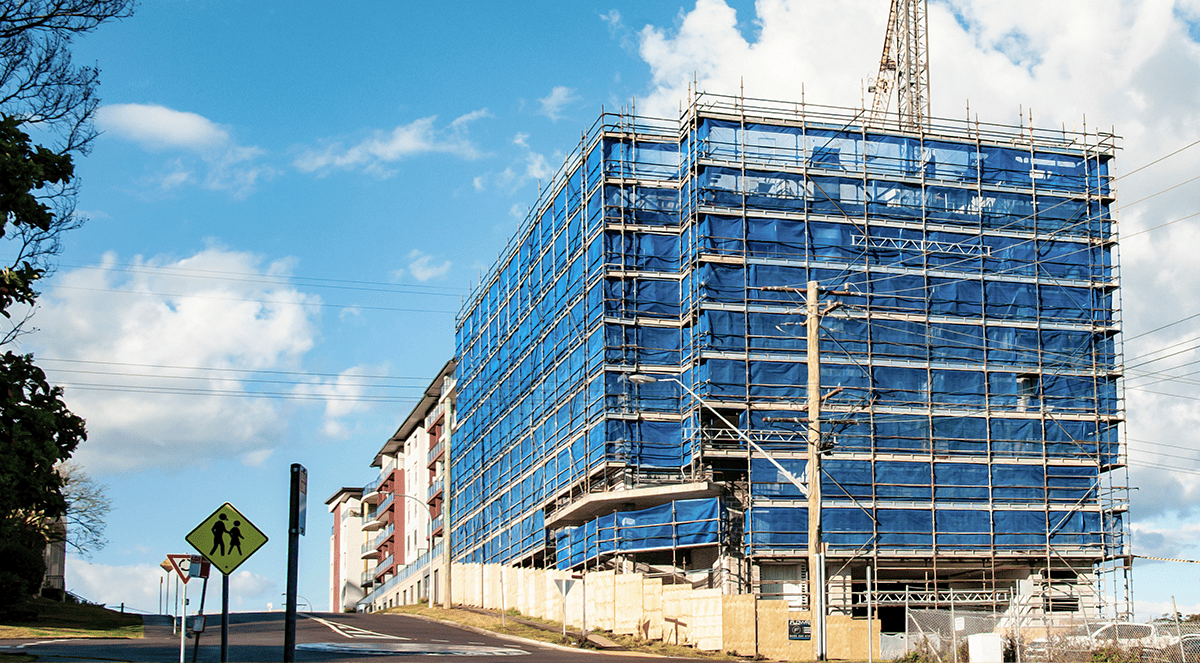
The Albanese Government’s housing tax changes could reduce the supply of new units, drive rents and prices higher and deliver the opposite of what they were designed to achieve, according to a blunt new assessment of Australia’s apartment market.
Property analysts Charter Keck Cramer say the Build to Sell apartment sector — conventional apartments constructed for individual buyers — is already facing “ongoing and increasing headwinds”, reflected in alarmingly low current and forecast supply across the capital cities.
The details
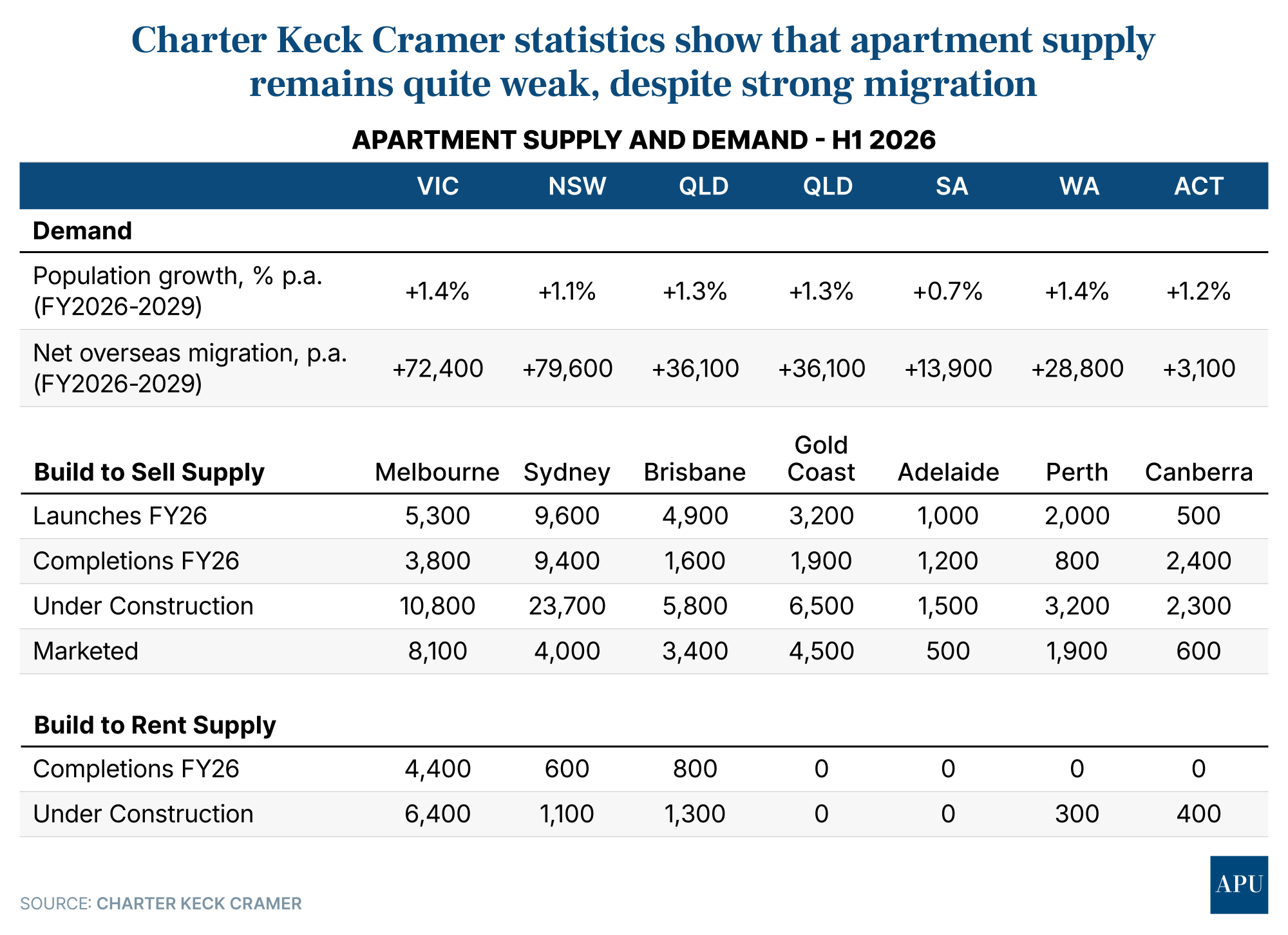
Charter Keck Cramer’s latest State of the Market report, which covers conditions in the first six months of 2026, argues the Federal Budget changes have added uncertainty to a market already struggling with high construction costs, weak borrowing capacity and projects that do not stack up financially.
“We acknowledge that the Federal Government has good intentions, however it has failed to make the correct evidence-based decisions with a true understanding of the impact on the new housing market,” the report says.
The May Budget changes included restrictions affecting negative gearing, capital gains tax treatment and lending to self-managed super funds.
The Government argues investors will be encouraged away from established homes and towards new housing, increasing supply while reducing competition with first-home buyers.
But Charter Keck Cramer says that assumes investors leaving the established market will simply move into newly built apartments.
“Our views are that the Government has misunderstood the impact of these changes on the BTS apartment market,” the report says.
“Firstly, there will not be a ‘one for one’ replacement of investors moving from established into new stock.
“Investors will now fully reconsider all investment decisions including moving into other asset classes.”
The property advisory firm also argues new apartments could become harder to sell because their tax advantages disappear when they are resold and become established property - a disadvantage it says the market may price in from the beginning.
SMSFs
The report’s strongest criticism is directed at proposed changes to property lending through self-managed super funds (SMSFs).
It describes the policy as “an error of judgment made on incomplete data and a fundamental lack of understanding of the new housing market”.
Based on discussions with property valuers, Charter Keck Cramer estimates SMSF investors account for about 20% to 30% of off-the-plan apartment buyers in Melbourne and Brisbane.
It says this buyer pool has now effectively disappeared.
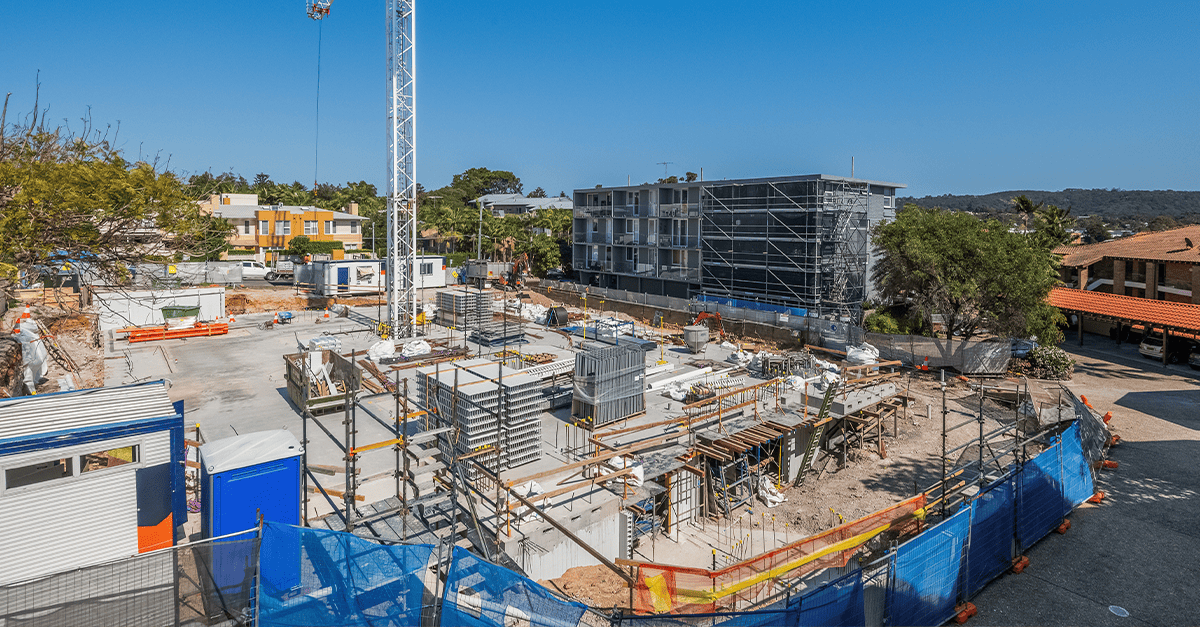
That matters because developers generally need enough presales to secure construction finance.
Removing a sizeable group of buyers can therefore prevent entire projects from proceeding.
Charter Keck Cramer says some projects, including in Brisbane, are already looking for “alternative sales channels” following the SMSF changes.
The report urges the Government to exclude new apartments from the proposed lending restrictions and allow SMSF buyers to continue purchasing stock under the previous rules.
“The impact of these changes, should they be legislated as proposed, will be that BTS apartment supply decreases even further,” it says.
“This will lead to further rent and also price increases and will have the opposite impact to what the Government is trying to achieve.”
Approvals do not equal new homes
State governments have rezoned land and introduced planning reforms intended to support more apartment construction, particularly in New South Wales.
Charter Keck Cramer acknowledges these changes have lifted development approvals, but warns approvals alone will not produce homes.
“This approved stock will not get built until the costs of delivery crisis … is resolved,” it says.
Projects remain caught between sharply higher construction costs, landowners reluctant to accept lower values and buyers unable to afford the prices developers need.
Charter Keck Cramer says buyer capacity, rather than a lack of demand, is holding back sales in many markets.
Interest rate rises have reduced borrowing power, while some new apartments are now up to 30% more expensive than comparable stock in 2020.
That creates settlement risk for projects sold several years ago, because some buyers may no longer qualify for the loans they expected to obtain when they paid their deposits.
The report warns banks, APRA and the RBA should prepare for increased lending risks over the next 12 months as projects reach completion.
Smaller apartments
Charter Keck Cramer says sales agents are reporting renewed demand for compact, well-designed dwellings as affordability becomes the dominant concern for buyers.
It argues state planning systems should permit more smaller but functional apartments, rather than impose requirements that push dwelling sizes beyond what buyers can afford.
The report also calls for governments to reduce the “tax wedge” embedded in new housing costs and support greater productivity and innovation in construction.


Credit
The report is also blunt about risks emerging in apartment development finance.
Private credit helped many projects survive when the major banks withdrew during the pandemic and remains important to housing construction.
However, Charter Keck Cramer says the rapid arrival of new lenders has created concerns about inconsistent risk assessment and a lack of transparency.
It says some projects in Melbourne and Sydney are not financially viable, while private credit may be delaying a correction in land values “needed to reset project economics”.
The take-out
Charter Keck Cramer expects apartment supply to remain constrained until buyers are confident interest rates have stabilised, the Budget changes are settled and construction economics improve.
Its broader message is that planning announcements and housing targets mean little if other policies undermine the buyers and finance needed to turn approvals into homes.
“Government is encouraged to make evidence-based policy decisions whilst understanding the nuances of the market,” the report says.
“Should they do the opposite they will undermine their aspirations and ultimately do more harm than good.”











.jpg?width=1920&height=1080&name=WTF%20Is%20Happening%20To%20The%20Housing%20Market!%20$500%20Billion%20Wiped%20Out%20As%20Prices%20Fall%20Faster%20Every%20Month%20Scott%20Kuru%20YPU%20027%20(1).jpg)
%20Scott%20Kuru%20YPU%20025.jpg?width=1920&height=1080&name=This%20Is%20Worse%20Than%20A%20Recession%20RBA%20Admits%20Australias%20Wage%20Collapse%20Cant%20Be%20Stopped%20(Prepare%20Now)%20Scott%20Kuru%20YPU%20025.jpg)























.jpg?width=1920&height=1080&name=EXPOSED%20How%20The%20Govt%20Let%20These%20Oil%20Giants%20Get%20Away%20With%20Paying%20Zero%20Tax%20For%20Aussie%20Gas%20Scott%20Kuru%20DPU%20256%20(1).jpg)






%20Scott%20Kuru%20DPU%20248.jpg?width=1920&height=1080&name=Major%20Banks%20CAUGHT%20Preparing%20For%20Australia%E2%80%99s%20Biggest%20Housing%20Crash%20(Defaults%20%26%20Bankruptcies%20Coming)%20Scott%20Kuru%20DPU%20248.jpg)
%20Scott%20Kuru%20DPU%20247.jpg?width=1920&height=1080&name=This%20Is%20How%20Australia%20Gets%20Pushed%20Into%20the%20Next%20Big%20Reset%20(Trust%20Collapse%20Has%20Officially%20Begun)%20Scott%20Kuru%20DPU%20247.jpg)







%20Scott%20Kuru%20DPU%20239.jpg?width=1920&height=1080&name=URGENT%20Life%20In%20Australia%20Has%20Become%20Impossible%20For%20Millions%20Of%20Aussies%20(It%E2%80%99s%20About%20To%20Get%20Worse)%20Scott%20Kuru%20DPU%20239.jpg)









%20Scott%20Kuru%20DPU%20227.jpg?width=1920&height=1080&name=URGENT%20ALERT%20Australia%E2%80%99s%20Property%20Market%20Is%20Sliding%20Into%20Something%20Much%20Bigger%20(Prepare%20Now)%20Scott%20Kuru%20DPU%20227.jpg)