









.png?width=292&height=292&name=Copy%20Link%20(1).png)

 SIGN UP FOR FREE NEWSLETTER
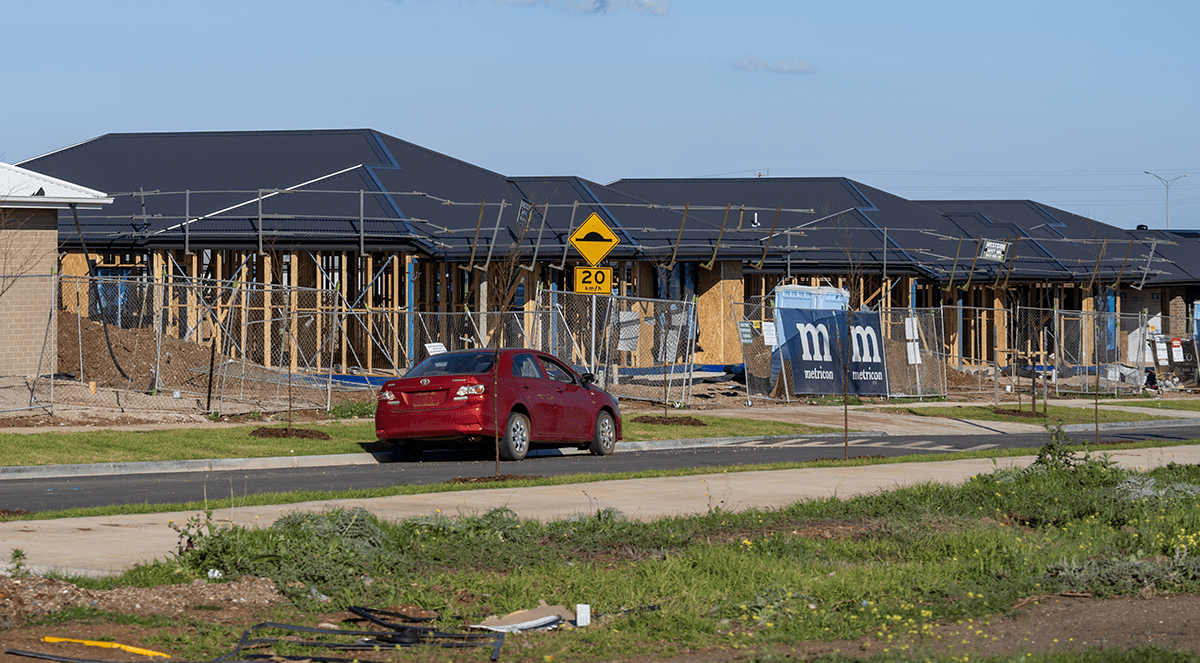
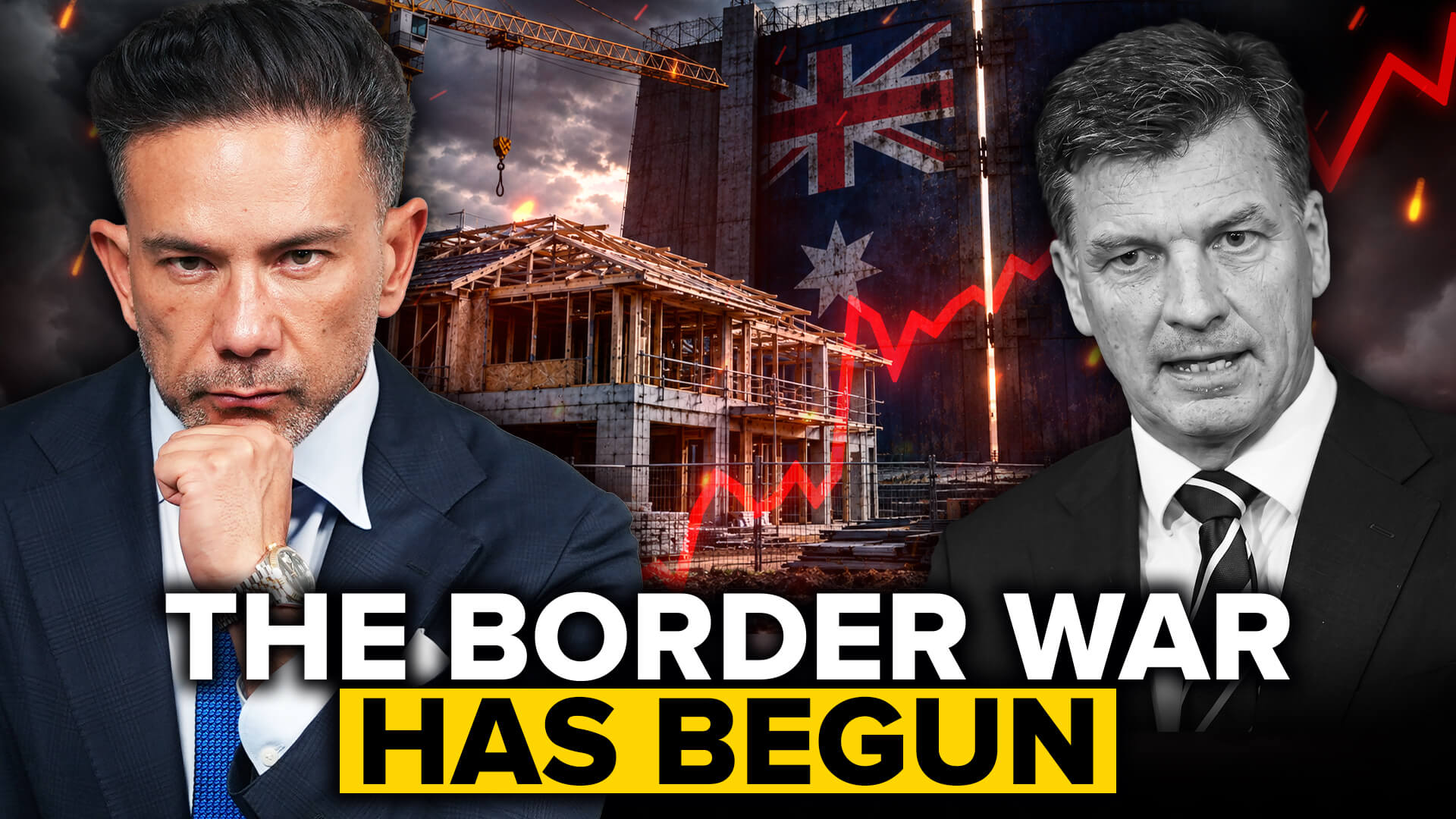
Australia’s home-building industry is facing a fresh acceleration in construction costs, threatening to make an already difficult housing supply challenge even harder.
After the large increases in building costs during and immediately after the pandemic finally began to ease, new figures suggest price pressures are returning.
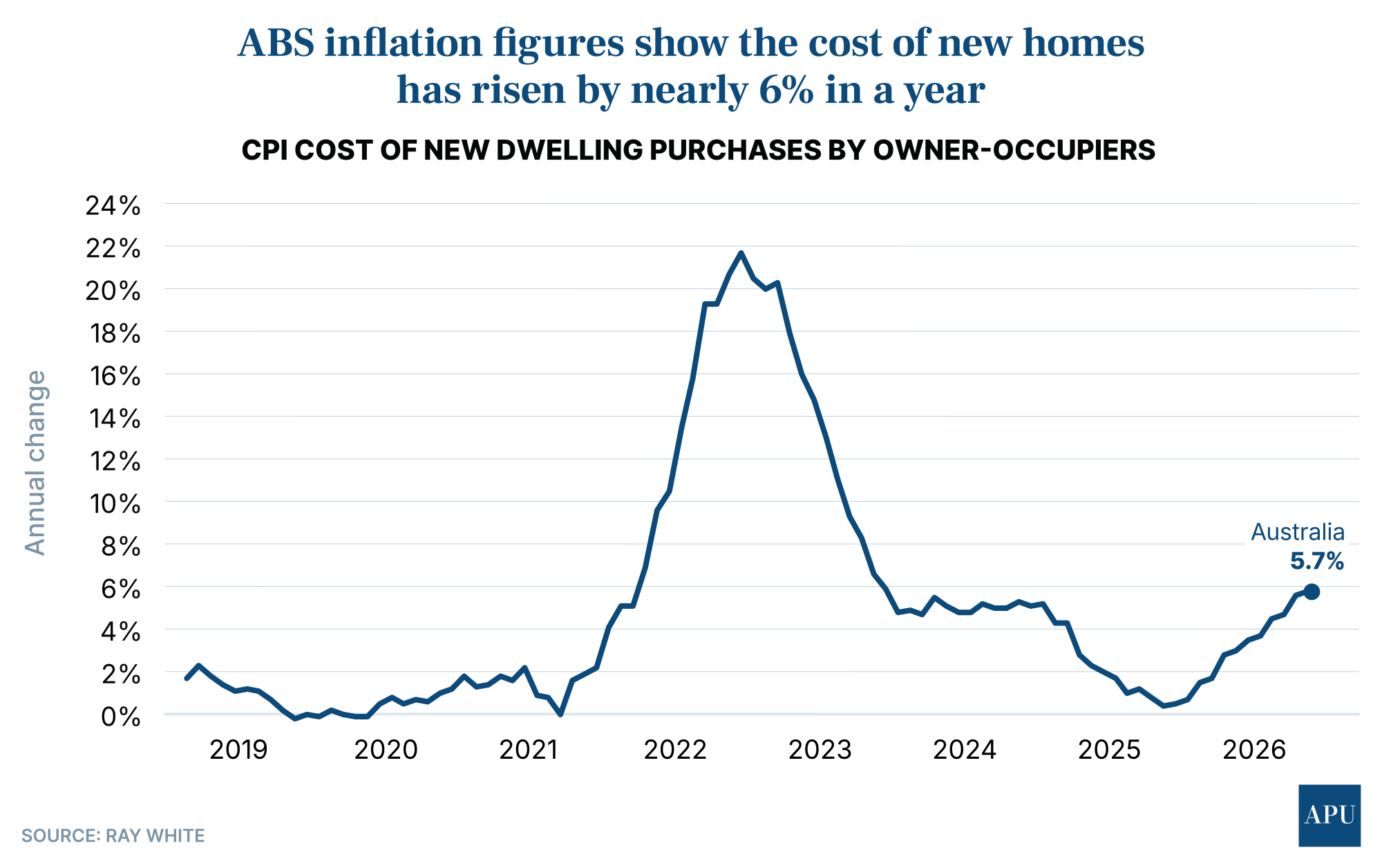
The latest ABS inflation data show the price of building a new dwelling was 5.7% higher in July than a year earlier, compared with annual growth of just 0.7% in June last year.
As a result, the ABS says builders are raising the prices of new homes to pass on higher labour and material costs.
The details
Ray White Chief Economist Nerida Conisbee says the ABS data show labour shortages, rising material prices and competition from an enormous pipeline of infrastructure, energy, data centre and resources projects are once again pushing construction costs higher.
And Ms Conisbee warns those increases are hitting an industry where margins are already under pressure and insolvencies remain high.
“Australia’s construction industry has spent the past few years dealing with one of the biggest increases in building costs on record,” she says.
“Just as those pressures appeared to be easing, construction costs are accelerating again.”
The problem starts with labour.
Ms Conisbee argues a lack of skilled workers remains one of the largest brakes on Australia’s ability to increase housing construction, particularly when so many other industries are chasing the same tradespeople.
The ABS has identified shortages of bricklayers, carpenters and concreters as an ongoing source of pressure on residential construction costs.
At the same time, the pipeline of new workers remains weak.
Construction trades in training fell 9.5% between 2021 and 2025, from 65,565 to 59,355, according to National Centre for Vocational Education Research data.
More recent figures show apprentice and trainee numbers continuing to fall across Australia, reinforcing concerns that domestic training is not replacing workers quickly enough.
Ms Conisbee says this is no longer simply a temporary shortage created by a busy construction cycle.
“Australia has a structural shortage of people able to build what we are planning to build,” she says.
Another problem is the sheer volume of construction Australia is trying to undertake simultaneously.
Governments say they want more housing, but they are also busy building transport infrastructure, hospitals and schools.
At the same time, private investment in data centres, renewable energy, electricity transmission and resources projects is creating additional demand for many of the same skilled workers and materials.
Electricians provide perhaps the clearest example.
A residential builder looking for an electrician may now be competing not merely against another home builder, but against data centre operators, mines, renewable energy projects and major infrastructure contractors with much deeper pockets.
“The problem is that they are all competing for many of the same workers and materials,” Ms Conisbee says.
“More projects don’t automatically mean more construction. They can also mean higher costs.”
The amount of work already underway illustrates the scale of the competition.
Australia completed about $82.5 billion of construction work in the June quarter alone, including $27.9 billion of residential construction and $36.7 billion of engineering work.
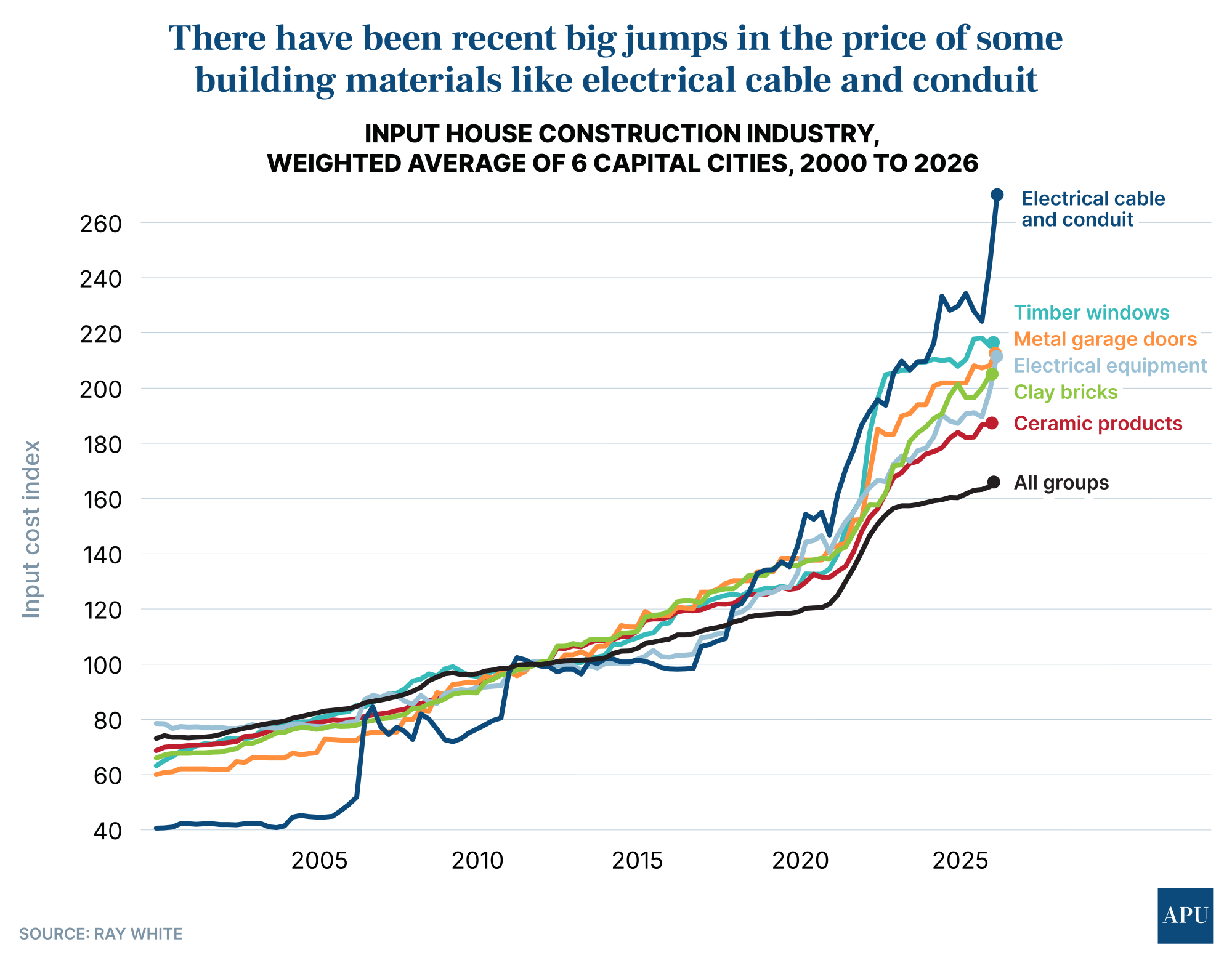
The big jumps in the price of building materials experienced during the pandemic have subsided, but the cost of many important building products is climbing again.
Ms Conisbee says prices for inputs into house construction rose 2.1% during the June quarter and 3.8% over the year, with some electrical and plaster products recording much larger increases.
The ABS has also pointed to higher freight costs, rising copper prices and supply disruptions as contributors to increasing construction costs.
Its June-quarter producer price data found builders were facing continued skilled labour shortages while higher fuel and delivery costs were also being passed through.
The longer-term increase is even more significant.
Ms Conisbee estimates overall inputs into house construction are now around 68% more expensive than in 2012.
That means builders entering the latest round of cost increases are starting from a dramatically higher base than they were before the pandemic.
The renewed cost pressure is particularly concerning because Australia’s building industry has already endured several years of financial stress.
Ms Conisbee says external administration appointments in construction reached a record 941 in August, although 542 were associated with the collapse of the large Bathla Group and therefore distort the headline figure.
Even stripping those out, she argues insolvency levels remain high.
Many builders are still recovering from the combination of fixed-price contracts signed before the pandemic, huge increases in materials and labour costs, higher interest rates and squeezed margins.
“Another acceleration in costs will be difficult for parts of the industry to absorb,” Ms Conisbee says.
There could also be consequences for inflation.
Headline CPI increased 3.5% in the year to July, while new dwelling prices rose 5.7%.
The ABS specifically identified higher material and labour costs being passed on by builders as the driver of the increase.
For housing, the timing could hardly be worse.
Australia is trying to dramatically lift construction to address a chronic shortage of homes, yet July building approvals fell 3.6% to 17,687 dwellings and housing commencements remain well below the pace required to meet national targets.
Building more homes is not simply a question of approving more land or projects.
Someone actually has to be available to build them.
As Ms Conisbee puts it: “Australia increasingly has a construction capacity problem, and until that changes, building more will remain expensive.”




.jpg?width=1920&height=1080&name=WTF%20Is%20Happening%20To%20The%20Housing%20Market!%20$500%20Billion%20Wiped%20Out%20As%20Prices%20Fall%20Faster%20Every%20Month%20Scott%20Kuru%20YPU%20027%20(1).jpg)
%20Scott%20Kuru%20YPU%20025.jpg?width=1920&height=1080&name=This%20Is%20Worse%20Than%20A%20Recession%20RBA%20Admits%20Australias%20Wage%20Collapse%20Cant%20Be%20Stopped%20(Prepare%20Now)%20Scott%20Kuru%20YPU%20025.jpg)

















.jpg?width=1920&height=1080&name=EXPOSED%20How%20The%20Govt%20Let%20These%20Oil%20Giants%20Get%20Away%20With%20Paying%20Zero%20Tax%20For%20Aussie%20Gas%20Scott%20Kuru%20DPU%20256%20(1).jpg)




%20Scott%20Kuru%20DPU%20248.jpg?width=1920&height=1080&name=Major%20Banks%20CAUGHT%20Preparing%20For%20Australia%E2%80%99s%20Biggest%20Housing%20Crash%20(Defaults%20%26%20Bankruptcies%20Coming)%20Scott%20Kuru%20DPU%20248.jpg)
%20Scott%20Kuru%20DPU%20247.jpg?width=1920&height=1080&name=This%20Is%20How%20Australia%20Gets%20Pushed%20Into%20the%20Next%20Big%20Reset%20(Trust%20Collapse%20Has%20Officially%20Begun)%20Scott%20Kuru%20DPU%20247.jpg)





%20Scott%20Kuru%20DPU%20239.jpg?width=1920&height=1080&name=URGENT%20Life%20In%20Australia%20Has%20Become%20Impossible%20For%20Millions%20Of%20Aussies%20(It%E2%80%99s%20About%20To%20Get%20Worse)%20Scott%20Kuru%20DPU%20239.jpg)





%20Scott%20Kuru%20DPU%20227.jpg?width=1920&height=1080&name=URGENT%20ALERT%20Australia%E2%80%99s%20Property%20Market%20Is%20Sliding%20Into%20Something%20Much%20Bigger%20(Prepare%20Now)%20Scott%20Kuru%20DPU%20227.jpg)