









.png?width=292&height=292&name=Copy%20Link%20(1).png)

 SIGN UP FOR FREE NEWSLETTER
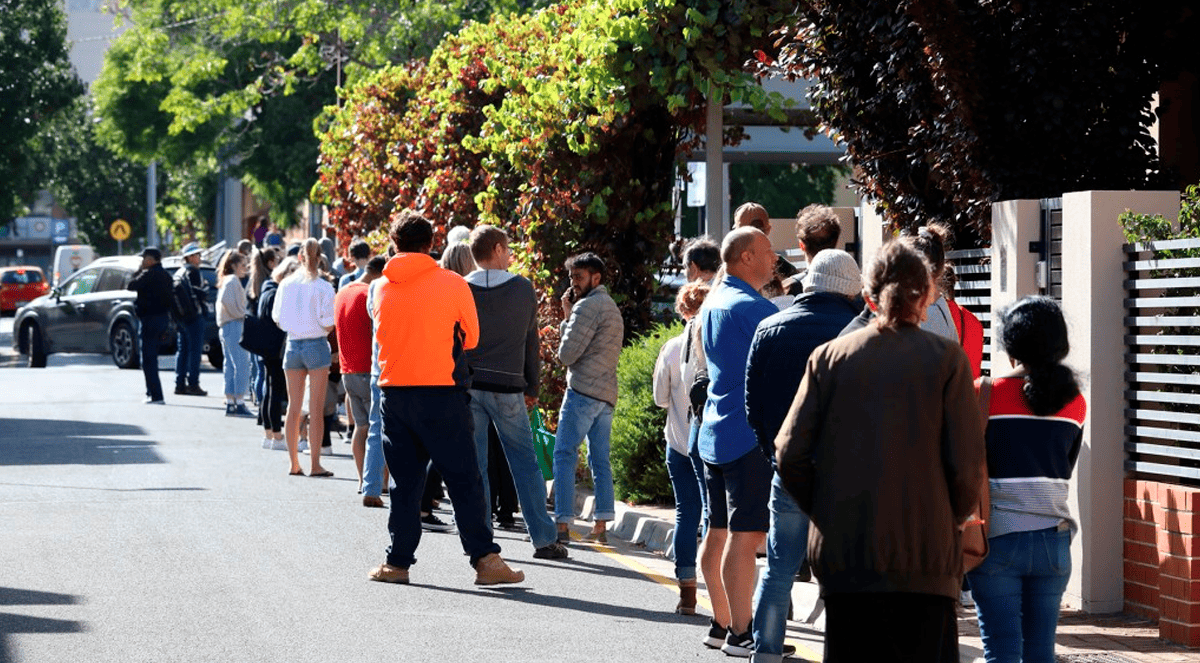
Image by Tony Lewis/InDaily
Australia’s rental market may be showing signs of cooling, but figures from three of the country’s major property data houses suggest the playing field remains heavily tilted in favour of landlords.
Cotality says national rents are still 5.5% higher than a year ago, with the median dwelling rent reaching $713 a week in September.
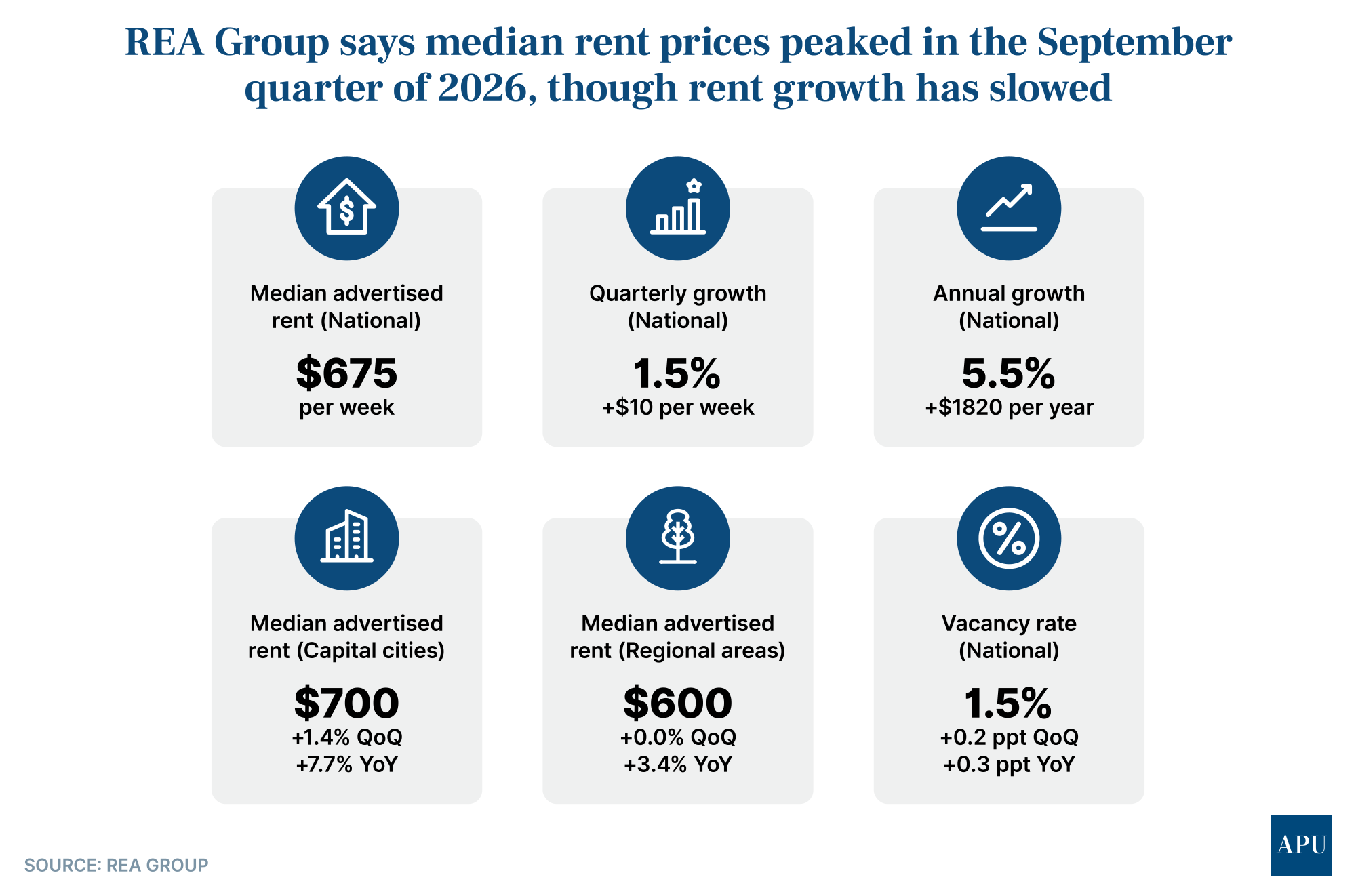
REA Group’s latest Rental Report tells a similar story, with national advertised rents hitting a record $675 a week, up 1.5% over the September quarter and 5.5% over the year.
At the same time, Cotality says gross rental yields have risen to 3.85% nationally, their highest level since August 2019, as rents continue to grow while dwelling values soften.
And although vacancy rates have increased from the exceptionally tight levels recorded earlier this year, all three reports suggest rental availability remains constrained.
The details
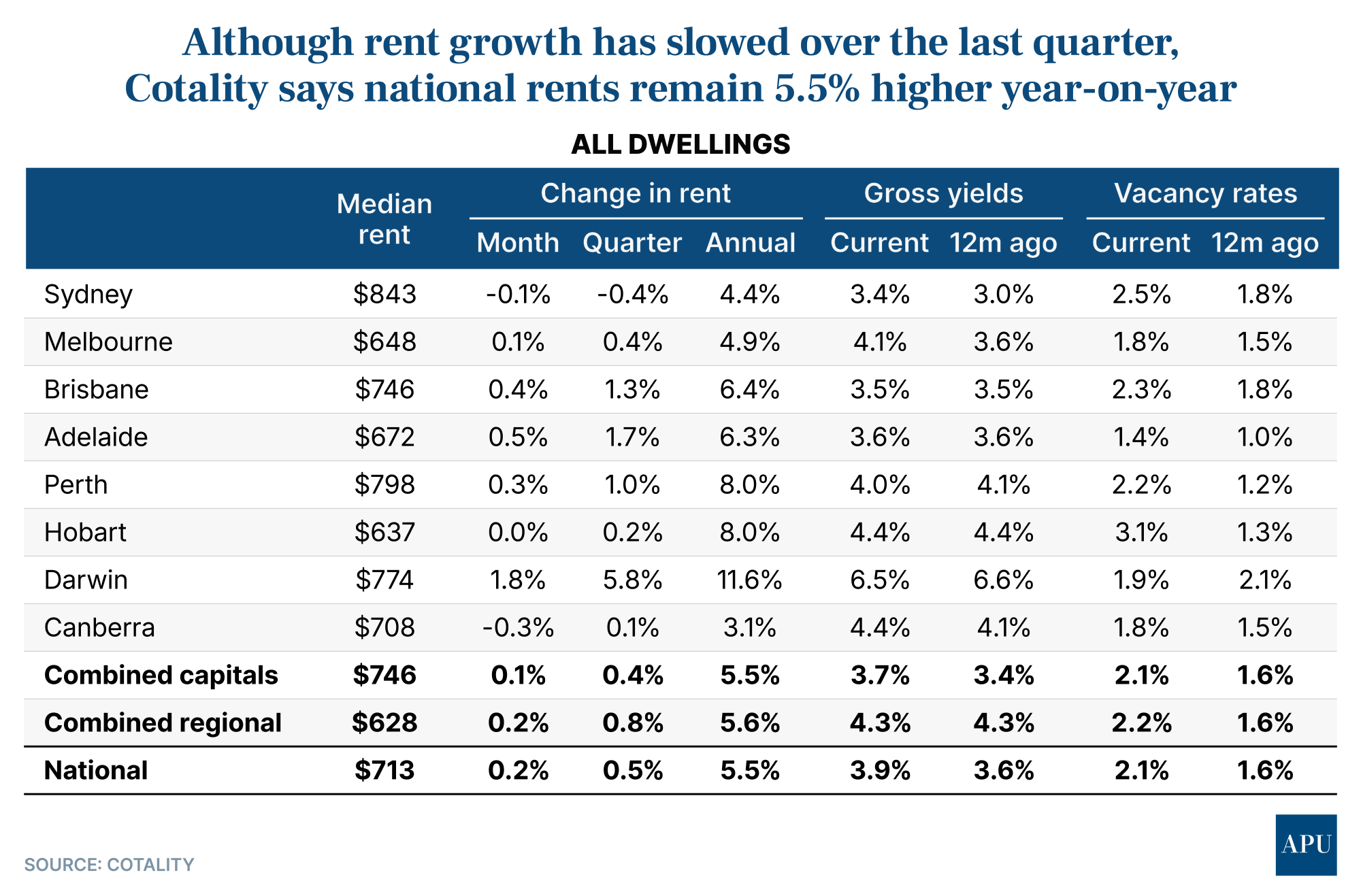
Cotality’s national Rental Value Index rose 0.5% in the September quarter of 2026, down sharply from 1.6% growth in the June quarter and 2.1% in the March quarter.
Annual growth also eased from 5.9% to 5.5%.
But that still leaves rents almost 39% higher than five years ago, equivalent to an increase of about $199 a week.
Cotality Research Director Tim Lawless says the slowdown reflects renters increasingly reaching the limits of what they can afford rather than any dramatic improvement in rental supply.
“Rental growth was strongest through the pandemic when average household sizes fell sharply as people sought additional space, then experienced a second wind as international borders reopened and rental demand increased without a commensurate uplift in rental supply,” Mr Lawless says.
“The consequence is that renters are reaching an affordability ceiling.
“Our June affordability data showed rental households were dedicating about 34% of their pre-tax income towards rent, the highest level on record.”
Domain’s latest quarterly Rental Report tells a similar story.
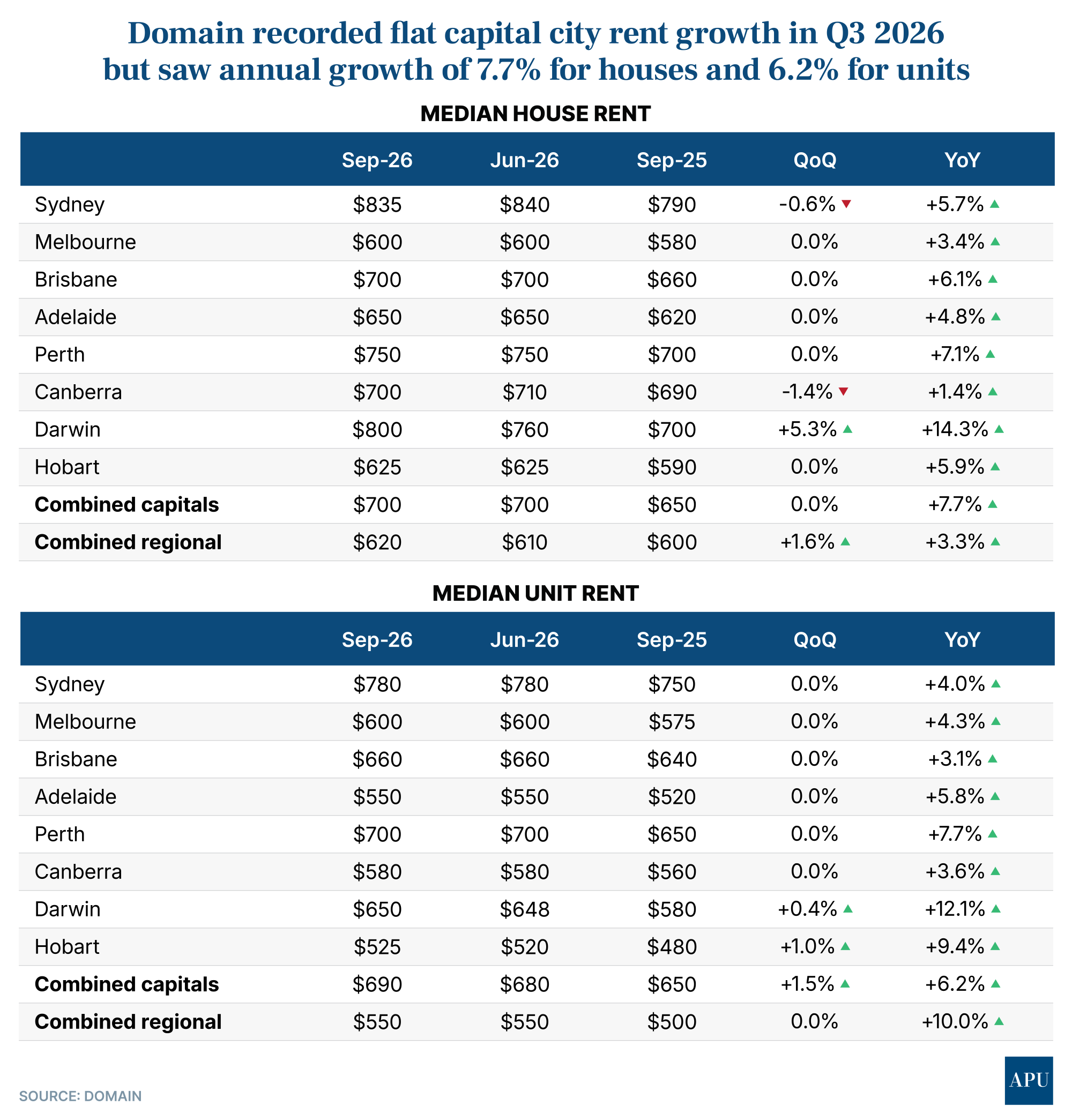
Capital-city house rents were unchanged overall in the September quarter, while unit rents rose 1.5%.
But rents remain at or near record levels across much of the country.
Sydney’s median house rent is still $835 a week, $45 higher than a year ago.
Perth house rents are $750 a week, Brisbane $700 and Darwin $800.
Domain Chief of Economics and Research Nicola Powell says the slowdown does not mean Australia suddenly has an abundance of rental homes.
“We still have severe rental shortages and vacancy rates remain really low, but there’s almost now this disconnect between where vacancy rates sit and what’s happening with rents,” Dr Powell says.
“There’s definitely this push-pull between tenants and landlords.
“Tenants just aren’t able to absorb further rent increases, limiting how much higher rents can actually go.”
REA Group’s figures provide further evidence that rents remain strong despite the slowdown in growth.
Its September report found national advertised rents increased by $10 a week during the quarter to a record $675, while capital-city rents reached $700 a week.
Capital-city advertised rents were 7.7% higher than a year ago, compared with 3.4% growth in regional markets.
The strongest annual increases were recorded in Darwin, where the median advertised rent rose 13.8%, followed by Hobart at 9.1%, Perth at 8.7% and Brisbane at 7.7%.
REA Group Senior Economic Analyst Megan Lieu says the balance between the capitals and regions has also shifted.
“Annual growth in regional rents is softening, while the reverse is happening in capital cities,” she says.
“Despite vacancies being slightly lower in regional areas, the improvement in available rentals has been larger at 0.4ppt compared to 0.2ppt in our capitals, which may be influencing price movements.”
The important take-out for investors is that rents appear to be slowing because tenants have hit affordability limits, not because Australia has suddenly produced enough rental housing.
Vacancy rates remain tight
Cotality says the national vacancy rate rose from 1.7% earlier this year to 2.1% in September.
But that remains well below its pre-pandemic average.
Adelaide has the tightest capital-city vacancy rate under Cotality’s measure at 1.4%, followed by Melbourne and Canberra at 1.8%, Darwin at 1.9% and Perth at 2.2%.
Domain’s methodology produces different absolute vacancy figures, but the underlying trend is similar.
It has Brisbane vacancies at just 0.7%, Adelaide and Perth at 0.4%, and Darwin and Hobart at only 0.3%.
Domain says vacancy rates remain “near historic lows nationally”, even though availability has improved somewhat in Sydney, Canberra and Hobart.
REA Group also recorded an increase in availability, with its national vacancy rate rising from 1.3% in June to 1.5% in September, the highest level since February 2022.
But its own report cautions that vacancy rates have remained in a remarkably narrow range of roughly 1.1% to 1.5% since early 2022, suggesting broader rental conditions have not materially changed.
Under REA Group’s measure, Perth and Hobart have the tightest capital-city vacancy rates at just 0.9%, followed by Adelaide at 1.0% and Brisbane at 1.1%.
The different figures reflect different methodologies, so the absolute vacancy rates reported by Cotality, Domain and REA Group are not directly comparable.
But all three point to the same broad conclusion: rental availability has improved slightly, but remains tight by historical standards.
Cotality’s Tim Lawless says the recent increase in vacancies appears to be more about renters adapting, with the formation of larger households, staying at home longer or moving to cheaper areas, rather than through a significant increase in supply.
“Even with the high levels of investor lending throughout much of 2025, supply constraints persist, so the recent slowdown in rental growth and rise in vacancies is likely to be more about demand adjusting than a significant increase in rental supply,” he says.
Rental yields keep improving
For investors, perhaps the most significant development is what is happening to yields.
Cotality says the national gross rental yield rose to 3.85% in September, up from 3.61% a year earlier and the highest level in more than seven years.
Capital-city yields rose even more strongly, from 3.4% to 3.7%.
Darwin continues to offer the highest gross dwelling yield at 6.52%, followed by Hobart and Canberra at about 4.4%.
Sydney remains the lowest-yielding capital at 3.4%, although even that is 43 basis points higher than a year ago.
Units remain particularly attractive from an income perspective, with gross yields across the capital cities at about 4.7%, compared with 3.4% for houses.
Melbourne and Perth units are yielding about 5.2%, Canberra 5.5% and Darwin 7.5%.
Domain says recent changes to negative gearing and capital gains tax have made yields an increasingly important consideration for investors.
“What a landlord is going to want is an investment property that works for them through the duration of holding that property,” Dr Powell says.
“Investors are going to want better yields.
“They’re going to be chasing those locations that offer greater yield potential.”
The take-out
Cotality cautions that investor mortgage rates remain in the mid-to-high 6% range, while insurance, maintenance, strata and council costs have all increased, making positive cash flow difficult for highly leveraged investors.
Cotality, Domain and REA Group all show rental growth slowing from the extraordinary pace of recent years.
But REA Group’s latest figures prove that slower rental growth does not mean falling rents.
National advertised rents have just reached a record high, capital-city rents are 7.7% higher than a year ago and vacancy rates remain tight.
Meanwhile, Cotality says dwelling completions have been “relatively flat for an extended period”, suggesting there is little sign of a major supply surge capable of fundamentally changing rental conditions.
For property investors, the picture is more complicated than headlines about a cooling rental market might suggest.
Rents remain extraordinarily high, housing supply is still constrained and rental yields are improving.




.jpg?width=1920&height=1080&name=WTF%20Is%20Happening%20To%20The%20Housing%20Market!%20$500%20Billion%20Wiped%20Out%20As%20Prices%20Fall%20Faster%20Every%20Month%20Scott%20Kuru%20YPU%20027%20(1).jpg)
%20Scott%20Kuru%20YPU%20025.jpg?width=1920&height=1080&name=This%20Is%20Worse%20Than%20A%20Recession%20RBA%20Admits%20Australias%20Wage%20Collapse%20Cant%20Be%20Stopped%20(Prepare%20Now)%20Scott%20Kuru%20YPU%20025.jpg)


























.jpg?width=1920&height=1080&name=EXPOSED%20How%20The%20Govt%20Let%20These%20Oil%20Giants%20Get%20Away%20With%20Paying%20Zero%20Tax%20For%20Aussie%20Gas%20Scott%20Kuru%20DPU%20256%20(1).jpg)







%20Scott%20Kuru%20DPU%20248.jpg?width=1920&height=1080&name=Major%20Banks%20CAUGHT%20Preparing%20For%20Australia%E2%80%99s%20Biggest%20Housing%20Crash%20(Defaults%20%26%20Bankruptcies%20Coming)%20Scott%20Kuru%20DPU%20248.jpg)
%20Scott%20Kuru%20DPU%20247.jpg?width=1920&height=1080&name=This%20Is%20How%20Australia%20Gets%20Pushed%20Into%20the%20Next%20Big%20Reset%20(Trust%20Collapse%20Has%20Officially%20Begun)%20Scott%20Kuru%20DPU%20247.jpg)







%20Scott%20Kuru%20DPU%20239.jpg?width=1920&height=1080&name=URGENT%20Life%20In%20Australia%20Has%20Become%20Impossible%20For%20Millions%20Of%20Aussies%20(It%E2%80%99s%20About%20To%20Get%20Worse)%20Scott%20Kuru%20DPU%20239.jpg)











%20Scott%20Kuru%20DPU%20227.jpg?width=1920&height=1080&name=URGENT%20ALERT%20Australia%E2%80%99s%20Property%20Market%20Is%20Sliding%20Into%20Something%20Much%20Bigger%20(Prepare%20Now)%20Scott%20Kuru%20DPU%20227.jpg)





%20Scott%20Kuru%20DPU%20221.jpg?width=1920&height=1080&name=The%20AI%20Situation%20in%20Australia%20Just%20Hit%20a%20Point%20of%20No%20Return...%20(Major%20Bank%20Proves%20It)%20Scott%20Kuru%20DPU%20221.jpg)