










 SIGN UP FOR FREE NEWSLETTER
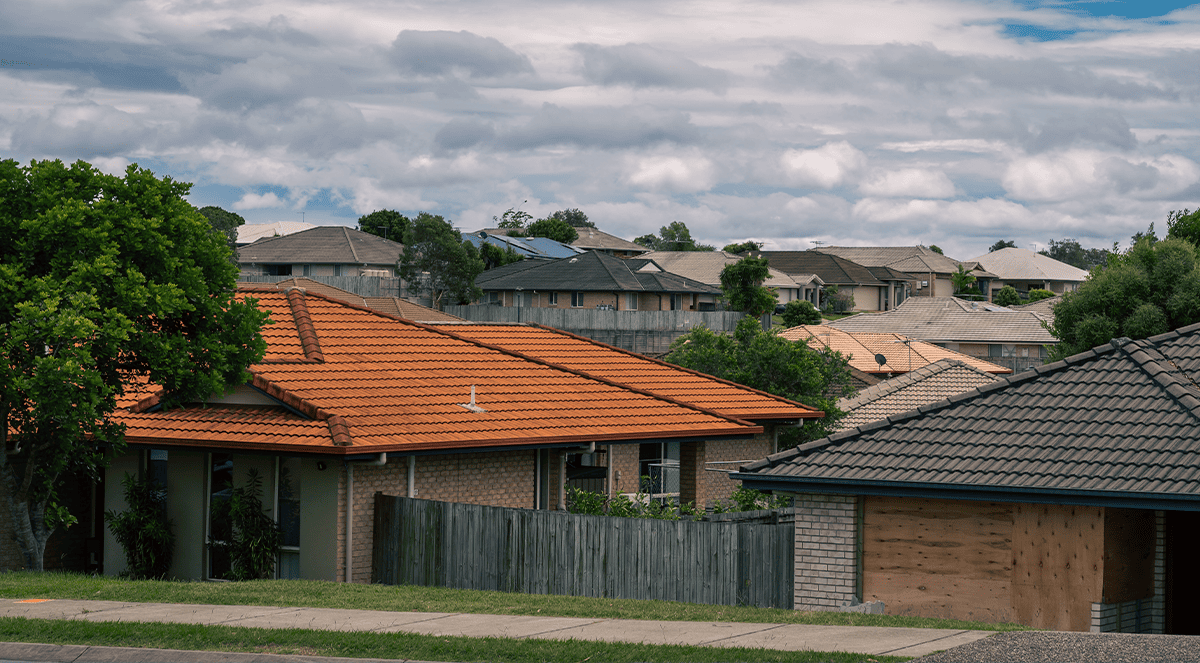
Australia’s residential property downturn is becoming difficult to ignore.
National home values have fallen for seven consecutive months, most capital-city suburbs have gone backwards over the past quarter and homes are taking considerably longer to sell.
Yet beneath the gloomy headlines is an unusual combination of conditions that favour buyers and property investors who still have the financial capacity to purchase.
The details
Cotality’s national Home Value Index fell another 1.2% in October 2026, its seventh consecutive monthly decline, leaving Australian dwelling values 6.7% below their March peak.
The property data company also says the downturn has become remarkably broad, with 97% of capital-city suburbs falling in value during the three months to the end of September.
PropTrack - the data arm of REA Group - has reported a shallower but still significant downturn.
It says national home prices fell 0.3% in October, marking a seventh consecutive month of declines, with prices now 4.3% below their March peak and 1.9% lower than a year ago.
From a buyer’s perspective, almost wherever they look in the major capital cities, prices have been moving in their favour.
And buyers also have two things that have been off the radar in recent years: choice and room to negotiate.
In fact, the change in selling conditions may be just as important as the decline in prices.
Cotality says the median time on market has risen to 39 days, the highest since August 2020, while vendor discounting has widened to 4.7%, its largest level since May 2019.
The slower pace of sales has also seen capital-city listings rise, reaching the highest level for this time of year since 2019.
The company’s research director Tim Lawless says the increase in available stock is giving buyers greater choice, although many are still unwilling or unable to take advantage of lower prices and a bigger selection of properties because confidence and borrowing capacity remain weak.
However, for buyers who can still obtain finance, this creates a very different environment from the post-pandemic boom years.
There’s more time to inspect properties, compare alternatives, undertake due diligence and negotiate hard on price and conditions - including extended settlements or repairs on older properties.

Where are the fire sales?
One reason prices have not fallen even faster is that Australia has not experienced a wave of forced selling.
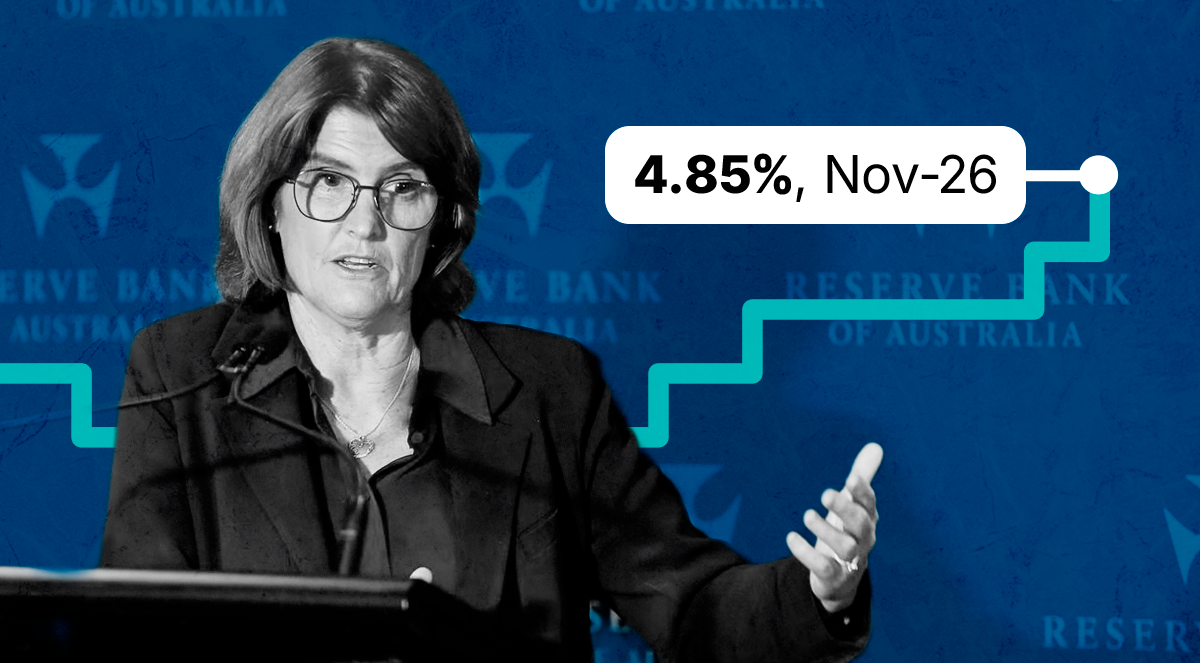
The RBA’s latest Financial Stability Review says most mortgage borrowers remain financially resilient, despite higher rates.
Less than 1% of borrowers are estimated to be in negative equity, meaning the overwhelming majority of households still owe less on their mortgage than their property is worth at current market prices.
Most borrowers also hold substantial savings in redraw and offset accounts, with the median mortgaged household having enough to cover more than a year of scheduled mortgage repayments at current rates.
The RBA estimates only around 2% of variable-rate owner-occupier households have insufficient income to cover both scheduled mortgage payments and essential living expenses, and most of those have savings capable of covering the shortfall for at least six months.
Even if housing values were to fall another 20%, the RBA estimates only about 5% of mortgages would move into negative equity.
That doesn’t mean individual households are not being squeezed by higher interest rates and the current cost-of-living crisis, but it does reduce the likelihood of a mass forced-selling cycle that would send prices spiralling further down.
The picture for investors
For investors, the other side of the equation looks considerably healthier.
Cotality’s latest Quarterly Rental Review shows national rents rose 5.5% over the year to September, taking the median rent to $713 a week.
The national rental vacancy rate has risen to 2.3%, but remains well below the pre-pandemic decade average of 3.3%.
And because rents are rising while property values are falling, yields are improving.
Cotality puts the national gross rental yield at around 3.9%, while the combined-capital yield has risen to 3.77%, its highest level since May 2015.
While mortgage interest and many ongoing property expenses can eat into gross rental returns, most of these costs are tax-deductible.
For qualifying new properties, negative gearing remains available, allowing eligible rental losses to be offset against other income.
From an investor’s perspective, paying less for an asset while receiving more rent is clearly a more favourable combination than the reverse.
Property downturns don’t last forever
History also provides some useful perspective.
Australia experienced 10 national housing downturns over roughly four decades before the current cycle, and seven lasted less than a year, according to Cotality data.
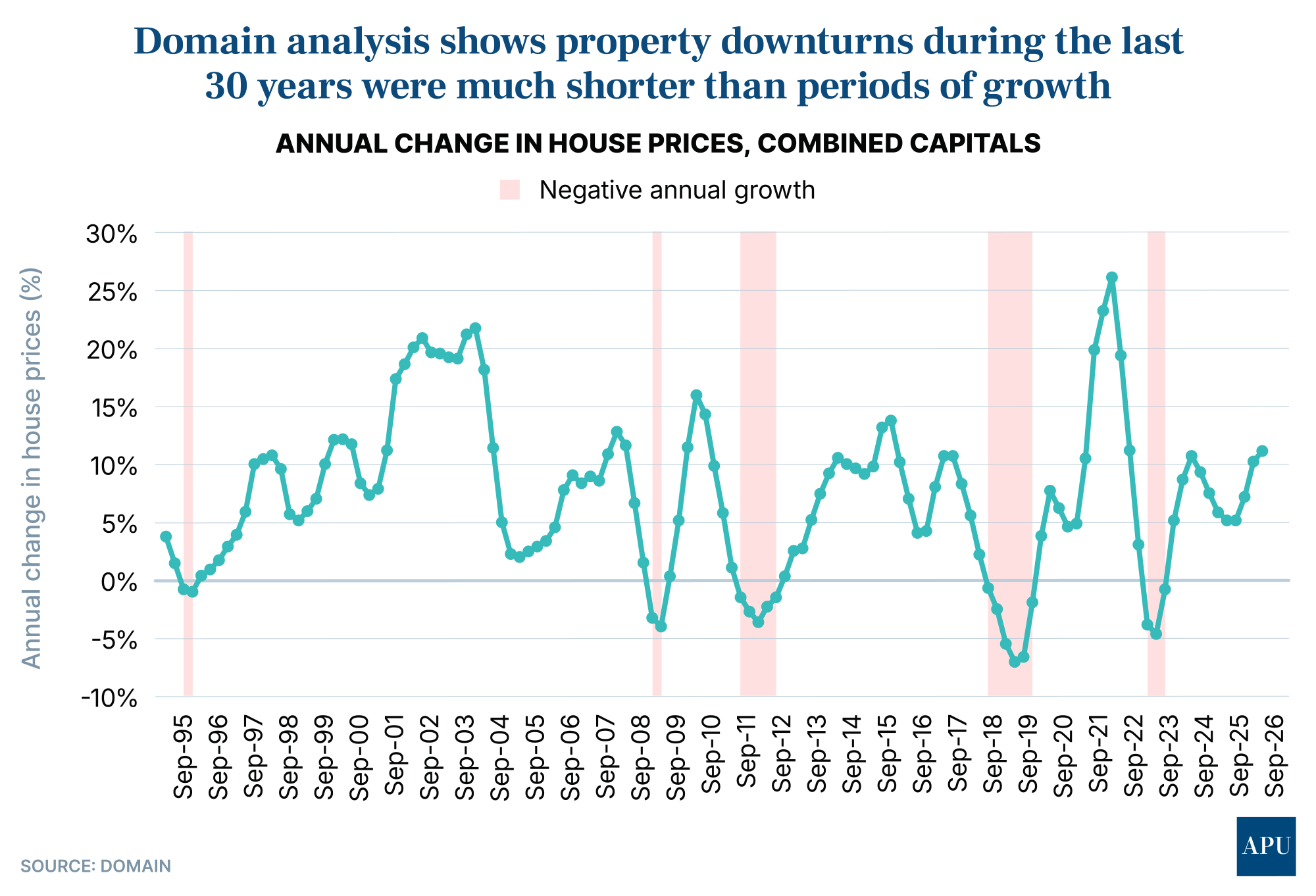
Separate Domain research published in July 2026 examined eight housing cycles since the mid-1990s.
It found downturns lasted an average of eight months and reduced property prices by 2.9%.
The subsequent upswings lasted almost three years on average and delivered gains of 32.3%.
While the present downturn could prove longer or deeper, particularly if interest rates rise further or unemployment increases, history challenges the idea that buyers and investors should necessarily wait until prices have clearly started rising again before considering buying.
By that stage, competition may also have returned.
The take-out
This doesn’t mean that every property is suddenly a bargain.
Interest rates are at an 18-year high, prices could decline further and any property bought as an investment still needs to work on its own numbers at today’s retail interest rates, with outgoings, taxes and charges factored in.
But today’s property market offers something buyers have not enjoyed for several years: choice and negotiating power.
Combine that with rising rents, improving yields, limited forced selling and a rental vacancy rate that remains historically tight, and the current downturn begins to look less like a crisis and more like an opportunity for well-positioned investors.