









.png?width=292&height=292&name=Copy%20Link%20(1).png)

 SIGN UP FOR FREE NEWSLETTER

Image by Nikki Short/NCA NewsWire
The RBA’s decision to raise interest rates for the fourth time this year has reinforced the gloomy mood around property, with borrowing capacity falling and national home prices easing for six consecutive months.
But history offers an important warning for buyers waiting for the central bank to start cutting rates before they consider entering the market.
During the last major rate-hiking cycle, Australian property prices began recovering while interest rates were still rising, and national housing values regained their previous peak within weeks of the final RBA increase.
While it’s true that higher rates hurt existing borrowers and reduce what new buyers can borrow, they can also weaken competition and create better negotiating conditions for people who remain able to purchase.
The details
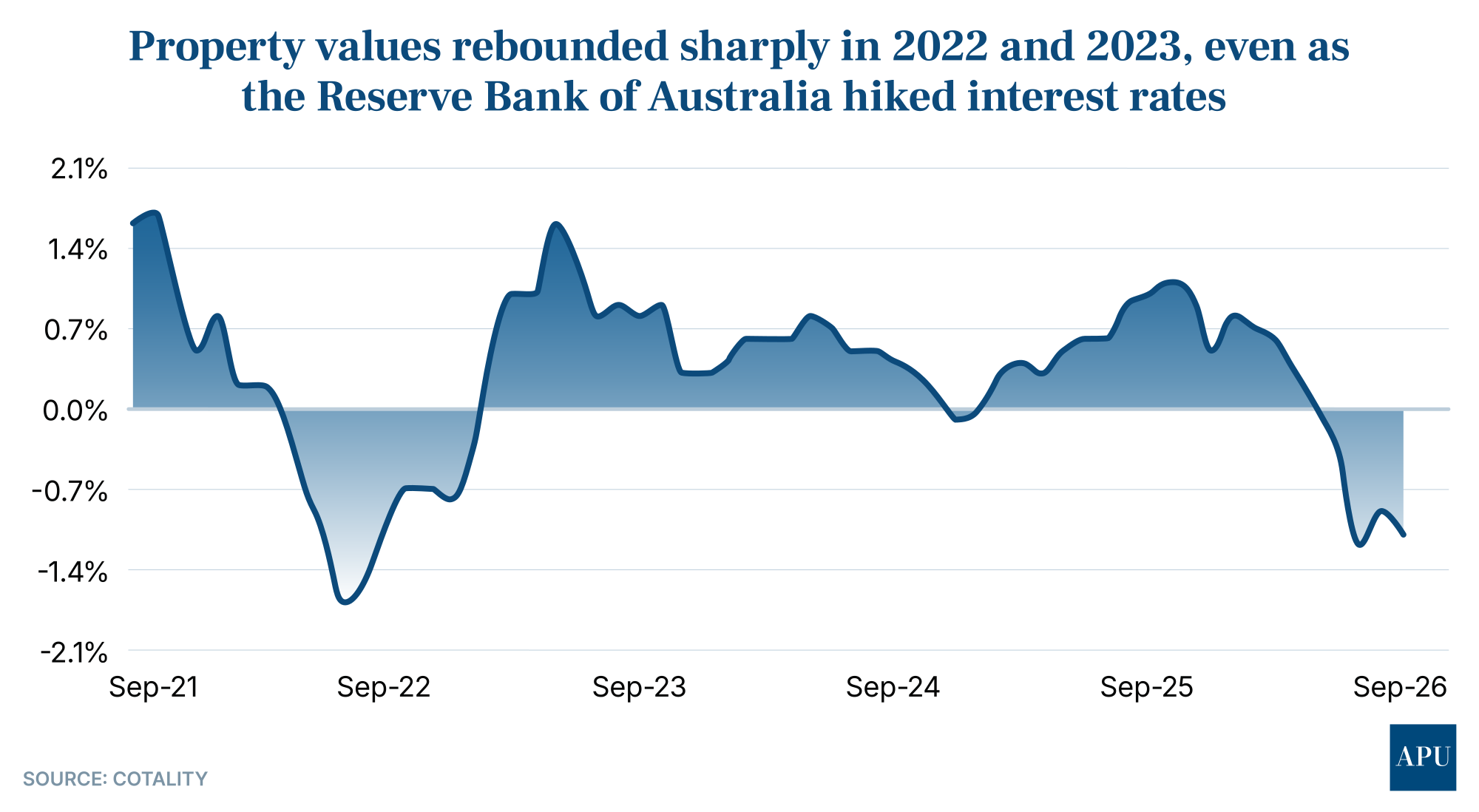
Cotality reported that by 22 November 2023, Australian home values had fully recovered the 7.5% decline from their April 2022 peak and reached a new record high.
The RBA had raised the cash rate to 4.35% just two weeks earlier, on November 7 2023.
That November move ultimately proved to be the final increase of the cycle, although nobody knew that with certainty at the time.
Rates then remained at 4.35% until the first cut in February 2025.
It turns out property prices did not wait for rate cuts.
The 2022–23 cycle provides a useful case study because it initially behaved much as conventional wisdom would suggest.
The RBA began lifting rates from a record-low 0.1% in May 2022, and higher mortgage costs quickly hit borrowing power and buyer demand.
By April 2023, the RBA estimated the maximum loan available to a typical borrower under bank serviceability assessments had fallen by around 30% since the first rate rise.
Home prices initially fell as well.
But the downturn bottomed well before the RBA finished tightening.
Cotality’s national Home Value Index troughed in January 2023 and then rose 7.6% by October that year, leaving values just 0.5% below their previous record before the November rate rise had even occurred.
REA Group’s PropTrack recorded a similar pattern.
Its index showed national prices rose for 11 consecutive months through November 2023 and finished the month 1.29% above their previous peak.
At the time, REA Group Senior Economist Eleanor Creagh said the rebound had occurred despite substantially higher borrowing costs because several other forces were pushing the other way.
“Strong housing demand, buoyed by record net overseas migration, tight rental markets, low unemployment and home equity gains of recent years, has worked alongside limited housing stock to offset the impacts of higher interest rates,” she said.
Higher rates changed the competition
While higher interest rates clearly reduced borrowing capacity for some buyers, that same reduction in borrowing power also changed the competitive landscape.
Buyers who might previously have been able to borrow $1 million could suddenly afford substantially less.
Some dropped out altogether, others shifted to cheaper properties or locations, while investors and owner-occupiers with stronger balance sheets faced fewer bidders.
So, in some cases, rate rises can create more negotiating room for buyers who retain purchasing capacity.
At the same time, relatively few owners were forced to sell.
Listings remained tight through much of 2023, meaning there were fewer homes available even as buyer demand began recovering.
PropTrack later found total listings in November 2023 were still 23.9% below their decade average, while enquiries per listing were 20.5% higher than a year earlier.
That combination proved powerful enough to overcome much of the drag from higher interest rates.
What about 2026?
There are obvious parallels with today, but also important differences.
The RBA lifted the cash rate again in September 2026 to 4.60%, its highest level in 15 years and its fourth increase of 2026.
The central bank says higher rates are already reducing housing demand, with prices falling in most capitals and new housing lending declining.
REA Group’s latest Home Price Report shows national prices down 3.3% from their March peak after six consecutive monthly falls.
Yet the decline remains relatively modest nationally, with prices still 0.1% higher than a year ago.
Regional prices remain 5.1% higher annually, while units have proven more resilient than houses.
So, while the current downturn is real, the question is whether buyers waiting for a clear signal that interest rates have peaked may again find that property markets turn before monetary policy does.
History suggests that’s entirely possible.
Why the bottom of the market is hard to pick
Property markets respond to expectations as much as current conditions.
If buyers become convinced rates are close to their peak, confidence can improve before the RBA actually cuts.
Likewise, if listings remain constrained, population keeps growing and rental markets remain tight, relatively small changes in buyer demand can move prices.
That was exactly what happened in 2023.
The RBA’s own minutes from November 2023 noted that housing prices were already rising and housing loan approvals had increased, even while financial conditions remained “restrictive”.
None of this guarantees the current downturn is near its bottom.
Rates could rise further, unemployment could increase, forced selling could pick up or buyer demand could weaken more sharply.
But the last cycle demonstrates why waiting for the first rate cut is not the same thing as buying at the bottom.
By the time the RBA actually began cutting rates in February 2025, national home prices had already been above their previous peak for well over a year.
For investors, the lesson is less about predicting the exact turning point than recognising that markets often move before the economic headlines become comfortable.
The bottom is only obvious after you’ve driven past it.







.jpg?width=1920&height=1080&name=WTF%20Is%20Happening%20To%20The%20Housing%20Market!%20$500%20Billion%20Wiped%20Out%20As%20Prices%20Fall%20Faster%20Every%20Month%20Scott%20Kuru%20YPU%20027%20(1).jpg)
%20Scott%20Kuru%20YPU%20025.jpg?width=1920&height=1080&name=This%20Is%20Worse%20Than%20A%20Recession%20RBA%20Admits%20Australias%20Wage%20Collapse%20Cant%20Be%20Stopped%20(Prepare%20Now)%20Scott%20Kuru%20YPU%20025.jpg)
























.jpg?width=1920&height=1080&name=EXPOSED%20How%20The%20Govt%20Let%20These%20Oil%20Giants%20Get%20Away%20With%20Paying%20Zero%20Tax%20For%20Aussie%20Gas%20Scott%20Kuru%20DPU%20256%20(1).jpg)







%20Scott%20Kuru%20DPU%20248.jpg?width=1920&height=1080&name=Major%20Banks%20CAUGHT%20Preparing%20For%20Australia%E2%80%99s%20Biggest%20Housing%20Crash%20(Defaults%20%26%20Bankruptcies%20Coming)%20Scott%20Kuru%20DPU%20248.jpg)
%20Scott%20Kuru%20DPU%20247.jpg?width=1920&height=1080&name=This%20Is%20How%20Australia%20Gets%20Pushed%20Into%20the%20Next%20Big%20Reset%20(Trust%20Collapse%20Has%20Officially%20Begun)%20Scott%20Kuru%20DPU%20247.jpg)







%20Scott%20Kuru%20DPU%20239.jpg?width=1920&height=1080&name=URGENT%20Life%20In%20Australia%20Has%20Become%20Impossible%20For%20Millions%20Of%20Aussies%20(It%E2%80%99s%20About%20To%20Get%20Worse)%20Scott%20Kuru%20DPU%20239.jpg)










%20Scott%20Kuru%20DPU%20227.jpg?width=1920&height=1080&name=URGENT%20ALERT%20Australia%E2%80%99s%20Property%20Market%20Is%20Sliding%20Into%20Something%20Much%20Bigger%20(Prepare%20Now)%20Scott%20Kuru%20DPU%20227.jpg)





%20Scott%20Kuru%20DPU%20221.jpg?width=1920&height=1080&name=The%20AI%20Situation%20in%20Australia%20Just%20Hit%20a%20Point%20of%20No%20Return...%20(Major%20Bank%20Proves%20It)%20Scott%20Kuru%20DPU%20221.jpg)