









.png?width=292&height=292&name=Copy%20Link%20(1).png)

 SIGN UP FOR FREE NEWSLETTER
Image by Brendon Thorne/Bloomberg
Australia’s housing downturn broadened further in September 2026, but the latest figures from the country’s two major property data houses suggest the decline remains a long way from a housing crash.
Cotality estimates national dwelling values fell 1.1% during September, taking its Home Value Index measure 5.2% below the record high reached in March.
But rival REA Group’s latest Home Price Report paints a noticeably milder picture.
Its PropTrack index recorded a national price fall of just 0.2% in September, leaving home prices 3.3% below their March peak, and still 0.1% higher than a year ago.
The divergence is significant because both datasets are widely used as measures of the health of Australia’s housing market, but they approach the task differently.
For property investors, an important part of the picture is being obscured by the focus on falling prices: rents are still rising strongly and rental yields are improving as property prices ease.
Cotality says national rents remain 5.5% higher than a year ago, while gross rental yields have climbed to 3.85%, their highest level since August 2019.
The details
Both Cotality and REA Group agree the property market has weakened since earlier this year.
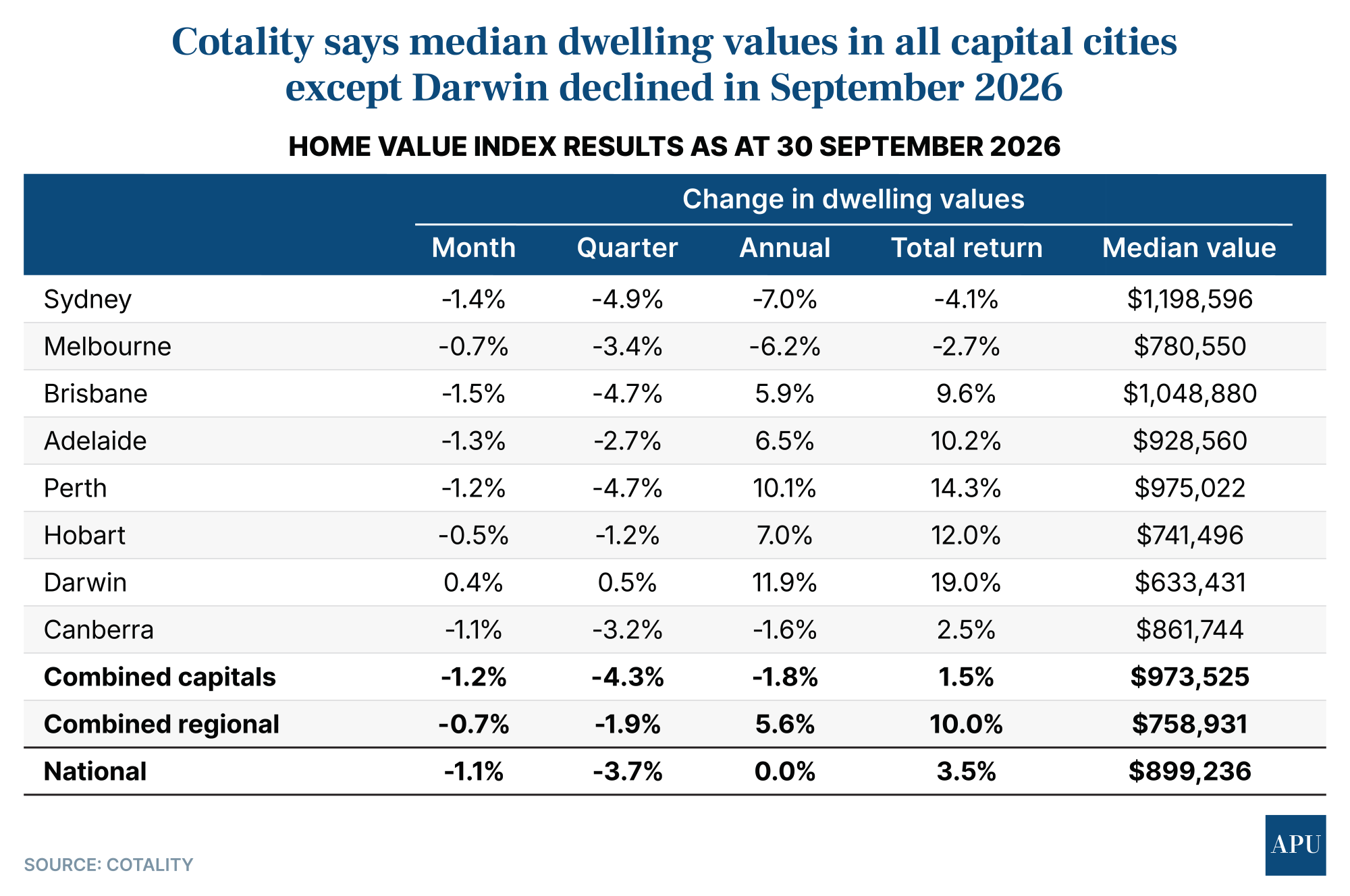
Cotality recorded its sixth consecutive monthly decline in September 2026, with dwelling values falling in every capital except Darwin.
Brisbane posted the largest monthly decline at 1.5%, followed by Sydney at 1.4%, Adelaide at 1.3% and Perth at 1.2%.
Cotality says Sydney values are now 8.6% below their February peak, while Melbourne is 7.5% below its record high.
Nationally, Cotality’s index sits 5.2% lower than it was in March 2026.
“97% of capital city suburbs were down in value over the three months to end of September, highlighting the broad-based scope of this negative housing cycle,” Cotality Research Director Tim Lawless says.
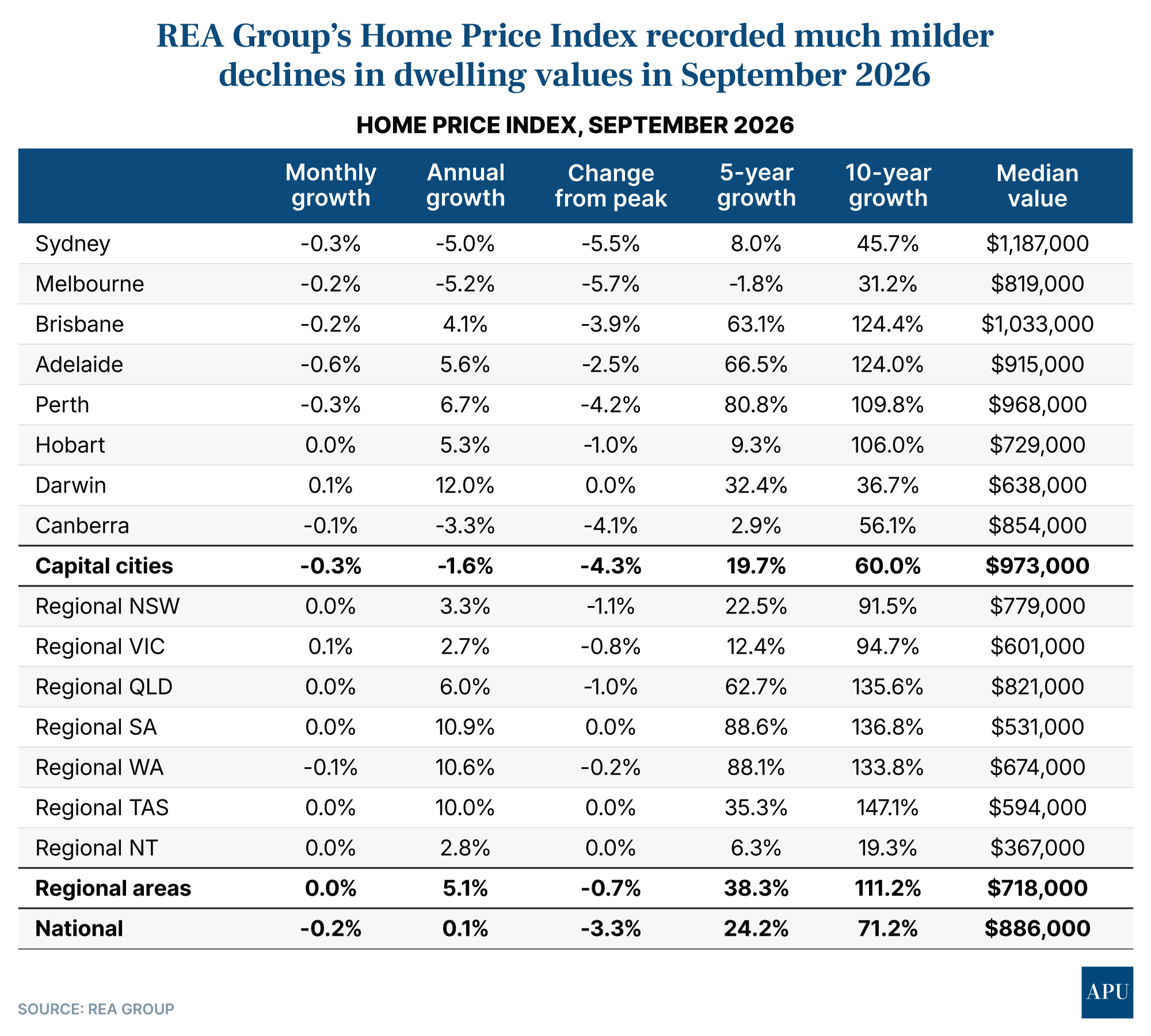
REA Group also recorded a sixth consecutive month of declines in median property prices, but the falls were considerably smaller.
Its data show Sydney prices down 0.3% in September, Melbourne and Brisbane 0.2%, Perth 0.3% and Adelaide 0.6%.
Nationally, prices are 3.3% below their peak, while regional prices were unchanged during September and remain 5.1% higher than a year ago.
REA Group Senior Economist Eleanor Creagh says the downturn is spreading from Sydney and Melbourne into markets such as Adelaide, Brisbane and Perth, which had previously proved much more resilient.
But she argues the main pressure remains reduced purchasing power among buyers, rather than distressed selling.
“Further price falls are likely over the coming months as this week’s (Reserve Bank of Australia) interest rate rise, tax changes and the cumulative impact of higher borrowing costs weigh on demand,” she says.
Different methodology
The difference between REA Group and Cotality’s assessment of the market partly comes down to how their indexes are calculated.
REA Group’s PropTrack index is based on the prices of homes that actually sell, while adjusting the figures so changes in the mix of properties sold do not distort the result.
Cotality also uses recent sales, but then uses those transactions and property characteristics such as size, location and number of bedrooms to estimate what every home in Australia would be worth, including properties that have not recently changed hands.
That means the two indexes are measuring the market slightly differently, and at the moment Cotality is showing the steeper downturn.
Cotality estimates national values are 5.2% below their March peak, while REA Group puts the fall at a milder 3.3% and says prices are still fractionally higher than a year ago.
Good news for investors
The other increasingly important feature of the downturn is what is happening to rents.
Cotality says national rents rose another 0.3% in September and are 5.5% higher over the year.
Although rental growth has slowed, rents are now around $200 a week higher than five years ago.
“This has been a period of unprecedented rental growth that has stretched rental affordability to the worst levels on record,” Cotality’s Tim Lawless says.
At the same time, falling property values combined with rising rents are improving investment yields.
National gross yields have risen to 3.85%, the highest in more than seven years.
Across the capitals, yields range from 3.4% in Sydney to 6.5% in Darwin, while units are generally producing considerably stronger yields than houses.
Cotality cautions that higher interest rates and other holding costs mean positive cash flow remains difficult to achieve
But the data house expects yields to continue rising if rents keep increasing while dwelling values drift lower.


Why the downturn may remain contained
Even Cotality’s more downbeat assessment contains several reasons why the downturn may remain contained.
Its latest HVI report specifically notes that, “despite the challenging outlook, there are several factors that should help to contain the downturn.”
The first is employment.
The labour market remains relatively tight, helping households maintain incomes and limiting the prospect of a large increase in mortgage arrears or forced property sales.
The second is the persistent shortage of new housing.
High construction costs, capacity constraints and poor project feasibility continue to restrict the number of new homes being delivered, while lengthy construction timelines mean even an improvement in approvals would take time to translate into completed housing.
Cotality says those barriers to supply, including high development and infrastructure costs and limited construction capacity, should continue to provide some support for property values.
Despite expecting prices to remain under downward pressure, its central scenario is therefore “a gradual drift lower in housing values rather than a material downturn”.
REA Group Senior Economist Eleanor Creagh agrees.
“Resilient employment, limited forced selling and homeowner equity buffers should contain the severity of the adjustment,” she says.











.jpg?width=1920&height=1080&name=WTF%20Is%20Happening%20To%20The%20Housing%20Market!%20$500%20Billion%20Wiped%20Out%20As%20Prices%20Fall%20Faster%20Every%20Month%20Scott%20Kuru%20YPU%20027%20(1).jpg)

%20Scott%20Kuru%20YPU%20025.jpg?width=1920&height=1080&name=This%20Is%20Worse%20Than%20A%20Recession%20RBA%20Admits%20Australias%20Wage%20Collapse%20Cant%20Be%20Stopped%20(Prepare%20Now)%20Scott%20Kuru%20YPU%20025.jpg)





























.jpg?width=1920&height=1080&name=EXPOSED%20How%20The%20Govt%20Let%20These%20Oil%20Giants%20Get%20Away%20With%20Paying%20Zero%20Tax%20For%20Aussie%20Gas%20Scott%20Kuru%20DPU%20256%20(1).jpg)







%20Scott%20Kuru%20DPU%20248.jpg?width=1920&height=1080&name=Major%20Banks%20CAUGHT%20Preparing%20For%20Australia%E2%80%99s%20Biggest%20Housing%20Crash%20(Defaults%20%26%20Bankruptcies%20Coming)%20Scott%20Kuru%20DPU%20248.jpg)
%20Scott%20Kuru%20DPU%20247.jpg?width=1920&height=1080&name=This%20Is%20How%20Australia%20Gets%20Pushed%20Into%20the%20Next%20Big%20Reset%20(Trust%20Collapse%20Has%20Officially%20Begun)%20Scott%20Kuru%20DPU%20247.jpg)







%20Scott%20Kuru%20DPU%20239.jpg?width=1920&height=1080&name=URGENT%20Life%20In%20Australia%20Has%20Become%20Impossible%20For%20Millions%20Of%20Aussies%20(It%E2%80%99s%20About%20To%20Get%20Worse)%20Scott%20Kuru%20DPU%20239.jpg)











%20Scott%20Kuru%20DPU%20227.jpg?width=1920&height=1080&name=URGENT%20ALERT%20Australia%E2%80%99s%20Property%20Market%20Is%20Sliding%20Into%20Something%20Much%20Bigger%20(Prepare%20Now)%20Scott%20Kuru%20DPU%20227.jpg)