









.png?width=292&height=292&name=Copy%20Link%20(1).png)

 SIGN UP FOR FREE NEWSLETTER
Image by Natalie Agius/ABC Radio Sydney
Australia’s apartment market could be entering one of its strongest periods for investors in years, with international real estate group CBRE forecasting rising rents, falling vacancy rates and a substantial lift in apartment prices towards the end of the decade.
CBRE expects median apartment prices to rise around 20% by 2030, with the strongest growth occurring in 2028 and 2029.
At the same time, median rents across 53 capital-city precincts are forecast to increase by 26% between 2026 and 2031, while the national capital-city apartment vacancy rate is expected to fall from 1.8% today to just 1.1%.
The combination could produce above-average investment returns over the next five years or so in some of Australia’s largest cities.
The details
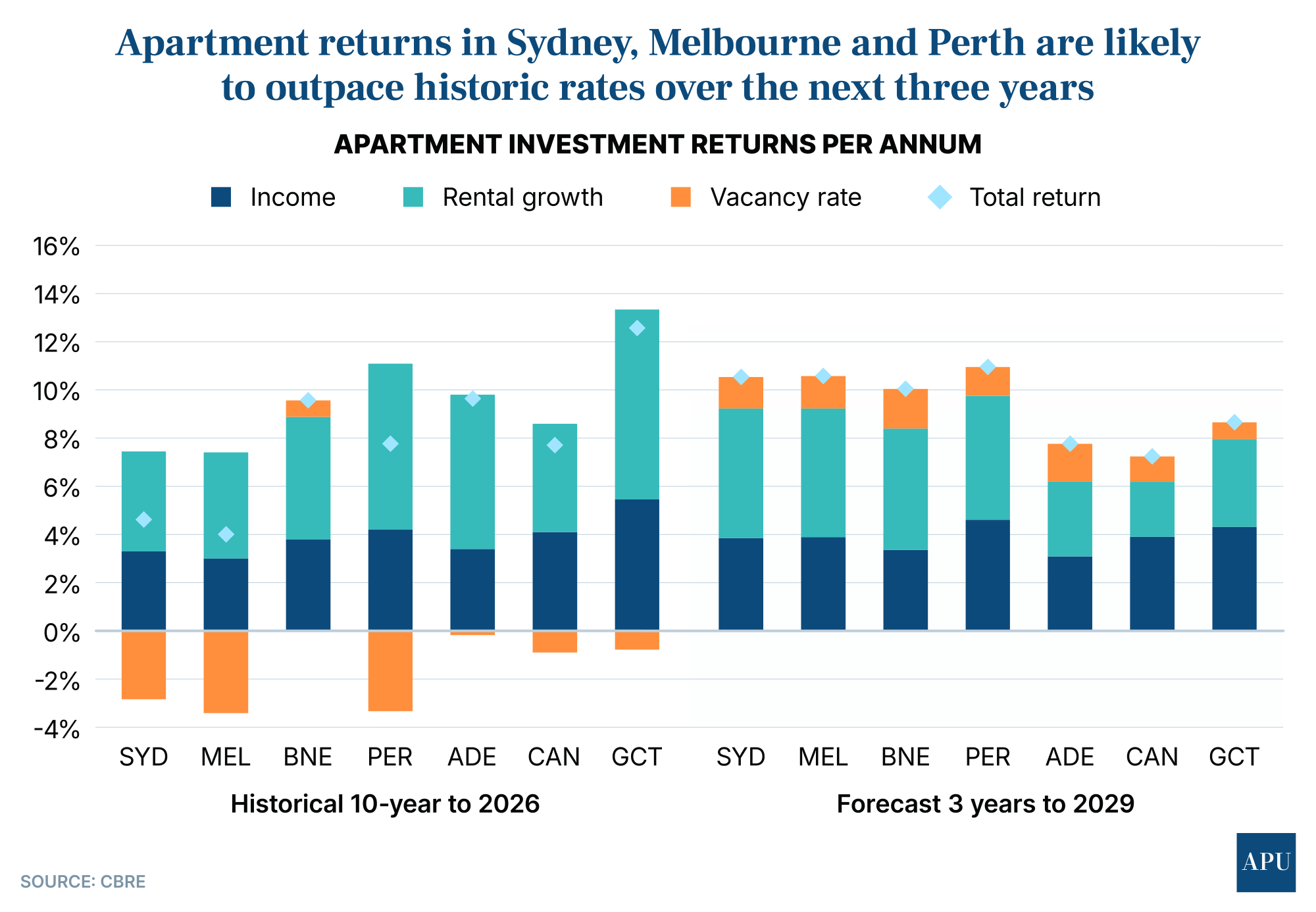
“CBRE estimate that investment returns for apartments in Sydney, Melbourne and Perth are likely to outpace historic rates,” the company says in its latest Apartment vacancy, rent and price outlook.
“We see apartment values as attractive, reflecting the recent impact of changes to negative gearing, capital gains tax and high/near-peak interest rates. Falling supply is also likely to see acceleration of rent growth.”
CBRE’s optimistic outlook is based largely on a widening imbalance between the number of apartments Australia is expected to build and the number of homes the country’s growing population will require.
CBRE forecasts apartment construction will average about 55,000 dwellings a year between 2026 and 2031.
But it estimates population growth requires around 75,000 new apartments annually just to prevent vacancy rates falling further.
That leaves an annual supply gap of roughly 20,000 apartments.
The mismatch is particularly stark in Australia’s largest cities.
Sydney is expected to deliver an average of around 11,000 apartments a year through to 2031, against total annual housing demand of around 27,000 dwellings.
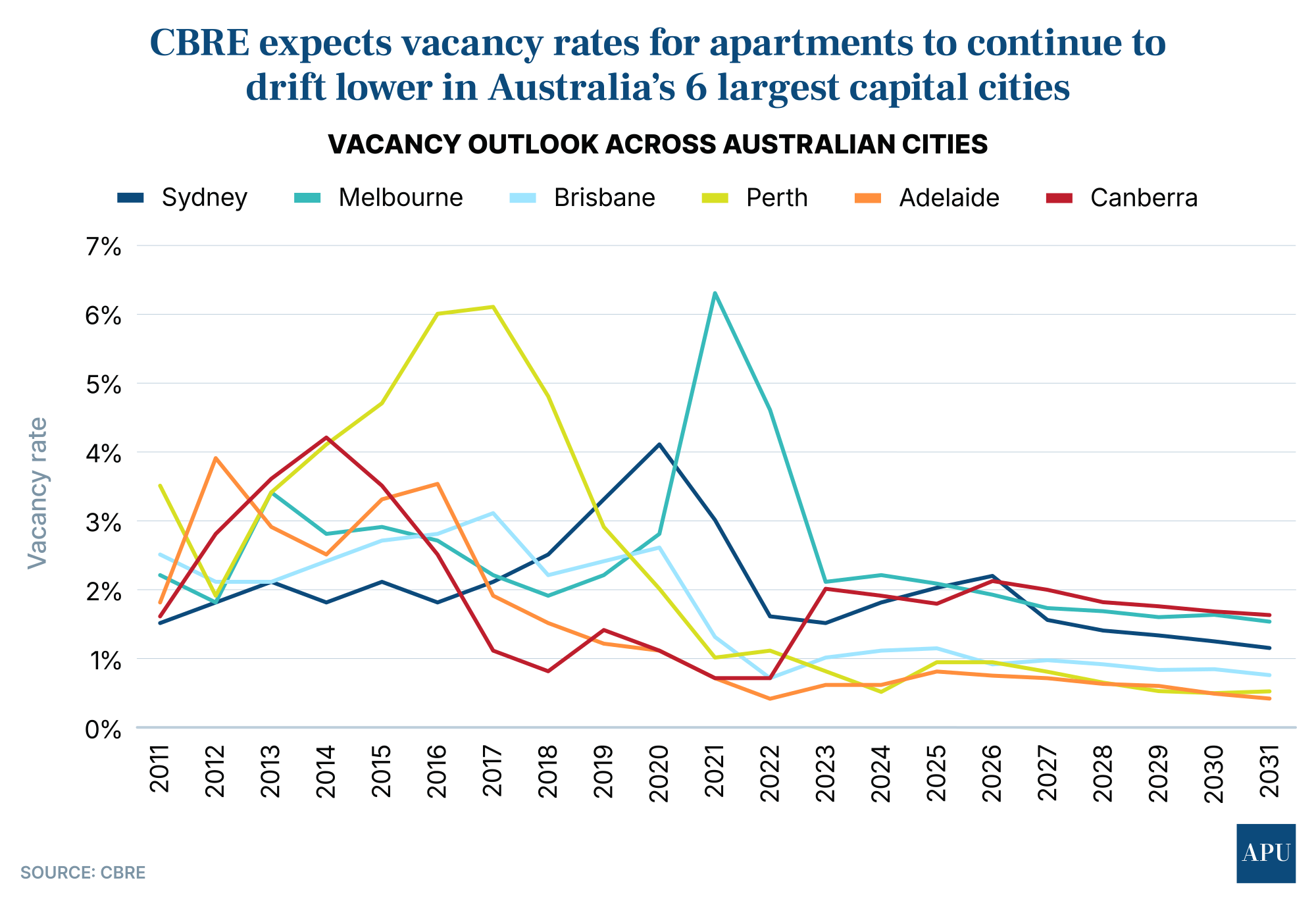
As a result, CBRE expects Sydney’s apartment vacancy rate to fall to just 1.1%.
Melbourne apartment construction is forecast to average only 7,500 dwellings a year, while total housing demand is expected to average around 41,000 homes annually.
Its city-wide vacancy rate is forecast to fall from 1.9% to 1.5%.
In Brisbane’s already tight apartment market, CBRE expects just 4,900 new apartments to come online each year between 2026 and 2031, compared with total housing demand of around 13,400 dwellings.
Vacancy is forecast to decline from roughly 1% to just 0.7%.
For investors, that shortage is expected to translate directly into further rental growth.
CBRE forecasts median apartment rents across the 53 precincts it monitors will rise 26% between 2026 and 2031, following an extraordinary 64% increase during the previous decade.
Rent growth is expected to be around 4% this year before accelerating again during 2027 and 2028 as vacancies tighten and landlords face higher property outgoings.
The company says rental markets can become particularly sensitive once vacancy rates fall below about 1.5%.
Around 60% of the capital-city precincts CBRE monitors are already below that level.
By 2027, it expects almost 90% of precincts to have vacancy rates below 1.5%.
“This should provide a backdrop for robust rent growth,” the report says.
By 2031, CBRE forecasts 82% of two-bedroom apartments will rent for more than $800 a week, with 39% exceeding $1,000.
The other major part of CBRE’s investment thesis is the growing disconnect between apartment values and the cost of building them.
Historically, apartment values have risen much faster than construction costs, allowing developers to buy land, build projects and earn an acceptable return.
But that relationship has broken down over the past five years.
Residential construction costs increased 48% between June 2020 and June 2026, while apartment values failed to keep pace.
CBRE estimates the current gap between construction costs and apartment values is around 30% and has widened by another 10% in only the past six months.
That makes many potential projects difficult to develop profitably.
CBRE therefore expects apartment prices to rise sufficiently to make new construction economically viable again.
“In our view, capital values for residential projects will accelerate significantly higher as supply falls until there is a healthy ecosystem for developers,” the report says.
Its national forecast is for apartment prices to rise around 20% by 2030, with CBRE particularly optimistic about Brisbane and Perth, followed by Sydney and Melbourne.
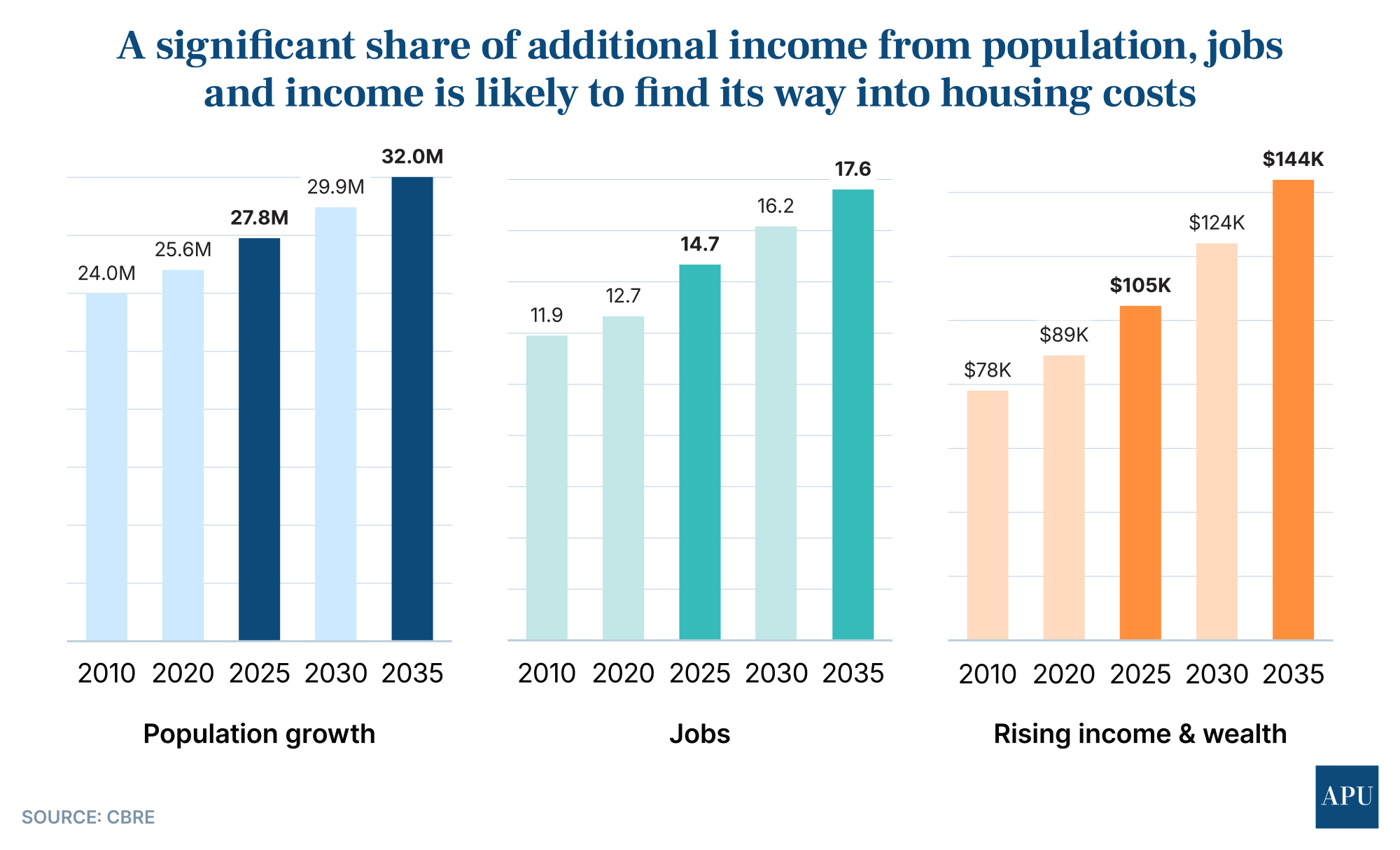
Demand is also expected to receive what CBRE describes as a “triple boost” from population growth, employment and rising incomes.
Australia’s population is forecast to increase from 27.6 million in 2025 to 32 million by 2035, with immigration accounting for around two-thirds of that growth.
Employment is expected to rise to 17.6 million, while average annual income is forecast to increase from around $105,000 today to $144,000 by 2035.
CBRE estimates those trends will inject about $1 trillion in additional household income into the economy over the next decade, compared with $620 billion during the previous 10 years.
It says a significant share of that additional income is likely to find its way into housing costs, either as rents or mortgage repayments.
A weaker market today could be the opportunity
Perhaps the most interesting aspect of the report for investors is that CBRE’s bullish longer-term outlook comes at a time when immediate market conditions remain subdued.
Its third-quarter 2026 survey found 56% of residential valuers described demand in their local markets as soft or very limited, with negative gearing and CGT changes and the prospect of higher interest rates weighing heavily on sentiment.
In other words, the markets CBRE expects to perform strongly later in the decade are not currently booming.
That potentially creates a window in which buyers face less competition before the supply shortage becomes more apparent in rents and prices.
CBRE expects apartment values to begin accelerating from 2027 as households adjust to higher incomes, new supply remains limited and another source of demand arrives, with migrants who moved to Australia during the post-pandemic migration surge beginning to look for homes to buy.
For investors prepared to look beyond today’s softer market conditions, CBRE believes Sydney, Melbourne and Perth in particular could deliver returns that outperform their historical averages.











.jpg?width=1920&height=1080&name=WTF%20Is%20Happening%20To%20The%20Housing%20Market!%20$500%20Billion%20Wiped%20Out%20As%20Prices%20Fall%20Faster%20Every%20Month%20Scott%20Kuru%20YPU%20027%20(1).jpg)
%20Scott%20Kuru%20YPU%20025.jpg?width=1920&height=1080&name=This%20Is%20Worse%20Than%20A%20Recession%20RBA%20Admits%20Australias%20Wage%20Collapse%20Cant%20Be%20Stopped%20(Prepare%20Now)%20Scott%20Kuru%20YPU%20025.jpg)
























.jpg?width=1920&height=1080&name=EXPOSED%20How%20The%20Govt%20Let%20These%20Oil%20Giants%20Get%20Away%20With%20Paying%20Zero%20Tax%20For%20Aussie%20Gas%20Scott%20Kuru%20DPU%20256%20(1).jpg)






%20Scott%20Kuru%20DPU%20248.jpg?width=1920&height=1080&name=Major%20Banks%20CAUGHT%20Preparing%20For%20Australia%E2%80%99s%20Biggest%20Housing%20Crash%20(Defaults%20%26%20Bankruptcies%20Coming)%20Scott%20Kuru%20DPU%20248.jpg)
%20Scott%20Kuru%20DPU%20247.jpg?width=1920&height=1080&name=This%20Is%20How%20Australia%20Gets%20Pushed%20Into%20the%20Next%20Big%20Reset%20(Trust%20Collapse%20Has%20Officially%20Begun)%20Scott%20Kuru%20DPU%20247.jpg)







%20Scott%20Kuru%20DPU%20239.jpg?width=1920&height=1080&name=URGENT%20Life%20In%20Australia%20Has%20Become%20Impossible%20For%20Millions%20Of%20Aussies%20(It%E2%80%99s%20About%20To%20Get%20Worse)%20Scott%20Kuru%20DPU%20239.jpg)











%20Scott%20Kuru%20DPU%20227.jpg?width=1920&height=1080&name=URGENT%20ALERT%20Australia%E2%80%99s%20Property%20Market%20Is%20Sliding%20Into%20Something%20Much%20Bigger%20(Prepare%20Now)%20Scott%20Kuru%20DPU%20227.jpg)