









.png?width=292&height=292&name=Copy%20Link%20(1).png)

 SIGN UP FOR FREE NEWSLETTER
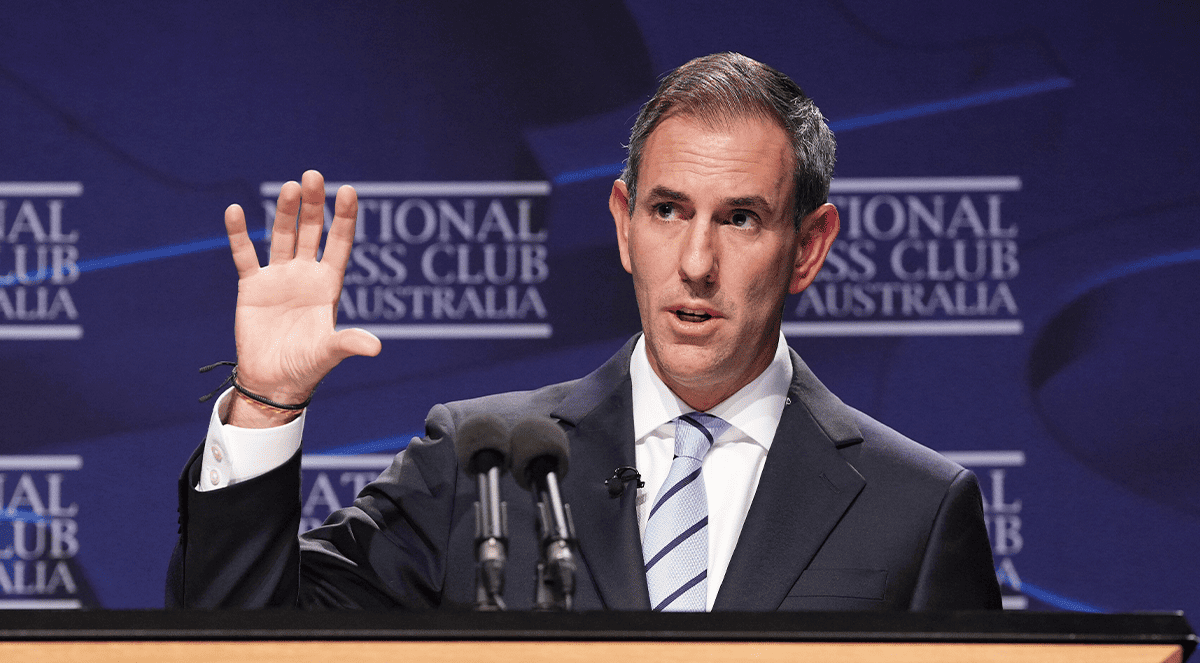
Image by Matt Roberts/ABC News
Treasurer Jim Chalmers has played down fears of a major property market slump, as new modelling shows even a 20% price fall in some Australian capitals would erase only a fraction of the extraordinary gains accumulated during the recent housing boom.
The housing market has weakened following three RBA interest rate hikes this year and in the wake of the May Federal Budget, which ushered in major property tax changes.
Both owner-occupier and investor activity have fallen, with national home values dropping 0.7% in July, the biggest monthly decline since December 2022.
But new modelling from data analytics firm Cotality shows the scale of the previous boom means substantial price falls would still leave homeowners in several cities sitting on sizeable gains.
The details
Mr Chalmers has rejected suggestions Australia is heading for a dramatic property price correction.
“The Treasury assumption is that prices will continue to grow… but a bit more slowly,” he told ABC Radio this week.
“Housing is a long-term investment.
“We expect house prices to continue to grow.”
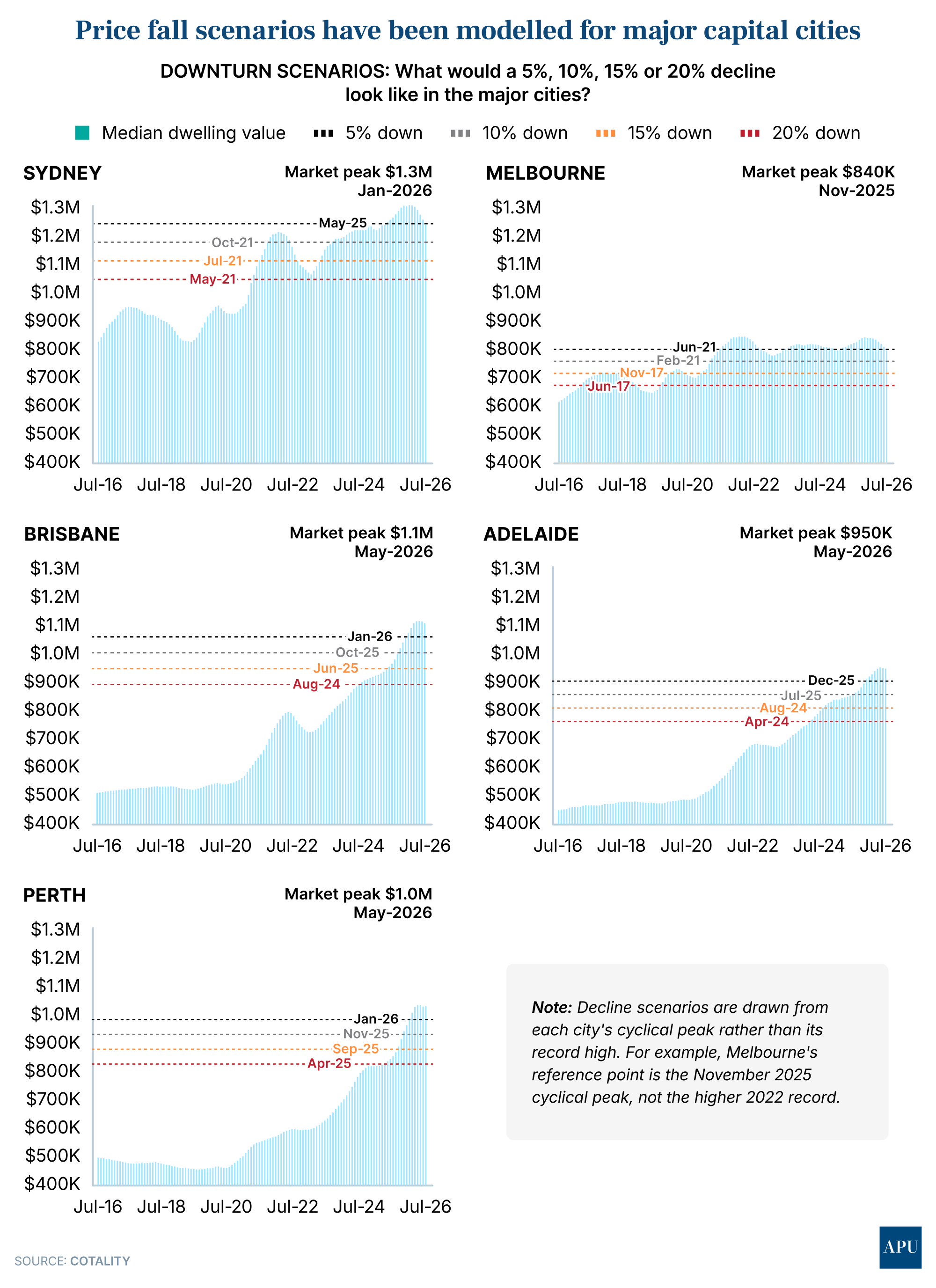
The Treasurer’s confident prediction comes as Cotality’s August Housing Chart Pack models what declines of 5%, 10%, 15% and 20% from peak dwelling values would mean across Australia’s major capitals.
“There’s been plenty of discussion about how far housing values could fall, but the same percentage decline doesn’t have the same impact everywhere,” Cotality Head of Research Gerard Burg says.
“Markets such as Perth, Brisbane and Adelaide recorded exceptional growth over the past five years, giving them a more significant buffer against declines than cities where values have been comparatively flat.”
Perth provides the most striking example.
Even if dwelling values fell 20% from their May 2026 peak, Cotality calculates the median in the WA capital would merely return to around its April 2025 level.
Brisbane could experience the same 20% decline and values would still only retreat to around August 2024.
And a 20% fall in Adelaide would take its housing market back to approximately April 2024.
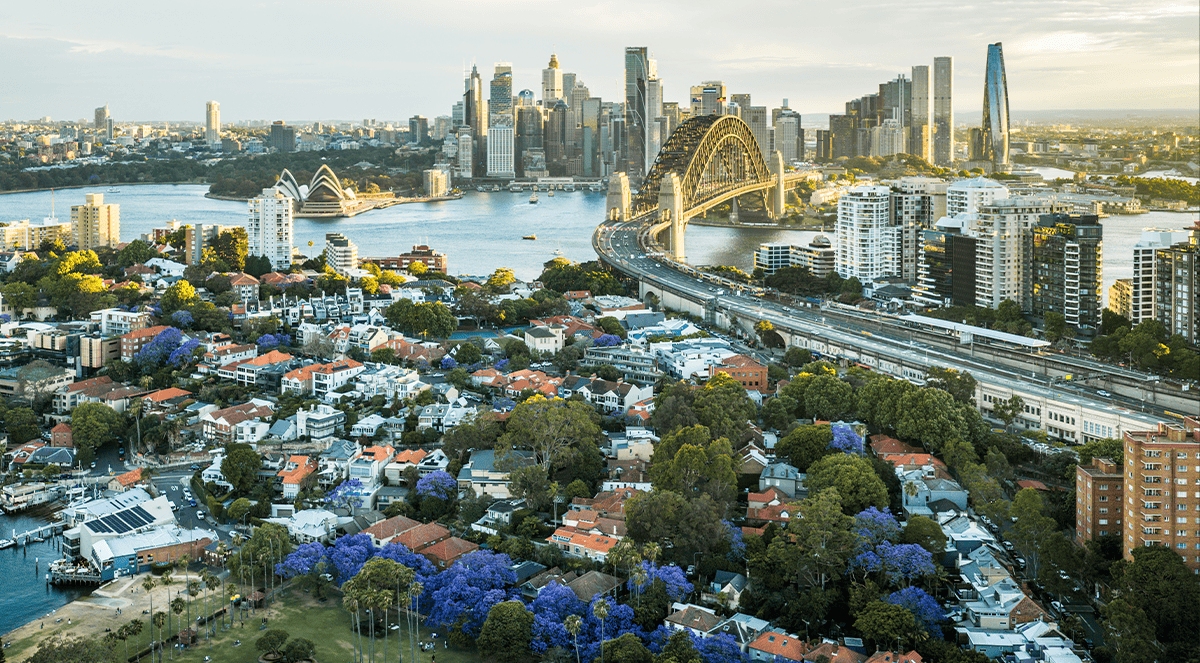
Sydney has already fallen more than 5% from its peak, but even a 20% peak-to-trough downturn would only return values to around May 2021.
That highlights just how much equity was accumulated during the pandemic and post-pandemic property boom.
However, the picture is markedly different in Melbourne.
After years of comparatively subdued growth, Cotality says Melbourne has the smallest buffer of any major capital.
A fall of slightly more than 10% from its November 2025 peak would take values back to pre-pandemic levels.
“Melbourne’s home values have recorded very little growth over the past five years, meaning a decline beyond 10% would return values to pre-pandemic levels,” Mr Burg says.
Cotality says national values fell 0.7% in July, with Brisbane down 0.6% and Adelaide easing 0.2%.
National sales volumes were also 0.8% lower over the year, while capital-city sales fell 3.5%.
Homes took a median of 35 days to sell over the three months to July, vendor discounts widened and auction clearance rates fell from around 66% in February to the low 40% range by late July, although they have staged a recovery in recent weeks.

Investor demand has also weakened since the May Budget changes to negative gearing and capital gains tax.
Commonwealth Bank has reported investor loan applications down 28% since May, while Westpac has recorded a decline of around 30%.
But Cotality says the Budget tax changes are only one of several factors weighing on housing.
Affordability and borrowing constraints were already emerging before three RBA interest rate increases this year added to mortgage repayments.
Cost-of-living pressures and weaker consumer confidence have further reduced buyer demand.
Mr Chalmers has also resisted attributing recent price weakness solely to the Government’s tax changes.
“We have seen a softening in house prices in recent months, even before the Budget, and that’s a reflection of a whole range of factors, including changes in interest rates, softness in the broader global and domestic economies, as well as any other influences from the Budget and the like,” he said.
He’s also stressed the Government is not seeking a particular fall in prices.
“We’re not targeting a particular price outcome, a particular percentage or dollar figure when it comes to housing,” Mr Chalmers said.
“Our job is to make sure that there are more affordable options for first-home buyers to get a toe-hold in the market.”
Cotality cautions that its home price fall scenario modelling is designed to provide context, NOT predict where prices will bottom.
“Although housing values are falling across more cities, underlying supply and demand conditions remain quite different,” Mr Burg says.
“Markets that experienced the strongest growth over recent years are entering this downturn from a much stronger position.”




.jpg?width=1920&height=1080&name=WTF%20Is%20Happening%20To%20The%20Housing%20Market!%20$500%20Billion%20Wiped%20Out%20As%20Prices%20Fall%20Faster%20Every%20Month%20Scott%20Kuru%20YPU%20027%20(1).jpg)
%20Scott%20Kuru%20YPU%20025.jpg?width=1920&height=1080&name=This%20Is%20Worse%20Than%20A%20Recession%20RBA%20Admits%20Australias%20Wage%20Collapse%20Cant%20Be%20Stopped%20(Prepare%20Now)%20Scott%20Kuru%20YPU%20025.jpg)





















.jpg?width=1920&height=1080&name=EXPOSED%20How%20The%20Govt%20Let%20These%20Oil%20Giants%20Get%20Away%20With%20Paying%20Zero%20Tax%20For%20Aussie%20Gas%20Scott%20Kuru%20DPU%20256%20(1).jpg)





%20Scott%20Kuru%20DPU%20248.jpg?width=1920&height=1080&name=Major%20Banks%20CAUGHT%20Preparing%20For%20Australia%E2%80%99s%20Biggest%20Housing%20Crash%20(Defaults%20%26%20Bankruptcies%20Coming)%20Scott%20Kuru%20DPU%20248.jpg)
%20Scott%20Kuru%20DPU%20247.jpg?width=1920&height=1080&name=This%20Is%20How%20Australia%20Gets%20Pushed%20Into%20the%20Next%20Big%20Reset%20(Trust%20Collapse%20Has%20Officially%20Begun)%20Scott%20Kuru%20DPU%20247.jpg)







%20Scott%20Kuru%20DPU%20239.jpg?width=1920&height=1080&name=URGENT%20Life%20In%20Australia%20Has%20Become%20Impossible%20For%20Millions%20Of%20Aussies%20(It%E2%80%99s%20About%20To%20Get%20Worse)%20Scott%20Kuru%20DPU%20239.jpg)










%20Scott%20Kuru%20DPU%20227.jpg?width=1920&height=1080&name=URGENT%20ALERT%20Australia%E2%80%99s%20Property%20Market%20Is%20Sliding%20Into%20Something%20Much%20Bigger%20(Prepare%20Now)%20Scott%20Kuru%20DPU%20227.jpg)





%20Scott%20Kuru%20DPU%20221.jpg?width=1920&height=1080&name=The%20AI%20Situation%20in%20Australia%20Just%20Hit%20a%20Point%20of%20No%20Return...%20(Major%20Bank%20Proves%20It)%20Scott%20Kuru%20DPU%20221.jpg)