









.png?width=292&height=292&name=Copy%20Link%20(1).png)

 SIGN UP FOR FREE NEWSLETTER
Image from Bloomberg
Australia’s rental property market appears set to remain favourable for investors over the next few years, with Commonwealth Bank forecasting continued rent growth and a sizeable improvement in rental yields.
A new analysis by CBA Senior Economist Trent Saunders says Australia’s underlying housing shortage remains the main force driving the rental market, with the national vacancy rate still sitting at around 1.8%, well below its pre-pandemic average.
Annual advertised rent growth is running at about 5.7%, while the bank expects rental yields to rise from around 3.75% in mid-2026 to about 4.5% by late 2027.
The combination of rising rents and softer dwelling prices could improve the returns available to property investors, even as recent tax changes make established investment properties less attractive for some buyers.
The details
CBA’s central argument is that Australia simply still does not have enough rental housing relative to demand.
While population growth is slowing and housing completions should eventually increase, the bank says years of accumulated undersupply will take time to unwind.
“The underlying housing shortage remains the main driver,” Mr Saunders says.
Advertised rents have accelerated again over the past year.
CBA estimates national advertised rents were 5.7% higher in August 2026 than a year earlier, up from annual growth of just 2.7% in mid-2025.
The increases vary considerably between cities.
Annual advertised rent growth was running at 4.8% in Sydney, 5.0% in Melbourne, 6.4% in Brisbane, 8.0% in Perth, 5.8% in Adelaide, 7.8% in Hobart and an extraordinary 11.4% in Darwin.
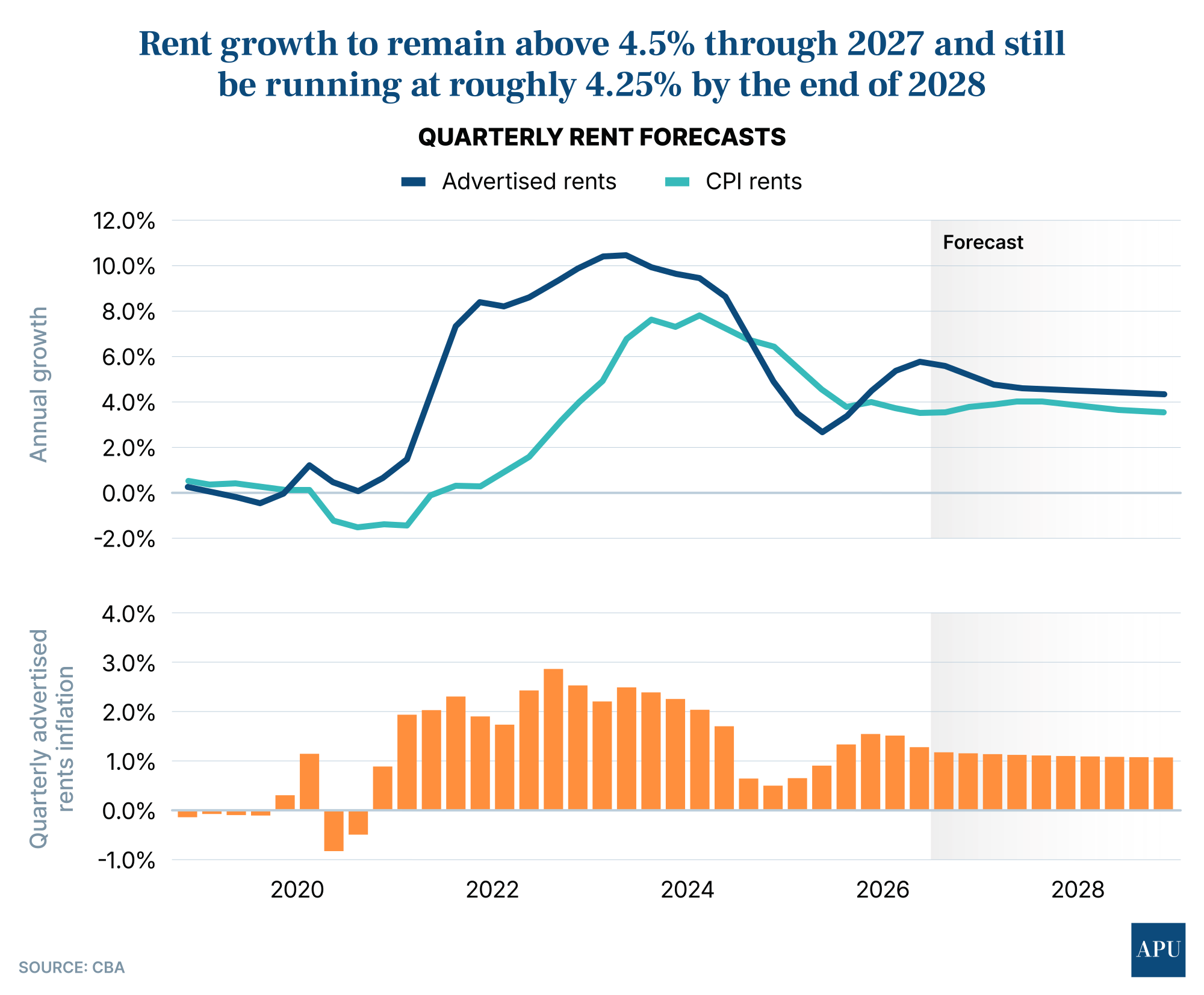
Advertised rent growth is expected to remain above 4.5% through 2027 and still be running at roughly 4.25% by the end of 2028.
That forecast means annual rental growth looks set to stay well above its pre-pandemic pace for several more years.
CBA says the key reason rent growth will remain strong is the lack of available rental homes.
Australia’s national vacancy rate is currently around 1.8%, compared with an average of about 2.8% between 2015 and 2019.
The bank expects vacancy rates to gradually rise towards 2% by the end of 2027, but that would still leave the market considerably tighter than it was before COVID.
The relationship between housing supply and rents is particularly clear in the states where population growth has outpaced new dwelling construction.
Western Australia stands out most sharply, with advertised rents rising by almost 10% a year on average since late 2019.
Queensland and South Australia have experienced a similar, though less extreme, imbalance between population growth and housing supply.
Victoria, Tasmania and NSW have generally seen stronger dwelling-stock growth relative to population and therefore weaker rent growth.
Higher yields
For investors, however, the most interesting CBA forecast may be what happens to rental yields.
The bank expects much of the adjustment to higher investor costs to occur through lower dwelling prices rather than dramatically higher rents.
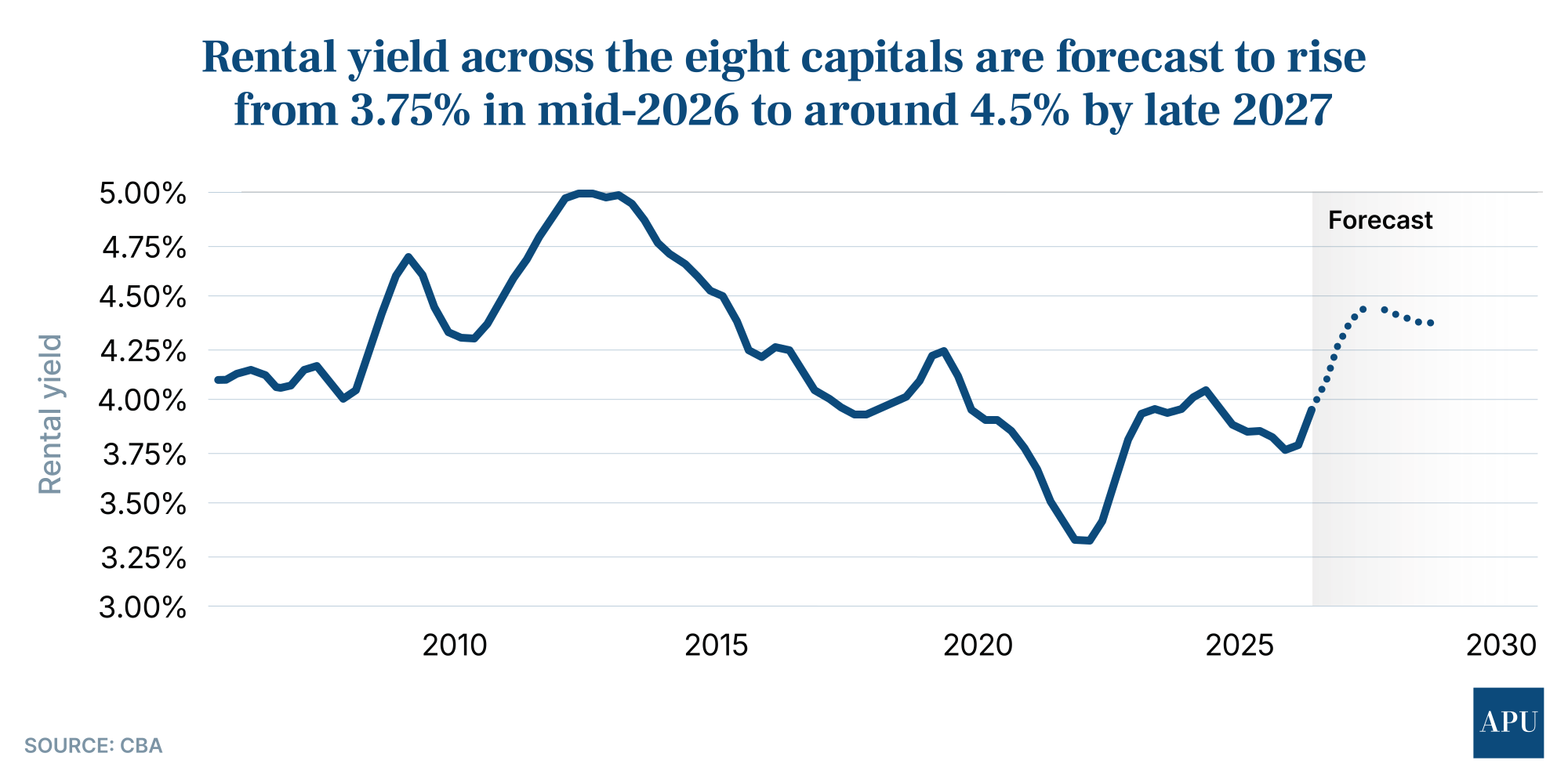
That matters because if property prices fall or remain relatively flat while rents continue to rise, rental yields improve.
CBA forecasts the rental yield across the eight capital cities will rise from around 3.75% in mid-2026 to approximately 4.5% by late 2027.
It argues those higher yields should “progressively help stabilise investor demand”.
For investors, lower purchase prices combined with elevated rents improve rental yields and reduce the cost of entering the market.
CBA also expects investor demand to increasingly shift towards property types and locations where yields are already higher, including apartments and dwellings in outer suburban and regional areas.
The take-out
CBA’s analysis does not argue that rental property will suddenly become an easy path to positive cash flow.
Higher mortgage rates, tax changes and other ownership costs will continue to weigh on returns, and CBA says the forecast improvement in yields will not fully compensate every prospective investor.
But the underlying fundamentals remain unusually supportive.
Australia still has too few rental homes.
Vacancy rates remain well below historical norms.
Rents are expected to keep rising at relatively strong rates for several years.
And if dwelling prices remain under pressure while rental income continues growing, investors entering the market could increasingly benefit from better yields.












.jpg?width=1920&height=1080&name=WTF%20Is%20Happening%20To%20The%20Housing%20Market!%20$500%20Billion%20Wiped%20Out%20As%20Prices%20Fall%20Faster%20Every%20Month%20Scott%20Kuru%20YPU%20027%20(1).jpg)
%20Scott%20Kuru%20YPU%20025.jpg?width=1920&height=1080&name=This%20Is%20Worse%20Than%20A%20Recession%20RBA%20Admits%20Australias%20Wage%20Collapse%20Cant%20Be%20Stopped%20(Prepare%20Now)%20Scott%20Kuru%20YPU%20025.jpg)























.jpg?width=1920&height=1080&name=EXPOSED%20How%20The%20Govt%20Let%20These%20Oil%20Giants%20Get%20Away%20With%20Paying%20Zero%20Tax%20For%20Aussie%20Gas%20Scott%20Kuru%20DPU%20256%20(1).jpg)







%20Scott%20Kuru%20DPU%20248.jpg?width=1920&height=1080&name=Major%20Banks%20CAUGHT%20Preparing%20For%20Australia%E2%80%99s%20Biggest%20Housing%20Crash%20(Defaults%20%26%20Bankruptcies%20Coming)%20Scott%20Kuru%20DPU%20248.jpg)
%20Scott%20Kuru%20DPU%20247.jpg?width=1920&height=1080&name=This%20Is%20How%20Australia%20Gets%20Pushed%20Into%20the%20Next%20Big%20Reset%20(Trust%20Collapse%20Has%20Officially%20Begun)%20Scott%20Kuru%20DPU%20247.jpg)







%20Scott%20Kuru%20DPU%20239.jpg?width=1920&height=1080&name=URGENT%20Life%20In%20Australia%20Has%20Become%20Impossible%20For%20Millions%20Of%20Aussies%20(It%E2%80%99s%20About%20To%20Get%20Worse)%20Scott%20Kuru%20DPU%20239.jpg)









%20Scott%20Kuru%20DPU%20227.jpg?width=1920&height=1080&name=URGENT%20ALERT%20Australia%E2%80%99s%20Property%20Market%20Is%20Sliding%20Into%20Something%20Much%20Bigger%20(Prepare%20Now)%20Scott%20Kuru%20DPU%20227.jpg)