









.png?width=292&height=292&name=Copy%20Link%20(1).png)

 SIGN UP FOR FREE NEWSLETTER
Despite the prospect of higher interest rates and predictions of further home price falls, one of the world’s leading real estate companies has unveiled a remarkably upbeat forecast for apartments in Australian cities.
CBRE says it expects residential capital values to be 20% higher by the end of the current decade.
Contributing to that robust price growth is a large cohort of recent migrants expected to move into property ownership, particularly in well-located city apartments.
However, the company says this desire to “put down roots” will coincide with a sharp fall in new apartment supply towards the end of the decade, driven by high construction costs and difficulties developers are facing in funding new projects.
That combination of strong demand and constrained supply is likely to support prices and keep the rental market tight.
The details
In a recent briefing note, CBRE’s Head of Research, Pacific, Sameer Chopra and its Head of Australian Residential Research, Craig Godber, point to a large cohort of future home buyers already living in Australia.
“Regardless of the current debate on migration settings, this cohort of potential buyers is already in the system,” they say.
The researchers refer to the real estate industry “rule of thumb”, which finds that new migrants typically buy their first home in Australia after spending around seven years living and working in their city of arrival.
They say this is around the time migrants often report that “Australia feels like home”, that they “feel settled in the community”, or when they obtain citizenship.
Chopra and Godber say this phenomenon is particularly interesting at the moment, as Australia has just experienced an outsized post-pandemic surge in net overseas migration between 2022 and 2025.
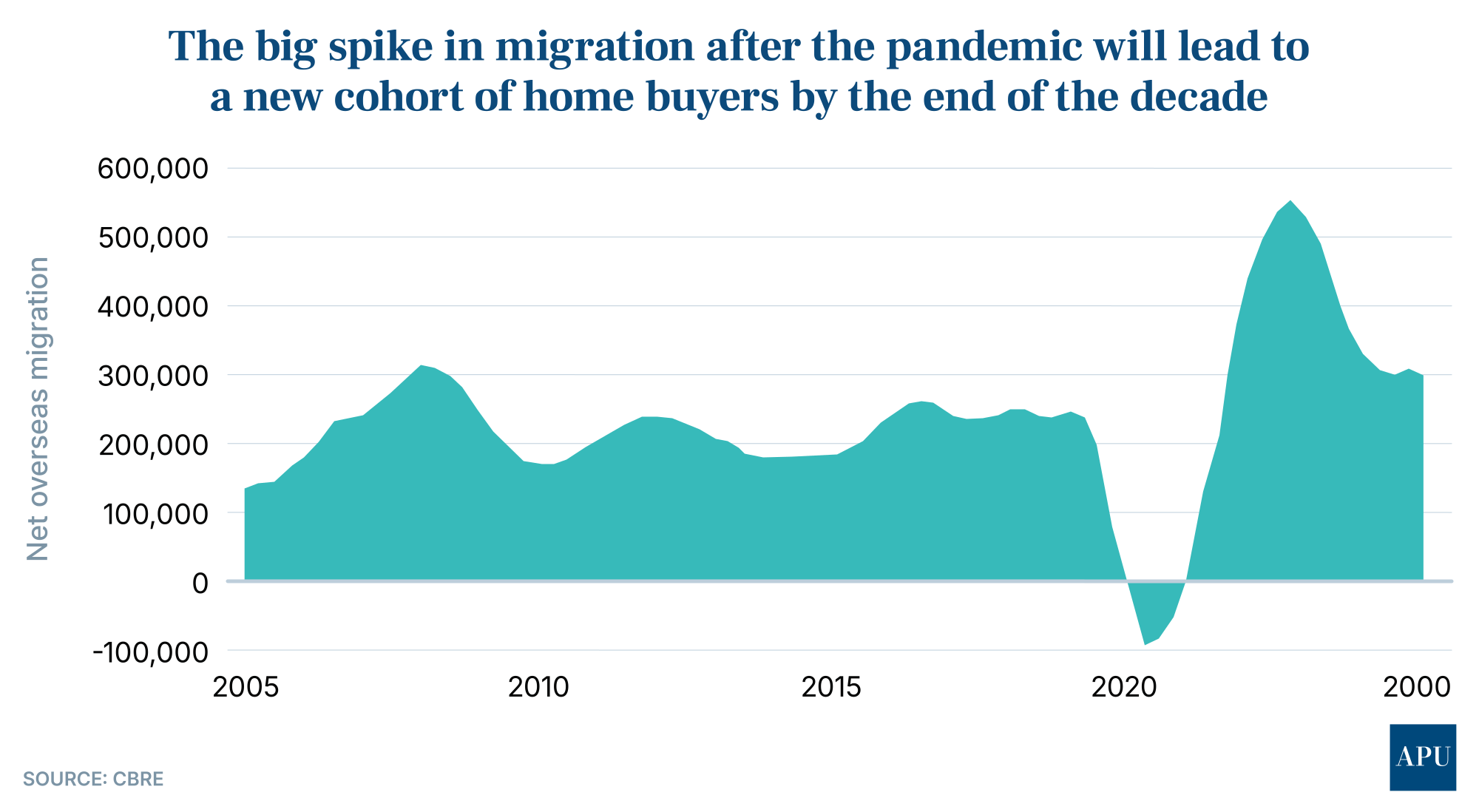
“We estimate that during this period, migration was ~720,000 above the 2010-2019 levels, and particularly over 2022/23,” they say.
Given that surge in net overseas migration, CBRE says it’s likely that towards the end of the decade, the so-called “Class of 2022-25” could create an additional 200,000 home buyers.
“What we’re saying is that there could be a sizable wave of buying intention towards the end of the decade when migrants that arrived in 2022-25 decide to plant roots,” Chopra and Godber say.

“For context, typically 500,000-550,000 homes transact per annum, with ~300,000 being owner occupiers.
“An additional 200,000 buyers emerging over the 2028-2030 timeframe shows the magnitude of expected demand,” they say.
However, the emergence of this new buyer cohort will come when apartment supply hits a challenging time.
“We expect apartment supply will be just 53,500 pa over 2028-30,” they say.
That’s 33% below the 10-year historical average and 14% lower than expectations just a year ago.
“At an individual project level, supply cuts/deferrals are due to higher construction costs, higher interest rates, negative gearing and well publicised issues in certain parts of the developer/lender sector,” Chopra and Godber say.
“Currently, there's a dearth of private investors in the apartment market.
“Later this decade, we expect a tidal wave of buying from recent Australians, just as supply falls further back.”
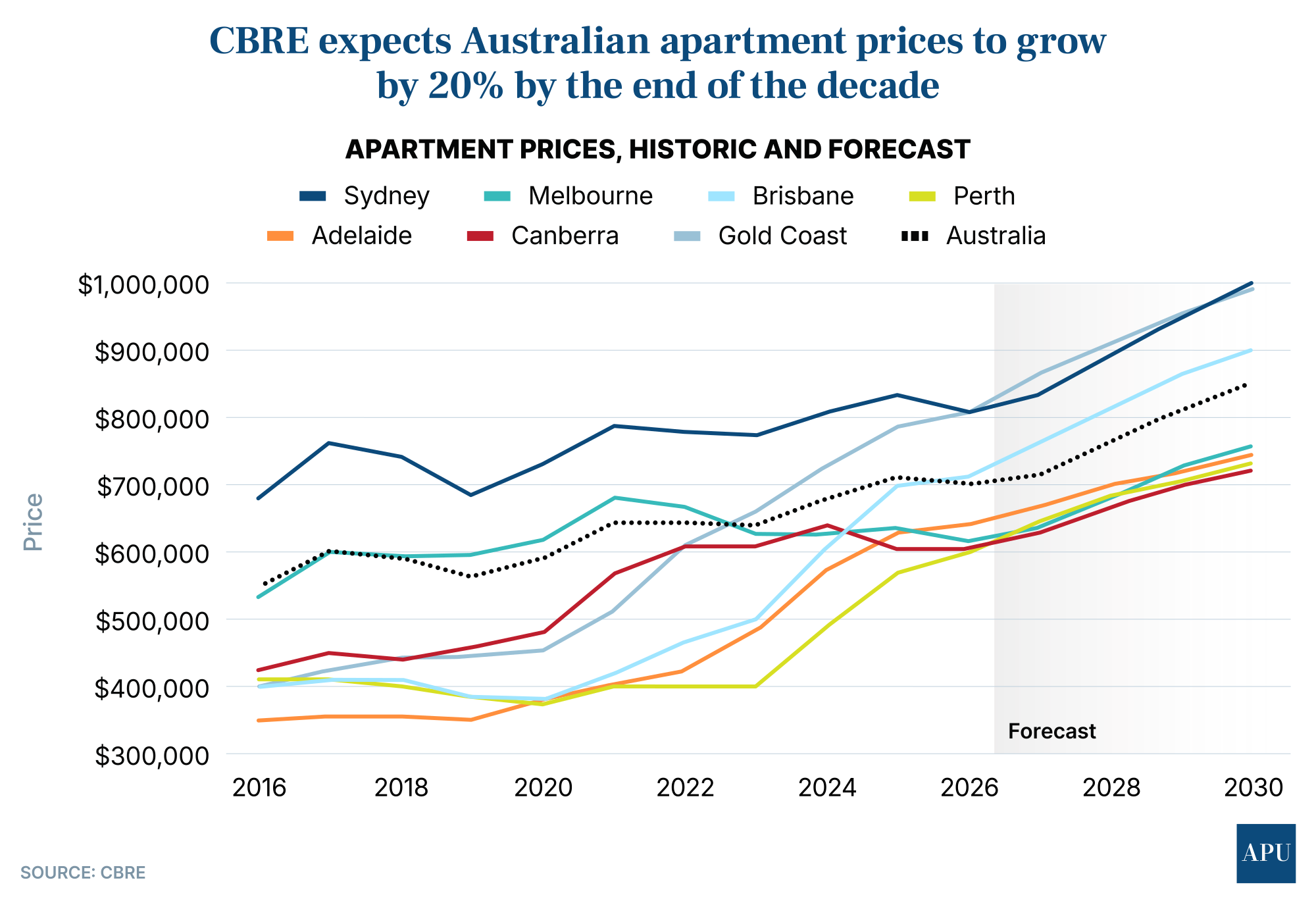
As a result, the CBRE analysts say they are optimistic about the outlook for apartment values.
“Our current forecast is for residential capital values to be 20% higher at the end of the decade,” they say.
However, they say employment growth will be key to a positive outcome.
“What could make us more bullish or more bearish on residential values is the outcome for jobs growth over the next 3-5 years,” they say.












.jpg?width=1920&height=1080&name=WTF%20Is%20Happening%20To%20The%20Housing%20Market!%20$500%20Billion%20Wiped%20Out%20As%20Prices%20Fall%20Faster%20Every%20Month%20Scott%20Kuru%20YPU%20027%20(1).jpg)

%20Scott%20Kuru%20YPU%20025.jpg?width=1920&height=1080&name=This%20Is%20Worse%20Than%20A%20Recession%20RBA%20Admits%20Australias%20Wage%20Collapse%20Cant%20Be%20Stopped%20(Prepare%20Now)%20Scott%20Kuru%20YPU%20025.jpg)





























.jpg?width=1920&height=1080&name=EXPOSED%20How%20The%20Govt%20Let%20These%20Oil%20Giants%20Get%20Away%20With%20Paying%20Zero%20Tax%20For%20Aussie%20Gas%20Scott%20Kuru%20DPU%20256%20(1).jpg)







%20Scott%20Kuru%20DPU%20248.jpg?width=1920&height=1080&name=Major%20Banks%20CAUGHT%20Preparing%20For%20Australia%E2%80%99s%20Biggest%20Housing%20Crash%20(Defaults%20%26%20Bankruptcies%20Coming)%20Scott%20Kuru%20DPU%20248.jpg)
%20Scott%20Kuru%20DPU%20247.jpg?width=1920&height=1080&name=This%20Is%20How%20Australia%20Gets%20Pushed%20Into%20the%20Next%20Big%20Reset%20(Trust%20Collapse%20Has%20Officially%20Begun)%20Scott%20Kuru%20DPU%20247.jpg)







%20Scott%20Kuru%20DPU%20239.jpg?width=1920&height=1080&name=URGENT%20Life%20In%20Australia%20Has%20Become%20Impossible%20For%20Millions%20Of%20Aussies%20(It%E2%80%99s%20About%20To%20Get%20Worse)%20Scott%20Kuru%20DPU%20239.jpg)