









.png?width=292&height=292&name=Copy%20Link%20(1).png)

 SIGN UP FOR FREE NEWSLETTER
Australia’s second-largest bank has downgraded its outlook for the housing market this year, warning higher interest rates are finally starting to bite just as the Albanese Government’s sweeping property tax overhaul threatens to further cool buyer demand.
The new forecasts from Westpac suggest Australia’s property boom is entering a softer phase, with Sydney and Melbourne expected to remain under significant pressure while growth slows nationally.
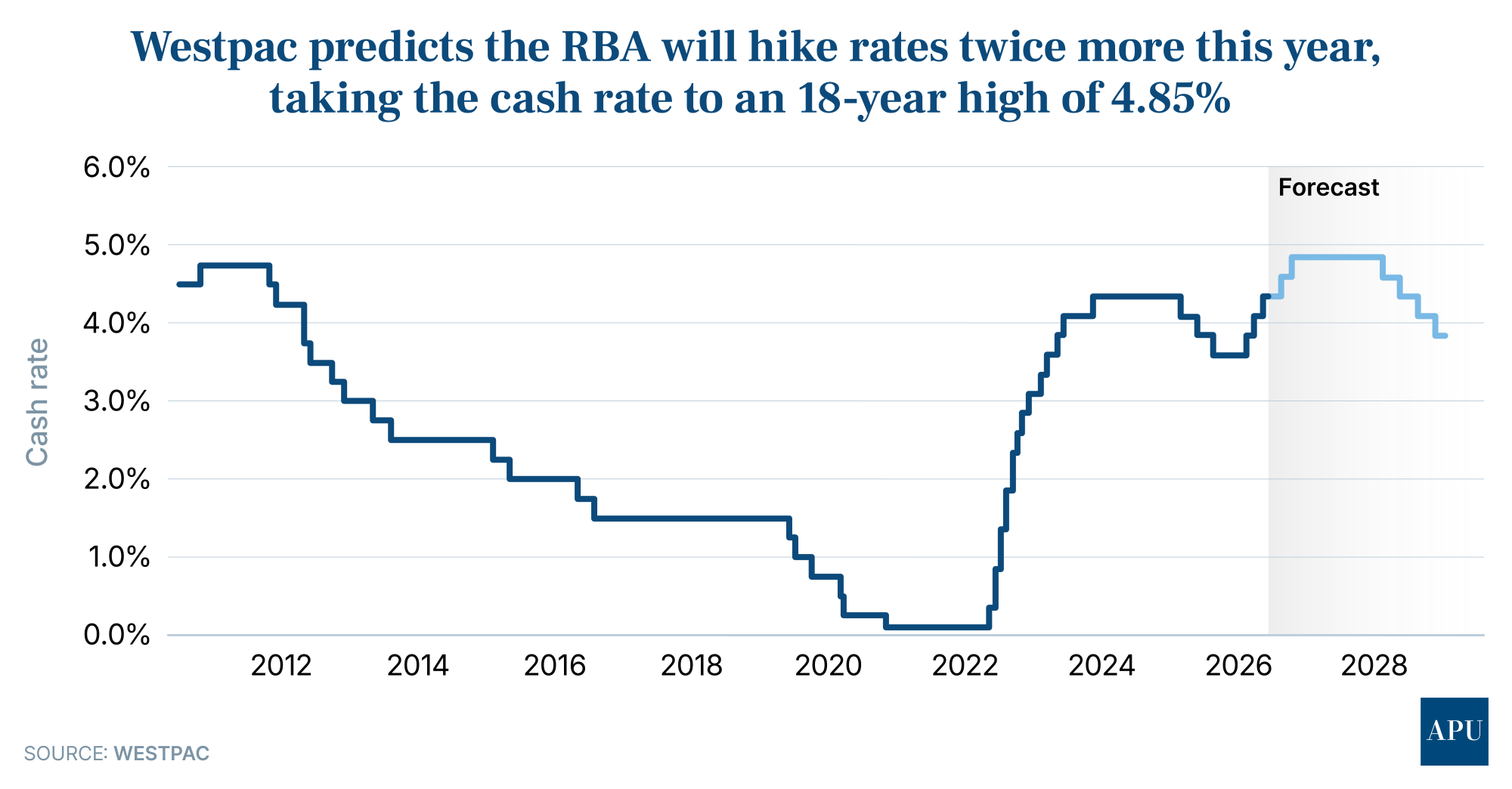
But the updated forecasts also show home price growth picking up again in 2027, as the market adjusts to the new tax rules and despite higher interest rates, with Westpac not expecting the Reserve Bank to lower the cash rate from an expected 4.85% until at least 2028.
The details
Westpac says the tax changes announced in the Federal budget on May the 12th, 2026 are expected to significantly affect Australia’s housing markets.
In an economic update, the bank’s Matthew Hassan, Luci Ellis and Mantas Vanagas say the changes to capital gains tax and negative gearing remove the “relative attractiveness of new investment in housing.”
However, the economists point out that the provisions which allow for ‘grandfathering’ of the assets of existing property investors will limit short term impacts and may actually lead to considerable refinancing.
“The grandfathering of changes strongly encourages current holders of leveraged investments that are negatively geared to retain these assets in a negatively geared way for as long as possible,” they observe.
“As such, current holders are likely to both retain these assets and seek to maximise tax benefits, e.g. by carrying higher levels of debt against the asset.”
Crucially, the Westpac team says that “the exemption for new investments in newly built dwellings will make this a more attractive option for investors.”
The bank says, when combined with recent and expected interest rate increases, the changes should see a 34% fall in new property investor activity in the near-term, “with the mix skewing towards newly built dwellings.”
Currently, 18% of new investor finance approvals are for the construction or purchase of newly built dwellings.
Westpac now expects that “share potentially rising towards 40–50% of new investor loans.”
Overall, the bank expects total housing market turnover to decline by 20%, while home price growth is now expected to ease across the major capital cities for the rest of the year.
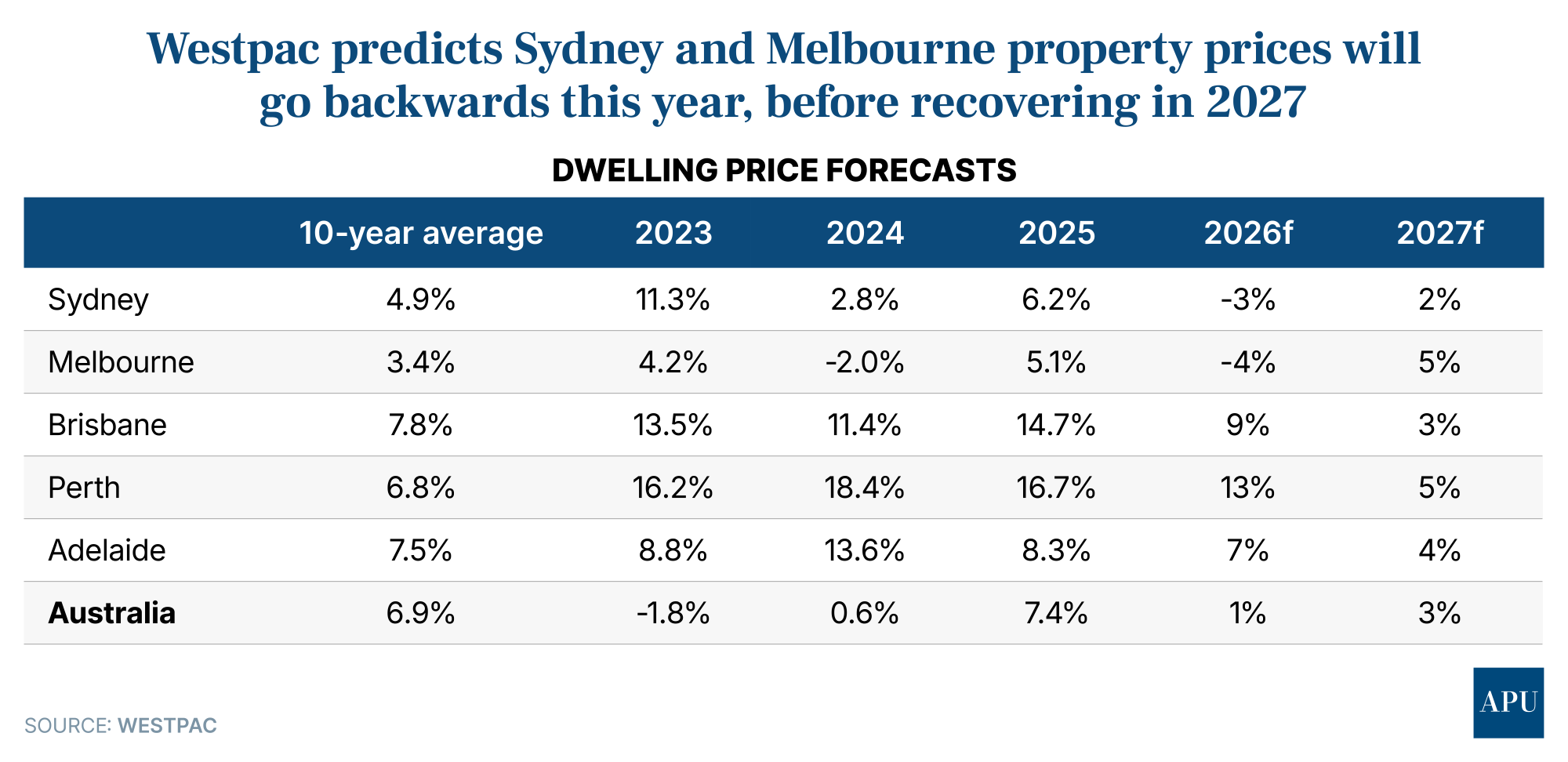
In the two largest property markets of Sydney and Melbourne, Westpac says this will mean home price falls of -3% and -4% respectively, with growth remaining positive but slowing more abruptly in the booming markets of Brisbane (+9%), Perth (+13%) and Adelaide (+7%).
But Westpac’s forecasts only predict a mild downturn, with Sydney and Melbourne recovering in 2027 to post 2% and 5% growth respectively.
And that’s despite the bank predicting official interest rates will rise to 4.85% - the highest cash rate since 2008 - later this year, and stay at that level until 2028.
The bank gives no indication of a major housing downturn, as predicted recently by Morgan Stanley.
The investment bank forecast the budget tax changes could prompt Australian home prices to fall by up to 10%, the most dramatic fall in four decades.
But even with predicted falls this year in Sydney and Melbourne, Westpac says Australian home prices will still eke out 1% growth nationally this year, before ticking up to 3% in 2027.
“Over the medium to longer term, the changes are expected to see more muted price cycles, a small, gradual lift in rental yields, (and) a modest lift in new dwelling construction,” Hassan, Ellis and Vanagas say.
The economists also point out their forecasts have to be seen against the “wider backdrop” of the housing market, which is still characterised by tight supply, low rental vacancy rates and “robust population-driven growth”.
As a result it sees “slightly firmer inflation in rents and home purchase costs”.


“Landlordism”
The Westpac economists also raise the spectre of a shift towards what they term ‘landlordism’ – “where the provision of market rental housing is increasingly by individuals and businesses for whom this is their primary source of income.”
This suggests a move towards property investing more as a “business” where an owner might hold several rental homes in a company structure or as part of a larger portfolio.
While there’s been plenty of focus on the removal of negative gearing for existing property bought after budget night, the Westpac economists indicate this could actually favour larger investors who own numerous properties.
“It will still be possible to negatively gear within a property portfolio, i.e. to offset net rental losses on one property against the rent and capital gains from other rental properties,” they say.
“This implies that owners of multiple rental properties will be able to spread their losses across their whole portfolio, while owners of one or two properties will only be able to carry losses forward.
“Over time, it is possible that ownership of rental properties becomes more concentrated among specialists in this business, whether as individual landlords or corporate and institutional ownership.”
Ironically, this could lead to more rental homes being controlled by a smaller number of wealthy landlords — the exact opposite of what long-time supporters of changes to negative gearing and the CGT discount like the Greens, unions and the welfare sector said they wanted to stop.







.jpg?width=1920&height=1080&name=WTF%20Is%20Happening%20To%20The%20Housing%20Market!%20$500%20Billion%20Wiped%20Out%20As%20Prices%20Fall%20Faster%20Every%20Month%20Scott%20Kuru%20YPU%20027%20(1).jpg)
%20Scott%20Kuru%20YPU%20025.jpg?width=1920&height=1080&name=This%20Is%20Worse%20Than%20A%20Recession%20RBA%20Admits%20Australias%20Wage%20Collapse%20Cant%20Be%20Stopped%20(Prepare%20Now)%20Scott%20Kuru%20YPU%20025.jpg)



























.jpg?width=1920&height=1080&name=EXPOSED%20How%20The%20Govt%20Let%20These%20Oil%20Giants%20Get%20Away%20With%20Paying%20Zero%20Tax%20For%20Aussie%20Gas%20Scott%20Kuru%20DPU%20256%20(1).jpg)







%20Scott%20Kuru%20DPU%20248.jpg?width=1920&height=1080&name=Major%20Banks%20CAUGHT%20Preparing%20For%20Australia%E2%80%99s%20Biggest%20Housing%20Crash%20(Defaults%20%26%20Bankruptcies%20Coming)%20Scott%20Kuru%20DPU%20248.jpg)
%20Scott%20Kuru%20DPU%20247.jpg?width=1920&height=1080&name=This%20Is%20How%20Australia%20Gets%20Pushed%20Into%20the%20Next%20Big%20Reset%20(Trust%20Collapse%20Has%20Officially%20Begun)%20Scott%20Kuru%20DPU%20247.jpg)







%20Scott%20Kuru%20DPU%20239.jpg?width=1920&height=1080&name=URGENT%20Life%20In%20Australia%20Has%20Become%20Impossible%20For%20Millions%20Of%20Aussies%20(It%E2%80%99s%20About%20To%20Get%20Worse)%20Scott%20Kuru%20DPU%20239.jpg)











%20Scott%20Kuru%20DPU%20227.jpg?width=1920&height=1080&name=URGENT%20ALERT%20Australia%E2%80%99s%20Property%20Market%20Is%20Sliding%20Into%20Something%20Much%20Bigger%20(Prepare%20Now)%20Scott%20Kuru%20DPU%20227.jpg)