









.png?width=292&height=292&name=Copy%20Link%20(1).png)

 SIGN UP FOR FREE NEWSLETTER

Image by Rodolfo Pazos
When prices and rents keep rising and getting onto the property ladder seems increasingly out of reach, people often start talking about an unsustainable housing bubble - one that's about to burst.
Let me explain why this will not happen here in Australia.
Mortgages seem enormous and the upward trajectory of home prices and rents looks unsustainable.
But a closer look at the data suggests the real problem confronting Australia isn’t a classic housing bubble at all; it’s a housing system under severe structural strain.
You can find my YouTube video on this topic here.
The details

A true housing bubble has a recognisable pattern:
After initial strong momentum, prices surge rapidly on speculation of future growth.
Then as new supply floods the market, credit often becomes dangerously easy to obtain.
When demand fades, prices collapse.
That was the dynamic seen in the United States, Ireland and Spain around the time of the Global Financial Crisis.
Australia’s housing market today looks very different.
Rather than being driven by speculative oversupply, price growth has been underpinned by chronic scarcity.
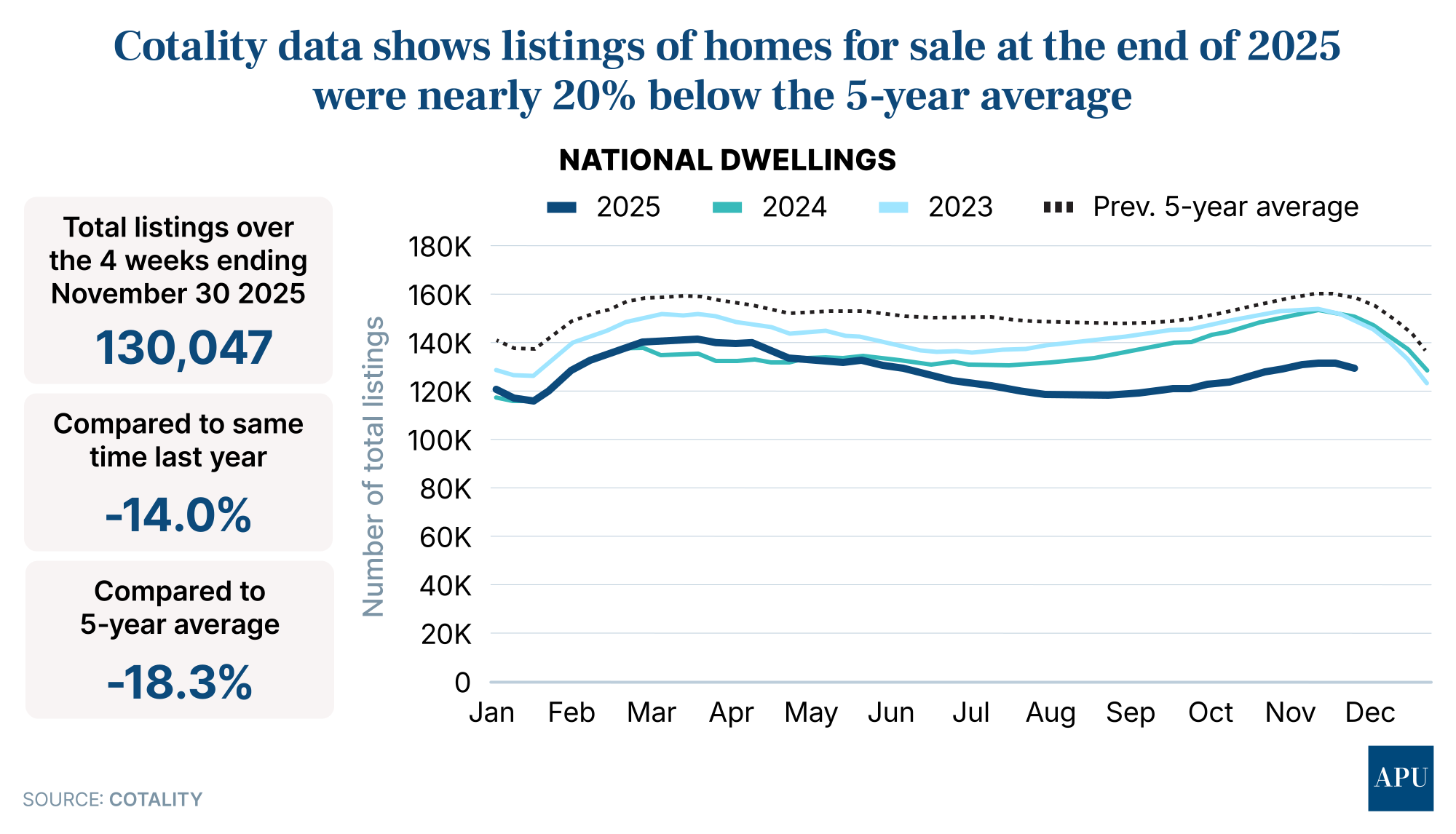
Cotality data shows housing listings are sitting near five-year lows across much of the country, while new dwelling approvals remain well below the levels needed to keep pace with population growth.
At the same time, Australia’s population has been expanding strongly, intensifying competition for a limited pool of homes.
Rental market conditions reinforce that picture.
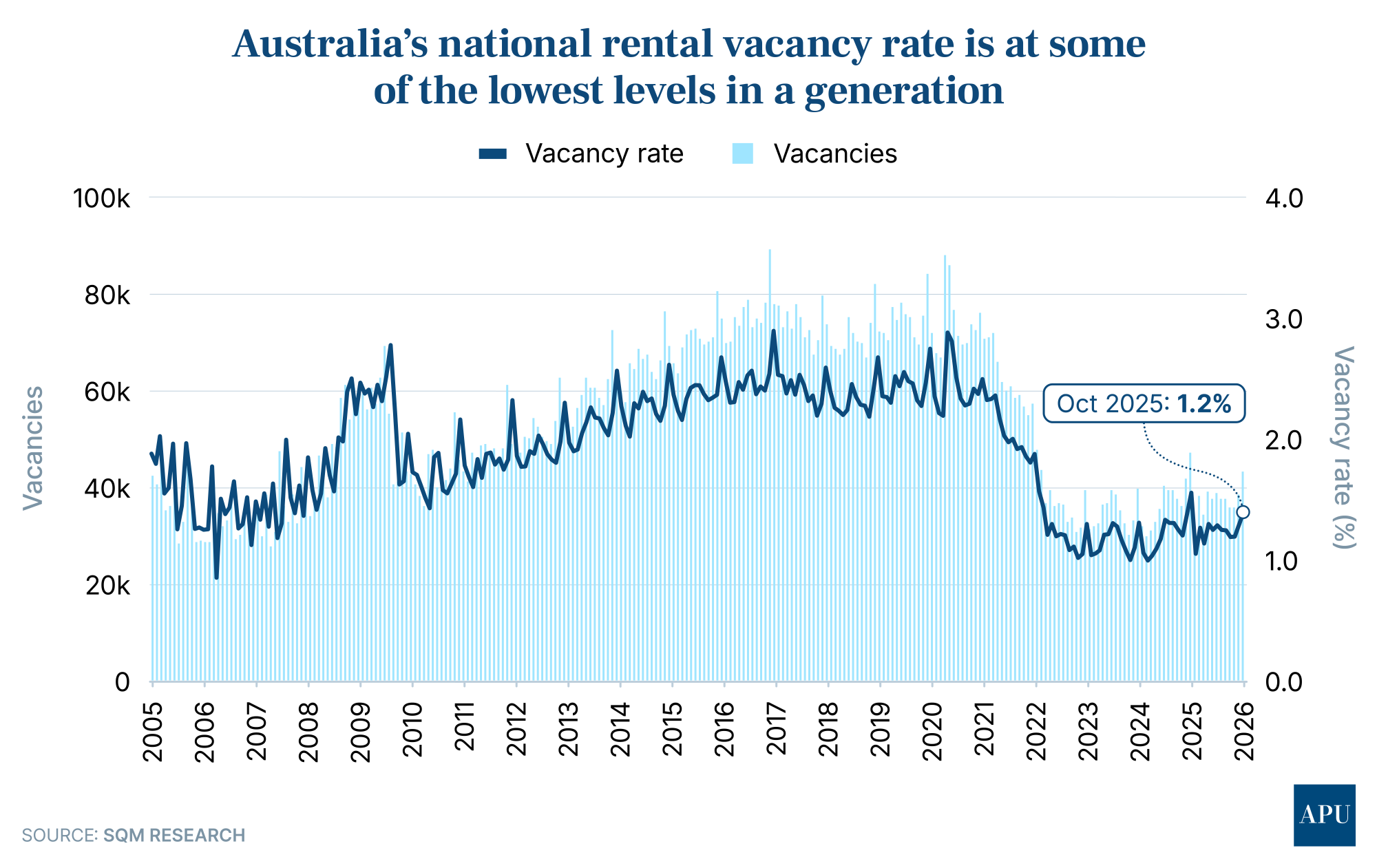
Vacancy rates in many capital cities are hovering around 1% or lower, according to industry groups and state-based rental surveys.
In a genuine housing bubble, excess stock pushes rental vacancies higher.
In Australia, the opposite is happening: tenants are competing fiercely for available homes, and rents continue to rise.
The construction sector - the very engine needed to increase housing supply - is also under pressure.
Builder insolvencies have surged, while construction costs have risen sharply due to labour shortages, material price increases and supply chain disruptions.
Industry estimates put building cost increases in the range of 30% to 40% since the pandemic.
These conditions make it harder, not easier, to flood the market with new homes.
Credit conditions further distinguish Australia from past bubble markets.
Since the GFC, regulators have imposed strict lending standards.
The Australian Prudential Regulation Authority requires banks to apply sizable serviceability buffers, and borrowers face detailed income and expense scrutiny.
During the GFC itself, Australia’s housing market avoided the collapses seen overseas largely because lending standards remained tighter and household balance sheets were stronger.
That doesn’t mean Australians’ sense of financial strain is misplaced.
Household debt levels are high, and higher interest rates have sharply increased mortgage repayments for recent buyers.
This has created a pressure bubble - not in home prices, but in housing affordability and rental and mortgage stress.

Demand, meanwhile, shows little sign of evaporating.
Mortgage pre-approval activity has lifted in recent months, rents continue to climb and population growth remains strong, mainly fuelled by still high overseas migration.
These are not the hallmarks of a market about to implode; they are indicators of a system constrained by structural shortages.
Economists and housing analysts increasingly argue that the most unsustainable elements sit outside prices themselves.
Planning delays, infrastructure bottlenecks, labour shortages, rising build costs and the mismatch between population growth and dwelling completions have all reached breaking point.
Together, they’ve created the “bubble feeling” many Australians experience - a sense that something has to give - without meeting the conditions for a classic price collapse.
For buyers, this distinction matters.
A sharp price crash typically requires oversupply, something most forecasters agree Australia is unlikely to see for many years.
For investors, the market’s dynamics resemble long-term scarcity rather than speculative excess, particularly in lower-priced segments with strong rental demand.
For existing homeowners looking to upgrade, the greater risk may be intensifying competition for limited stock rather than falling prices.
Australians are right to feel that the housing system is stretched and unsustainable.
But the evidence suggests there is no speculative housing bubble waiting to burst.
It’s a bubble of a different type - a prolonged failure several decades in the making to build enough homes, within a system strained by costs, planning constraints and rising demand.


.jpg?width=1920&height=1080&name=WTF%20Is%20Happening%20To%20The%20Housing%20Market!%20$500%20Billion%20Wiped%20Out%20As%20Prices%20Fall%20Faster%20Every%20Month%20Scott%20Kuru%20YPU%20027%20(1).jpg)
%20Scott%20Kuru%20YPU%20025.jpg?width=1920&height=1080&name=This%20Is%20Worse%20Than%20A%20Recession%20RBA%20Admits%20Australias%20Wage%20Collapse%20Cant%20Be%20Stopped%20(Prepare%20Now)%20Scott%20Kuru%20YPU%20025.jpg)














.jpg?width=1920&height=1080&name=EXPOSED%20How%20The%20Govt%20Let%20These%20Oil%20Giants%20Get%20Away%20With%20Paying%20Zero%20Tax%20For%20Aussie%20Gas%20Scott%20Kuru%20DPU%20256%20(1).jpg)




%20Scott%20Kuru%20DPU%20248.jpg?width=1920&height=1080&name=Major%20Banks%20CAUGHT%20Preparing%20For%20Australia%E2%80%99s%20Biggest%20Housing%20Crash%20(Defaults%20%26%20Bankruptcies%20Coming)%20Scott%20Kuru%20DPU%20248.jpg)
%20Scott%20Kuru%20DPU%20247.jpg?width=1920&height=1080&name=This%20Is%20How%20Australia%20Gets%20Pushed%20Into%20the%20Next%20Big%20Reset%20(Trust%20Collapse%20Has%20Officially%20Begun)%20Scott%20Kuru%20DPU%20247.jpg)



%20Scott%20Kuru%20DPU%20239.jpg?width=1920&height=1080&name=URGENT%20Life%20In%20Australia%20Has%20Become%20Impossible%20For%20Millions%20Of%20Aussies%20(It%E2%80%99s%20About%20To%20Get%20Worse)%20Scott%20Kuru%20DPU%20239.jpg)





%20Scott%20Kuru%20DPU%20227.jpg?width=1920&height=1080&name=URGENT%20ALERT%20Australia%E2%80%99s%20Property%20Market%20Is%20Sliding%20Into%20Something%20Much%20Bigger%20(Prepare%20Now)%20Scott%20Kuru%20DPU%20227.jpg)





%20Scott%20Kuru%20DPU%20221.jpg?width=1920&height=1080&name=The%20AI%20Situation%20in%20Australia%20Just%20Hit%20a%20Point%20of%20No%20Return...%20(Major%20Bank%20Proves%20It)%20Scott%20Kuru%20DPU%20221.jpg)