









.png?width=292&height=292&name=Copy%20Link%20(1).png)

 SIGN UP FOR FREE NEWSLETTER
Lending for mortgages has surpassed $100 billion in just three months for the first time, with investors leading the charge.
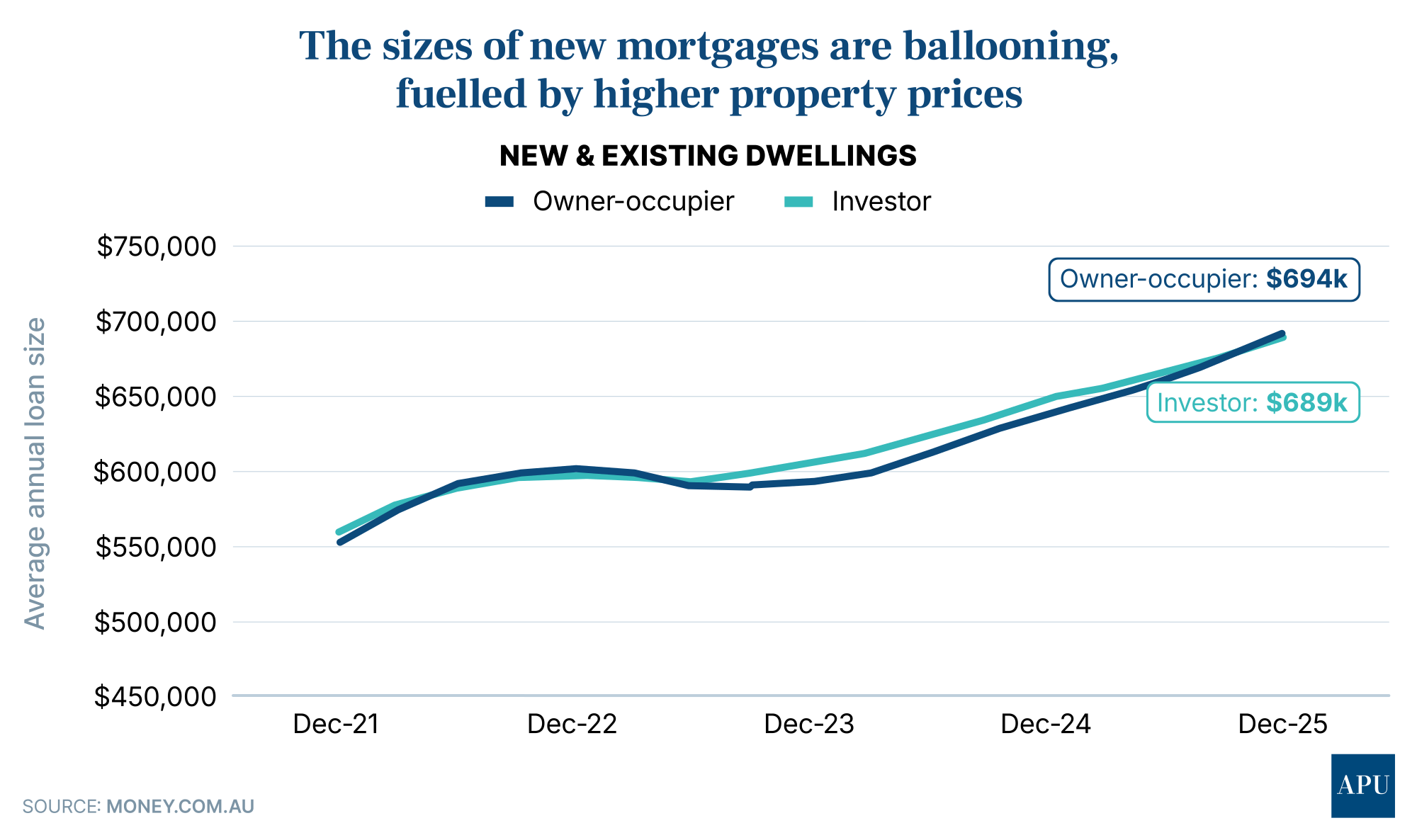
Loan sizes have also ballooned - a function of increasing property prices.
The Federal government’s revamped 5% Deposit Guarantee scheme is also set to have a major impact on the mortgage market, with comparison site Money.com.au predicting that loans to first-home buyers will increase by 11% over the course of this year.
However, in a blow for hopes of a greater housing supply, Money finds that lending for new builds is continuing to fall.
The details
Money.com.au’s latest Mortgage Insights Report says that in original terms, lending for residential properties smashed through the $100 billion mark in a single quarter for the first time,
reaching $115.18 billion in the three months to December 2025.
The average loan size for an owner-occupier was $694,000, while it was slightly lower at $689,000 for investors.
However, the total number of mortgages written during 2025 remains 12% below the
2021 peak of 628,520 loans.
That peak occurred during the Covid property boom, when the Reserve Bank of Australia cut the cash rate to the emergency low of just 0.1%.
Money says that while loan volumes are still below that peak, the average loan size has
jumped a huge 24.7% since 2021.
“This shows the extent to which growth in the mortgage market is being driven by rising house prices,” states the Mortgage Insights Report, which is based on an examination of official lending numbers from the Australian Bureau of Statistics.
Investors
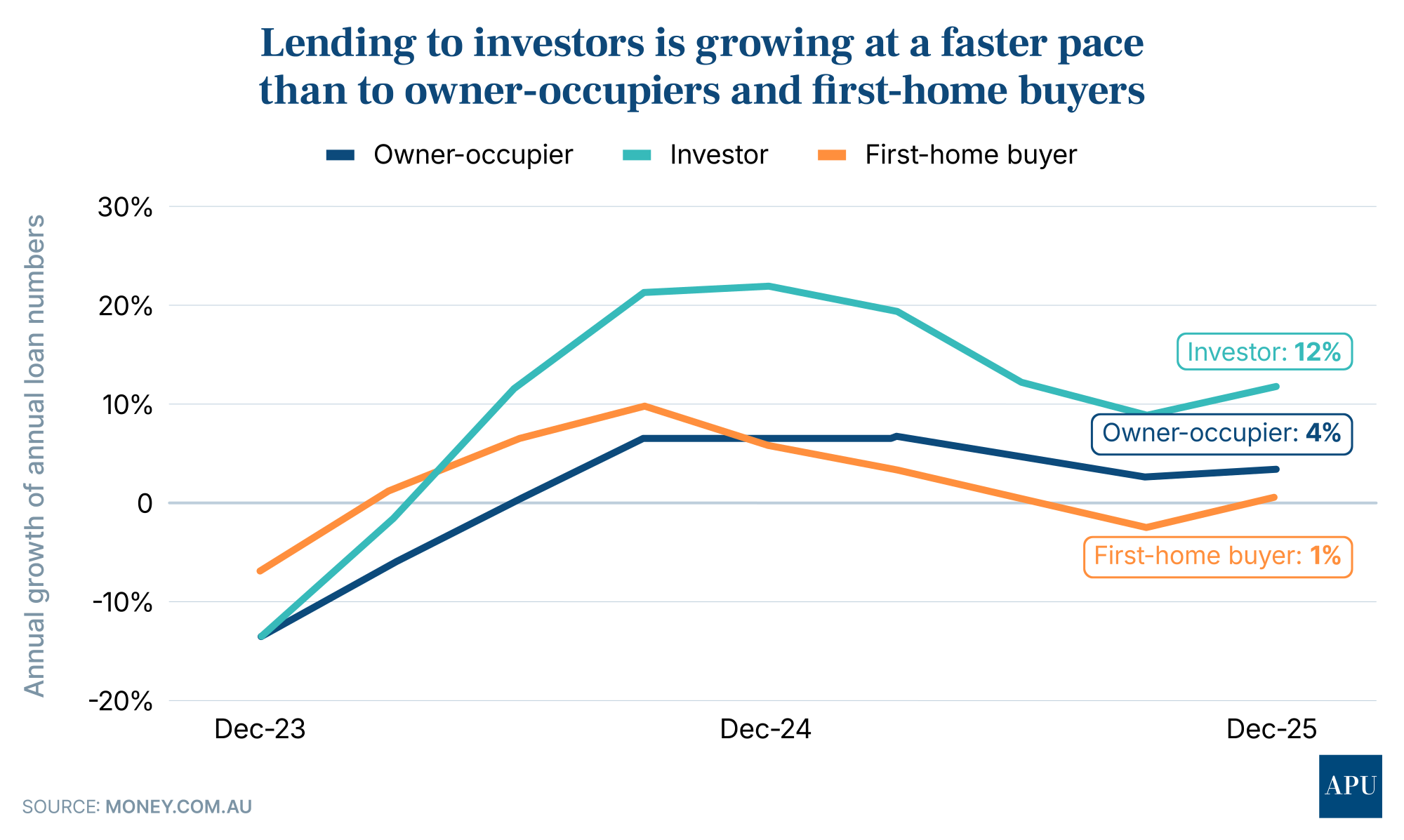
The report says loans to property investors reached a record 39% market share in 2025, with
investor loan numbers grew 12% over the year - three times the growth recorded among loans to owner occupiers.
Investor loans to purchase existing dwellings also rose 15% in 2025, with Money saying existing property purchases now constitute 82% of investor lending, driving the sector’s overall growth.
Loans for renovations by investors also rose 15% during 2025.
Money.com.au’s Property Expert, Debbie Hays, says investors are increasingly turning to
value-add strategies in the current market.
“Many investors already have the equity and capital to upgrade existing properties, lift rental
returns and manufacture additional equity to reinvest,” she says.
“With correct structure and negative gearing strategies in place, renovations can be a powerful portfolio growth strategy while the construction pipeline remains subdued.”
Money says overall lending to investors is projected to rise 13% in 2026 to 246,598 loans, based on current growth trends.
First-home buyers
Money’s Mortgage Insights Report says the Federal government’s 5% Deposit Guarantee Scheme has supported first-home buyer loans to hit their highest annual level since 2021.
The December 2025 quarter saw a 10% year-on-year increase.
Money says the increase in demand was largely driven by buyers in New South Wales, where quarterly loans jumped 20%, adding 9,164 loans and pushing annual growth in first-home buyers loans back into positive territory at 2% for the state.
The Mortgage Insights Report says the 5% Deposit Guarantee scheme has also had a dramatic impact on the sizes of loans taken out by first-home buyers.
The strongest growth was in Western Australia and Queensland, where average loan sizes rose 13% and 12% annually, respectively.
Money says the true test of the First Home Buyer Scheme will come this year, “with new loan volumes still relatively subdued despite the recent uplift.”
“Ongoing house price pressures and the prospect of further cash rate rises in 2026 are likely to keep first-home buyer lending from accelerating significantly,” the report says.
Based on current growth rates, Money says it expects first-home buyer loans to increase 11% this year.
Refinancing
More Australians homeowners appear to be questioning the existing deal on their mortgages.
Money.com.au’s Mortgage Insights Report says refinancing hit record highs in 2025, with 641,552 loans refinanced - 20% higher than 2024 levels (533,839).
With the cash rate rising again, Money expects further growth in refinancing activity, predicting another 19% in 2026, based on current growth trends.
Interestingly, it appears Aussie mortgage holders are demanding - and often getting - a better deal from their existing lender, with internal refinances reaching a record 232,950 loans in 2025.
New dwellings
The Mortgage Insights Report says that loans for new dwellings “remain the key area of decline.”
“Owner occupier loans in this segment fell 9% over the year, while investor loans dropped 4%, even as the broader market expanded.”
Owner occupier land and construction lending was flat at just 56,686 loans over 2025, with volumes 58% below their 2021 peak, despite overall owner occupier lending rising 4% annually.
Money says that based on current growth trends, owner occupier lending is forecast to lift 5% in 2026 to 354,910 loans, while land and construction loans are expected to grow by just 2%.
Money’s Debbie Hays says the housing construction pipeline is still running well below capacity.
“The lending market is continuing its recovery from the 2021 heyday, but construction is
barely budging, which means supply is not improving.
“Until construction activity meaningfully rebounds, the supply squeeze will continue to put upward pressure on house prices and rents,” she says.

The take-out
Money’s conclusions are clear.
Lending and the size of new mortgages are increasing at pace, but this is overwhelmingly for existing properties.
The lack of new housing supply at a time of relatively high population growth is pushing more buyer demand to the existing pool of homes, driving up prices and requiring buyers (both owner-occupiers and investors) to take out larger and larger mortgages.
The result: more money chasing fewer homes, limited new supply coming online and continued upward pressure on prices and rents.













.jpg?width=1920&height=1080&name=WTF%20Is%20Happening%20To%20The%20Housing%20Market!%20$500%20Billion%20Wiped%20Out%20As%20Prices%20Fall%20Faster%20Every%20Month%20Scott%20Kuru%20YPU%20027%20(1).jpg)
%20Scott%20Kuru%20YPU%20025.jpg?width=1920&height=1080&name=This%20Is%20Worse%20Than%20A%20Recession%20RBA%20Admits%20Australias%20Wage%20Collapse%20Cant%20Be%20Stopped%20(Prepare%20Now)%20Scott%20Kuru%20YPU%20025.jpg)





























.jpg?width=1920&height=1080&name=EXPOSED%20How%20The%20Govt%20Let%20These%20Oil%20Giants%20Get%20Away%20With%20Paying%20Zero%20Tax%20For%20Aussie%20Gas%20Scott%20Kuru%20DPU%20256%20(1).jpg)







%20Scott%20Kuru%20DPU%20248.jpg?width=1920&height=1080&name=Major%20Banks%20CAUGHT%20Preparing%20For%20Australia%E2%80%99s%20Biggest%20Housing%20Crash%20(Defaults%20%26%20Bankruptcies%20Coming)%20Scott%20Kuru%20DPU%20248.jpg)
%20Scott%20Kuru%20DPU%20247.jpg?width=1920&height=1080&name=This%20Is%20How%20Australia%20Gets%20Pushed%20Into%20the%20Next%20Big%20Reset%20(Trust%20Collapse%20Has%20Officially%20Begun)%20Scott%20Kuru%20DPU%20247.jpg)







%20Scott%20Kuru%20DPU%20239.jpg?width=1920&height=1080&name=URGENT%20Life%20In%20Australia%20Has%20Become%20Impossible%20For%20Millions%20Of%20Aussies%20(It%E2%80%99s%20About%20To%20Get%20Worse)%20Scott%20Kuru%20DPU%20239.jpg)











%20Scott%20Kuru%20DPU%20227.jpg?width=1920&height=1080&name=URGENT%20ALERT%20Australia%E2%80%99s%20Property%20Market%20Is%20Sliding%20Into%20Something%20Much%20Bigger%20(Prepare%20Now)%20Scott%20Kuru%20DPU%20227.jpg)