









.png?width=292&height=292&name=Copy%20Link%20(1).png)

 SIGN UP FOR FREE NEWSLETTER
Two of Australia’s “Big 4” mortgage lenders say they now expect the nation’s central bank to hike rates next week, partly because the current conflict in the Middle East is unlikely to help dampen inflation pressures.
In a blow for borrowers, Westpac and National Australia Bank say they also think the Reserve Bank of Australia will move to hike the cash rate again in May.
Given there’s no monetary policy board meeting in April, that would mean the central bank would be increasing the cash rate at three consecutive meetings - a scenario which was last seen three years ago, as the RBA battled to contain an inflation breakout in the wake of the pandemic.
The details
Following the RBA’s decision to raise the cash rate for the first time in two and a half years in February 2026, National Australia Bank says it now expects the central bank to raise rates again by 0.25% in both March and May.
Previously, NAB had predicted just one more 0.25% rate hike in this cycle.
But, changing its call, the bank’s economics team says it now expects the cash rate to peak at 4.35%.
“Given the relatively unfavorable starting point for inflation in Australia and recent confirmation that the economy is running well above its trend rate of growth, the case for a near-term rate hike is clear,” says NAB’s Chief Economist Sally Auld.
In an economic note, Ms Auld and her team make it clear they’ve changed their position following “hawkish commentary” from both RBA Governor Michele Bullock and her Deputy Andrew Hauser.
In a podcast interview released on Tuesday, Mr Hauser likened the inflationary aspects of the conflict in the Middle East on oil prices to the large inflation breakout that occurred around the world, when energy prices soared after Russia invaded Ukraine in 2022.
“We don’t want to go through that period again,” he said.
“So failing to raise rates to the level they need to be and allowing inflation to get out of control is a clear problem.”

Following those podcast comments, money market traders priced in a more than 60% chance of a rate rise by the RBA next Tuesday, up from around 30%.
“It is clear from their commentary that senior RBA officials are inclined to view the Iranian conflict as an inflationary shock,” NAB’s economics team says.
“The starting point for the RBA prior to the Iran conflict was: 1) inflation that is too high and a forecast that saw inflation return to target over an extended period of time; 2) GDP growth that is above the RBA’s estimate of trend; and 3) a tight labour market.


“Against this backdrop, we can infer that the RBA will have very limited tolerance for upside pressure on inflation and likely, somewhat more tolerance for softer growth outcomes.
“This means that the policy of least regret is to hike in March.”
Westpac Bank has also changed its view, expecting rate hikes from the RBA in both March and May.
While Chief Economist Luci Ellis says she believes the inflationary effect of higher oil prices as a result of the Iran conflict will be temporary, “The RBA Monetary Policy Board will nevertheless feel compelled to react, especially given the hit to confidence and financial markets has so far not been severe.”
“It (the RBA) has signalled a willingness to respond to the spike in headline inflation to head off a sustained rise in inflation expectations,” she says.
However, comparison site Canstar says a cash rate hike at the RBA’s March meeting next week “is not a done deal.”
“The war in the Middle East has cast a huge cloud of uncertainty over the decision, because while the short-term impact of the conflict will push up prices, particularly fuel, the longer-term damage to the economy and jobs market is not yet clear,” says Canstar’s Insights Director Sally Tindall.
Nevertheless, Ms Tindall says that, if Westpac and NAB’s latest forecasts prove accurate, it would add further pressure to already stretched household budgets.

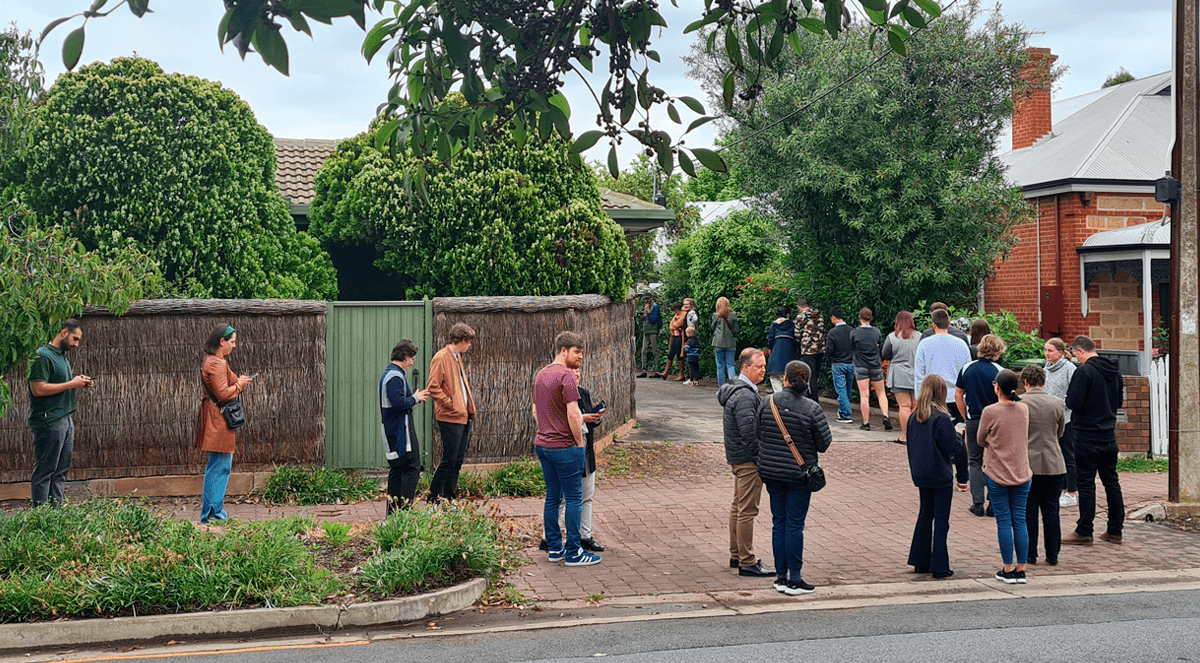
“A family with a $600,000 mortgage isn’t just looking at a few extra dollars each month.
“If the RBA ends up rolling out three successive hikes through to May, they’re looking at an extra $272 just as winter sets in.”
Ms Tindall says her advice to households with a mortgage is to prepare for the possibility of higher rates.
“If you haven't stress-tested your budget against a rate that’s at least a half a percentage point higher, tonight is the night to do it,” she says.










.jpg?width=1920&height=1080&name=WTF%20Is%20Happening%20To%20The%20Housing%20Market!%20$500%20Billion%20Wiped%20Out%20As%20Prices%20Fall%20Faster%20Every%20Month%20Scott%20Kuru%20YPU%20027%20(1).jpg)
%20Scott%20Kuru%20YPU%20025.jpg?width=1920&height=1080&name=This%20Is%20Worse%20Than%20A%20Recession%20RBA%20Admits%20Australias%20Wage%20Collapse%20Cant%20Be%20Stopped%20(Prepare%20Now)%20Scott%20Kuru%20YPU%20025.jpg)
























.jpg?width=1920&height=1080&name=EXPOSED%20How%20The%20Govt%20Let%20These%20Oil%20Giants%20Get%20Away%20With%20Paying%20Zero%20Tax%20For%20Aussie%20Gas%20Scott%20Kuru%20DPU%20256%20(1).jpg)






%20Scott%20Kuru%20DPU%20248.jpg?width=1920&height=1080&name=Major%20Banks%20CAUGHT%20Preparing%20For%20Australia%E2%80%99s%20Biggest%20Housing%20Crash%20(Defaults%20%26%20Bankruptcies%20Coming)%20Scott%20Kuru%20DPU%20248.jpg)
%20Scott%20Kuru%20DPU%20247.jpg?width=1920&height=1080&name=This%20Is%20How%20Australia%20Gets%20Pushed%20Into%20the%20Next%20Big%20Reset%20(Trust%20Collapse%20Has%20Officially%20Begun)%20Scott%20Kuru%20DPU%20247.jpg)







%20Scott%20Kuru%20DPU%20239.jpg?width=1920&height=1080&name=URGENT%20Life%20In%20Australia%20Has%20Become%20Impossible%20For%20Millions%20Of%20Aussies%20(It%E2%80%99s%20About%20To%20Get%20Worse)%20Scott%20Kuru%20DPU%20239.jpg)










%20Scott%20Kuru%20DPU%20227.jpg?width=1920&height=1080&name=URGENT%20ALERT%20Australia%E2%80%99s%20Property%20Market%20Is%20Sliding%20Into%20Something%20Much%20Bigger%20(Prepare%20Now)%20Scott%20Kuru%20DPU%20227.jpg)