









.png?width=292&height=292&name=Copy%20Link%20(1).png)

 SIGN UP FOR FREE NEWSLETTER
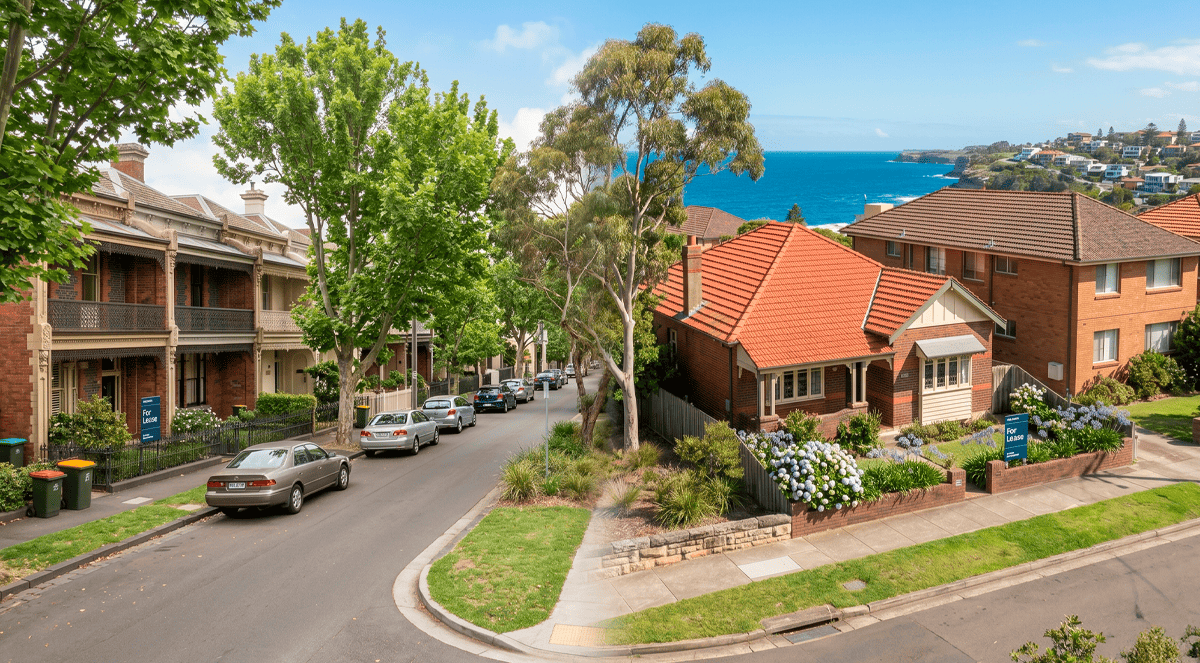
Australia's housing market hit a standstill in May, as falling prices in Sydney and Melbourne wiped out strong gains across some smaller capitals and regional Australia, according to the latest monthly data from Cotality and REA Group’s PropTrack.
Cotality’s Home Value Index
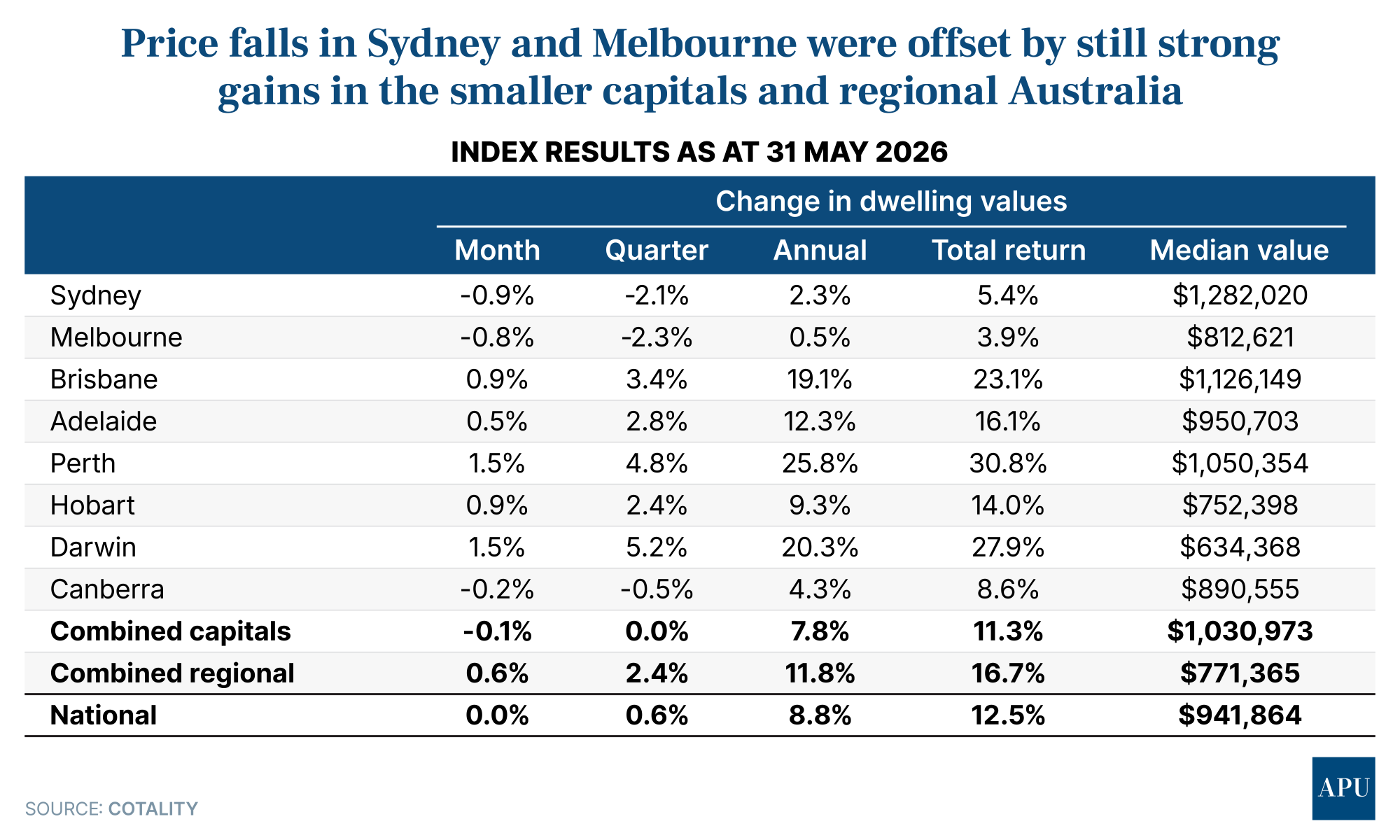
Cotality says dwelling values fell 0.9% and 0.8% in Sydney and Melbourne, respectively, over the month, as more homes came onto the market for sale in Australia's two largest cities just as higher interest rates started to bite.
Home values also fell 0.2% in Canberra in May.
Across the remaining capitals, prices continued to rise, although Cotality says growth is "clearly losing momentum".
Perth and Darwin saw the strongest monthly gains at 1.5%, followed by Brisbane and Hobart at 0.9%, while Adelaide recorded a 0.5% rise.
Cotality now values the median Australian home at $941,864.
“We are continuing to see multi-speed conditions across Australia’s housing sector, with Perth and Melbourne at opposite ends of the spectrum,” says Cotality Research Director Tim Lawless.
“The past five years have seen these cities diverge sharply, with Perth values up a stunning 91.4% while Melbourne home values are only 3.3% higher since May 2021.
“While the speed of value change remains very different from city to city, the direction is becoming more consistent, with most markets losing momentum as demand-side headwinds intensify.”
PropTrack Home Price Index
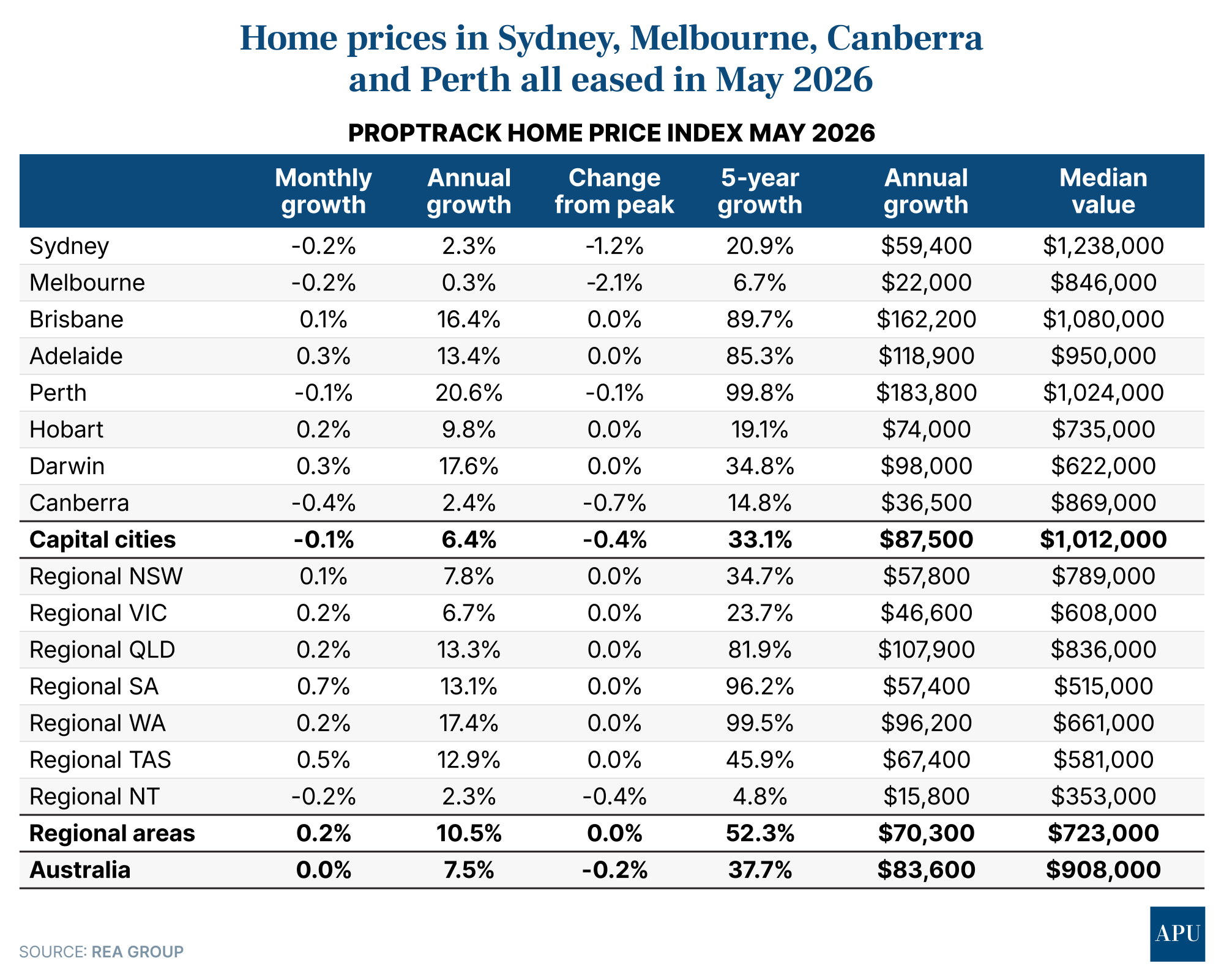
REA Group’s latest PropTrack Home Price Index report saw national home prices hold essentially flat in May, decreasing by a minuscule 0.04%, with price falls in Sydney, Melbourne, Canberra and Perth offset by modest rises elsewhere.
The data shows home prices in Sydney and Melbourne were down 0.2% in May, the third consecutive month of price falls for both cities, while Canberra fell 0.4%.
Notably, Perth also saw prices ease 0.1% in May.
While PropTrack notes this is “a very modest decline, it represents a clear slowing in prices after an extremely strong 2025, and the first monthly decline since late 2024.”
Nevertheless, Perth prices are still up 20.6% compared to a year ago.
PropTrack says the median home price in Australia is $908,000.
“Home price growth has clearly stalled as the effects of this year’s consecutive rate hikes flow through,” says REA Group Senior Economist Angus Moore.
“The slowdown has been most notable in Sydney and Melbourne, with both cities posting their third consecutive decline in home prices.
“Though, these declines have been modest with prices only 1.2% below where they sat in March.”
Mr. Moore says home price growth has also clearly slowed in the booming markets of Brisbane, Perth and Adelaide, after an extremely strong 2025.
“Prices were down slightly in Perth, and while prices were up modestly in Brisbane and Adelaide, it was the slowest month of growth for both since late 2022 to early 2023.”
Slowdown
Cotality’s Tim Lawless says the housing market slowdown has been building for months, well before interest rates began rising again, conflict escalated in Iran and the Federal Budget unveiled major property tax changes.
He points out that most cities recorded a peak in value growth in spring last year.
Since then, affordability and mortgage serviceability constraints have increasingly weighed on housing demand.
While lower-priced properties have continued to show stronger or more resilient conditions than higher price tiers across most capitals, Cotality says the pace of growth is generally easing across more affordable markets as well, with falls recorded in lower-quartile houses in Sydney and Melbourne.
Alongside easing home values, the slowdown in housing demand is also evident in lower home sales, with the estimated number of sales over the past three months tracking 2.2% lower than a year ago and 4.1% below the five-year average.
“The largest drop in estimated sales can be seen in Sydney and Melbourne, down 17.0% and 14.2% on levels a year ago,” says Mr Lawless.
“These are also the cities where advertised supply has risen to above-average levels, providing more choice and better leverage for buyers.”
Selling conditions have also softened, with auction clearance rates in the major capitals close to 50% through the second half of May, while listings are trending higher across most markets.
Rental market
While the housing market is cooling for buyers and sellers, renters continue to face intense pressure.
Cotality says rents rose a strong 0.6% in May 2026, pushing annual national rent growth to 5.9% — the largest annual increase since the 12 months ending September 2024.
The data analytics company says most capitals have seen annual rental growth regain momentum in recent months, and upward pressure on rents is likely to continue due to an extremely low national vacancy rate of just 1.5%.
However, Mr Lawless says he is uncertain how much longer this strong rental growth can continue.
“With the cost of renting up about $204 a week over the past five years, renters are likely to be at or approaching a ceiling on how much they can pay, potentially driving structural changes in rental demand.”
Cotality says that with rents continuing to rise while home prices ease, gross rental yields are increasing, with Melbourne recording the highest yields among the major capitals at 3.87% — their highest level since August 2013.
The outlook
According to Cotality, the property market is facing growing challenges as higher interest rates, worsening affordability and weak consumer confidence begin to weigh more heavily on buyer demand.
The research firm says affordability remains stretched across most capital cities, while recent RBA rate hikes have reduced borrowing capacity and increased mortgage repayment burdens.
Combined with persistent cost-of-living pressures and subdued consumer sentiment, these factors are narrowing the pool of potential buyers, particularly at the upper end of the market.
Cotality says the outlook is also being affected by recent Federal Budget changes to negative gearing and capital gains tax concessions, which the firm says are likely to trigger a "material pullback in investor demand", albeit from near-record levels.
Nevertheless, the market continues to benefit from several supporting factors, including limited housing supply, strong population growth and a still-firm labour market.
Overall, Cotality expects the market to move into a more subdued phase, with "a further loss of momentum and a drift towards lower home values, rather than a sharp correction."
“With at least one further rate hike expected in 2026, and some pullback in investor demand post-Budget, prices are likely to continue to be soft,” is the take from REA Group’s Angus Moore.
“Even so, price declines are unlikely to be large as the labour market remains resilient, households have strong equity buffers, in turn, limiting forced sales, and high construction costs and supply constraints are limiting the volume of new homes.”









.jpg?width=1920&height=1080&name=WTF%20Is%20Happening%20To%20The%20Housing%20Market!%20$500%20Billion%20Wiped%20Out%20As%20Prices%20Fall%20Faster%20Every%20Month%20Scott%20Kuru%20YPU%20027%20(1).jpg)
%20Scott%20Kuru%20YPU%20025.jpg?width=1920&height=1080&name=This%20Is%20Worse%20Than%20A%20Recession%20RBA%20Admits%20Australias%20Wage%20Collapse%20Cant%20Be%20Stopped%20(Prepare%20Now)%20Scott%20Kuru%20YPU%20025.jpg)
























.jpg?width=1920&height=1080&name=EXPOSED%20How%20The%20Govt%20Let%20These%20Oil%20Giants%20Get%20Away%20With%20Paying%20Zero%20Tax%20For%20Aussie%20Gas%20Scott%20Kuru%20DPU%20256%20(1).jpg)






%20Scott%20Kuru%20DPU%20248.jpg?width=1920&height=1080&name=Major%20Banks%20CAUGHT%20Preparing%20For%20Australia%E2%80%99s%20Biggest%20Housing%20Crash%20(Defaults%20%26%20Bankruptcies%20Coming)%20Scott%20Kuru%20DPU%20248.jpg)
%20Scott%20Kuru%20DPU%20247.jpg?width=1920&height=1080&name=This%20Is%20How%20Australia%20Gets%20Pushed%20Into%20the%20Next%20Big%20Reset%20(Trust%20Collapse%20Has%20Officially%20Begun)%20Scott%20Kuru%20DPU%20247.jpg)







%20Scott%20Kuru%20DPU%20239.jpg?width=1920&height=1080&name=URGENT%20Life%20In%20Australia%20Has%20Become%20Impossible%20For%20Millions%20Of%20Aussies%20(It%E2%80%99s%20About%20To%20Get%20Worse)%20Scott%20Kuru%20DPU%20239.jpg)










%20Scott%20Kuru%20DPU%20227.jpg?width=1920&height=1080&name=URGENT%20ALERT%20Australia%E2%80%99s%20Property%20Market%20Is%20Sliding%20Into%20Something%20Much%20Bigger%20(Prepare%20Now)%20Scott%20Kuru%20DPU%20227.jpg)