









.png?width=292&height=292&name=Copy%20Link%20(1).png)

 SIGN UP FOR FREE NEWSLETTER

Image by Alex Ellinghausen/AFR
Australia should allow three-storey development across most residential land and build more apartments near transport hubs, as part of a major overhaul of planning rules.
Those are the key findings of an interim report on housing regulation by the Productivity Commission, the Federal Government’s independent research and advisory body on major economic issues.
The report argues planning rules have made dwellings slower and more expensive to deliver, leading to a shortage of homes in places where people actually want to live, while contributing to soaring prices, declining home ownership and growing rental stress.
The details
Treasurer Jim Chalmers asked the Productivity Commission to look at regulations affecting housing supply and come up with practical solutions to help Australia build more homes more quickly.
The interim report finds housing has become dramatically less affordable over the past two decades as property prices have risen much faster than wages.
An average household now needs about 11 years to save a 20% deposit on a typical home, up from eight years in 2005.
Home ownership among Australians aged 25 to 34 fell about 18% between 1981 and 2021, while a middle-income household now typically spends about one-third of its income securing a new rental.
The Commission says the underlying problem is not simply that Australia builds too few homes.
The problem is that too few homes are built near jobs, transport, education and established services.
As a result, the interim report says Australia is forecast to miss the National Housing Accord target by at least 220,000 homes by June 2029, despite federal and state governments committing to deliver 1.2 million well-located dwellings over five years.
While the final report is not due until March next year, the Commission's interim findings make clear it favours broad-based upzoning across Australian cities, replacing fragmented planning systems that restrict large areas to detached houses or low-density development.
It also wants governments to reduce minimum lot sizes, allow housing in more zones earmarked for commercial use, remove unnecessary parking and apartment-size requirements, streamline approvals and coordinate infrastructure before land is released.

Image by Carla Gottgens/Bloomberg
Productivity Commission Chair Danielle Wood says the goal is not to remove safety or quality standards, but to shift the planning system’s default position from stopping development to enabling it.
“We really think we need a shift in mindset from, ‘No, you can’t build except for in these very narrow pockets of places, and if you satisfy 100 conditions,’ to, ‘Yes, you can build as long as you meet these kind of minimum requirements that we as a society, of course, need,’” she told the ABC.
Ms Wood says preliminary estimates indicate regulation could add between $100,000 and $300,000 to the cost of a home, while complicated approval processes could delay projects by years.
“We build about half as much house per hour worked as we did 30 years ago,” she says.
“So this is having a very real impact on our capacity to deliver the homes we need.”
The most politically contentious recommendation is that states and territories permit developments of up to three storeys across most residential land.
That would open more suburbs to townhouses, terraces and smaller apartment buildings without necessarily replacing established neighbourhoods with high-rise towers.


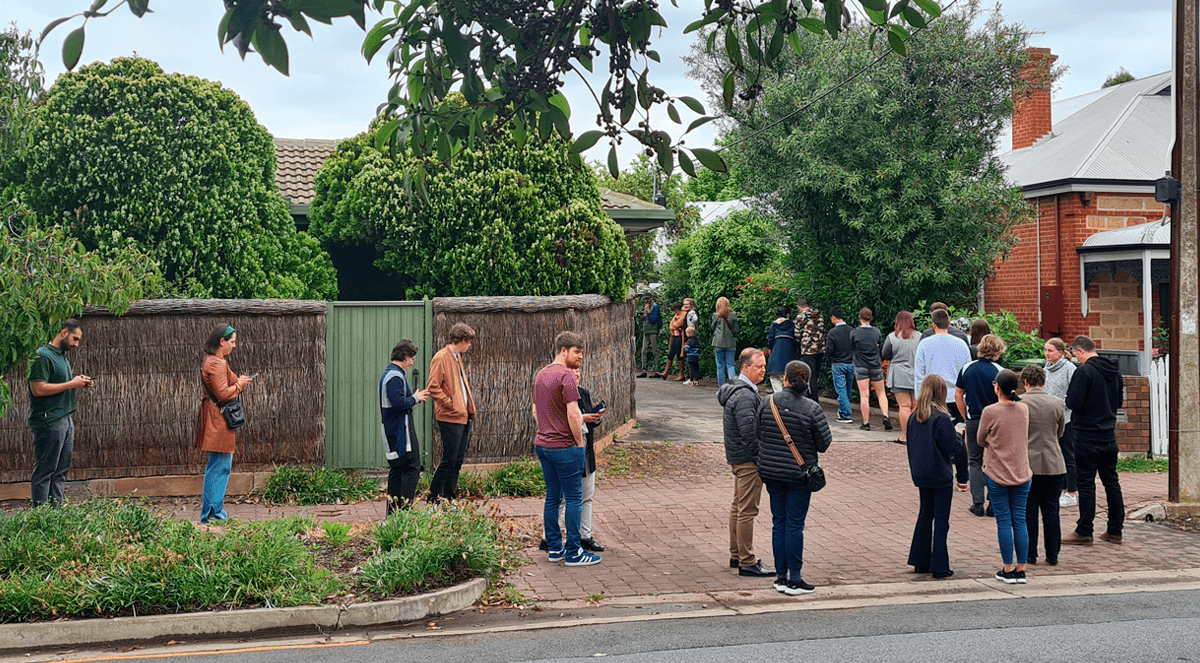
The Commission also wants mid-rise buildings of four to nine storeys, and taller apartment developments, allowed in high-demand areas with existing or readily expandable transport infrastructure.
“At the moment, about three-quarters of cities like Adelaide, Perth, Sydney and Brisbane, you can only build one or two storeys,” Ms Wood says.
“We’re advocating for more gentle density across our cities.”
The report also proposes reducing minimum lot sizes where they make projects unviable, allowing residential development in commercial areas unless there is a strong reason to prohibit it, and reviewing broad heritage and neighbourhood-character controls.
Minimum car-parking rules, maximum floor-space ratios and requirements governing apartment balconies, storage and dwelling size should also be removed or reduced where they impose costs without clear community benefits.
The Commission warns that rezoning or releasing land also does not guarantee homes will be built.
Ms Wood says the Commission heard examples of land released on city fringes that could not be developed because basic utility connections were unavailable.
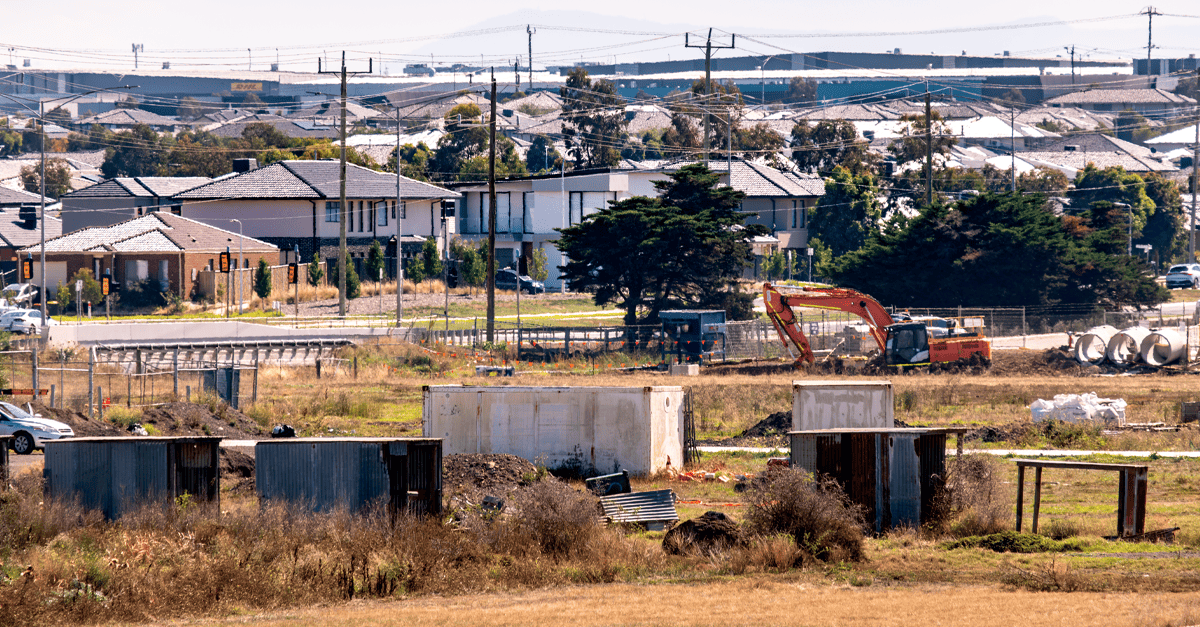
“Because there was no sewage connection or no water connection, those houses couldn’t be built for a number of years,” she says.
“So pre-planning that infrastructure piece is also going to be part of the solution.”
But Ms Wood stressed the Commission was not advocating deregulation at any cost.
“Nobody is saying you’d have no regulation in this space,” she says.
“Obviously, it’s incredibly important that we continue to regulate for safety, for minimum quality of buildings.”
The Productivity Commission Chair also says that even if governments adopt the proposed reforms, affordability will not improve quickly.
“This problem didn’t happen overnight,” Ms Wood says, warning a fix would probably take “decades rather than years”.
The Commission’s message is that governments cannot keep promising more homes while retaining planning systems designed principally to limit where and how housing can be built.
The harder task will be persuading existing communities and three levels of government to accept the trade-offs required to change those rules.








.jpg?width=1920&height=1080&name=WTF%20Is%20Happening%20To%20The%20Housing%20Market!%20$500%20Billion%20Wiped%20Out%20As%20Prices%20Fall%20Faster%20Every%20Month%20Scott%20Kuru%20YPU%20027%20(1).jpg)

%20Scott%20Kuru%20YPU%20025.jpg?width=1920&height=1080&name=This%20Is%20Worse%20Than%20A%20Recession%20RBA%20Admits%20Australias%20Wage%20Collapse%20Cant%20Be%20Stopped%20(Prepare%20Now)%20Scott%20Kuru%20YPU%20025.jpg)





























.jpg?width=1920&height=1080&name=EXPOSED%20How%20The%20Govt%20Let%20These%20Oil%20Giants%20Get%20Away%20With%20Paying%20Zero%20Tax%20For%20Aussie%20Gas%20Scott%20Kuru%20DPU%20256%20(1).jpg)







%20Scott%20Kuru%20DPU%20248.jpg?width=1920&height=1080&name=Major%20Banks%20CAUGHT%20Preparing%20For%20Australia%E2%80%99s%20Biggest%20Housing%20Crash%20(Defaults%20%26%20Bankruptcies%20Coming)%20Scott%20Kuru%20DPU%20248.jpg)
%20Scott%20Kuru%20DPU%20247.jpg?width=1920&height=1080&name=This%20Is%20How%20Australia%20Gets%20Pushed%20Into%20the%20Next%20Big%20Reset%20(Trust%20Collapse%20Has%20Officially%20Begun)%20Scott%20Kuru%20DPU%20247.jpg)







%20Scott%20Kuru%20DPU%20239.jpg?width=1920&height=1080&name=URGENT%20Life%20In%20Australia%20Has%20Become%20Impossible%20For%20Millions%20Of%20Aussies%20(It%E2%80%99s%20About%20To%20Get%20Worse)%20Scott%20Kuru%20DPU%20239.jpg)











%20Scott%20Kuru%20DPU%20227.jpg?width=1920&height=1080&name=URGENT%20ALERT%20Australia%E2%80%99s%20Property%20Market%20Is%20Sliding%20Into%20Something%20Much%20Bigger%20(Prepare%20Now)%20Scott%20Kuru%20DPU%20227.jpg)