










 SIGN UP FOR FREE NEWSLETTER
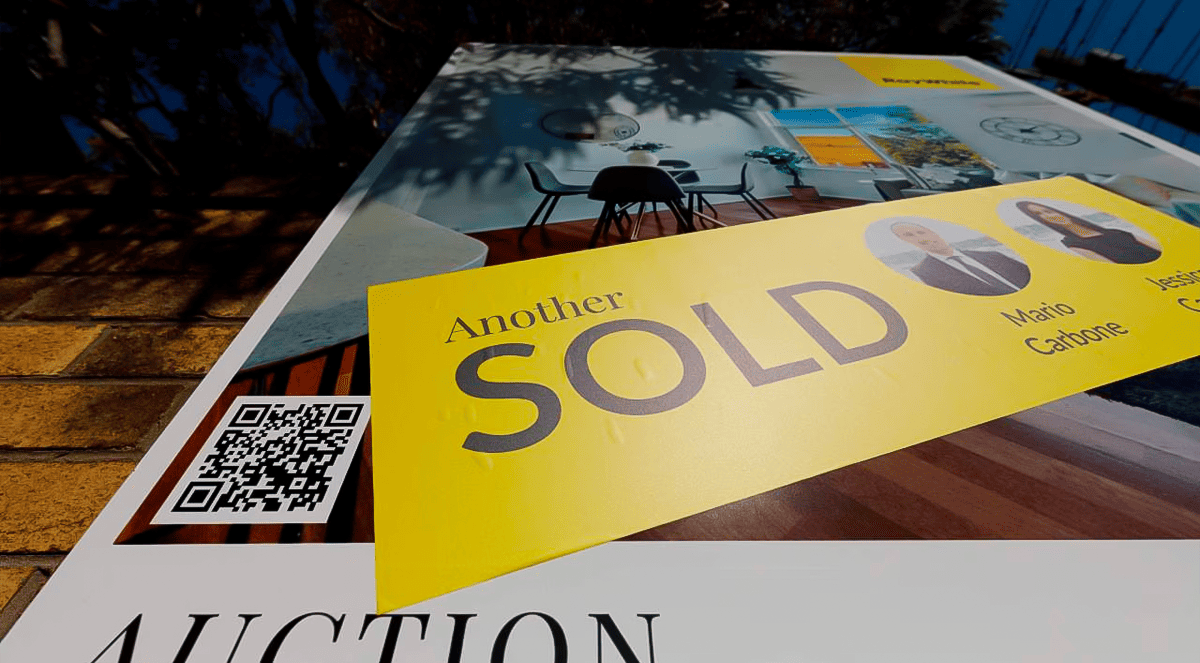
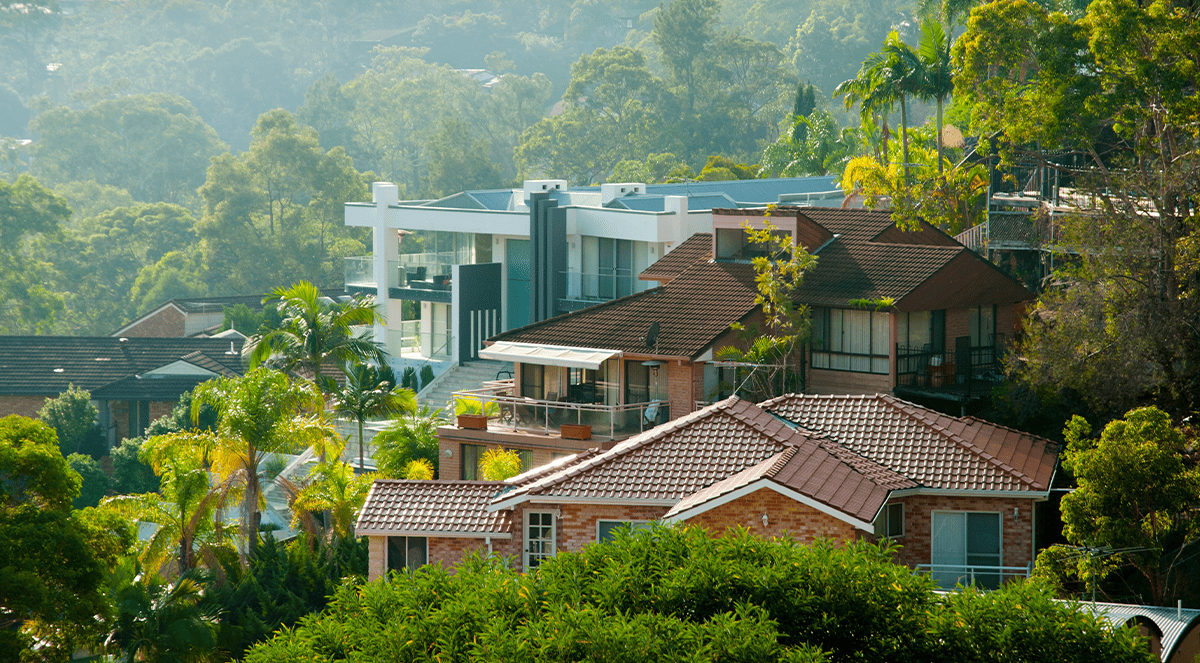
Image by Max Mason-Hubers/NCA NewsWire
One of the key arguments for renting rather than buying a property is that mortgage repayments are far more expensive.
However, in a growing number of Australian suburbs, that gap is starting to disappear.
High rents, easing property prices and weaker buyer demand have created an unusual situation where weekly mortgage repayments are now cheaper than rent in parts of capital cities, including Melbourne and Darwin, while in dozens more areas the gap between renting and buying has narrowed sharply.
Analysis by Guardian Australia of Cotality data found that in around one in 10 suburbs and towns nationally, repayments on a typical property were less than $200 a week higher than rent.
And in some suburbs, buying is already cheaper.
The details
Australia’s median rent rose 5.5% over the year to September 2026 to reach $713 a week, according to Cotality.
At the same time, national property values were broadly flat over the year, following six consecutive months of declines.
It’s that combination - rising rents and easing prices - that has helped narrow the gap between the cost of renting and servicing a mortgage.
Guardian Australia’s analysis assumed a buyer took out a new 30-year mortgage covering 95% of the property’s value at an interest rate of 6.2%.
Significantly, the calculations did not include other ownership costs such as council rates, strata fees, insurance and maintenance.
Buyers with larger deposits, and therefore smaller mortgages, would generally find the comparison more favourable.
Melbourne provides some of the clearest examples.
At the end of September 2026, Cotality says the median apartment rent in the Victorian capital was $628 a week, after rising 4.8% over the previous 12 months.
Typical mortgage repayments on a Melbourne apartment were estimated at $839 a week, based on a median value of $624,740.
That still leaves buying more expensive on average, but the difference has narrowed substantially in some suburbs.
In inner-city Carlton, Travancore, Southbank and Melbourne’s CBD, typical mortgage repayments were estimated to be lower than rents.
In Carlton, where the median weekly rent is $620, Guardian Australia estimates it is $142 cheaper a week to service a mortgage on a median-value apartment worth $355,092.
Similarly, in Melbourne CBD, where the median weekly rent is $708, it’s $88 cheaper a week to meet the mortgage repayments on a loan for a $461,623 median value apartment.
Why apartments stand out
Image from Gerard Burg’s LinkedIn Page
Cotality Australia Head of Research Gerard Burg says apartment-heavy suburbs can produce unusual results because large amounts of new supply can suppress sale prices without necessarily easing pressure in the rental market.
“That just [shows] this influx of supply pushing down the value of the purchase, while comparatively tight rental availability had led to this increase in rents,” he told Guardian Australia.
This helps explain why inner-city apartment markets feature prominently among the places where buying and renting costs are converging.
New apartments can increase the number of properties available for sale, particularly when they are bought by owner-occupiers rather than investors.
At the same time, rental vacancy rates can remain tight if the number of properties available to tenants fails to keep pace with demand.
The result is lower or softer purchase prices sitting alongside high rents.
But Mr Burg cautions against assuming this has become the norm across the broader housing market.
Such areas remain “anomalies”, he says, with detached houses generally still much more expensive to buy than rent.
“If it was a sustained thing that you could buy a property more cheaply than renting it, then everyone would buy and everyone would exit the rental market,” Mr Burg says.
However, the trend is not limited to Melbourne.
In Sydney, mortgage repayments were estimated to be just $10 a week above rents in Ultimo near the CBD and $23 higher in Warwick Farm in western Sydney.
In Canberra, the difference was less than $70 a week in the suburbs of Belconnen and Phillip.
When only apartments were considered, Braddon, Lyons, Gungahlin and Harrison also joined the list of suburbs where buying costs were relatively close to renting.
Darwin stands out even more.
In around a quarter of the city’s suburbs, it was cheaper to buy than rent, according to the analysis.
Rents in the Northern Territory capital have risen 11.6% over the past year.
Mr Burg says many of the locations where buying is cheaper than renting are mining or resource-project areas, where fly-in fly-out workers create strong rental demand without necessarily increasing demand to purchase homes.
That can push rents disproportionately high relative to property values.

For example in the Guardian’s analysis, the greatest difference between rents and mortgage repayments in Australia was found in Tom Price, an iron ore mining town in WA’s Pilbara region.
With a median dwelling value of $756,918, mortgage repayments were estimated to be $681 a week cheaper than rent in the remote town.
Could buying get even cheaper?
The gap between renting and buying could narrow further if property prices continue to fall and interest rates stop rising.
Mortgage repayments have generally increased over the past year because higher rates have offset lower property values.
But in suburbs where prices have fallen by more than 10%, lower purchase prices can outweigh the effect of higher borrowing costs.
Mr Burg says repayments could fall if the Reserve Bank holds rates steady while property values continue to decline.
“[With] rents continuing to increase or … go sideways, that could occur.”
That doesn’t mean tenants should rush out and buy simply because mortgage repayments look similar to, or lower than, their rent.
Upfront costs remain substantial, while buyers also need to consider interest-rate risk, maintenance expenses and whether they expect to hold the property for long enough to justify buying and selling costs such as stamp duty, legal fees and agent fees.
For investors, the same numbers may point to markets where rental yields are becoming increasingly attractive, particularly where rents have risen while purchase prices have softened.
However, a high yield is only part of the equation: investors still need to distinguish between areas with sustainable rental demand and those where cheap prices reflect weak capital-growth prospects or unusually high local risks.
But after years in which rapidly rising property prices pushed home ownership further away from renters, the calculation is definitely changing in some markets.