










 SIGN UP FOR FREE NEWSLETTER
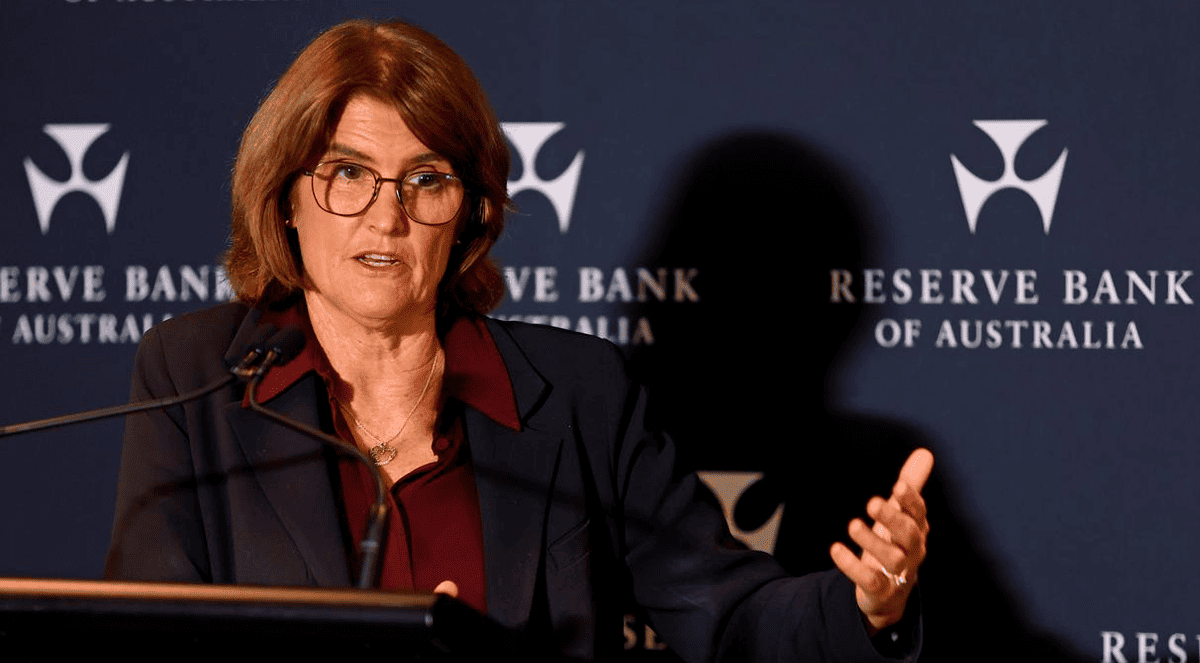
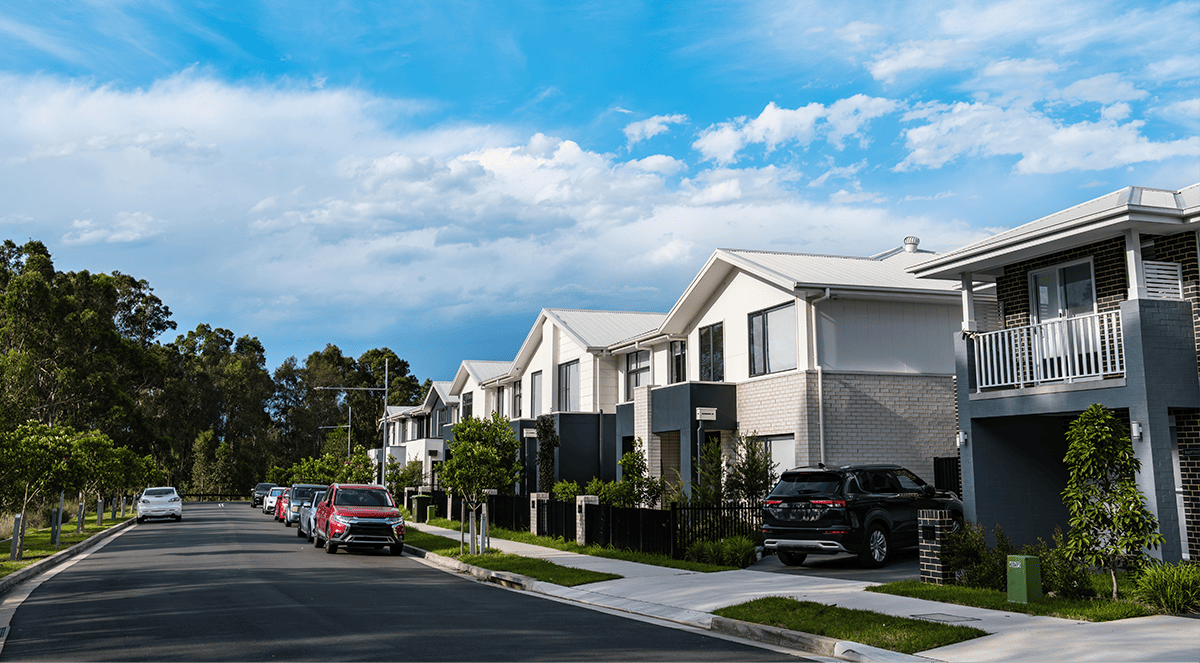
Image by John Appleyard/NewsWire
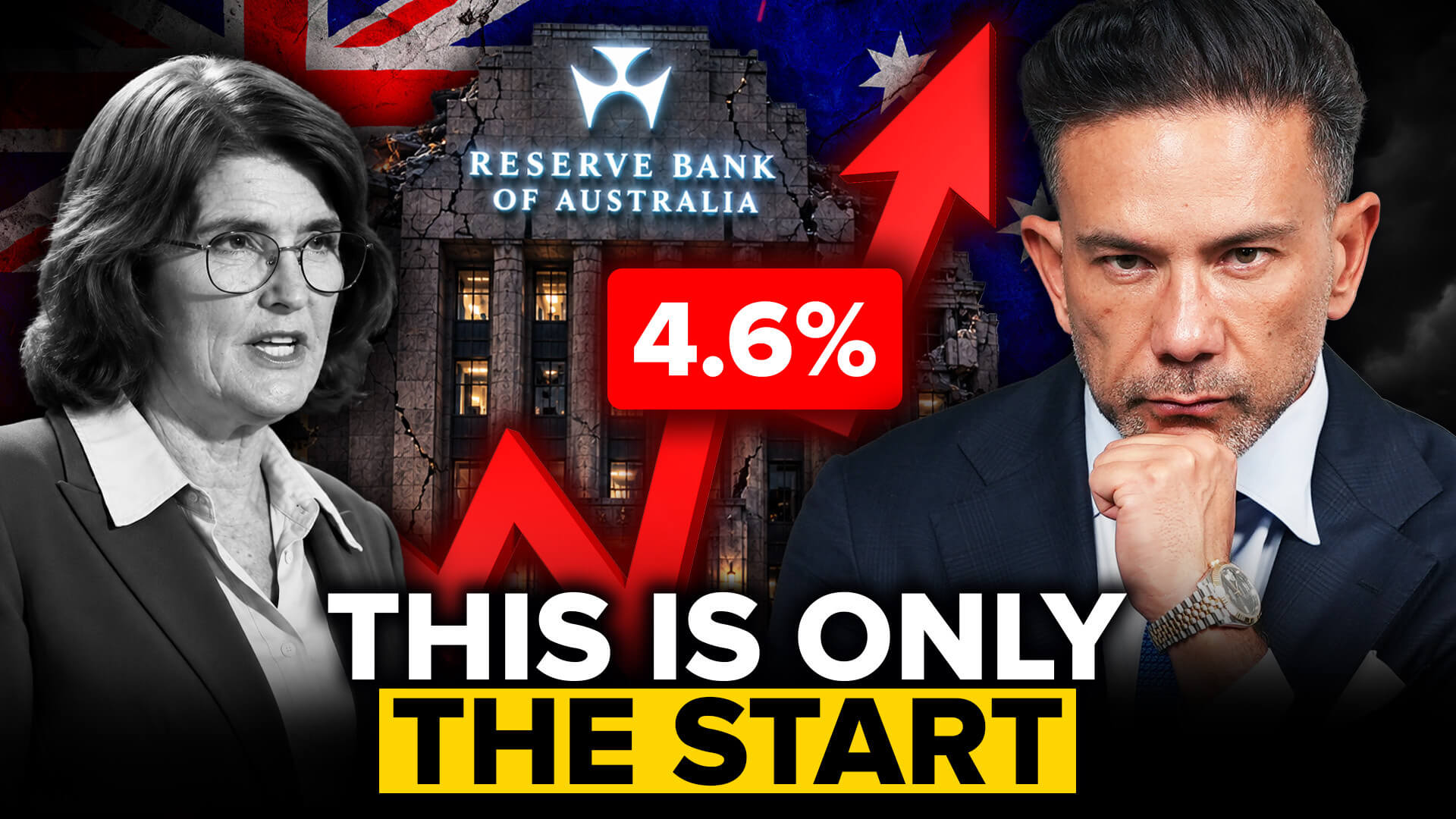
The Reserve Bank of Australia has raised the cash rate for the fifth time this year, taking it to 4.85%.
The decision, announced on Melbourne Cup Day, was widely expected.
However, only six of the nine members of the RBA’s Monetary Policy Board voted in favour of the increase, even as the central bank materially upgraded its inflation forecasts.
And in an ominous warning, Governor Michele Bullock indicated unemployment would need to rise to bring inflation sustainably back to target, while acknowledging sluggish growth could make households feel as though Australia was in recession, even though it technically is not.
The details
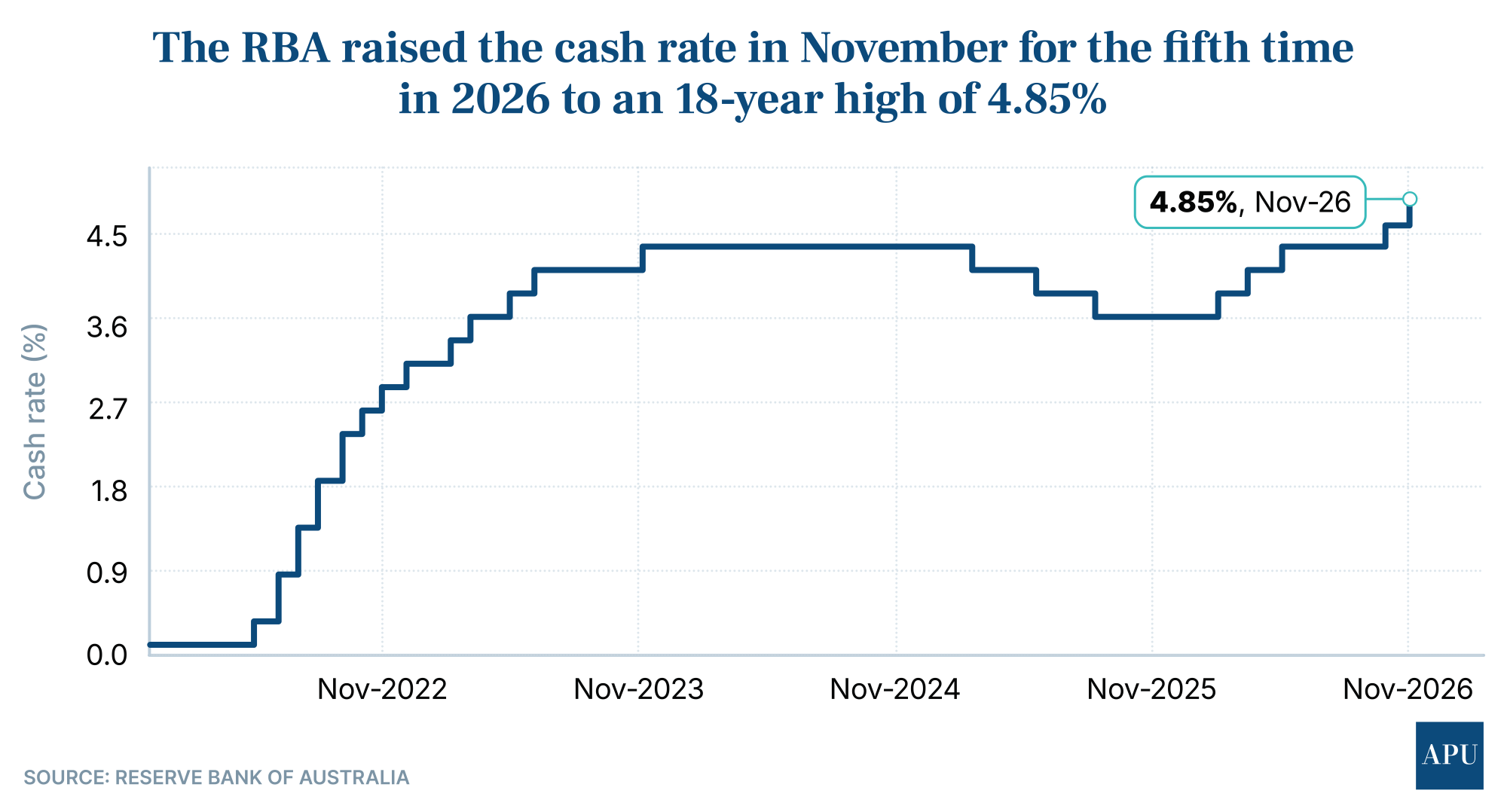
The RBA lifted the cash rate to 4.85% at its November 2026 meeting, taking Australia's cash rate to a level not seen since late 2008, around the time of the GFC.
The move follows rate rises in February, March, May and September as the central bank battles high inflation.
“Inflation remains elevated and recent data indicate that it is broadly based,” the bank said in the statement accompanying the decision.
“The inflation outlook has also been revised materially higher in the updated staff forecasts.
“Inflation is now forecast to remain elevated through much of 2027 and is not expected to reach the top of the 2–3 per cent target range until late 2027, around three quarters later than previously forecast,” the statement said.
While the central bank says this gloomier forecast reflects higher fuel and other commodity prices affected by the conflict in the Middle East, domestic inflation pressures have also been higher than expected.
KPMG Australia chief economist Brendan Rynne says he’s not surprised.
“Things like services, which make up about 70% of the Australian economy … 75% of the Australian economy … things like … health fees, school fees, they've been running at above 4% inflation rate for some time now,” he says.
“And the largest component of those services costs is wages.
“And so when we're seeing aggregate wages or wages growth above that 3.5% mark, that's helping feed that inflation across the economy.
“Today's decision was widely expected, but that doesn't make it any easier for Australian families and businesses to absorb,” Federal Treasurer Jim Chalmers told a press conference in Canberra.
Mr Chalmers emphasised the ongoing conflict in the Middle East as the primary driver of inflation pressures, downplaying the effect of government spending.
“We're helping with the cost of living in a really responsible way at the same time as we manage the budget responsibly and we try and address Australia's longstanding productivity challenge,” he said.
But KPMG’s Dr Rynne says there’s no question government spending is having a significant impact on inflation.
“What we can see is that total government consumption spending plus household spending together is now some 2.5% higher as a proportion of GDP than what it was prior to COVID.
“And what we've seen is that Commonwealth spending is about 2.5% higher than what the long-run average has been over the last 20 years,” he says.
Outlook
In its latest Statement of Monetary Policy, the RBA has published significantly gloomier forecasts for the Australian economy, compared with its August forecasts.
While the bank sees Australia avoiding a recession, economic growth will slow to just 1.3% by the end of next year before picking up slightly to 1.5% by the end of 2028.
In her regular post-decision press conference, RBA Governor Michele Bullock said this sluggish growth could make households feel like Australia was in a recession, although it technically wasn’t.
“I think that is going to make people feel like it’s a recession because they feel poorer, their spending can’t grow very quickly because their incomes aren’t growing very quickly.”
The RBA also expects headline inflation to peak at 4.5% in December this year and not be back in the RBA’s 2-3% band until a year later.
Underlying or core inflation is also not likely to return to the 2-3% target range until December 2028.
Those scenarios are based on an assumption that the RBA maintains a high cash rate of at least 4.8% (with a small jump to 4.9% next year) until December 2028.
Unemployment is also expected to drift higher, from around 4.7% in December this year to 5.1% two years later.
Governor Bullock referred to this, saying “the labor market will need to ease further to bring overall demand and supply back into balance and inflation sustainably back to target.”
Housing
The latest rise will hit mortgage holders hardest.
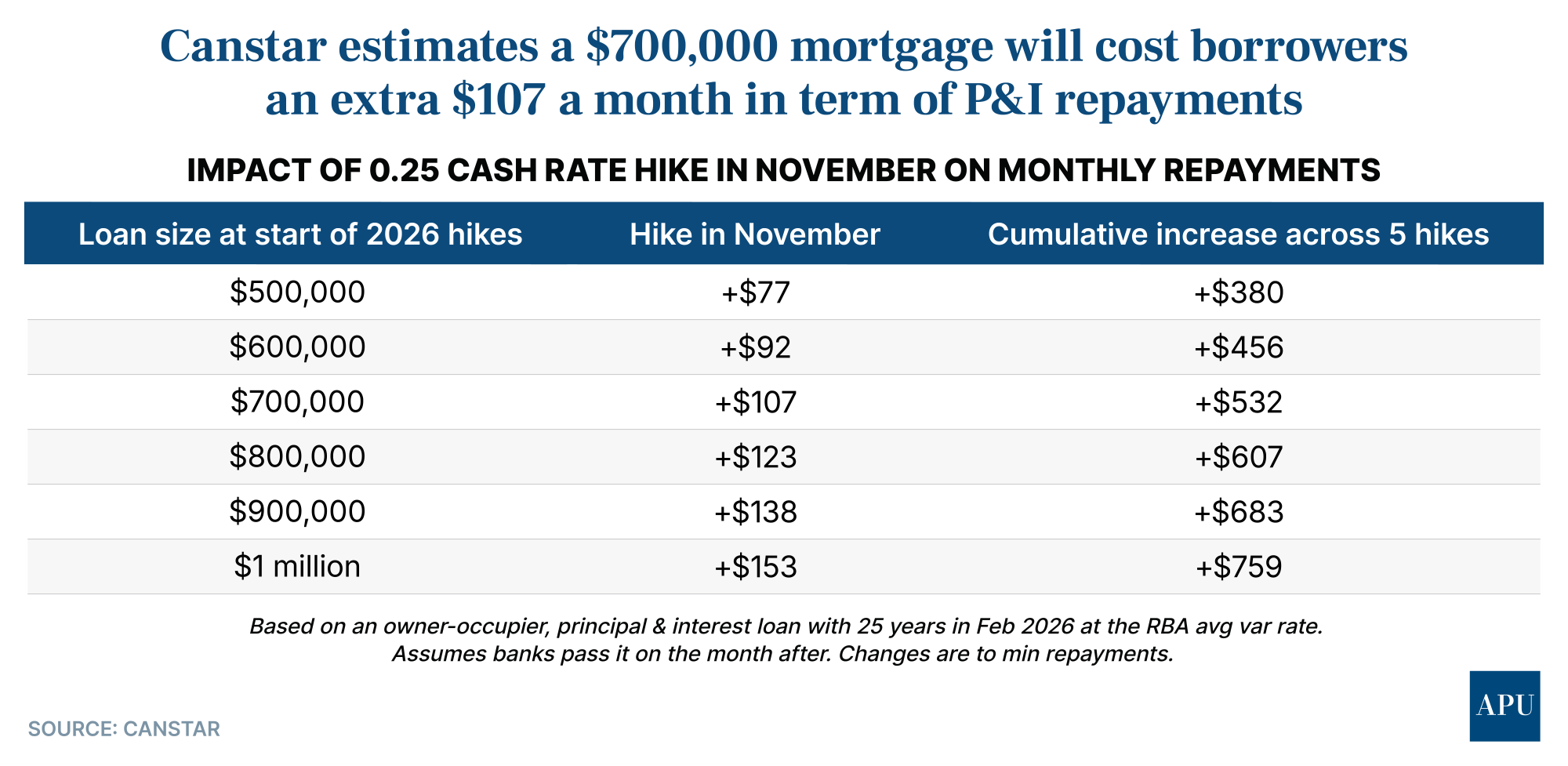
Canstar estimates a borrower with an average-sized $700,000 mortgage and 25 years remaining will pay an extra $107 a month if lenders pass the increase on in full.
Across all five rate rises this year, that borrower’s minimum repayments would be about $532 a month higher than at the start of 2026.
Angus Moore, Senior Economist at realestate.com.au says he expects the RBA rate hike move will slow the property market further.
“Further increases in mortgage rates will reduce borrowing capacities again for prospective buyers, adding to the downward pressure on home prices,” he says.
“However, the downturn, while brisk, remains an orderly adjustment driven by rising rates and affordability pressures, rather than a distressed housing correction.
“In the near-term, higher mortgage rates and very challenging housing affordability will continue to weigh on home prices; over the longer-term, structural undersupply of housing remains a long-term support for prices.”
Rival data analytics company Cotality says that higher interest rates “will continue to impact the confidence and financial capacity of potential buyers.”
“We expect housing values and turnover to continue trending lower in the face of higher interest rates combined with the downside influence of persistent cost of living pressures, weak sentiment and less investment demand post budget.
“It may take rate cuts, which currently look unlikely until the second half of 2027, to underpin a broad-based market recovery.”
In an initial response to the RBA rate decision and the latest Statement of Monetary Policy forecasts, ANZ Bank said it believed it was unlikely the RBA would raise rates again.
“In our view we are at, or close to, the cash rate peak and we are not forecasting another increase,” the bank’s economics team said.