








.png?width=292&height=292&name=Copy%20Link%20(1).png)

 SIGN UP FOR FREE NEWSLETTER
Image from realestate.com.au
Australia’s obsession with home ownership can sometimes make people who rent look like financial failures.
But for many households, particularly in Sydney and Brisbane, renting is not simply what people do while trying to save a deposit to buy a home - it can be dramatically cheaper than buying the same type of property.
The details
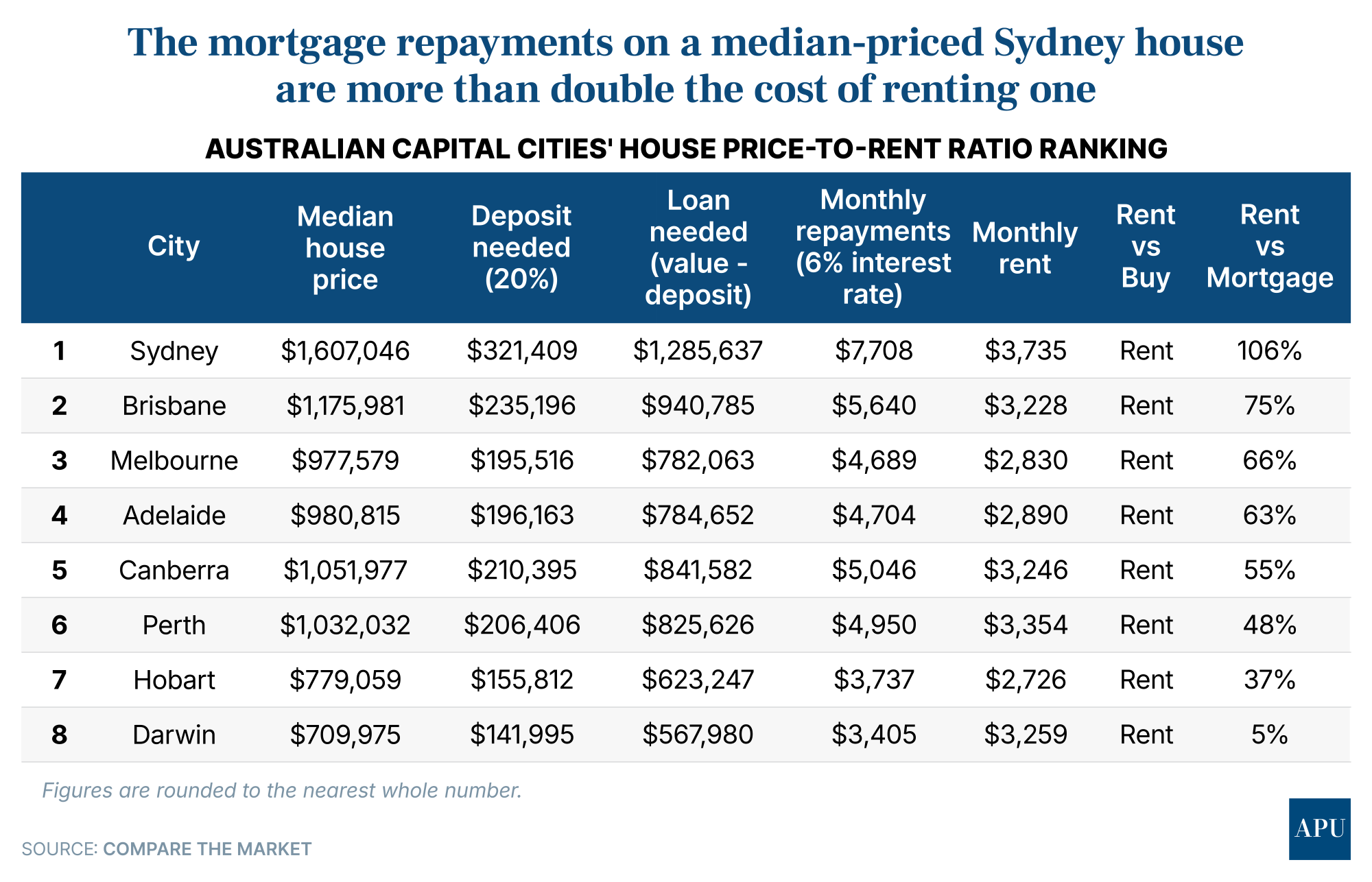
New analysis from comparison website Compare the Market estimates that monthly mortgage repayments on a median-priced Sydney house are more than double the cost of renting one, while in Brisbane, buying a median-priced house requires repayments around 75% higher than the median rent.
The figures help explain why many Australians will remain renters even when they would ultimately prefer to own.
The obstacle is not necessarily a lack of ambition or financial discipline.
In some cities, the immediate cost of buying has moved so far beyond the cost of renting that ownership is simply not viable.
Compare the Market examined median house and unit values and median rents across Australia’s capital cities.
Its calculations assumed buyers had a 20% deposit and borrowed the remainder at an interest rate of 6%.
The analysis did not include stamp duty, council rates, insurance, maintenance, body corporate fees or the opportunity cost of tying up a large deposit, meaning the short-term financial gap between buying and renting could be even wider.
Sydney provides the most extreme example.
Based on a median house price of just over $1.6 million, a buyer would need a deposit of about $321,000 and a mortgage of almost $1.29 million.
At 6%, estimated monthly repayments would be about $7,708.
The median monthly house rent, by comparison, was about $3,735.
That makes the mortgage repayment alone 106% higher than the cost of renting, before allowing for other ownership expenses.
For a household weighing up whether to rent or buy, that’s a difference of almost $4,000 every month.
It also explains why renting may remain the rational option even for people on relatively strong incomes.
A household may be able to afford Sydney rent but have little prospect of servicing a mortgage twice as large, particularly after childcare, groceries, transport and other costs are considered.
Brisbane’s gap widens
Brisbane recorded the second-largest house price-to-rent gap.
With a median house price of about $1.18 million, estimated mortgage repayments were approximately $5,640 a month, compared with rent of about $3,228.
That leaves buyers paying roughly $2,400 more each month, even after contributing a deposit of more than $235,000.
The figures challenge Brisbane’s longstanding image as a relatively affordable alternative to Sydney.
Rapid price growth has transformed the Queensland capital into one of Australia’s most expensive housing markets, even though rents have also risen sharply.
Melbourne and Adelaide followed, with mortgage repayments estimated to be 66% and 63% higher than rents respectively.
In Canberra, Compare the Market found buying a median-priced house cost about 55% more each month than renting.
The gap was 48% in Perth and 37% in Hobart.
Darwin was the exception.
Its estimated monthly mortgage repayment on a median-priced house was only about 5% higher than the median rent, reflecting lower property prices and high rental costs.
Cheaper, but not necessarily better
The figures compare immediate monthly expenses only.
They don’t capture one of the biggest advantages of buying: mortgage repayments gradually build ownership of an asset, while rent does not.
“While renting is currently the cheaper option in most Australian capital cities when comparing monthly costs alone, the decision isn’t always straightforward,” Compare the Market’s Chris Ford says.
“Buying a home allows Australians to build equity over time, while renters may benefit from greater flexibility and lower upfront costs.
“Ultimately, the right choice will depend on an individual’s financial position, lifestyle goals and how long they plan to stay in a particular location.”
For many prospective buyers, however, there is little choice.
The deposit required for a median house ranges from about $142,000 in Darwin to more than $321,000 in Sydney.
Even households that can assemble that money may struggle to pass lender serviceability tests or meet repayments at current interest rates.
Units narrow the divide
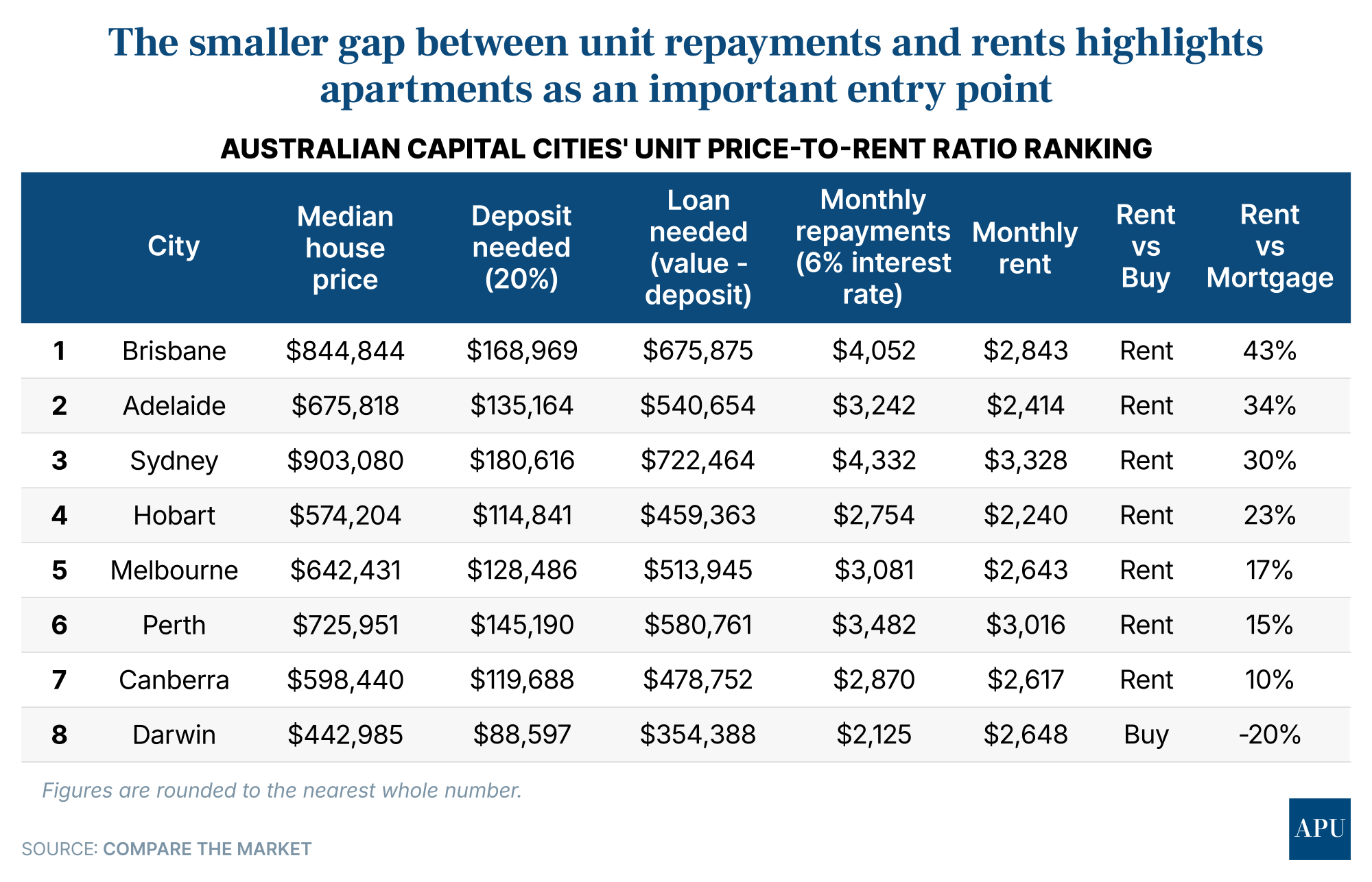
The comparison becomes less extreme for units, highlighting why apartments remain an important entry point into home ownership.
In Sydney, estimated repayments on a median-priced unit were about 30% higher than rent, compared with a 106% gap for houses.
Melbourne’s unit gap was 17%, Perth’s was 15% and Canberra’s was 10%.
Brisbane remained the least affordable unit market for buyers relative to renters, with repayments about 43% higher than monthly rent.
Darwin again stood apart.
Compare the Market says mortgage repayments on a median unit were about $2,125 a month, compared with rent of roughly $2,648, making buying cheaper on a monthly basis.
For households determined to own, compromising on dwelling type may close much of the affordability gap.
The bigger picture
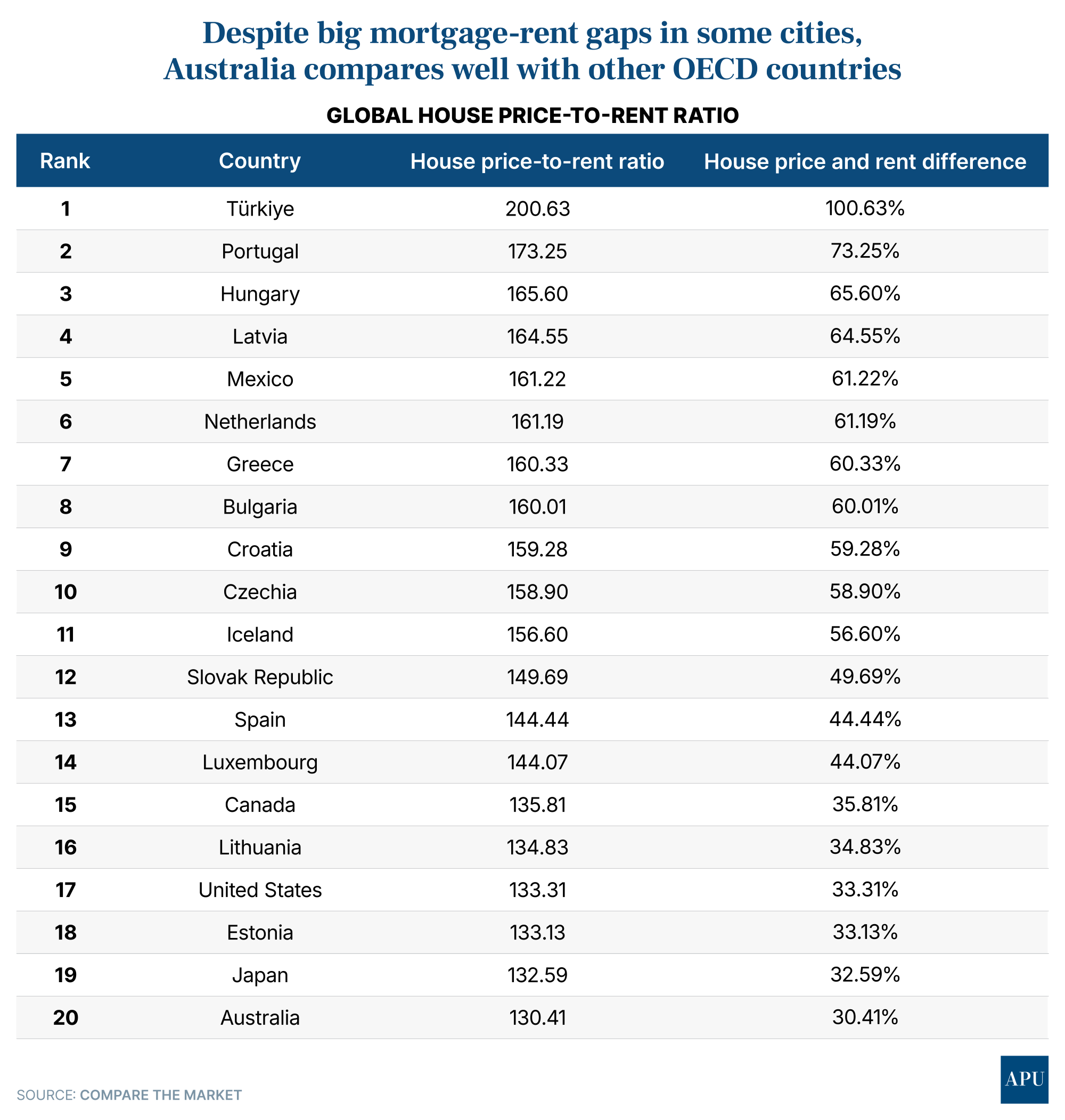
Compare the Market also examined price-to-rent ratios internationally.
Australia ranked 20th among the countries studied, with house prices estimated to be 30.41% higher relative to rents nationally.
Türkiye recorded the largest gap, while Finland was the only country where buying was marginally cheaper than renting.
But the divide within Australia is more revealing than the international comparison.
The Australian average obscures the enormous difference between individual cities - Sydney, where a median house mortgage can cost more than twice the rent, and Darwin, where the monthly costs are much closer.
That doesn’t necessarily make renting a better long-term wealth strategy.
But it does explain why, for many Australians, remaining a tenant is not simply a lifestyle preference - it’s the only option the monthly numbers make possible.
For investors, the message is also clear.
As housing affordability deteriorates, the figures suggest quality rental accommodation will become even more important in Australia’s housing mix.






.jpg?width=1920&height=1080&name=WTF%20Is%20Happening%20To%20The%20Housing%20Market!%20$500%20Billion%20Wiped%20Out%20As%20Prices%20Fall%20Faster%20Every%20Month%20Scott%20Kuru%20YPU%20027%20(1).jpg)
%20Scott%20Kuru%20YPU%20025.jpg?width=1920&height=1080&name=This%20Is%20Worse%20Than%20A%20Recession%20RBA%20Admits%20Australias%20Wage%20Collapse%20Cant%20Be%20Stopped%20(Prepare%20Now)%20Scott%20Kuru%20YPU%20025.jpg)
















.jpg?width=1920&height=1080&name=EXPOSED%20How%20The%20Govt%20Let%20These%20Oil%20Giants%20Get%20Away%20With%20Paying%20Zero%20Tax%20For%20Aussie%20Gas%20Scott%20Kuru%20DPU%20256%20(1).jpg)





%20Scott%20Kuru%20DPU%20248.jpg?width=1920&height=1080&name=Major%20Banks%20CAUGHT%20Preparing%20For%20Australia%E2%80%99s%20Biggest%20Housing%20Crash%20(Defaults%20%26%20Bankruptcies%20Coming)%20Scott%20Kuru%20DPU%20248.jpg)
%20Scott%20Kuru%20DPU%20247.jpg?width=1920&height=1080&name=This%20Is%20How%20Australia%20Gets%20Pushed%20Into%20the%20Next%20Big%20Reset%20(Trust%20Collapse%20Has%20Officially%20Begun)%20Scott%20Kuru%20DPU%20247.jpg)




%20Scott%20Kuru%20DPU%20239.jpg?width=1920&height=1080&name=URGENT%20Life%20In%20Australia%20Has%20Become%20Impossible%20For%20Millions%20Of%20Aussies%20(It%E2%80%99s%20About%20To%20Get%20Worse)%20Scott%20Kuru%20DPU%20239.jpg)





%20Scott%20Kuru%20DPU%20227.jpg?width=1920&height=1080&name=URGENT%20ALERT%20Australia%E2%80%99s%20Property%20Market%20Is%20Sliding%20Into%20Something%20Much%20Bigger%20(Prepare%20Now)%20Scott%20Kuru%20DPU%20227.jpg)