









.png?width=292&height=292&name=Copy%20Link%20(1).png)

 SIGN UP FOR FREE NEWSLETTER
Economists and financial markets expect the Reserve Bank of Australia to keep the cash rate on hold at its monetary policy board meeting in mid-June, following the release of the latest official inflation numbers.
Figures from the Australian Bureau of Statistics show the Consumer Price Index (or headline inflation) was 4.2% in the year to the end of April 2026, a notable drop from the 4.6% recorded in the 12 months to March.
However, a majority of economists and market traders still think the central bank has not finished its current rate hiking cycle, pencilling in at least one more 0.25% increase this year.
The details
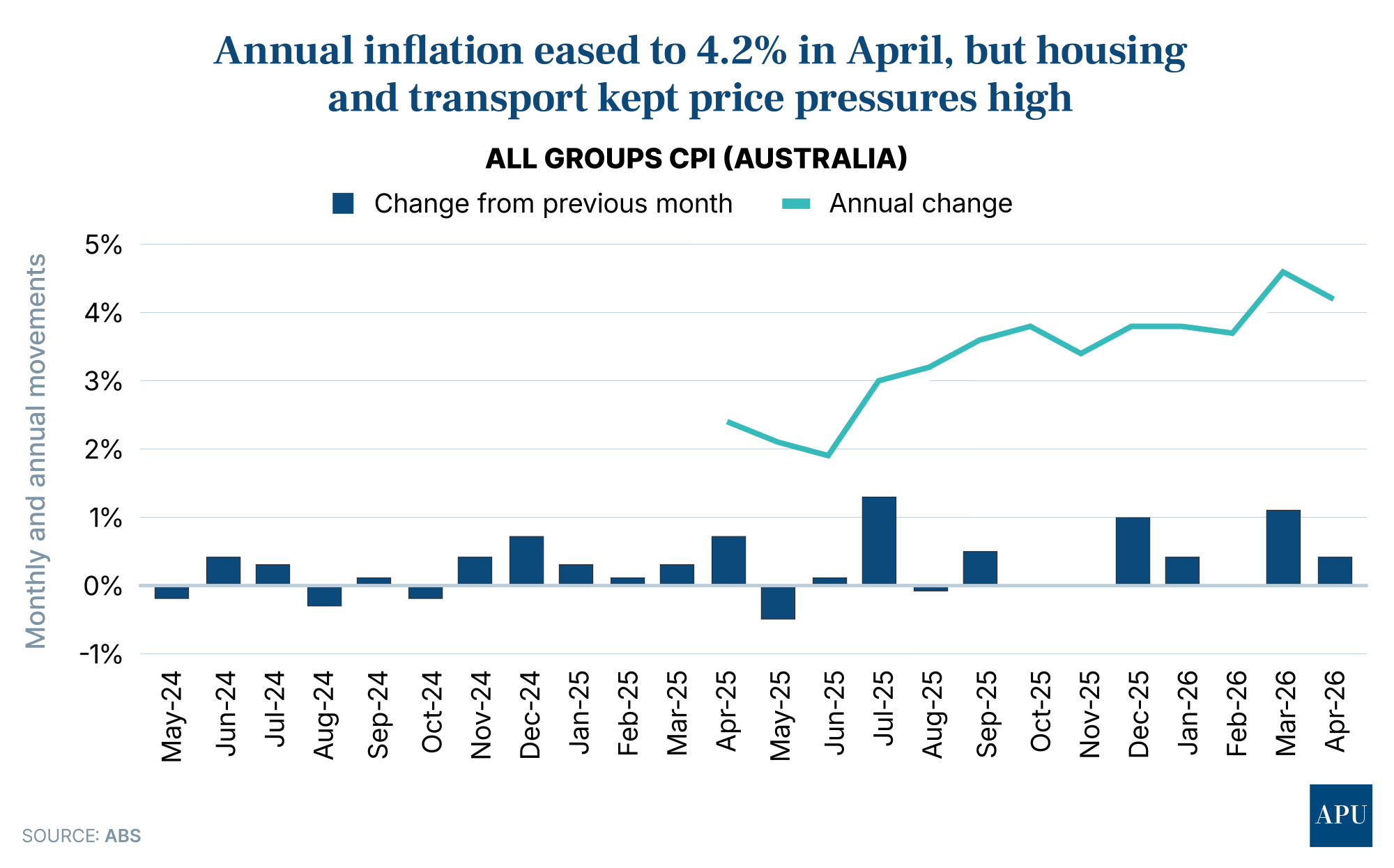
The ABS says the broad Housing and Transport categories were the largest contributors to annual inflation in April 2026, with rises of 6.3% and 6.6% respectively, with the effect of the Iran war showing up clearly in the statistics.
Fuel prices (which are included in Transport) fell 7.0% from March to April, following the decision by the federal government to halve the fuel excise from April the 1st.
But that followed a 32.8% blow out the previous month.
“Automotive fuel prices are still 23.5% higher compared to February and before the impact of the Middle East conflict,” said Sue-Ellen Luke, the ABS Head of Prices Statistics.
“The impact of higher oil prices has also been seen in products and services with high freight and logistics costs, such as parcel delivery and building materials.”
While the CPI fell, trimmed mean inflation, which strips out much of the volatility of price movements and is the RBA board’s preferred inflation measure, ticked up for the first time this year to an annual rate of 3.4%.
It was up from 3.3% in March and well above the RBA’s inflation target range of 2-3%.
“Trimmed mean inflation remains stickier than a toffee apple,” says Canstar’s data insights director, Sally Tindall.
“In the last 12 months, the only moves it’s made were in the wrong direction.”
Nevertheless, independent economist Saul Eslake says the RBA may be “mildly pleased” with the latest inflation numbers, “since their most recent forecasts - issued at the beginning of this month - envisaged 'headline' inflation of 4.2% and 'underlying' inflation of 3.8% over the year to the June quarter.”
“So the 'headline' figure is in line with their forecast, and the 'underlying' rate, though up slightly from March, is nonetheless below their forecast for the June quarter as a whole (noting that there are two more months to come),” he says.
“Combined with the unexpected 0.2 pc pt increase in the unemployment rate to 4.5% in April (reported last week), and their apparent satisfaction that, at 4.6%, the cash rate is now back in 'restrictive' territory, they are likely to leave the cash rate unchanged at their next meeting on 15-16 June.”
Canstar warns that while the RBA might be set to hit pause in June, borrowers “should not mistake this as the end” of rate hikes in this cycle.
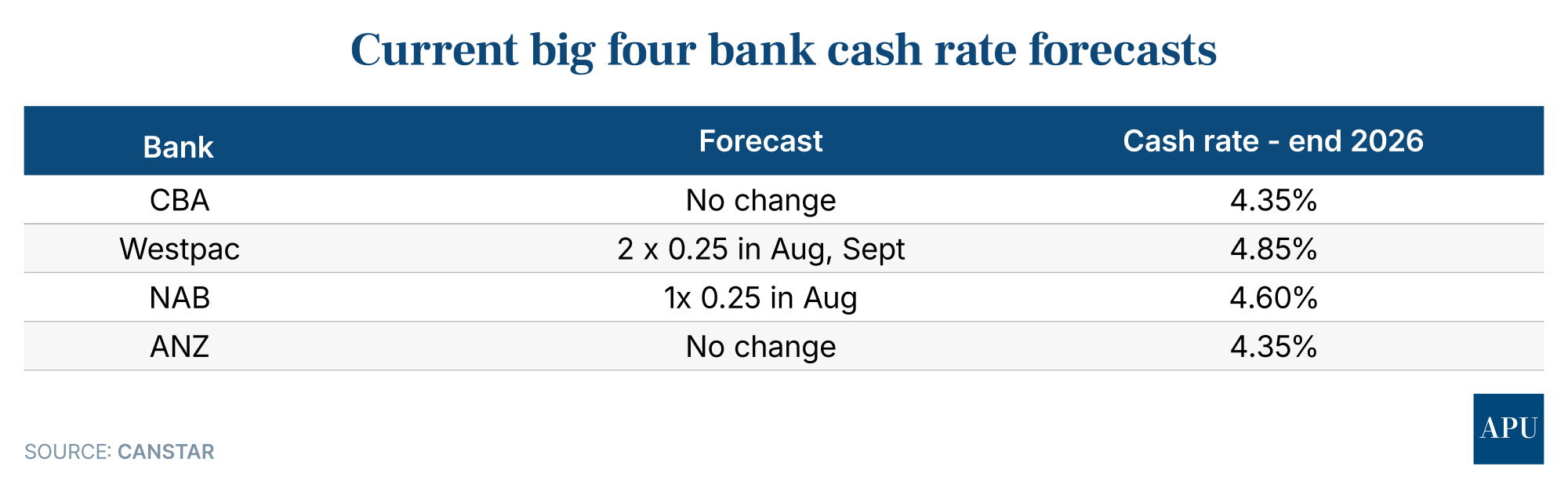
The comparison site points out that while Australia’s big “four” banks are all forecasting the RBA will keep the cash rate unchanged at 4.35% in June, only the Commonwealth Bank and ANZ expect it to be the end of the rate hiking cycle.
“If the Board does pause in June it won’t signal the end of the hikes,” says Canstar’s Sally Tindall.
“If the current cash rate setting doesn’t get inflation moving back in the right direction, the RBA will have no option but to ratchet up the pressure even further.”
Westpac holds the most pessimistic view among the big banks, predicting two more 0.25% rate hikes this year - a prospect which would take official interest rates to 4.85% - their highest level since the GFC in 2008.
Although it says the April headline CPI was a welcome “undershoot”, it still believes inflation will spike further, peaking in July, August and September of this year, especially if the Federal government does not extend the temporary fuel excise cut past the end of June, when it is scheduled to revert to normal.
That, the bank believes, would leave the RBA with little choice but to raise rates twice more, spelling even more mortgage pain for stressed borrowers.
After rate hikes at consecutive RBA meetings in February, March and May, a June pause would leave borrowers with a window of reprieve - although it could be short-lived.
Canstar’s advice is to use the time wisely.
“If your finances aren’t prepared for another couple of rate hikes, now is the time to start making those preparations,” Sally Tindall says.





.jpg?width=1920&height=1080&name=WTF%20Is%20Happening%20To%20The%20Housing%20Market!%20$500%20Billion%20Wiped%20Out%20As%20Prices%20Fall%20Faster%20Every%20Month%20Scott%20Kuru%20YPU%20027%20(1).jpg)
%20Scott%20Kuru%20YPU%20025.jpg?width=1920&height=1080&name=This%20Is%20Worse%20Than%20A%20Recession%20RBA%20Admits%20Australias%20Wage%20Collapse%20Cant%20Be%20Stopped%20(Prepare%20Now)%20Scott%20Kuru%20YPU%20025.jpg)
























.jpg?width=1920&height=1080&name=EXPOSED%20How%20The%20Govt%20Let%20These%20Oil%20Giants%20Get%20Away%20With%20Paying%20Zero%20Tax%20For%20Aussie%20Gas%20Scott%20Kuru%20DPU%20256%20(1).jpg)






%20Scott%20Kuru%20DPU%20248.jpg?width=1920&height=1080&name=Major%20Banks%20CAUGHT%20Preparing%20For%20Australia%E2%80%99s%20Biggest%20Housing%20Crash%20(Defaults%20%26%20Bankruptcies%20Coming)%20Scott%20Kuru%20DPU%20248.jpg)
%20Scott%20Kuru%20DPU%20247.jpg?width=1920&height=1080&name=This%20Is%20How%20Australia%20Gets%20Pushed%20Into%20the%20Next%20Big%20Reset%20(Trust%20Collapse%20Has%20Officially%20Begun)%20Scott%20Kuru%20DPU%20247.jpg)






%20Scott%20Kuru%20DPU%20239.jpg?width=1920&height=1080&name=URGENT%20Life%20In%20Australia%20Has%20Become%20Impossible%20For%20Millions%20Of%20Aussies%20(It%E2%80%99s%20About%20To%20Get%20Worse)%20Scott%20Kuru%20DPU%20239.jpg)








%20Scott%20Kuru%20DPU%20227.jpg?width=1920&height=1080&name=URGENT%20ALERT%20Australia%E2%80%99s%20Property%20Market%20Is%20Sliding%20Into%20Something%20Much%20Bigger%20(Prepare%20Now)%20Scott%20Kuru%20DPU%20227.jpg)