









.png?width=292&height=292&name=Copy%20Link%20(1).png)

 SIGN UP FOR FREE NEWSLETTER
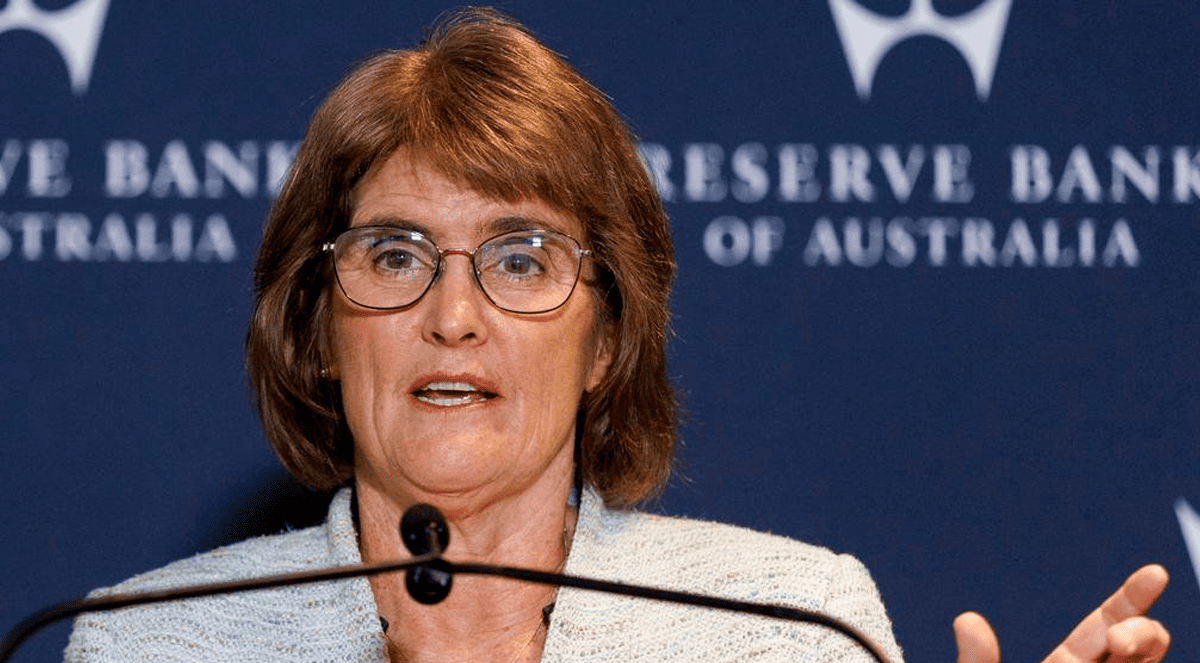
Image by Nikki Short
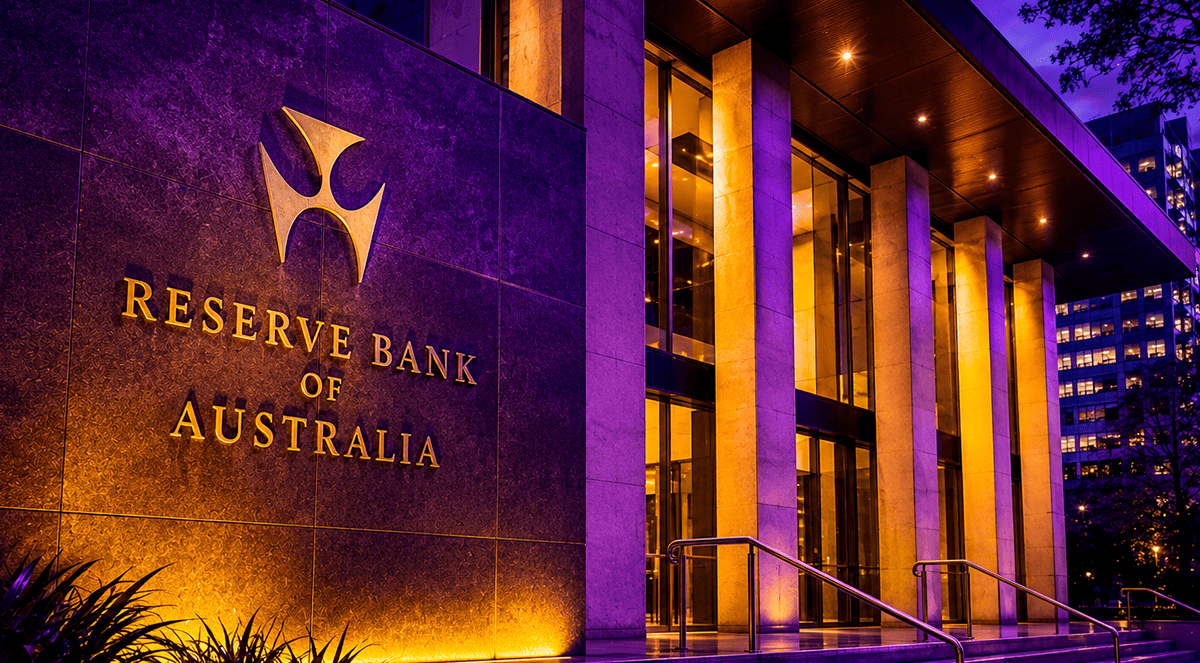
The Reserve Bank of Australia has raised the nation’s cash rate for the second month in a row, arguing domestic inflation pressures were too strong, even before the Middle East conflict forced up the price of oil.
It is the second hike this year, following a move last month, and takes the official cash rate to 4.1%, reversing two of the rate cuts seen last year.
While the decision was widely expected, it wasn’t unanimous, with 5 of the 9 members of the RBA’s monetary policy board voting in favour of a rise in the cash rate, with 4 members against.
The details
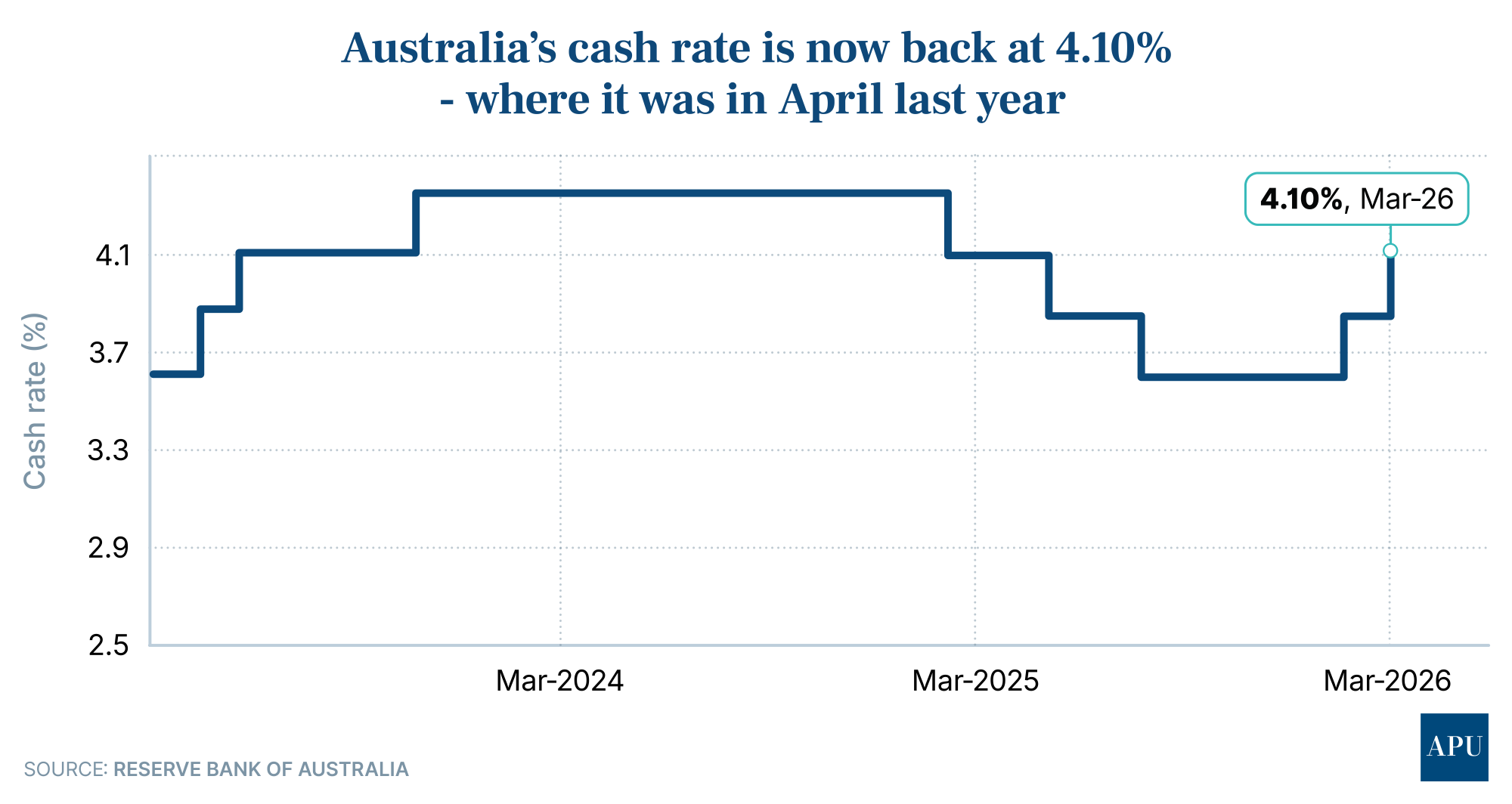
In a statement explaining its latest interest rate decision, the Reserve Bank makes clear that it was already worried about inflation pressures before the outbreak of hostilities in the Middle East at the end of February.
The RBA is tasked with returning inflation to a target range of 2-3%, but the latest statistics from the Australian Bureau of Statistics show headline inflation in January 2026 remained stubbornly high at 3.8%, with the central bank’s preferred core measure at 3.4%.
“While inflation has fallen substantially since its peak in 2022, it picked up materially in the second half of 2025,” the RBA statement says.
“Information since the February meeting (where rates were raised by 0.25%) suggests that some of the increase in inflation reflects greater capacity pressures.
“In addition, the conflict in the Middle East has resulted in sharply higher fuel prices, which, if sustained, will add to inflation,” the statement says.
AMP’s Deputy Chief Economist, Diana Mousina, says higher fuel prices can also act to dampen inflation, which may help explain why the RBA board was split on the decision to move the cash rate higher.
“Inflation has been creeping up a bit, and of course higher petrol prices, which have about a 3% weighting in the inflation basket, could add about 1% to headline inflation if prices stay at these current levels,” she explains.
“However, that's also got a negative impact to consumption, because higher oil prices are basically a tax on spending - they crimp demand.
“And as much as petrol is sort of a necessity… people will try and cut back as much as they can if we see prices remaining at these high levels… or they will have to cut back through other forms of spending.
“So this is why I think the board was so divided, because there are quite significant downside risks to growth from higher oil prices,” she says.
At her post-meeting press conference, the RBA Governor Michele Bullock was at pains to stress that all monetary policy committee members felt inflation in Australia was too high, but were split on the timing of a rate hike.
“The things that all the members agreed on were that inflation is too high, that there are still inflationary pressures from excess demand in the economy, and that inflation expectations, we need to make sure they're anchored,” she said.
“Where the difference was, was in the timing.
“The members that voted to hold were voting to hold in a hawkish sense,” the Governor said.
Reacting to the RBA decision, Federal Treasurer Jim Chalmers freely admitted Australia has an “inflation challenge”, but highlighted the split decision.
“You can see in the statement that it was a close vote, and it was a close call, and I think that reflects the uncertainty that we're seeing in the global economy, and the statement refers to risks in both directions, in that regard,” he told a press conference in Canberra.
“This is obviously not the decision that lots of Australians were hoping for.
“It's not a surprising decision, but that doesn't make it any easier for millions of Australians with a mortgage.”
Mortgages
So what kind of impact will the latest rate rise have on mortgaged households?
Presuming lenders pass on the 0.25% March rate hike in full, comparison site Canstar estimates a household with an average-sized variable rate mortgage of $600,000 would have to make extra monthly repayments of around $91.
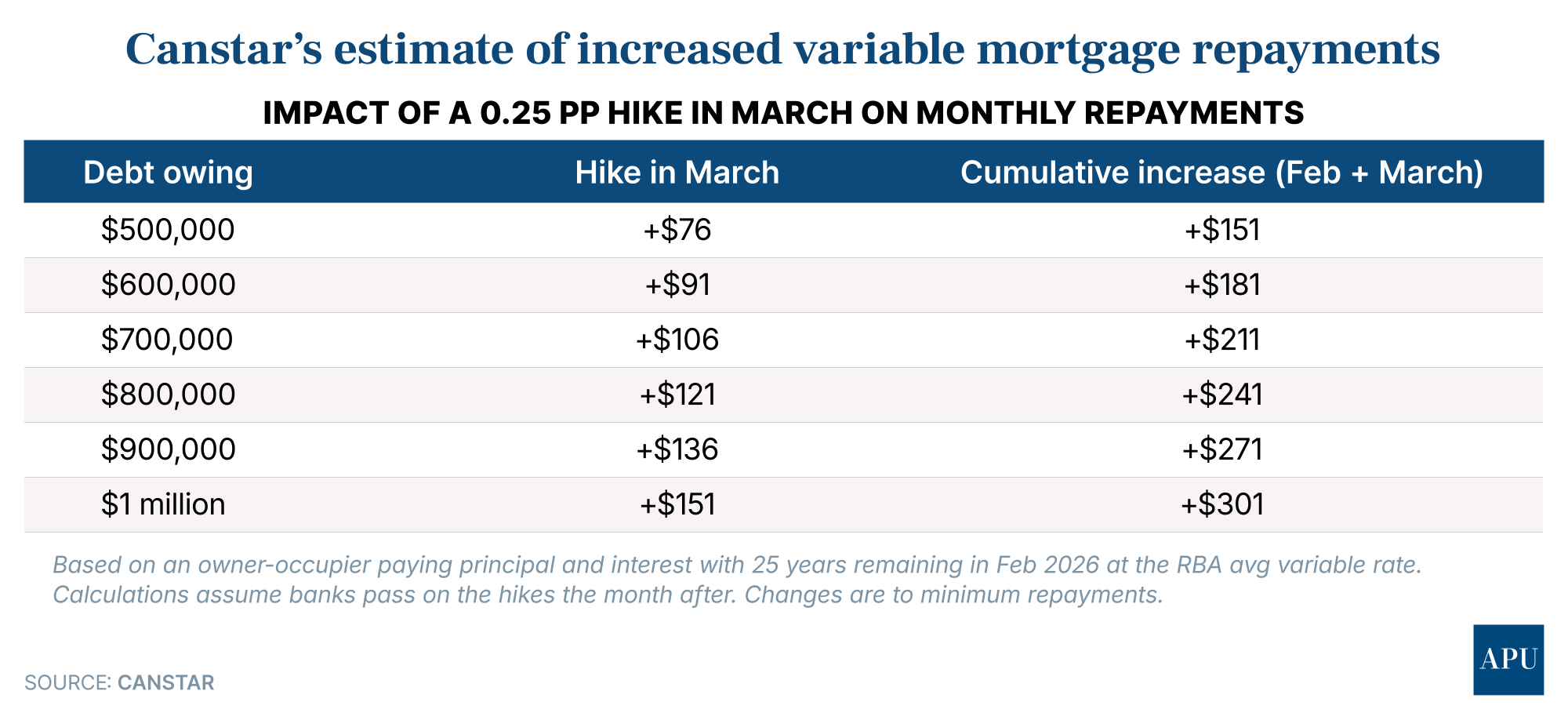
When combined with February’s rate rise, that means households will be making extra repayments of $181 a month than they were at the start of the year.
For households with a $1 million mortgage, the combined 0.5% of rate hikes will see monthly repayments soar by $301.
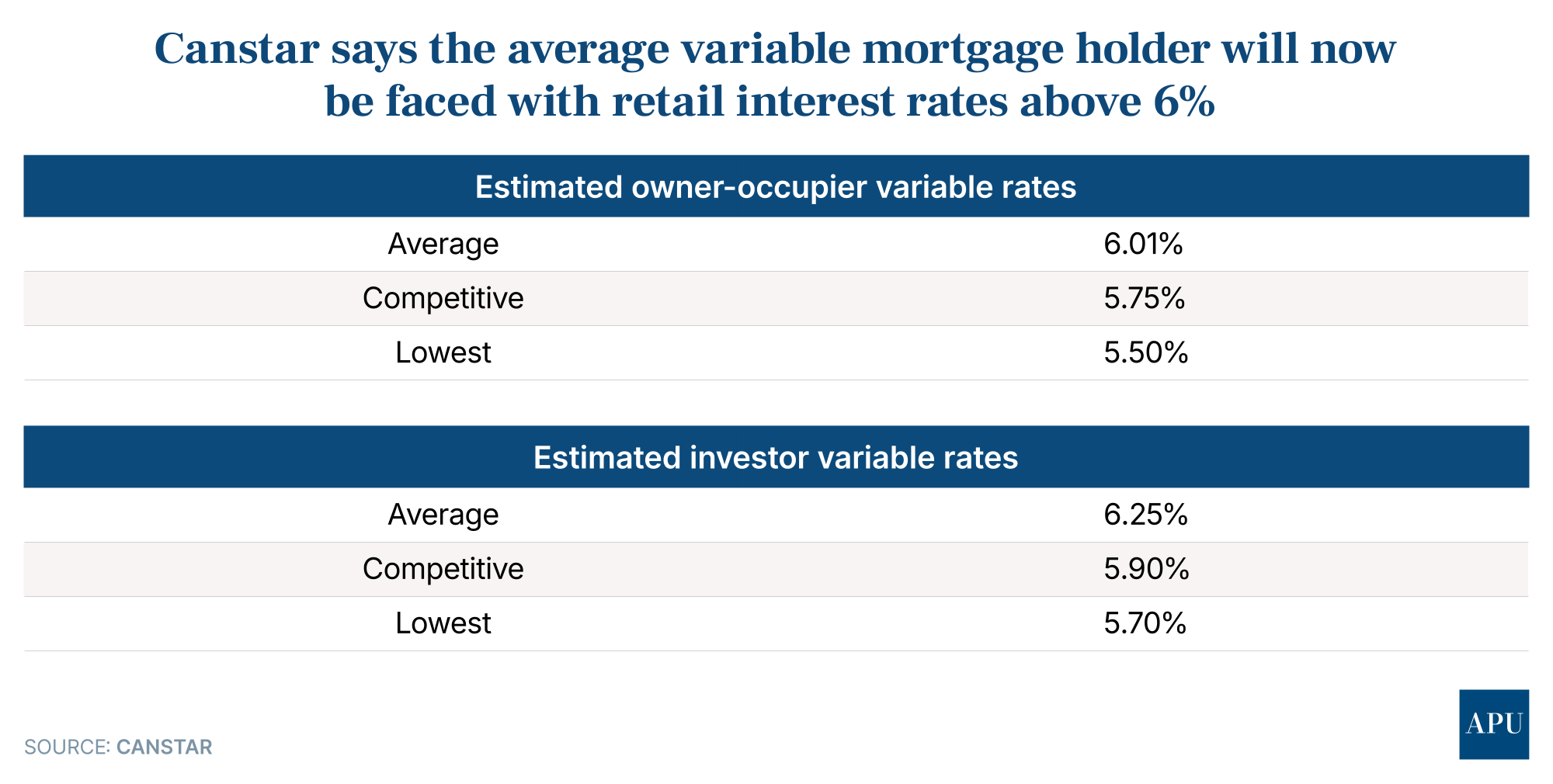
In terms of retail mortgages, Canstar says the latest cash rate hike is set to push rates for owner occupiers back above 6%, while an average interest rate for an investor would be around 6.25%.
Impact on the property market
REA Group Senior Economist Eleanor Creagh says the RBA’s second rate hike in two months “will temper the improvement in borrowing capacity that followed rate cuts in 2025.”
“Higher mortgage rates will add to affordability constraints for buyers and will slow the pace of price growth from the strong gains recorded through 2025.
“National home prices have risen solidly over the past year.
“However, affordability remains stretched, and further tightening in monetary policy will limit the pace of further price increases through 2026,’’ she predicts.
Rival property data house Cotality believes the RBA’s move could actually lead to even more activity at the more affordable end of the Australian property market.
“This tightening is likely to continue to cool demand in the property sector overall but may further increase competition within the lower quartile property segment,” says Cotality's Head of Research, Gerard Burg.
“Cotality’s national Home Value Index rose by 2.1% in the three months to February, but across the country, properties in the lower value quartile rose by 3.2%, as buyers continued to seek affordability.
“While the future direction of interest rates appears higher, there remains uncertainty as to how high.”
Mr. Burg points out that the money markets have already priced in at least one further hike from the RBA this year, while economists at Australia’s “Big 4” banks anticipate another rate rise in May.
“This would fully reverse the rate cuts implemented (by the RBA) in 2025, returning the cash rate to 4.35%,” he says.
AMP’s Diana Mousina thinks the impact of the two rate rises so far this year, plus higher fuel costs and increases in the prices of essentials, will have a much larger impact on household budgets than many anticipate.
“On my calculations, the average household is now paying about an extra $330 a month from higher rates and from higher inflation for those that have a mortgage in Australia,” she says.
That’s why she says AMP believes there will be no more rate rises in 2026.
“At this stage, we expect no changes to interest rates, and that's basically because of this dampening demand impact that we see from higher interest rates, higher inflation, and the destruction to real wages growth,” Ms Mousina says.
The RBA’s monetary policy board next meets on the 4th and 5th of May.











.jpg?width=1920&height=1080&name=WTF%20Is%20Happening%20To%20The%20Housing%20Market!%20$500%20Billion%20Wiped%20Out%20As%20Prices%20Fall%20Faster%20Every%20Month%20Scott%20Kuru%20YPU%20027%20(1).jpg)
%20Scott%20Kuru%20YPU%20025.jpg?width=1920&height=1080&name=This%20Is%20Worse%20Than%20A%20Recession%20RBA%20Admits%20Australias%20Wage%20Collapse%20Cant%20Be%20Stopped%20(Prepare%20Now)%20Scott%20Kuru%20YPU%20025.jpg)
























.jpg?width=1920&height=1080&name=EXPOSED%20How%20The%20Govt%20Let%20These%20Oil%20Giants%20Get%20Away%20With%20Paying%20Zero%20Tax%20For%20Aussie%20Gas%20Scott%20Kuru%20DPU%20256%20(1).jpg)






%20Scott%20Kuru%20DPU%20248.jpg?width=1920&height=1080&name=Major%20Banks%20CAUGHT%20Preparing%20For%20Australia%E2%80%99s%20Biggest%20Housing%20Crash%20(Defaults%20%26%20Bankruptcies%20Coming)%20Scott%20Kuru%20DPU%20248.jpg)
%20Scott%20Kuru%20DPU%20247.jpg?width=1920&height=1080&name=This%20Is%20How%20Australia%20Gets%20Pushed%20Into%20the%20Next%20Big%20Reset%20(Trust%20Collapse%20Has%20Officially%20Begun)%20Scott%20Kuru%20DPU%20247.jpg)







%20Scott%20Kuru%20DPU%20239.jpg?width=1920&height=1080&name=URGENT%20Life%20In%20Australia%20Has%20Become%20Impossible%20For%20Millions%20Of%20Aussies%20(It%E2%80%99s%20About%20To%20Get%20Worse)%20Scott%20Kuru%20DPU%20239.jpg)










%20Scott%20Kuru%20DPU%20227.jpg?width=1920&height=1080&name=URGENT%20ALERT%20Australia%E2%80%99s%20Property%20Market%20Is%20Sliding%20Into%20Something%20Much%20Bigger%20(Prepare%20Now)%20Scott%20Kuru%20DPU%20227.jpg)