









.png?width=292&height=292&name=Copy%20Link%20(1).png)

 SIGN UP FOR FREE NEWSLETTER
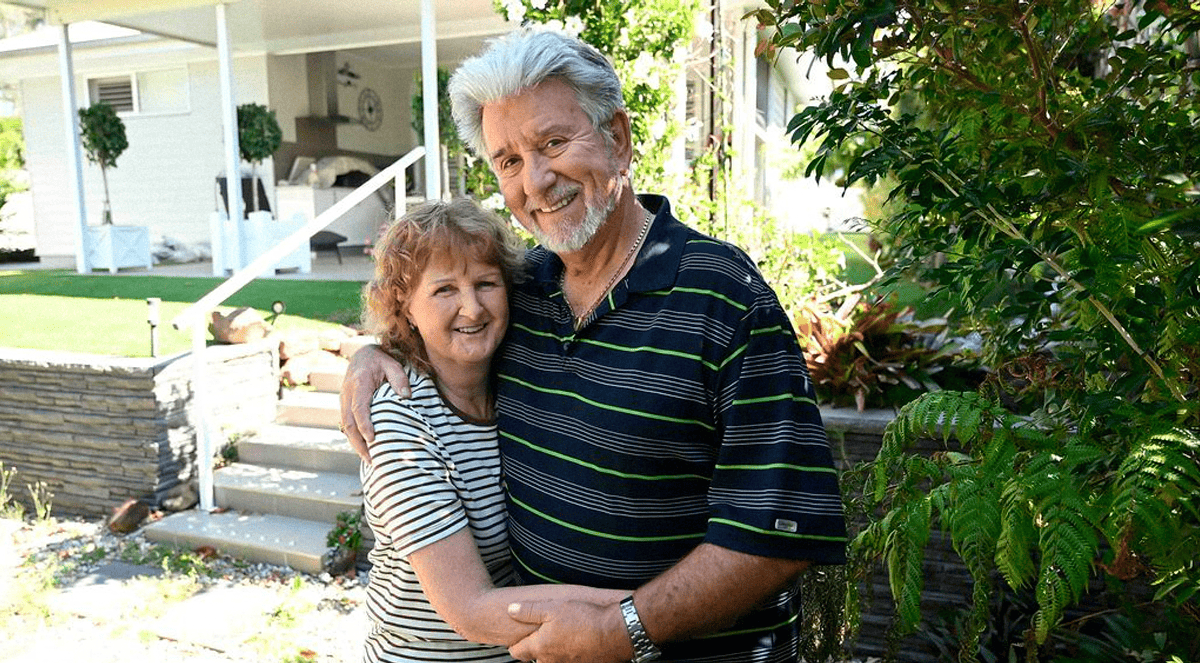
Image by Lyndon Mechielsen/Courier Mail
Several recent surveys have claimed that many older Australians are being prevented from moving to more appropriate homes or relocating to “lifestyle” locations by punitive taxes like stamp duty.
Media coverage of the findings has tended to paint a picture of older, “empty-nester” couples supposedly “trapped” in larger, family-sized houses, often in well-located city areas.
The larger houses are usually close to shops, schools and transport and would be ideal for younger families.

However, new member data from Australia’s largest superannuation fund turns this accepted wisdom on its head, with three-quarters of over 50s polled saying they’re actually keen to stay right where they are as they age.
The details
A number of recent studies and industry surveys have suggested that reforming or removing taxes - particularly stamp duty levied by state and territory governments - could significantly increase the number of Australian retirees choosing to downsize.
Depending on the jurisdiction or the purchase price, stamp or transfer duty can add anywhere between 3% and 6% to the cost of purchasing a new home.
A 2024 research paper by Dr Nick Garvin from the e61 Institute concluded that if stamp duty was scrapped, there could be an estimated 100,000 more moves by owners in New South Wales alone.
In Western Australia, a 2025 survey found that 63% of retirees believed stamp duty costs stopped them from downsizing, while a report from the Retirement Living Council has suggested that removing financial barriers like stamp duty could allow an extra 94,000 seniors to move into retirement village housing options.
Findings like this have led the Federal government to introduce the “downsizer contribution”, which allows people over 54 to contribute up to $300,000 from the proceeds of the sale of their home into superannuation, which doesn't count towards super contribution caps.
The opposition Liberal Party in South Australia has also adopted a stamp duty rebate policy for seniors, as part of its platform for next month’s state election.
Under the plan, South Australians over the age of 55 could be eligible for a one-off $15,000 stamp duty concession to move into a smaller home valued under $1.2 million.
"We want to ensure that big families can move into big homes and the way to do that is by providing this type of incentive so that downsizers as well don't feel that financial strain,” Liberal leader Ashton Hurn explained after launching the policy.
“They (retirees) can make this move that is good for them and good for the next generation of South Australians as well."
However, member data from AustralianSuper - the country’s largest superannuation fund, which has 3.5 million members and manages over $400 Billion in assets - appears to tell a very different story.
Despite the supposed appeal of relocating or downsizing in retirement, 74% of AustralianSuper members say they plan to stay exactly where they are.
The member data comes from both Aussies nearing retirement and those already retired.
When asked to select their top three priorities when considering where to retire, AustralianSuper found that proximity to health services, friends and family, as well as safety and security concerns topped the list.
55% said access to healthcare was the most important factor in deciding where to retire, while 50% cited proximity to friends and family as a top consideration when choosing where to live later in life.
This included many retirees opting to live near their children, in order to regularly care for grandchildren.
Safety and security was another important factor, with 33% listing it as their top priority.



This factor scored higher with women over 50, with 38% saying it was their number one concern.
Interestingly, these three top priorities were even more important to Australians who had already retired, indicating that as people get older, the importance of practical considerations only increases.
So access to healthcare went from 53% as the most important consideration for those planning to retire, up to 68% for those already retired.
Staying close to friends and family bumped up from 48% to 58%, and safety and security from 32% to 33%.
AustralianSuper says these findings demonstrate that what’s important to people in retirement can change over time.
The super fund’s Head of Retirement, Jacki Ellis, says the millions of Australians who are approaching or who are already retired are redefining what retirement looks like.
“Today's retirees are already telling us the traditional cliff-edge moment of working until retirement age and then stopping all-together no longer works for them,” Ms Ellis says.
“As more Australians chase a retirement that is an extension of their current lifestyle, it’s no surprise many Australians want to stay put, rather than marking the end of their working life with a move.”
Her advice for people approaching retirement?
“The sooner you map out your goals, the easier it is to work towards living the retirement lifestyle you want, wherever that may be.”
The take-out
Many “empty-nesters” seem quite happy to stay exactly where they are when their working life comes to an end, close to doctors and medical practitioners they know and trust, family and friends and their local community.

Instead of “rattling around” in big homes with too many bedrooms, many are entertaining grandchildren with sleep-overs, playing with them and gardening in the back-yard, or running a virtual taxi-service, taking the grandkids to school, sport or activities while their parents work.
While stamp duty concessions and other incentives to encourage older people to “downsize” or relocate to lifestyle locations may have some appeal, the AustralianSuper member data appears to show this is more likely to occur at the margins, suggesting a limited impact on housing turnover in older, more established areas of our big cities.
It seems stability, family and community connections matter more to today’s retirees than “sea-change” or “tree-change” aspirations, suggesting the assumed wave of would-be Baby Boomer and Gen X retirees heading for coastal towns or downsizing to smaller dwellings may have been wildly overstated.
Also overstated appear to be the predictions of a high level of housing turnover in some of the most tightly-held “family” suburbs of our major cities.
That has significant implications for politicians and planners who favour significant “in-fill” housing development in the middle-ring of our major cities.














.jpg?width=1920&height=1080&name=WTF%20Is%20Happening%20To%20The%20Housing%20Market!%20$500%20Billion%20Wiped%20Out%20As%20Prices%20Fall%20Faster%20Every%20Month%20Scott%20Kuru%20YPU%20027%20(1).jpg)

%20Scott%20Kuru%20YPU%20025.jpg?width=1920&height=1080&name=This%20Is%20Worse%20Than%20A%20Recession%20RBA%20Admits%20Australias%20Wage%20Collapse%20Cant%20Be%20Stopped%20(Prepare%20Now)%20Scott%20Kuru%20YPU%20025.jpg)




























.jpg?width=1920&height=1080&name=EXPOSED%20How%20The%20Govt%20Let%20These%20Oil%20Giants%20Get%20Away%20With%20Paying%20Zero%20Tax%20For%20Aussie%20Gas%20Scott%20Kuru%20DPU%20256%20(1).jpg)







%20Scott%20Kuru%20DPU%20248.jpg?width=1920&height=1080&name=Major%20Banks%20CAUGHT%20Preparing%20For%20Australia%E2%80%99s%20Biggest%20Housing%20Crash%20(Defaults%20%26%20Bankruptcies%20Coming)%20Scott%20Kuru%20DPU%20248.jpg)
%20Scott%20Kuru%20DPU%20247.jpg?width=1920&height=1080&name=This%20Is%20How%20Australia%20Gets%20Pushed%20Into%20the%20Next%20Big%20Reset%20(Trust%20Collapse%20Has%20Officially%20Begun)%20Scott%20Kuru%20DPU%20247.jpg)







%20Scott%20Kuru%20DPU%20239.jpg?width=1920&height=1080&name=URGENT%20Life%20In%20Australia%20Has%20Become%20Impossible%20For%20Millions%20Of%20Aussies%20(It%E2%80%99s%20About%20To%20Get%20Worse)%20Scott%20Kuru%20DPU%20239.jpg)