









.png?width=292&height=292&name=Copy%20Link%20(1).png)

 SIGN UP FOR FREE NEWSLETTER
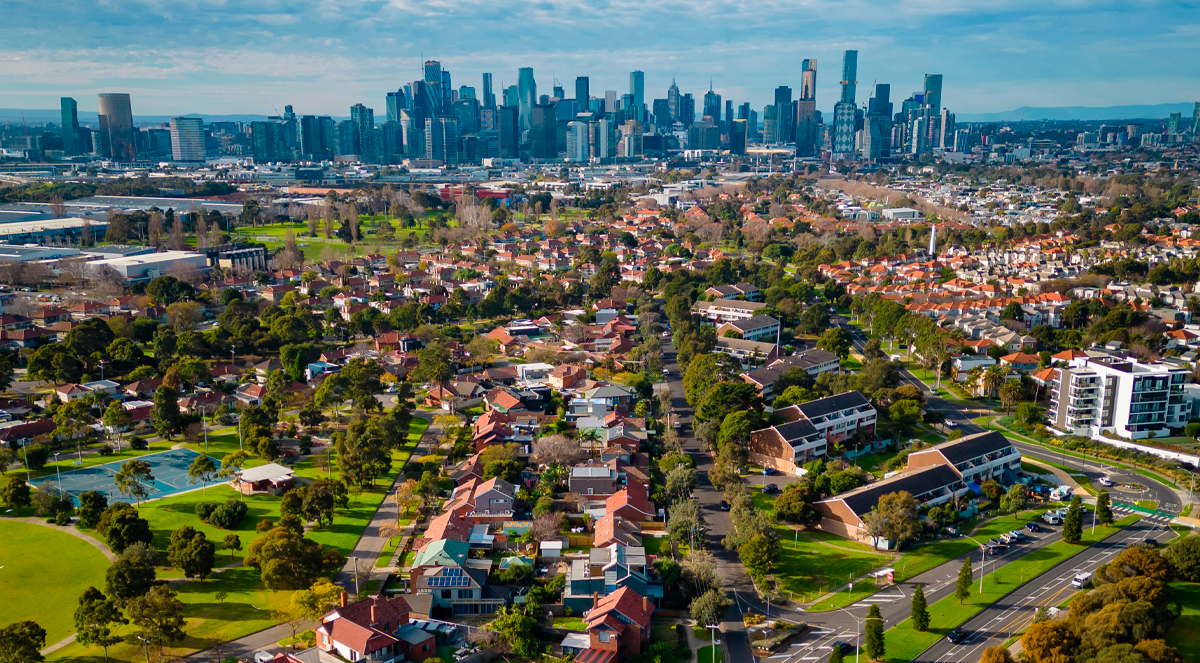
Melbourne's reputation as Australia's housing affordability capital could be under threat, with the property industry warning Victoria is now the only state where the pipeline of future building work is actually shrinking.
New figures from a regular Property Council survey show Victoria is the only state to record negative forward work schedules, while industry confidence has plunged to its lowest level since the COVID pandemic.
The details
Figures from the quarterly Procore/Property Council survey indicate building industry confidence is at its lowest reading in Victoria since the early weeks of the COVID pandemic, with a key sentiment index plunging 17 points over the June quarter, falling from 84 to just 67.
An index reading of 100 is considered neutral.
Confidence across Australia's entire property industry has also deteriorated sharply following the Federal Budget, although Victoria's results stand out as by far the weakest in the country.
The figures have prompted the Property Council's Victorian division to warn the Allan Government that soaring taxes, regulatory uncertainty, and concerns over the management of major infrastructure projects have driven business confidence to its lowest level in 6 years.
The Council has also issued an extraordinary 30-day ultimatum to the state government to produce what it says is “a credible economic recovery plan.”
The survey found that industry confidence in the Victorian Labor Government's ability to plan for and deliver growth fell to a record low of negative 86.4, down from negative 71.2 only three months earlier, again the weakest result of any Australian state.
Victoria was also the only jurisdiction to record negative forward work schedules, with a reading of -12.7, suggesting many construction businesses expect workloads to shrink rather than grow.
For developers, a shrinking forward work schedule is often an early indicator that fewer projects will commence over coming years.
The survey was conducted between the 1st and 17th of June and included responses from 606 property industry participants across Australia.
Property Council Victorian Executive Director Cath Evans said the results reflected an industry that had lost confidence in Victoria's economic direction.
"In the last 90 days, the Victorian Government handed down a State Budget which outlined no meaningful plan to attract the investment we need as a state," she said.
"Investment is leaving Victoria at scale and development projects are becoming increasingly difficult to deliver because of uncompetitive tax and regulatory settings."
Ms Evans said the government now had 30 days to outline "its plan to restore Victoria's economy, and attract businesses and investors back to the state".
"Unless the government changes course, confidence will continue to stay at record lows, and all Victorians will ultimately pay the price."
The Property Council is calling for the removal of investor taxes, including the Absentee Owner Surcharge, as part of a broader strategy to make Victoria more attractive to investment.
Population growth
One factor that has helped keep housing relatively affordable in Victoria is the state’s ability to build enough homes to keep pace with rapid population growth more effectively than many other states.
But while the forward construction outlook is deteriorating, Victoria’s population continues to grow strongly, supported by high levels of overseas migration.
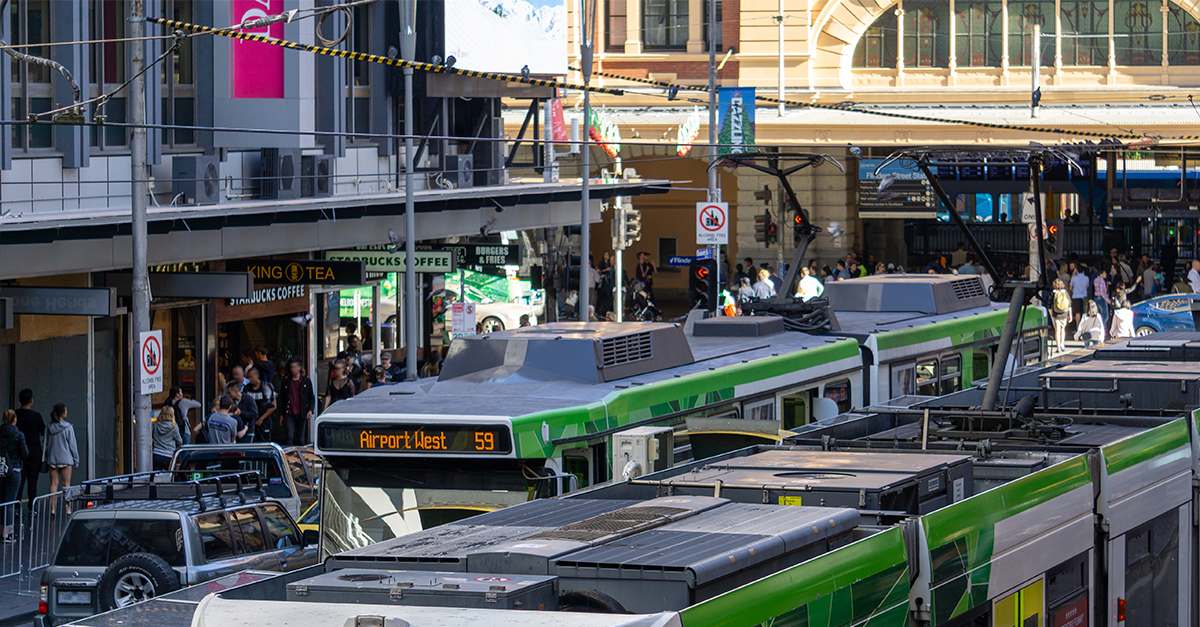
ABS figures show Victoria’s population increased by 1.7% in the year to 31 December 2025, the second-fastest growth rate in Australia behind Western Australia at 2.2%. Victoria recorded the largest numerical increase, adding 117,300 people.
With Cotality putting Melbourne’s rental vacancy rate at just 1.3% in the June quarter of 2026, a prolonged slowdown in home building could intensify the shortage of available housing and place further upward pressure on rents and home prices.
National confidence also weakens
Victoria's problems come against a backdrop of weakening confidence across Australia's broader property sector.
Nationally, the Procore/Property Council survey found industry confidence fell to 92 index points, the weakest result since the pandemic lockdowns.
Property Council Chief Executive Mike Zorbas said the results reflected a significant deterioration in investment sentiment.
"This is not good news.
“Industry is reporting a clear loss of momentum when we need new commercial, industrial, retail and housing projects for our growing cities more than ever."
Mr Zorbas warned that developers were grappling with higher borrowing costs, elevated construction costs, labour shortages and significant policy changes.
"The property industry relies on new investment to deliver homes, workplaces and communities.
“When investment shrinks across the board, project feasibilities fail," he said.
"The property sector employs 1.4 million Australians and pays $130 billion in taxes each year.
“Add higher building and borrowing costs, a tradie deficit and new Federal taxes on project investors and you can bet building new homes will soon become even more expensive."
More than just an industry survey
Although the Procore/Property Council figures measure business confidence, industry leaders argue they have much broader implications.
Developers argue confidence matters because projects don't proceed unless investors are prepared to commit capital.
When confidence falls, fewer projects stack up financially, meaning fewer homes are built.
The Property Council argues this comes at exactly the wrong time as governments attempt to increase housing supply to address Australia's affordability crisis.
Government defends reforms
The Allan Government rejects suggestions that its policies are undermining housing supply.
"Labor's reforms are seeing housing supply outpace anywhere else in Australia, making Victoria the first home buyer capital of the nation," a government spokeswoman told the Herald Sun newspaper.
"Our reforms are designed to get young Victorians into homeownership and to make renting fairer and more affordable and all the evidence shows that this is working."
However, if the property industry's concerns prove correct, Victoria's housing affordability advantage may prove temporary.
A slowing pipeline of new homes, combined with continued population growth, will further tighten housing supply and place renewed upward pressure on both home prices and rents.




.jpg?width=1920&height=1080&name=WTF%20Is%20Happening%20To%20The%20Housing%20Market!%20$500%20Billion%20Wiped%20Out%20As%20Prices%20Fall%20Faster%20Every%20Month%20Scott%20Kuru%20YPU%20027%20(1).jpg)
%20Scott%20Kuru%20YPU%20025.jpg?width=1920&height=1080&name=This%20Is%20Worse%20Than%20A%20Recession%20RBA%20Admits%20Australias%20Wage%20Collapse%20Cant%20Be%20Stopped%20(Prepare%20Now)%20Scott%20Kuru%20YPU%20025.jpg)










.jpg?width=1920&height=1080&name=EXPOSED%20How%20The%20Govt%20Let%20These%20Oil%20Giants%20Get%20Away%20With%20Paying%20Zero%20Tax%20For%20Aussie%20Gas%20Scott%20Kuru%20DPU%20256%20(1).jpg)




%20Scott%20Kuru%20DPU%20248.jpg?width=1920&height=1080&name=Major%20Banks%20CAUGHT%20Preparing%20For%20Australia%E2%80%99s%20Biggest%20Housing%20Crash%20(Defaults%20%26%20Bankruptcies%20Coming)%20Scott%20Kuru%20DPU%20248.jpg)
%20Scott%20Kuru%20DPU%20247.jpg?width=1920&height=1080&name=This%20Is%20How%20Australia%20Gets%20Pushed%20Into%20the%20Next%20Big%20Reset%20(Trust%20Collapse%20Has%20Officially%20Begun)%20Scott%20Kuru%20DPU%20247.jpg)

%20Scott%20Kuru%20DPU%20239.jpg?width=1920&height=1080&name=URGENT%20Life%20In%20Australia%20Has%20Become%20Impossible%20For%20Millions%20Of%20Aussies%20(It%E2%80%99s%20About%20To%20Get%20Worse)%20Scott%20Kuru%20DPU%20239.jpg)




%20Scott%20Kuru%20DPU%20227.jpg?width=1920&height=1080&name=URGENT%20ALERT%20Australia%E2%80%99s%20Property%20Market%20Is%20Sliding%20Into%20Something%20Much%20Bigger%20(Prepare%20Now)%20Scott%20Kuru%20DPU%20227.jpg)