









.png?width=292&height=292&name=Copy%20Link%20(1).png)

 SIGN UP FOR FREE NEWSLETTER
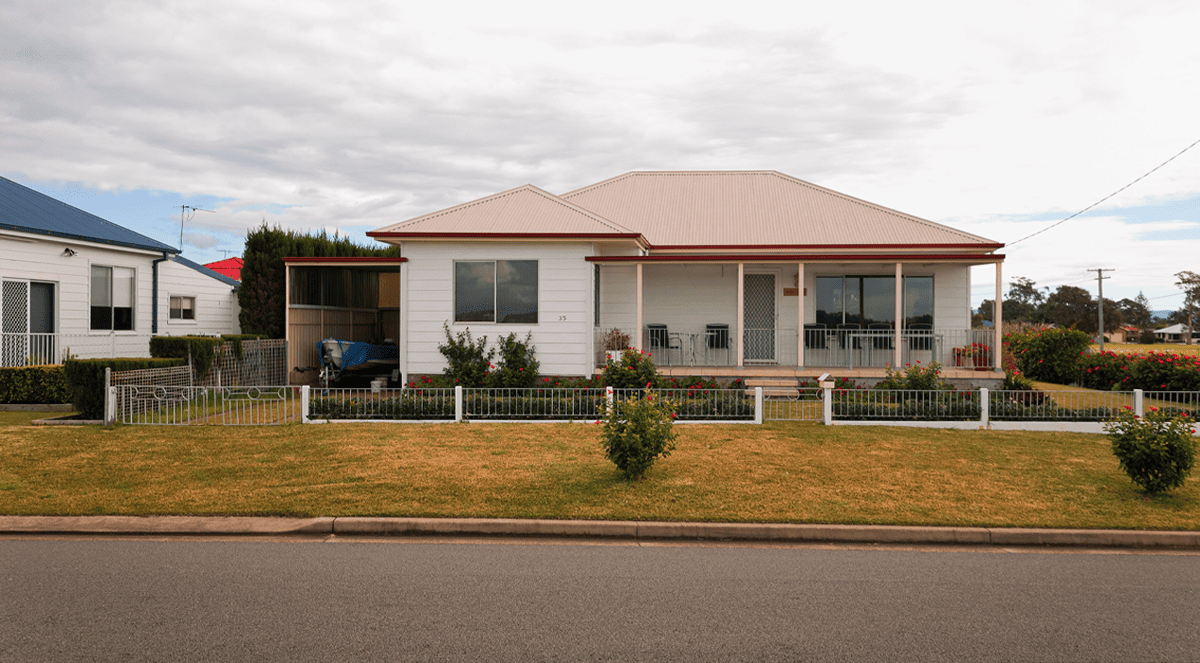
Australia’s housing downturn accelerated in July, but new data shows the weakness remains heavily concentrated at the top end of the market, with entry-level homes continuing to record modest gains and the rental market remaining tight.
Cotality’s national Home Value Index fell 0.7% over the month, the largest monthly decline since December 2022, as the downturn spread beyond Sydney and Melbourne to Brisbane and Adelaide.
However, the headline fall masks a sharply divided market.
Values across the most expensive quarter of Australian homes dropped 3.2% over the three months to July, while properties in the lowest-priced quarter still increased by 0.3%.
That suggests buyers remain active where homes are more affordable, even as higher interest rates, reduced borrowing capacity and weak consumer confidence weigh heavily on prestige property.
For investors already in the market, the rental picture is also more encouraging.
National rents rose another 0.4% in July and were 5.9% higher over the year, while gross rental yields across the combined capitals reached their highest level in seven years.
The details
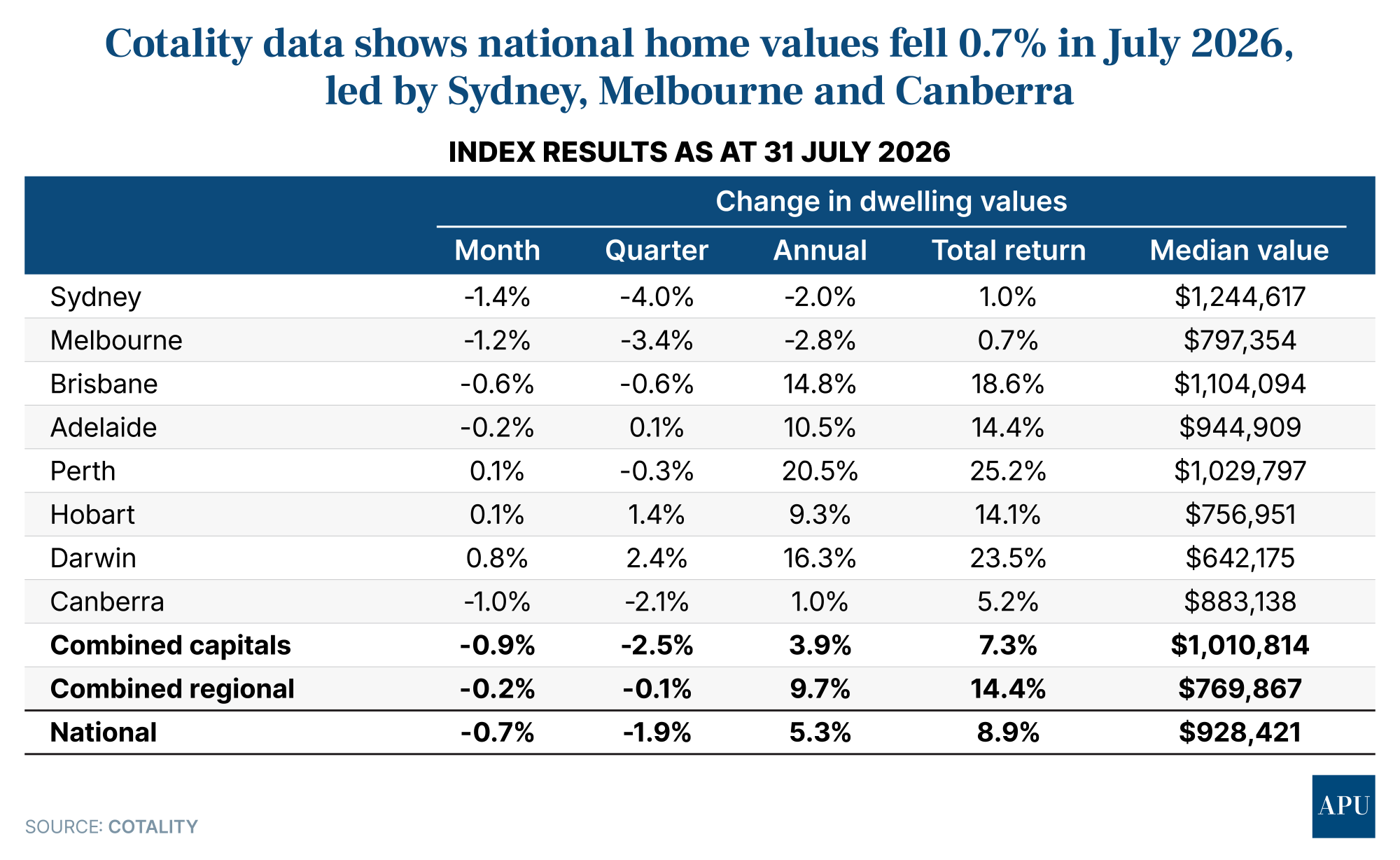
New Cotality data shows Sydney, Melbourne and Canberra continued to lead the national downturn, with home values falling 1.4%, 1.2% and 1% respectively in July 2026.
Sydney values are now 2% lower than a year ago, while Melbourne has eased 2.8% since July 31, 2025.
On an annual basis, Canberra values are still in positive territory, up 1% on the same time last year.
The slowdown has now reached other big cities, with Brisbane values falling 0.6% in July and Adelaide declining 0.2%, with Cotality saying revised figures show both markets also went backwards in June.
Perth edged 0.1% higher in July, although Cotality revised its June result from growth to a 0.5% decline.
Cotality says the national residential property downturn has been driven by several pressures hitting buyers at once.
Affordability and mortgage serviceability were already stretched late last year before the RBA delivered three interest rate rises in February, March and May 2026, adding 75 basis points to the cash rate.
Higher fuel costs, weak consumer confidence linked to the Iran conflict and uncertainty surrounding tax changes announced in the Federal Budget have also reduced demand.
But the impact is far from uniform.
Entry-level demand holds up
The strongest part of the market remains lower-priced property, where first-home buyers and investors are more likely to compete.
Cotality says while upper-quartile values fell 3.2% nationally over the three months to July, lower-quartile values rose 0.3%.
The result points to continued demand for more affordable homes, even as prestige markets weaken.
Cotality says buyers now face less competition, more choice and greater negotiating power than they did at the start of the year.
Total advertised listings across the combined capital cities were 5.7% above their five-year average in late July, while auction clearance rates have remained below 50% since late May.
“There remains a mismatch between the pricing expectations of buyers and sellers,” Cotality Head of Research Gerard Burg says.
More vendors are being forced to negotiate, properties are taking longer to sell and buyers can be more selective.
At the same time, the resilience of entry-level prices suggests genuinely affordable homes are not suddenly becoming easy to secure.
The competition has not disappeared - it’s shifted down the price ladder.
Sellers start to pull back
Cotality also suggests the market may adjust through lower supply rather than a much sharper fall in prices.
“This adjustment is most evident in our weekly listings data,” Mr Burg says.
“We have observed a deterioration in the flow of new listings across the country in recent weeks, led by Sydney, as potential vendors assess a weak market and choose to wait until conditions improve.”
Cotality says this may limit the extent of the downturn, particularly while unemployment remains low and population growth continues to support underlying housing demand.
Stronger returns for landlords
The rental market remains a much brighter part of the outlook for property investors.
National rents rose 0.4% in July and were 5.9% higher than a year earlier for the third consecutive month.
That’s equivalent to an increase of about $40 a week in the median rent.
Darwin recorded the strongest annual rental growth at 10.4%, followed by Perth at 8.1% and Hobart at 8%.
Vacancy rates also remain exceptionally low.
The national vacancy rate increased slightly to 1.7% in July but remained well below its 10-year average of 2.4%.
That imbalance continues to support rents and improve rental yields as property values weaken.
Gross rental yields across the combined capitals reached 3.56% in July, their highest level since August 2019.
Melbourne recorded the highest yield among the major capitals at 4%, while Sydney was lowest at 3.3%.
The outlook
Cotality says the most likely outcome is a further deterioration in home values over the coming months, particularly in higher-priced markets with greater investor exposure and elevated supply.
But it also sees several reasons why a severe correction remains unlikely.
Unemployment is low, population growth remains strong, forced sales are limited and fewer vendors appear willing to list into a weak market.
The risk of another RBA rate rise has also eased following softer-than-expected inflation figures.











.jpg?width=1920&height=1080&name=WTF%20Is%20Happening%20To%20The%20Housing%20Market!%20$500%20Billion%20Wiped%20Out%20As%20Prices%20Fall%20Faster%20Every%20Month%20Scott%20Kuru%20YPU%20027%20(1).jpg)
%20Scott%20Kuru%20YPU%20025.jpg?width=1920&height=1080&name=This%20Is%20Worse%20Than%20A%20Recession%20RBA%20Admits%20Australias%20Wage%20Collapse%20Cant%20Be%20Stopped%20(Prepare%20Now)%20Scott%20Kuru%20YPU%20025.jpg)

























.jpg?width=1920&height=1080&name=EXPOSED%20How%20The%20Govt%20Let%20These%20Oil%20Giants%20Get%20Away%20With%20Paying%20Zero%20Tax%20For%20Aussie%20Gas%20Scott%20Kuru%20DPU%20256%20(1).jpg)







%20Scott%20Kuru%20DPU%20248.jpg?width=1920&height=1080&name=Major%20Banks%20CAUGHT%20Preparing%20For%20Australia%E2%80%99s%20Biggest%20Housing%20Crash%20(Defaults%20%26%20Bankruptcies%20Coming)%20Scott%20Kuru%20DPU%20248.jpg)
%20Scott%20Kuru%20DPU%20247.jpg?width=1920&height=1080&name=This%20Is%20How%20Australia%20Gets%20Pushed%20Into%20the%20Next%20Big%20Reset%20(Trust%20Collapse%20Has%20Officially%20Begun)%20Scott%20Kuru%20DPU%20247.jpg)







%20Scott%20Kuru%20DPU%20239.jpg?width=1920&height=1080&name=URGENT%20Life%20In%20Australia%20Has%20Become%20Impossible%20For%20Millions%20Of%20Aussies%20(It%E2%80%99s%20About%20To%20Get%20Worse)%20Scott%20Kuru%20DPU%20239.jpg)










%20Scott%20Kuru%20DPU%20227.jpg?width=1920&height=1080&name=URGENT%20ALERT%20Australia%E2%80%99s%20Property%20Market%20Is%20Sliding%20Into%20Something%20Much%20Bigger%20(Prepare%20Now)%20Scott%20Kuru%20DPU%20227.jpg)