









.png?width=292&height=292&name=Copy%20Link%20(1).png)

 SIGN UP FOR FREE NEWSLETTER

Image from Yahoo Finance Australia/ Getty
The Albanese Government’s housing tax package could result in 10,700 fewer homes being built by the end of the decade, while pushing rents higher and wiping more than $1 billion from economic output.
The estimates come from economic forecasts commissioned by four of Australia’s largest property and construction industry groups.
The new analysis updates modelling first released after the May Federal Budget and incorporates the subsequent deal between Labor and the Greens to ban self-managed super funds from taking out loans to buy residential investment property.
The details
In June, analysis by Qaive and Tulipwood Economics estimated the combined effect of the Government’s changes to negative gearing and the capital gains tax discount would reduce new dwelling starts by 8,742 between 2026–27 and 2029–30.
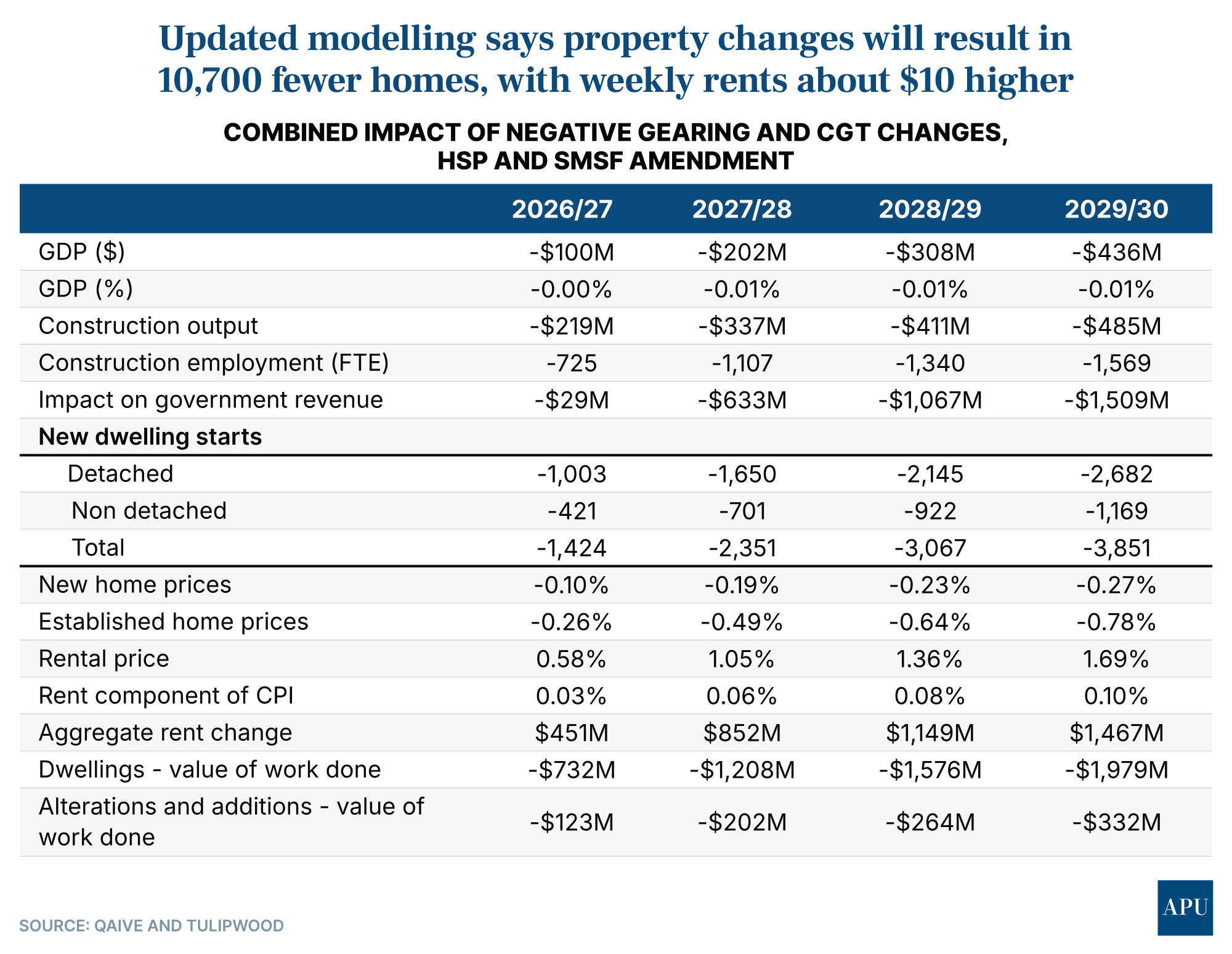
The updated figure is now 10,700 fewer homes, with weekly rents expected to be about $10 higher, cumulative GDP around $1.05 billion lower and the equivalent of about 4,740 full-time construction jobs for one year lost over the next four years.
The modelling was commissioned by the Housing Industry Association, Master Builders Australia, the Real Estate Institute of Australia and the Property Council of Australia.
A joint statement issued by the four property industry groups is blunt, declaring that “Australia cannot resolve its housing shortage through policies that make it harder to finance, build, and supply rental homes.”
The original Qaive and Tulipwood modelling concluded the Budget tax changes alone would reduce dwelling starts by just over 14,000 homes over four years.
The Government’s $2 billion Housing Support Program was expected to offset some of that loss, but not enough to prevent a net reduction of 8,742 new homes.
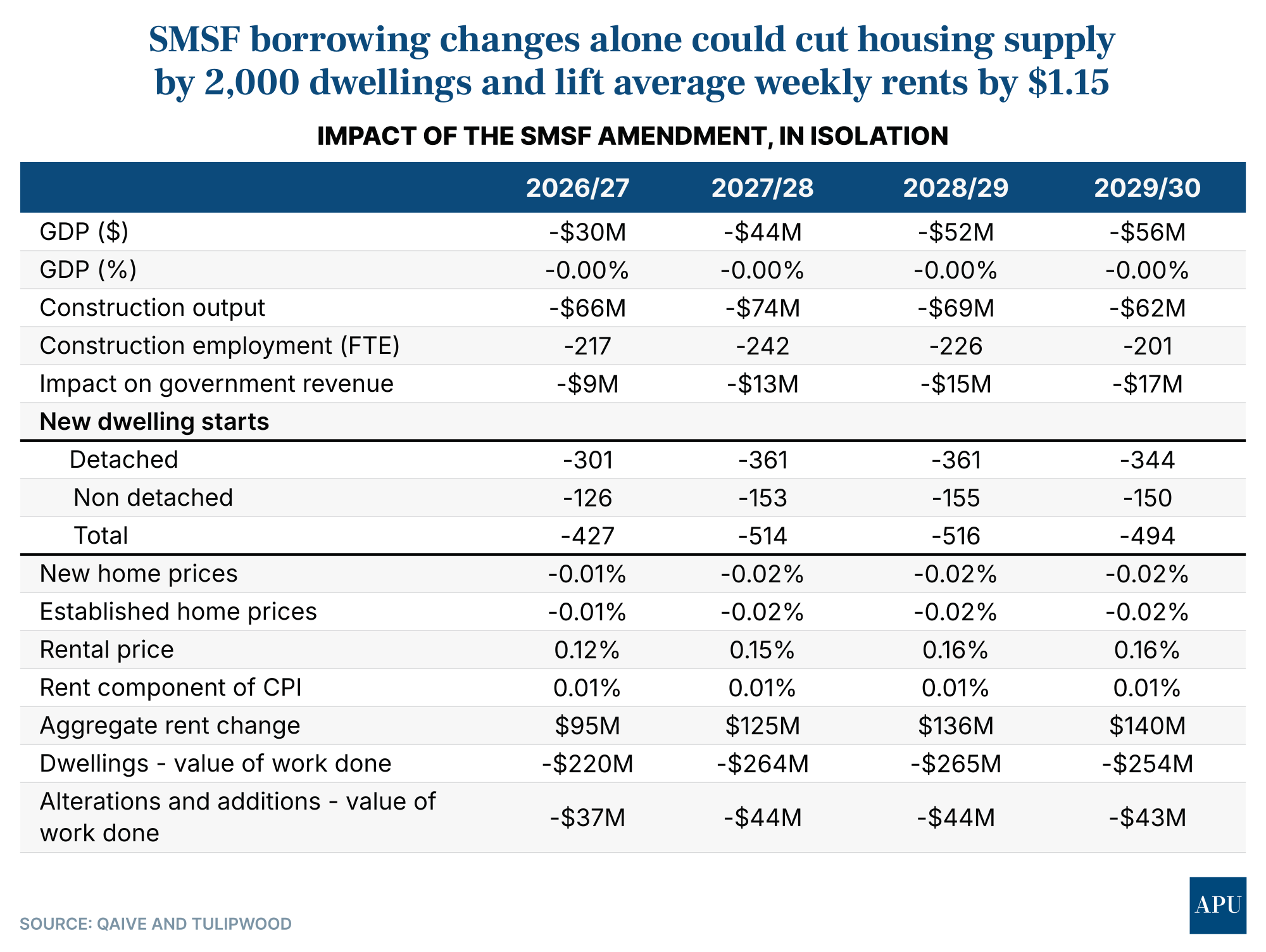
The supplementary modelling now adds the impact of the SMSF borrowing ban agreed during negotiations with the Greens to secure passage of the broader tax package through Parliament.
In isolation, the economists estimate the SMSF change will reduce housing supply by almost 2,000 dwellings, lift average weekly rents by about $1.15, cut GDP by $182 million and reduce construction employment by 886 full-time-equivalent years between 2026–27 and 2029–30.
When combined with the negative gearing and CGT reforms and the Housing Support Program, the total estimated reduction in dwelling starts rises to about 10,700.
Of that reduction, around 1,950 dwelling starts are attributed directly to the SMSF amendment.
The modelling estimates the value of residential dwelling work done will be almost $2 billion lower in 2029–30 than under a no-policy-change baseline, while rental prices will be about 1.69% higher.
When the deal with the Greens was announced in June, Prime Minister Anthony Albanese said so-called “limited recourse borrowing” by SMSFs was “a very small part of the housing market”, while noting previous financial-system reviews had raised concerns about the arrangements.
But the industry groups argue its impact on new housing could be greater than its relatively small share of the overall housing market suggests, because SMSF investors can provide presales that help developers secure the finance needed to get larger projects started.
The supplementary Qaive and Tulipwood report uses ATO, APRA, ABS lending and construction data to estimate how much residential investment is exposed to the change, while allowing for some of the displaced SMSF demand to be picked up by other investors.
The findings also follow separate industry warnings that thousands of SMSF-backed property contracts could be at risk following the policy change.
Critics have argued that removing a source of investor finance at a time when Australia is already struggling to meet housing targets could further weaken development feasibility, particularly for new apartment and townhouse projects.
The updated modelling also widens the gap between the industry groups’ estimates of future rent increases and the Government’s.
Labor has argued its reforms will produce around 75,000 additional owner-occupiers over a decade, lift median rents by less than $2 a week, leave house-price growth around 2% lower than it otherwise would have been over several years, and ultimately add as many as 30,000 homes once its other supply measures are included.
Qaive and Tulipwood instead estimate the combined policy package will push rents up by roughly $10 a week by 2029–30.
That follows their original modelling, which estimated rents would rise from around $3 a week in the first year to about $9 by 2029–30 as the effects of reduced housing supply accumulated.
The supplementary modelling estimates the SMSF borrowing restriction alone would add about $1.15 a week to average rents.
Australia is already well behind the pace required to deliver 1.2 million homes under the National Housing Accord.
The latest National Housing Supply and Affordability Council figures show approvals and commencements have improved since the Accord began, but the country still has a substantial amount of ground to make up.
Around 244,000 dwellings were under construction in the March quarter of 2026, the highest number on record, yet completions remain well short of the pace needed to reach the five-year target.
That’s why the industry groups argue their latest estimates matter, even if 10,700 homes represents only a fraction of the national target.
“With the national 1.2 million-home target already under significant pressure, policy settings that are estimated to remove 10,700 new homes from the market move Australia further away from its housing objectives,” the groups say in a joint statement.
They argue housing policy should instead focus on accelerating planning approvals, delivering enabling infrastructure, increasing construction skills and capacity, and maintaining the private investment required to supply rental homes.











.jpg?width=1920&height=1080&name=WTF%20Is%20Happening%20To%20The%20Housing%20Market!%20$500%20Billion%20Wiped%20Out%20As%20Prices%20Fall%20Faster%20Every%20Month%20Scott%20Kuru%20YPU%20027%20(1).jpg)
%20Scott%20Kuru%20YPU%20025.jpg?width=1920&height=1080&name=This%20Is%20Worse%20Than%20A%20Recession%20RBA%20Admits%20Australias%20Wage%20Collapse%20Cant%20Be%20Stopped%20(Prepare%20Now)%20Scott%20Kuru%20YPU%20025.jpg)

























.jpg?width=1920&height=1080&name=EXPOSED%20How%20The%20Govt%20Let%20These%20Oil%20Giants%20Get%20Away%20With%20Paying%20Zero%20Tax%20For%20Aussie%20Gas%20Scott%20Kuru%20DPU%20256%20(1).jpg)







%20Scott%20Kuru%20DPU%20248.jpg?width=1920&height=1080&name=Major%20Banks%20CAUGHT%20Preparing%20For%20Australia%E2%80%99s%20Biggest%20Housing%20Crash%20(Defaults%20%26%20Bankruptcies%20Coming)%20Scott%20Kuru%20DPU%20248.jpg)
%20Scott%20Kuru%20DPU%20247.jpg?width=1920&height=1080&name=This%20Is%20How%20Australia%20Gets%20Pushed%20Into%20the%20Next%20Big%20Reset%20(Trust%20Collapse%20Has%20Officially%20Begun)%20Scott%20Kuru%20DPU%20247.jpg)







%20Scott%20Kuru%20DPU%20239.jpg?width=1920&height=1080&name=URGENT%20Life%20In%20Australia%20Has%20Become%20Impossible%20For%20Millions%20Of%20Aussies%20(It%E2%80%99s%20About%20To%20Get%20Worse)%20Scott%20Kuru%20DPU%20239.jpg)









%20Scott%20Kuru%20DPU%20227.jpg?width=1920&height=1080&name=URGENT%20ALERT%20Australia%E2%80%99s%20Property%20Market%20Is%20Sliding%20Into%20Something%20Much%20Bigger%20(Prepare%20Now)%20Scott%20Kuru%20DPU%20227.jpg)