








.png?width=292&height=292&name=Copy%20Link%20(1).png)

 SIGN UP FOR FREE NEWSLETTER
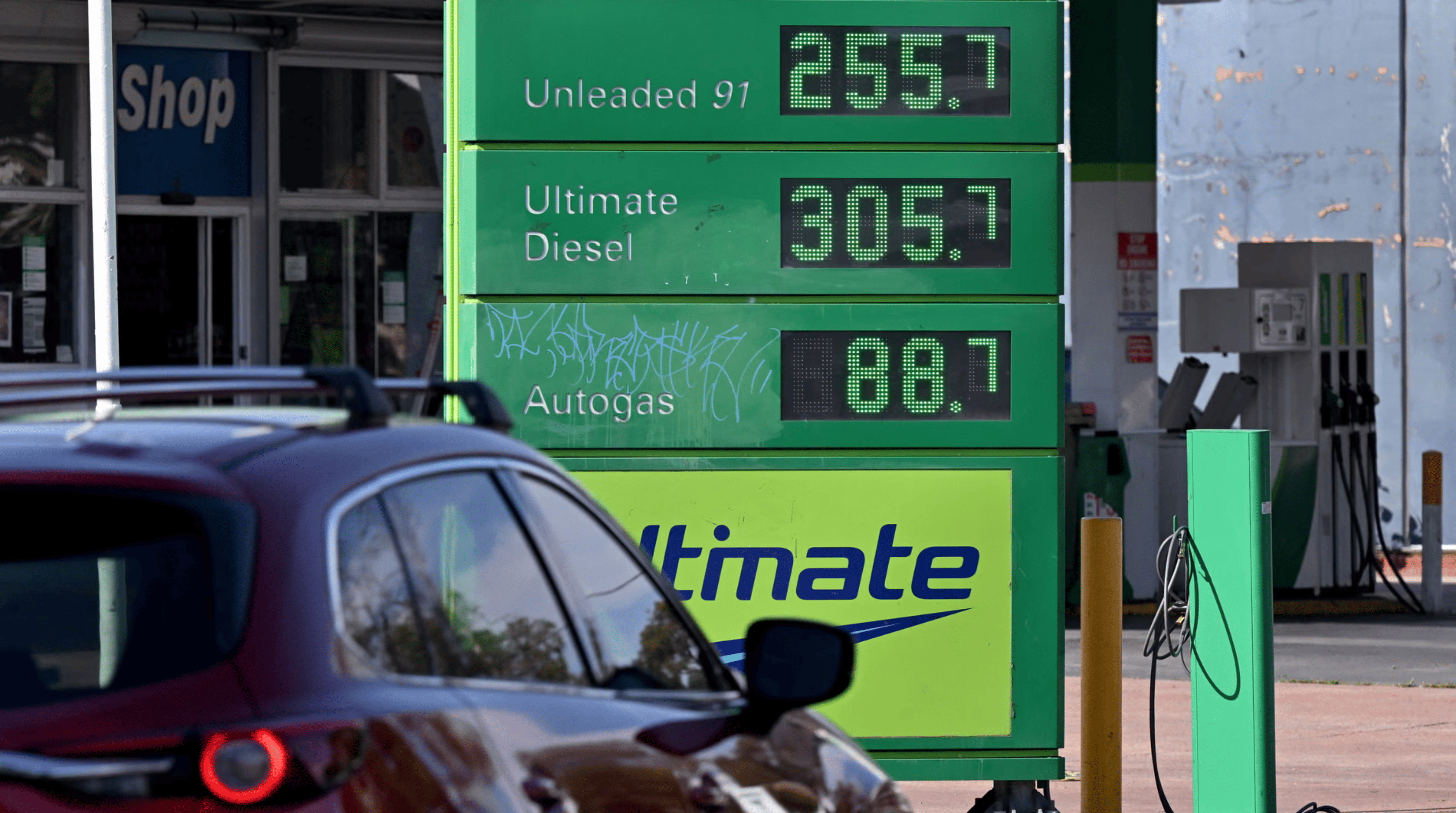
Data released last week by the Australian Bureau of Statistics showed headline inflation in Australia was 3.7% in the 12 months to February 2026, easing slightly from 3.8% the previous month.
However, the figures pre-date the major oil shock precipitated by conflict in the Middle East, so it's unlikely to dissuade the Reserve Bank of Australia from hiking interest rates further, as the central bank struggles to return inflation to its mandated 2-3% target.
The figures were released as an independent analysis of economic data revealed that ALL of the increase in inflation in the latter half of 2025 was due to profiteering by companies and businesses, rather than pressures from a tight labour market or rising labour costs.
The findings raise major questions about the effectiveness of the RBA’s strategy of punishing households with higher mortgage interest rates in a bid to bring down inflation across the economy, particularly at a time when Australians are dealing with the impact of high fuel prices.
The details
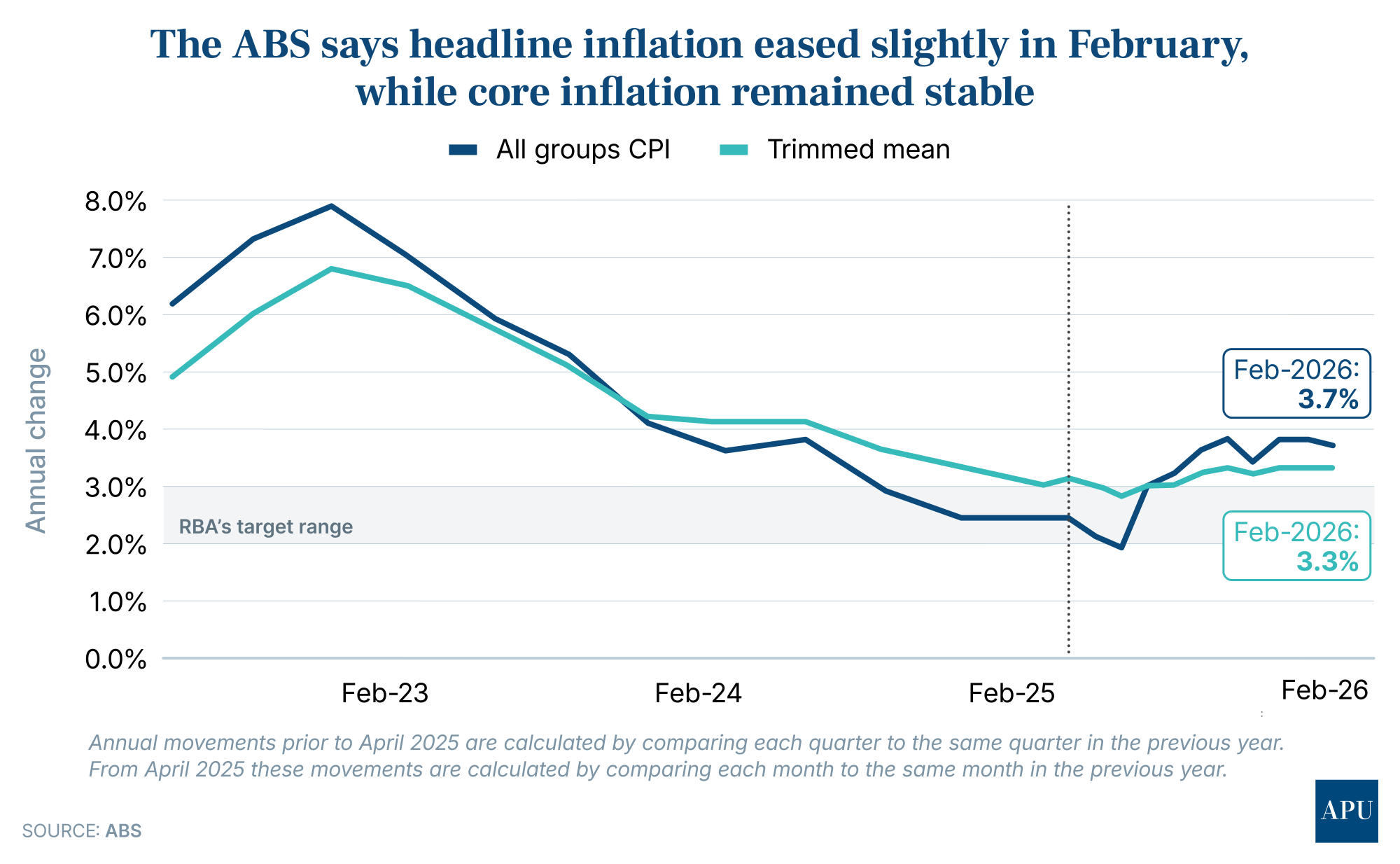
The Australian Bureau of Statistics says the nation’s measure of headline inflation, the Consumer Price Index (CPI), rose 3.7% in the 12 months to February 2026.
“The 3.7% annual CPI inflation to February eased slightly from the 3.8% annual CPI inflation to January,” says Sue-Ellen Luke, the ABS’ Head of Prices Statistics.
The largest contributor to annual inflation in February was the Housing category, which rose by 7.2%.
This category includes rents, the cost of new dwellings and electricity.
The “trimmed mean” - a core inflation measure preferred by the Reserve Bank - was steady at 3.3%.
“Sadly, the numbers are essentially meaningless, because the February data came before the Middle East conflict that has rocketed fuel prices and boosted the cost of essentially everything we purchase,” says ABC Finance reporter Daniel Ziffer.
“Westpac economists and others say they expect the next (CPI inflation) result to have a five in front of it,” Mr Ziffer says, “far above the 2 to 3% range, the RBA wants it (inflation) in before it next looks at setting interest rates in May.”
Westpac actually says it expects the impact of the Middle East conflict to see headline inflation in Australia hitting 5.5% by the middle of the year.
ANZ Bank takes a more cautious view, expecting inflation to peak at 4.9%, but predicts “the combination of geopolitical uncertainty, rising interest rates and higher inflation is likely to dampen Australia’s consumer demand and economic growth.”
“Real GDP growth is now expected to be 1.3% y/y over 2026 and 1.8% y/y in 2027, a material downward revision from our most recent forecasts,” says the bank’s Head of Australian Economics, Adam Boyton.
All of Australia’s “Big 4” banks now expect the Reserve Bank of Australia to increase the cash rate again by 0.25% at its next monetary policy board meeting in May, while money markets have been pricing in anywhere between a 60% and an 80% chance of a rate hike.
Where inflation is coming from
While it’s clear the Middle East conflict is having a significant (and hopefully temporary) impact on prices, inflation had actually begun creeping up in Australia in the latter half of last year.
The Reserve Bank Governor, Michele Bullock, was quite clear about the cause, referencing “tightness in the labour market” and “unit labour costs are running still quite hot”, as she and the board raised interest rates in both February and March of this year.
The implication is that because workers are hard to find, businesses either have to offer higher wages than they normally would to attract them, or that already employed workers are pushing for pay rises well above the rate of inflation.
However, two days after the RBA’s last move to raise rates, the ABS released figures showing that unemployment had risen from 4.1% to 4.3% in February 2026.
“Unfortunately, the Reserve Bank has got it wrong,” say Greg Jericho and David Richardson, economists at the left-leaning Australia Institute.
Using ABS National Accounts data, the two economists analysed the impact of unit labour costs (the average labour required to produce one unit of output) on the inflation measure in the GDP figures, the so-called “GDP deflator”.
They were then able to determine the impact of the increases in gross operating surplus (corporate profits) and gross mixed income (small business income).
They label this “unit profit costs”.
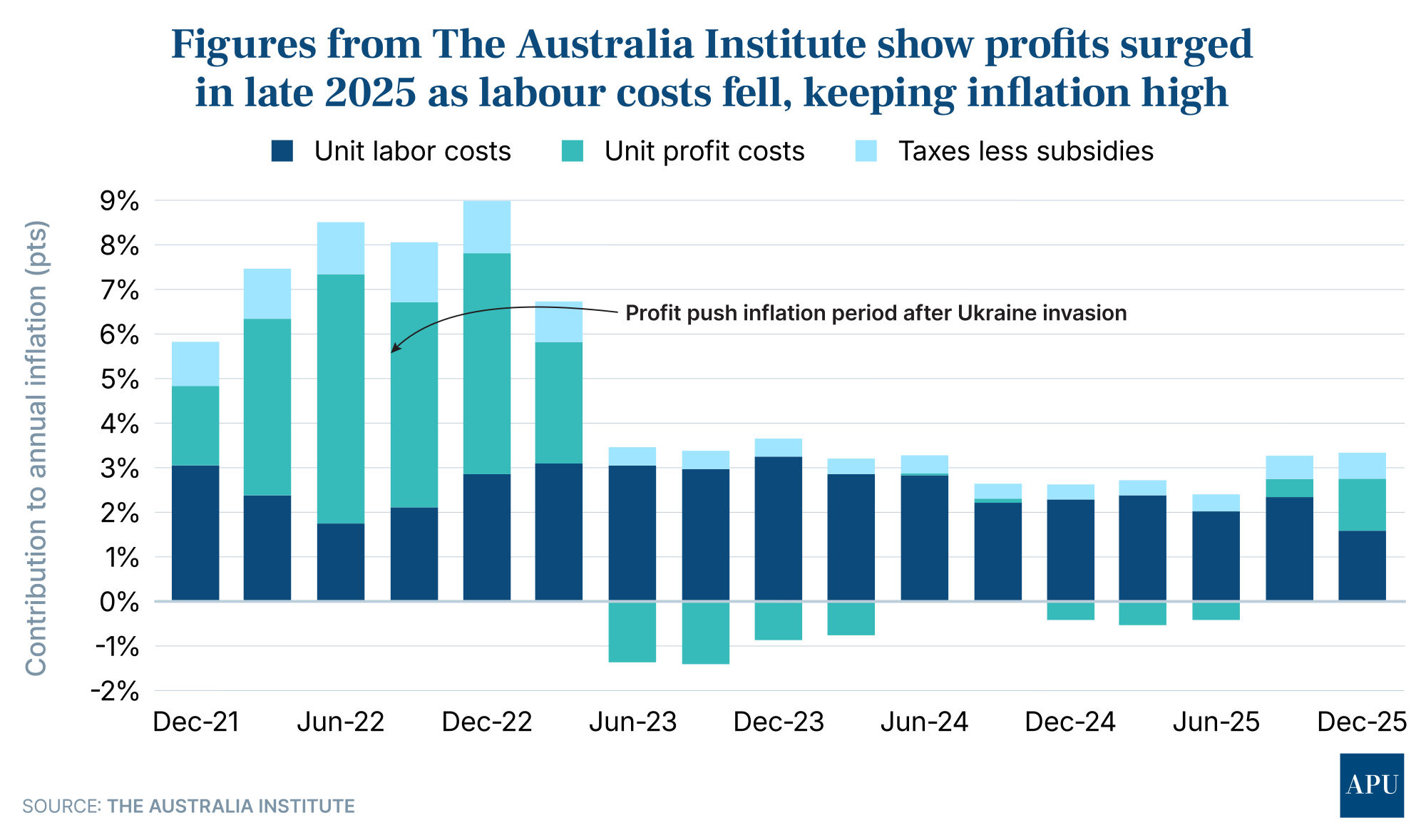
From June to December 2025, they found the contribution of labour costs to annual inflation had fallen from 2% to 1.6% - the same period where Michele Bullock had claimed unit labor costs had been “running still quite hot.”
“At the same time, our estimate of the contribution of the cost from profits (rose) from a negative 0.4% contribution in the year to June 2025 to a 1.2% contribution in the year to December 2025,” Greg Jericho and David Richardson say.
“This means that all of the increase in inflation in the latter half of 2025 came from increased profits, not wages or labour costs.
“Indeed, labour costs and wage contribution to inflation fell in the last half of the year.”
The Australia Institute economists point out that this has happened before.
They say the big jump in inflation, which saw the RBA raise the cash rate no less than 13 times between May 2022 and November 2023, was largely due to profit gouging.
“Companies were taking advantage of the supply shocks out of the pandemic and the Russian invasion of Ukraine to raise prices by more than costs to increase their profits.
“But those higher prices caused the increase in inflation,” Jericho and Richardson say.
“What we are seeing from the end of 2025 is a similar shift – much smaller than in 2022 and 2023, but noticeable all the same.
“So, if the RBA is wrong when it believes inflation is rising because the labour market is tight, that means it is causing higher unemployment through higher interest rates for no good reason.
“Given all of this happened before the Iran war and the surge in oil prices, the very great worry is that this will just be the start, and a repeat of 2022 and 2023 is set to follow – a period of increased profits pushing up inflation and workers being saddled with the misdiagnosed cure of higher interest rates,” they conclude.
You can see this price-gouging scenario playing out in real time.
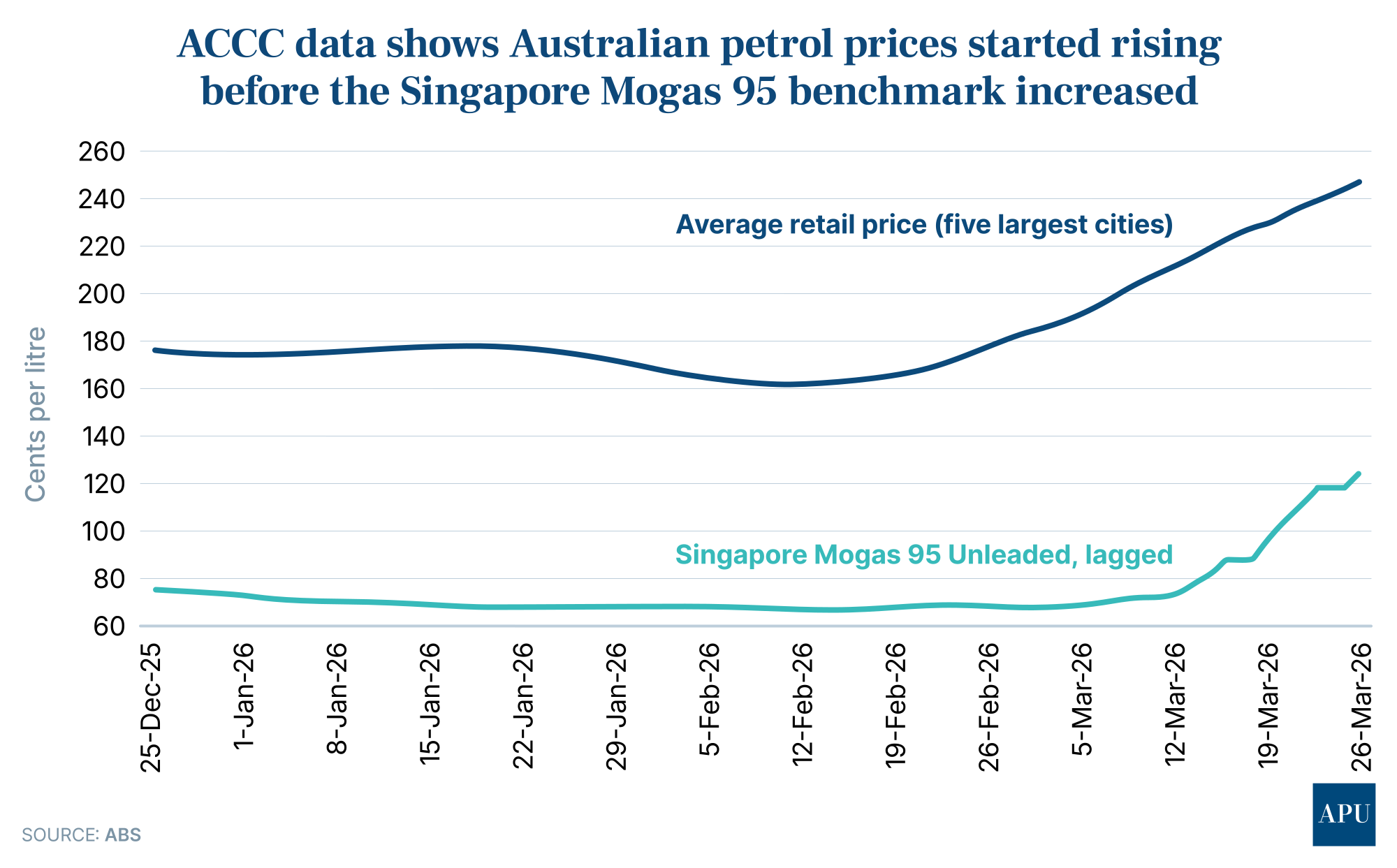
Fuel companies in Australia were quick to raise bowser prices after the outbreak of hostilities in the Middle East, even though it takes several weeks for oil in its crude state to be bought on the spot market, refined into petrol or diesel, shipped to Australia and transported to local fuel stations.
As most of Australia’s automotive fuel is now imported from refineries in Asia, the benchmark for our unleaded petrol is now the Singapore Mogas 95 measure.
The above chart from the consumer watchdog, the ACCC, clearly shows that fuel prices in Australia started rising well before the Singapore Mogas measure, even though the graph shows Mogas on a 10-day lag.
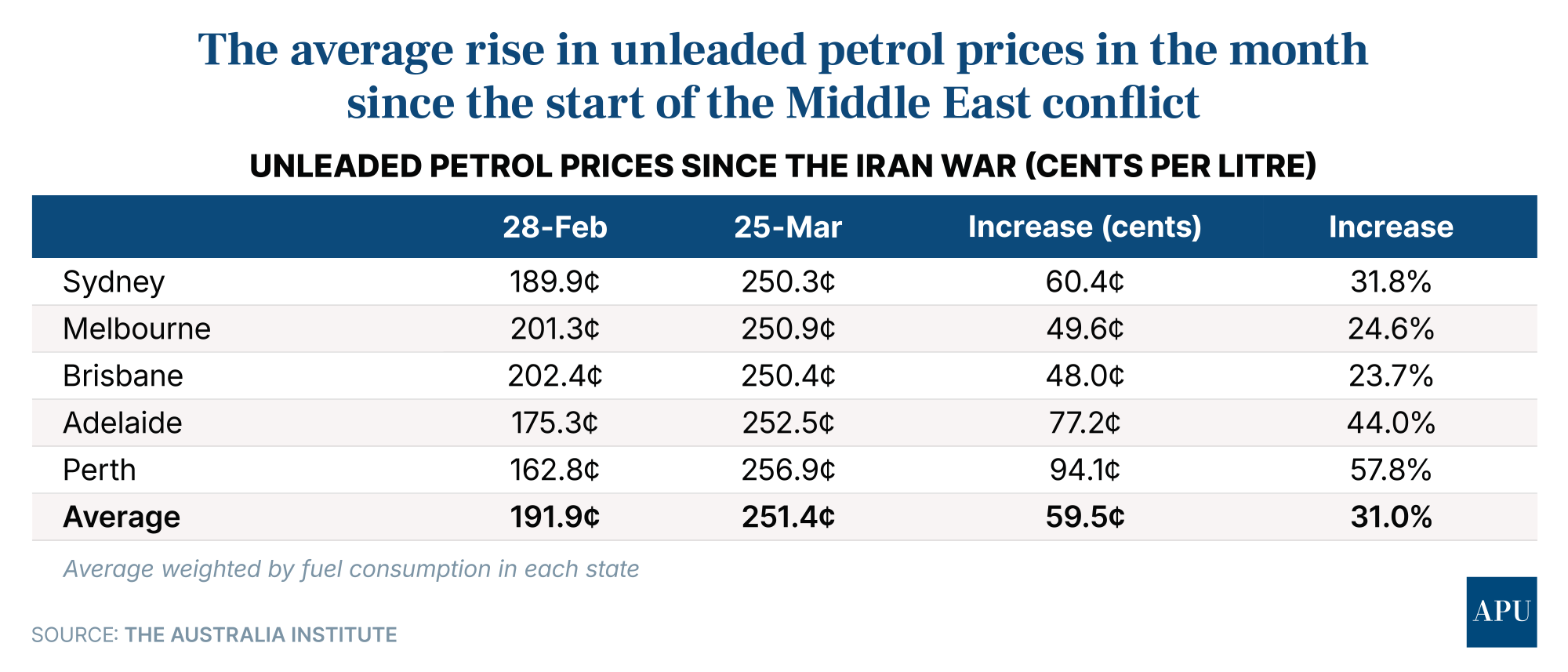
Separate calculations by The Australia Institute’s David Richardson and Greg Jericho estimate the impact of petrol price rises so far has been equivalent to a 40 basis point (0.4%) interest rate hike.
“Combined with the 50 basis points (0.5%) rise in February and March, in less than 2 months, households (with a mortgage) are paying the equivalent of a 90 basis point (0.9%) rise in interest rates,” Greg Jericho says.
“That. Is. Brutal.”
It is.
But that won’t stop the RBA from raising rates again in May, convinced that workers - not businesses - are being just a bit too greedy.
As for prices of goods and services?
“Even if oil and gas supply resumes in the near term, we don’t expect a neat return to pre-conflict price levels,” says ANZ’s Group Chief Economist, Richard Yetsenga.
Given what we’ve seen in recent years in terms of corporate profiteering, that, I would suggest, is an understatement.




.jpg?width=1920&height=1080&name=WTF%20Is%20Happening%20To%20The%20Housing%20Market!%20$500%20Billion%20Wiped%20Out%20As%20Prices%20Fall%20Faster%20Every%20Month%20Scott%20Kuru%20YPU%20027%20(1).jpg)
%20Scott%20Kuru%20YPU%20025.jpg?width=1920&height=1080&name=This%20Is%20Worse%20Than%20A%20Recession%20RBA%20Admits%20Australias%20Wage%20Collapse%20Cant%20Be%20Stopped%20(Prepare%20Now)%20Scott%20Kuru%20YPU%20025.jpg)





















.jpg?width=1920&height=1080&name=EXPOSED%20How%20The%20Govt%20Let%20These%20Oil%20Giants%20Get%20Away%20With%20Paying%20Zero%20Tax%20For%20Aussie%20Gas%20Scott%20Kuru%20DPU%20256%20(1).jpg)





%20Scott%20Kuru%20DPU%20248.jpg?width=1920&height=1080&name=Major%20Banks%20CAUGHT%20Preparing%20For%20Australia%E2%80%99s%20Biggest%20Housing%20Crash%20(Defaults%20%26%20Bankruptcies%20Coming)%20Scott%20Kuru%20DPU%20248.jpg)
%20Scott%20Kuru%20DPU%20247.jpg?width=1920&height=1080&name=This%20Is%20How%20Australia%20Gets%20Pushed%20Into%20the%20Next%20Big%20Reset%20(Trust%20Collapse%20Has%20Officially%20Begun)%20Scott%20Kuru%20DPU%20247.jpg)







%20Scott%20Kuru%20DPU%20239.jpg?width=1920&height=1080&name=URGENT%20Life%20In%20Australia%20Has%20Become%20Impossible%20For%20Millions%20Of%20Aussies%20(It%E2%80%99s%20About%20To%20Get%20Worse)%20Scott%20Kuru%20DPU%20239.jpg)









%20Scott%20Kuru%20DPU%20227.jpg?width=1920&height=1080&name=URGENT%20ALERT%20Australia%E2%80%99s%20Property%20Market%20Is%20Sliding%20Into%20Something%20Much%20Bigger%20(Prepare%20Now)%20Scott%20Kuru%20DPU%20227.jpg)