









.png?width=292&height=292&name=Copy%20Link%20(1).png)

 SIGN UP FOR FREE NEWSLETTER
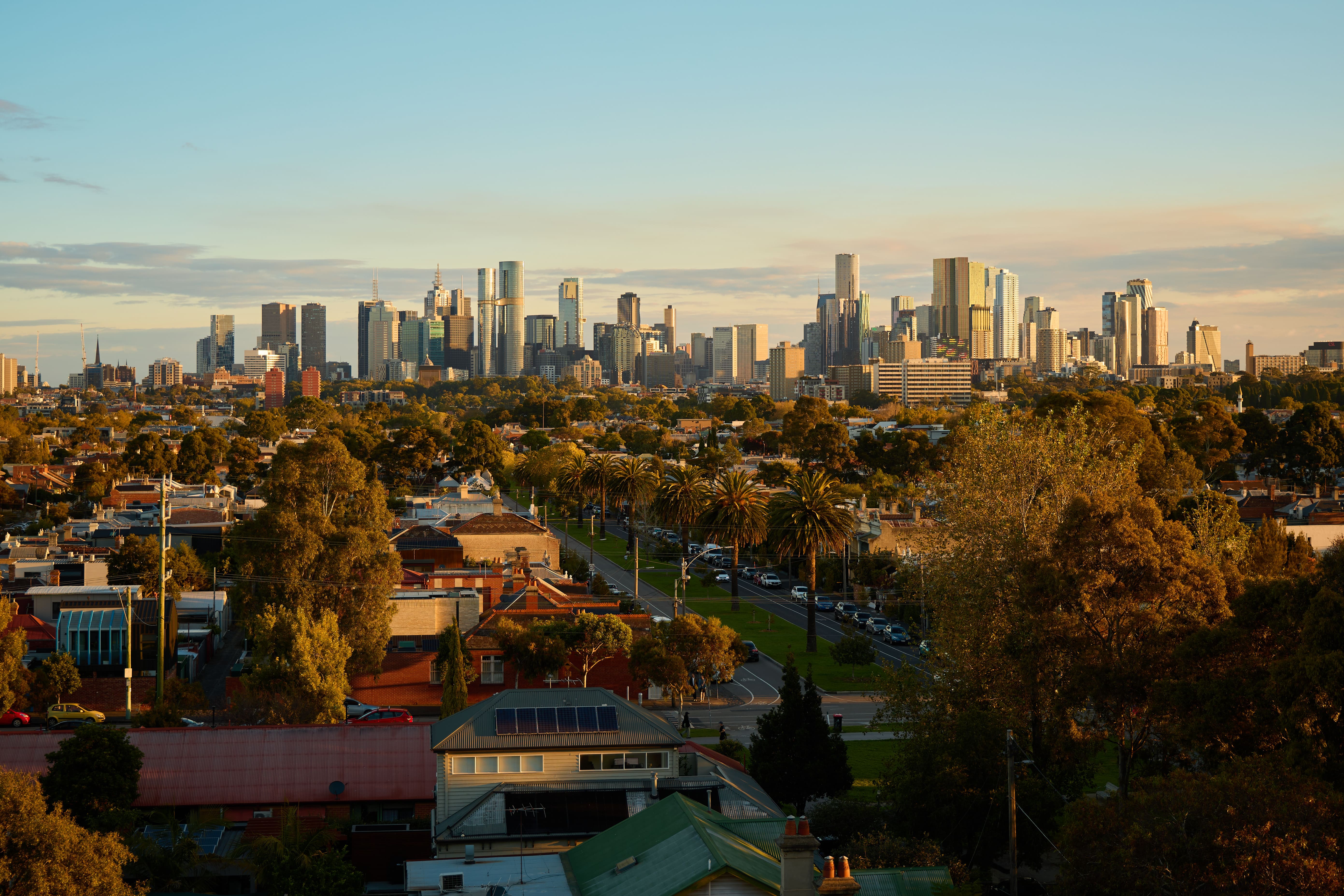
A leading property insider says the widely-held view that Melbourne’s relative housing affordability is the result of higher taxes and a tougher regime for investors is wrong.
In a detailed new analysis, Nerida Conisbee, the Chief Economist at Ray White Real Estate and the current Chair of the Construction Forecasting Council, argues Melbourne’s affordability is the result of decades of sustained housing supply.
“Melbourne’s affordability hasn’t been created by taxes; it has been built,” she says.
“Over an extended period, Victoria has delivered more housing than any other state, and that sustained development pipeline has kept price growth less elevated than elsewhere.”
The details
Since 1984, Victoria has completed more homes than any other state in Australia.
Over the past decade alone, it has delivered just over 30% of all new housing nationally, despite accounting for only around 27% of population growth.
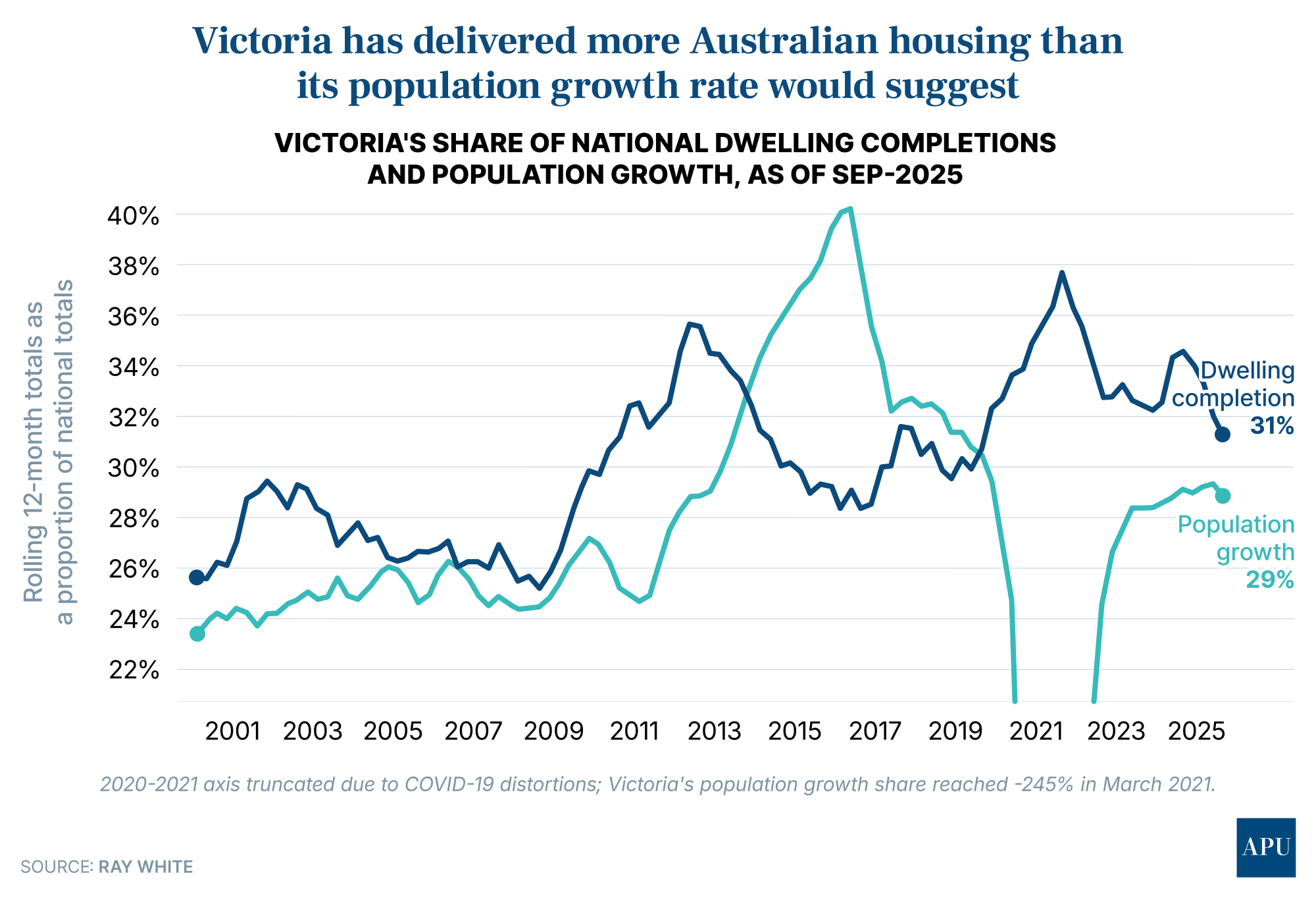
That imbalance matters, as it means supply has consistently outpaced demand relative to other states - a rare feat in a country grappling with chronic housing shortages.
“This is not a short-term surge, but a sustained expansion in construction capacity and planning settings that have allowed new housing to be delivered at scale,” Nerida Conisbee says.
The impact of that supply pipeline shows up starkly in the data.
“Melbourne hasn’t avoided rising housing costs — but it has seen far more subdued growth than the rest of the country,” the Ray White Chief Economist says.
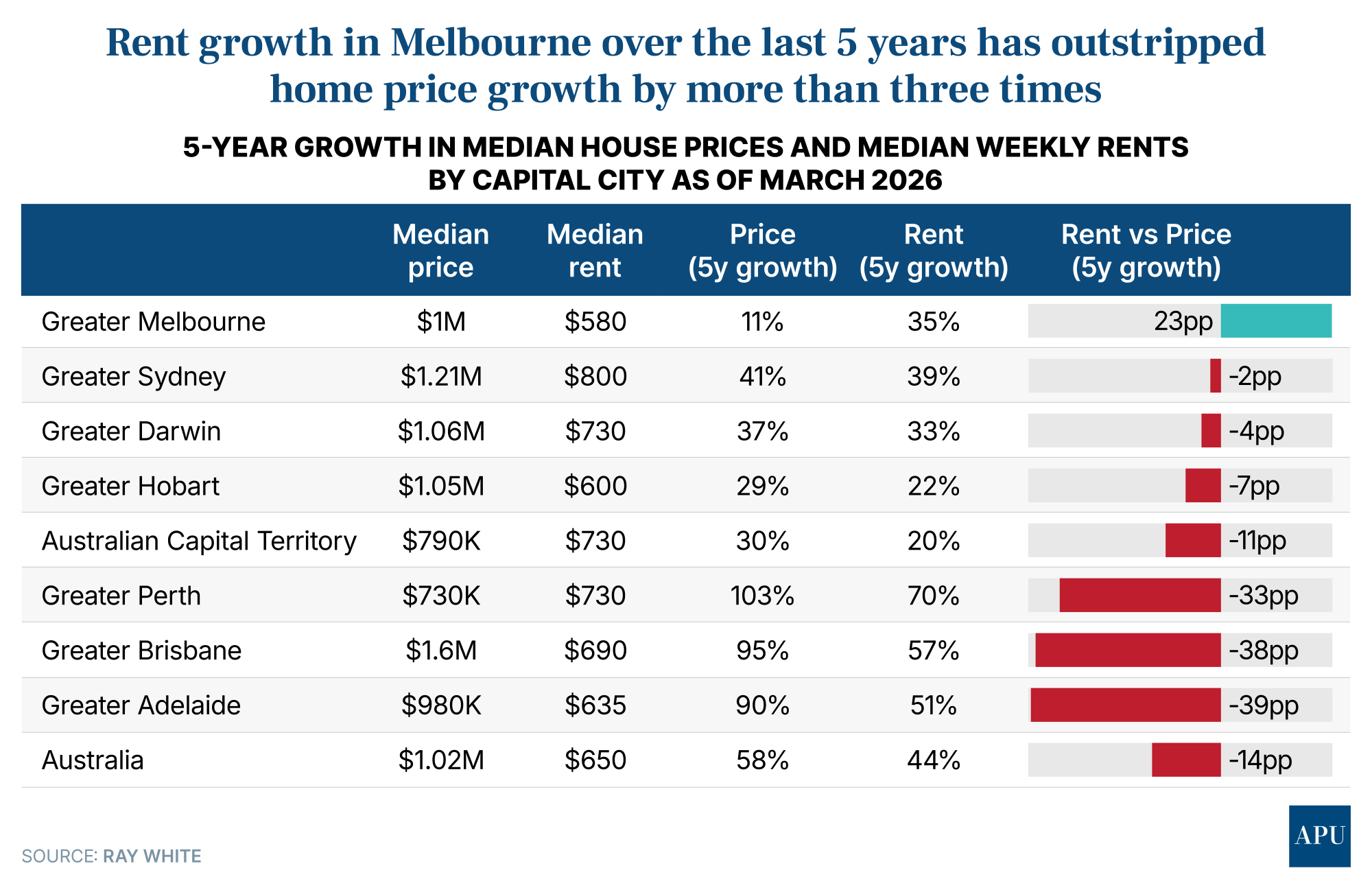
Over the past five years, price growth in Melbourne has been the lowest of any major capital.
Rents have also risen more slowly than in high-growth markets like Queensland, South Australia and Western Australia.
“This is what strong supply does,” she says.
“It calms growth in both prices and rents.
“If you want to keep housing costs under control, you have to build more of it.”
The investor “tax effect”
Nerida Conisbee says that while good housing supply has improved affordability overall, state government policy changes targeting investors have had a very different effect, particularly for renters.
“What higher taxes on investors have done is not create affordability, but change how it is distributed,” she says.
The data is striking.
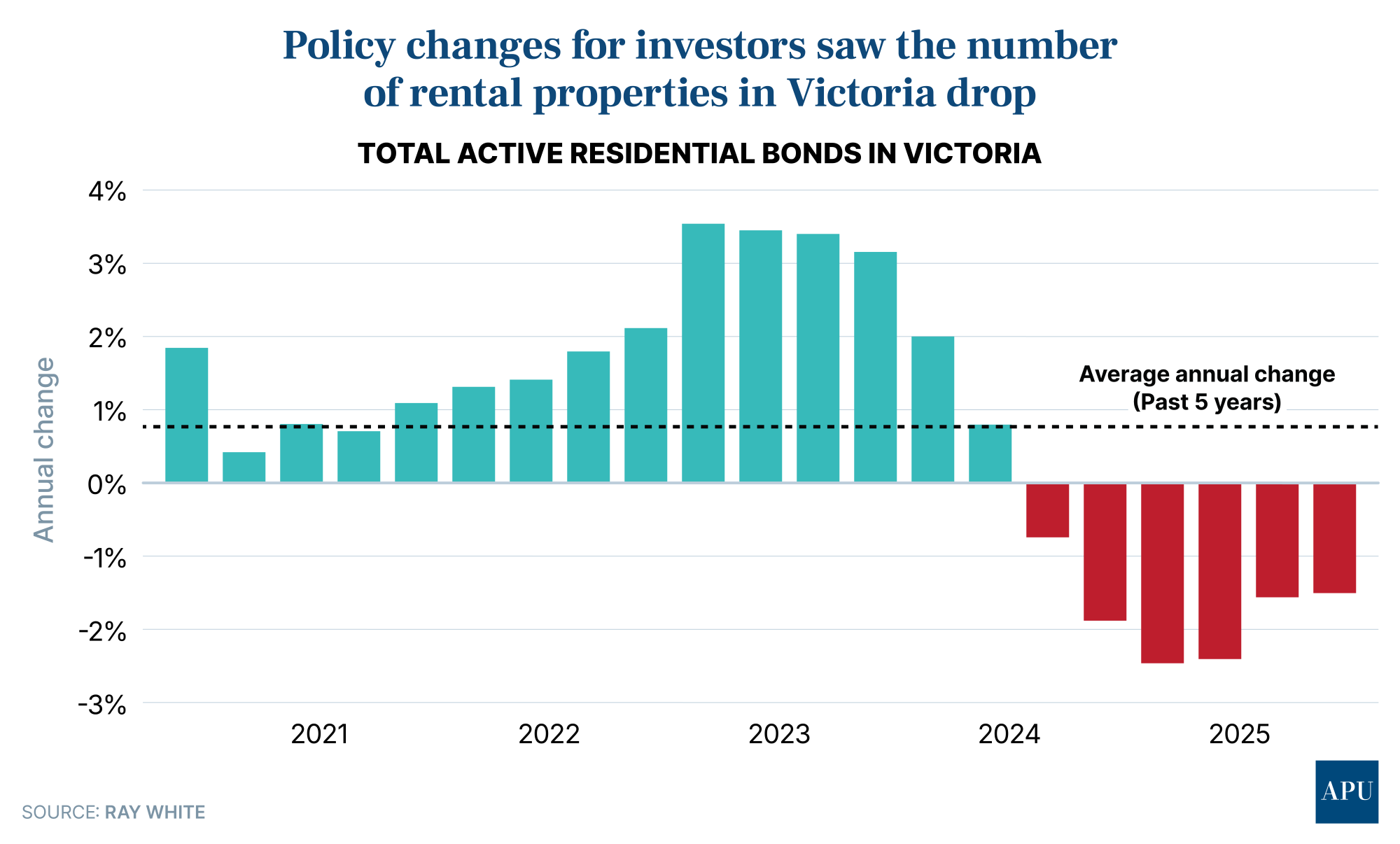
Victorian rental bonds peaked at around 676,000 in mid-2023, but then fell to about 655,000 by mid-2024 as new land tax and policy changes targeting investors came into effect.
“That is a material contraction in (rental) supply,” Nerida Conisbee says.
The result has been a shift in who has borne housing costs.
“Home buyers have benefited from weaker price growth, while renters have faced tighter conditions and stronger rent increases,” she says.
“The pressure hasn’t disappeared — it has just moved.”
That shift becomes even clearer when comparing Melbourne to the rest of the country.
In most capital cities, rising demand and limited supply have pushed up property prices far faster than rents, effectively capitalising housing pressure into asset values.
Melbourne is the exception.
“Over the past five years, price growth has been just 11%, while rents have risen by 35%, moving in the opposite direction,” Nerida Conisbee says.
“This is a fundamentally different outcome.
“In most cities, housing pressure has shown up in prices.
“In Melbourne, it has shown up in rents.”
In Victoria’s case, strong supply has helped contain home prices.
But policies that discourage investors have reduced rental stock, shifting the burden onto tenants.
“And renters don’t simply disappear,” the Ray White Chief Economist warns.
“They are typically younger, lower-income, and more exposed to rising costs.”
The long-term consequences could be severe.
“Those who reach retirement while still renting are far more likely to experience financial stress and poverty, and higher rents only make that outcome worse.”
Nerida Conisbee says Victoria’s experience is also a warning for states like Queensland and Western Australia.
These states have seen rapid population growth in the face of low housing supply, and Victorian-style policies aimed at taxing investors more are often touted as possible solutions to increase affordability.
Ms Conisbee says that could backfire.
“These states have experienced much stronger price growth precisely because supply has been more constrained,” she says.
“Reducing investor participation in these markets would not solve affordability — it would tighten rental supply further and place even more pressure on rents.
“The pressure doesn’t disappear — it intensifies where supply is weakest.”
Looking ahead
Despite its relative affordability, Victoria’s broader economic picture is less rosy.
Business confidence is the lowest in the country, state government debt is high and rising fast and unemployment is the highest nationwide, with one-in-seven young people out of work.
Population growth remains strong, but is now driven almost entirely by overseas migration.
“For residents, houses may be cheaper but conditions are tougher,” Nerida Conisbee says.
There’s also a more fundamental concern: whether the supply pipeline of new homes can continue.
“A strong development pipeline depends on a confident and profitable private sector,” she says.
“With business confidence low, costs rising and taxes increasing, the economics of building are becoming more challenging.”
Policies that discourage investors may also undermine project feasibility, particularly in higher-density developments.
“If supply begins to weaken, the affordability gains Victoria has achieved will become harder to sustain.”

The bottom line
The Ray White Chief Economist’s conclusion is blunt.
“There is… a clear positive in Victoria’s experience,” she says.
“It shows that housing affordability is not out of reach — but it also makes clear where it comes from.”
And it’s not tax settings.
“It isn’t the result of higher taxes or discouraging investors.
“It is the result of building more homes, consistently and at scale, over a long period of time.”
In a country still struggling to house its growing population, the message is hard to ignore.
“The lesson is simple,” Nerida Conisbee says.
“If you want better housing outcomes, you have to build.”



.jpg?width=1920&height=1080&name=WTF%20Is%20Happening%20To%20The%20Housing%20Market!%20$500%20Billion%20Wiped%20Out%20As%20Prices%20Fall%20Faster%20Every%20Month%20Scott%20Kuru%20YPU%20027%20(1).jpg)
%20Scott%20Kuru%20YPU%20025.jpg?width=1920&height=1080&name=This%20Is%20Worse%20Than%20A%20Recession%20RBA%20Admits%20Australias%20Wage%20Collapse%20Cant%20Be%20Stopped%20(Prepare%20Now)%20Scott%20Kuru%20YPU%20025.jpg)















.jpg?width=1920&height=1080&name=EXPOSED%20How%20The%20Govt%20Let%20These%20Oil%20Giants%20Get%20Away%20With%20Paying%20Zero%20Tax%20For%20Aussie%20Gas%20Scott%20Kuru%20DPU%20256%20(1).jpg)




%20Scott%20Kuru%20DPU%20248.jpg?width=1920&height=1080&name=Major%20Banks%20CAUGHT%20Preparing%20For%20Australia%E2%80%99s%20Biggest%20Housing%20Crash%20(Defaults%20%26%20Bankruptcies%20Coming)%20Scott%20Kuru%20DPU%20248.jpg)
%20Scott%20Kuru%20DPU%20247.jpg?width=1920&height=1080&name=This%20Is%20How%20Australia%20Gets%20Pushed%20Into%20the%20Next%20Big%20Reset%20(Trust%20Collapse%20Has%20Officially%20Begun)%20Scott%20Kuru%20DPU%20247.jpg)




%20Scott%20Kuru%20DPU%20239.jpg?width=1920&height=1080&name=URGENT%20Life%20In%20Australia%20Has%20Become%20Impossible%20For%20Millions%20Of%20Aussies%20(It%E2%80%99s%20About%20To%20Get%20Worse)%20Scott%20Kuru%20DPU%20239.jpg)





%20Scott%20Kuru%20DPU%20227.jpg?width=1920&height=1080&name=URGENT%20ALERT%20Australia%E2%80%99s%20Property%20Market%20Is%20Sliding%20Into%20Something%20Much%20Bigger%20(Prepare%20Now)%20Scott%20Kuru%20DPU%20227.jpg)





%20Scott%20Kuru%20DPU%20221.jpg?width=1920&height=1080&name=The%20AI%20Situation%20in%20Australia%20Just%20Hit%20a%20Point%20of%20No%20Return...%20(Major%20Bank%20Proves%20It)%20Scott%20Kuru%20DPU%20221.jpg)