









.png?width=292&height=292&name=Copy%20Link%20(1).png)

 SIGN UP FOR FREE NEWSLETTER
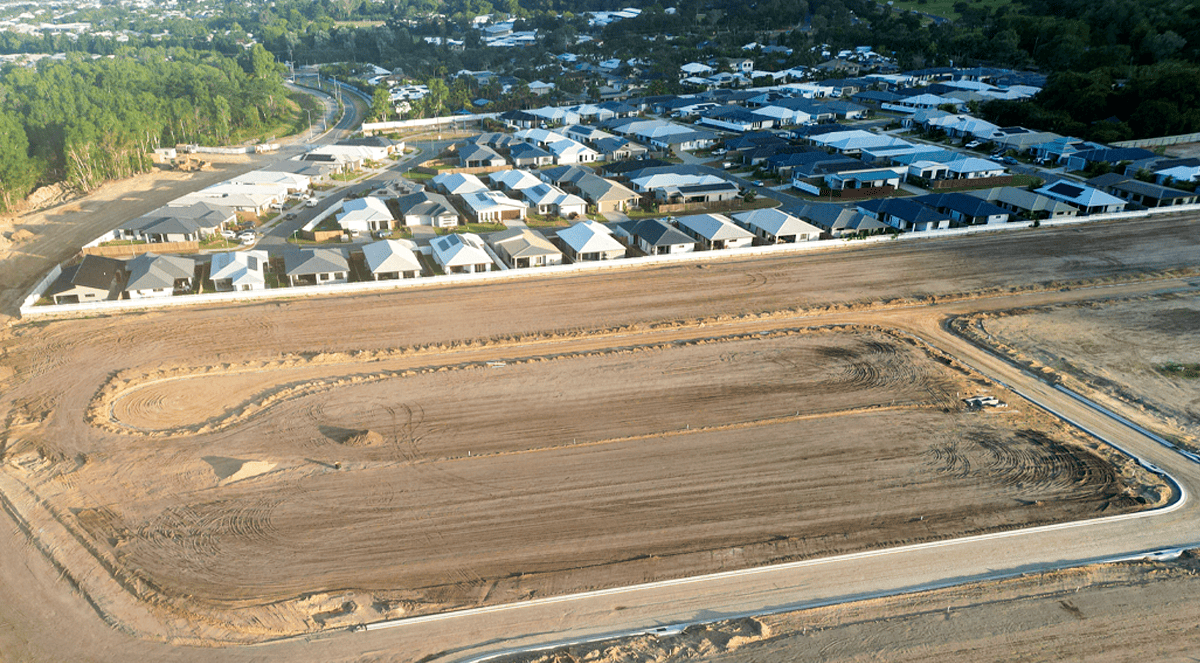
The Albanese Government’s deal with the Greens to stop self-managed super funds borrowing to buy residential property has sparked warnings from developers that it could make it harder to get new housing projects off the ground.
The measure was secured as part of the Greens’ agreement to support Labor’s broader changes to negative gearing and capital gains tax in Parliament.
The details
Under the change, self-managed super funds, or SMSFs, will no longer be able to use borrowed money to purchase residential investment property through so-called limited recourse borrowing arrangements or LBRAs.
Existing loans will be protected, meaning current SMSF property investors will not be forced to unwind existing arrangements.
However, future SMSF property buyers will only be able to purchase residential property if they can do so without loans.

Image from SkyNews Australia
The Government and the Greens say SMSF borrowing accounts for less than 1% of total residential property borrowing.
Nevertheless, they claim to be closing a “loophole” that would have allowed some investors to continue buying property in a tax-advantaged environment, even as Labor moves to limit negative gearing and capital gains tax concessions on existing properties.
But developers and property industry figures warn the decision could have an unintended consequence: reducing one of the early sources of buyer demand that helps new housing projects secure finance and begin construction.
Developers and project marketers have warned that SMSF buyers can make up a large share of the pre-sales needed to get new housing developments moving.
Colliers director of project marketing Ashley Bramich told the Australian Financial Review that SMSF investors were particularly important in the off-the-plan new housing market.
“The self-managed super fund space in the off-the-plan, brand-new industry makes up for approximately 30% of the pre-sales, the critical pre-sales required for construction funding to get projects out of the ground,” he said.
“A large percentage of these sales, if they weren’t being made, would stop many projects from being delivered, and therefore affecting supply, housing affordability, and rents.”
That concern was echoed by Paul Hameister, founder and executive chairman of Melbourne developer Hamton, who told the AFR that SMSF buyers accounted for a smaller, but still significant, share of his pre-sales market.
“The SMSF sales as a percentage of pre-sales, which we need in order to draw down on construction finance to get a building under construction, is around 20%,” Mr Hameister told the newspaper.
“If the government takes that out of our pre-sale market, then it makes it exponentially harder for an off-the-plan developer to commence construction to deliver new supply.”
Many apartment and townhouse developers rely on a certain level of pre-sales before banks and financiers will release construction funding.
If those sales do not materialise, projects can be delayed, redesigned or abandoned altogether.
That matters at a time when Australia is already struggling to build enough homes to meet population growth and the National Housing Accord target of 1.2 million new homes by 2029.
The AFR also reported concerns from Melbourne builder-developer Glenvill, which builds about 1,500 townhouses a year for developers in new housing estates.
Glenvill managing director Leigh Squarci said at least 250 of those townhouses would typically be funded by SMSFs using one-part contracts, where buyers pay a 10% deposit upfront and the balance on completion.
These contracts are popular with SMSF borrowers because the builder and developer carry much of the construction risk.
But Mr Squarci said they were also crucial in securing early sales commitments.

Image from SkyNews Australia
Prime Minister Anthony Albanese, Treasurer Jim Chalmers and Housing Minister Clare O’Neil have made clear the property investor tax changes are aimed at reducing competition from investors for aspiring first-home buyers.
But while the SMSF change may reduce one form of investor demand, it could also remove an important pool of buyers who help fund the construction of new projects.
And in a housing market already constrained by high construction costs, labour shortages, planning delays and tight development feasibility, even a relatively small reduction in pre-sales demand could matter.



The SMSF change has also sparked concern among advisers and superannuation industry figures, who argue the policy will reduce investment flexibility for people trying to build retirement savings outside large industry or retail super funds.
SMSFs are not simple structures; they involve compliance, audit and trustee responsibilities, and borrowing inside super can magnify losses as well as gains.
Regulators have long warned that SMSF property investment is not suitable for everyone and that poor advice or aggressive property marketing can create real risks.
The 2014 Financial System Inquiry recommended restoring the general ban on direct borrowing by superannuation funds, although the government of the day did not adopt that recommendation.
However, critics of the ban argue a better response would be stronger regulation of poor financial advice and property spruiking, rather than a blanket restriction on SMSF residential borrowing.













.jpg?width=1920&height=1080&name=WTF%20Is%20Happening%20To%20The%20Housing%20Market!%20$500%20Billion%20Wiped%20Out%20As%20Prices%20Fall%20Faster%20Every%20Month%20Scott%20Kuru%20YPU%20027%20(1).jpg)
%20Scott%20Kuru%20YPU%20025.jpg?width=1920&height=1080&name=This%20Is%20Worse%20Than%20A%20Recession%20RBA%20Admits%20Australias%20Wage%20Collapse%20Cant%20Be%20Stopped%20(Prepare%20Now)%20Scott%20Kuru%20YPU%20025.jpg)





























.jpg?width=1920&height=1080&name=EXPOSED%20How%20The%20Govt%20Let%20These%20Oil%20Giants%20Get%20Away%20With%20Paying%20Zero%20Tax%20For%20Aussie%20Gas%20Scott%20Kuru%20DPU%20256%20(1).jpg)







%20Scott%20Kuru%20DPU%20248.jpg?width=1920&height=1080&name=Major%20Banks%20CAUGHT%20Preparing%20For%20Australia%E2%80%99s%20Biggest%20Housing%20Crash%20(Defaults%20%26%20Bankruptcies%20Coming)%20Scott%20Kuru%20DPU%20248.jpg)
%20Scott%20Kuru%20DPU%20247.jpg?width=1920&height=1080&name=This%20Is%20How%20Australia%20Gets%20Pushed%20Into%20the%20Next%20Big%20Reset%20(Trust%20Collapse%20Has%20Officially%20Begun)%20Scott%20Kuru%20DPU%20247.jpg)







%20Scott%20Kuru%20DPU%20239.jpg?width=1920&height=1080&name=URGENT%20Life%20In%20Australia%20Has%20Become%20Impossible%20For%20Millions%20Of%20Aussies%20(It%E2%80%99s%20About%20To%20Get%20Worse)%20Scott%20Kuru%20DPU%20239.jpg)











%20Scott%20Kuru%20DPU%20227.jpg?width=1920&height=1080&name=URGENT%20ALERT%20Australia%E2%80%99s%20Property%20Market%20Is%20Sliding%20Into%20Something%20Much%20Bigger%20(Prepare%20Now)%20Scott%20Kuru%20DPU%20227.jpg)