









.png?width=292&height=292&name=Copy%20Link%20(1).png)

 SIGN UP FOR FREE NEWSLETTER
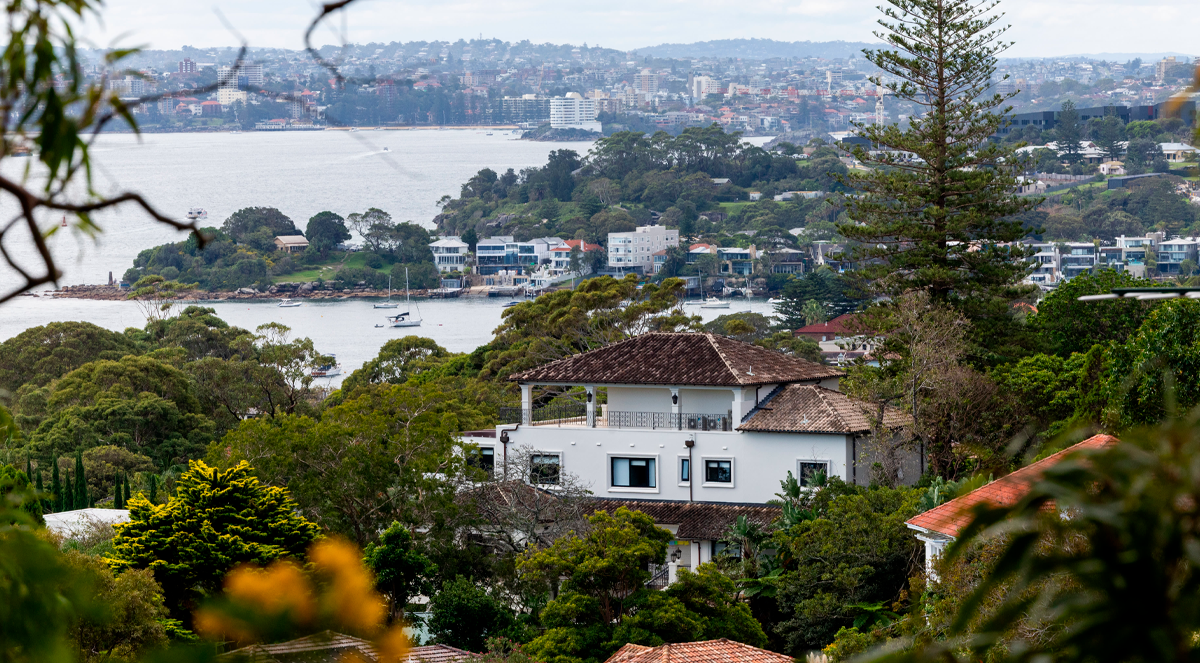
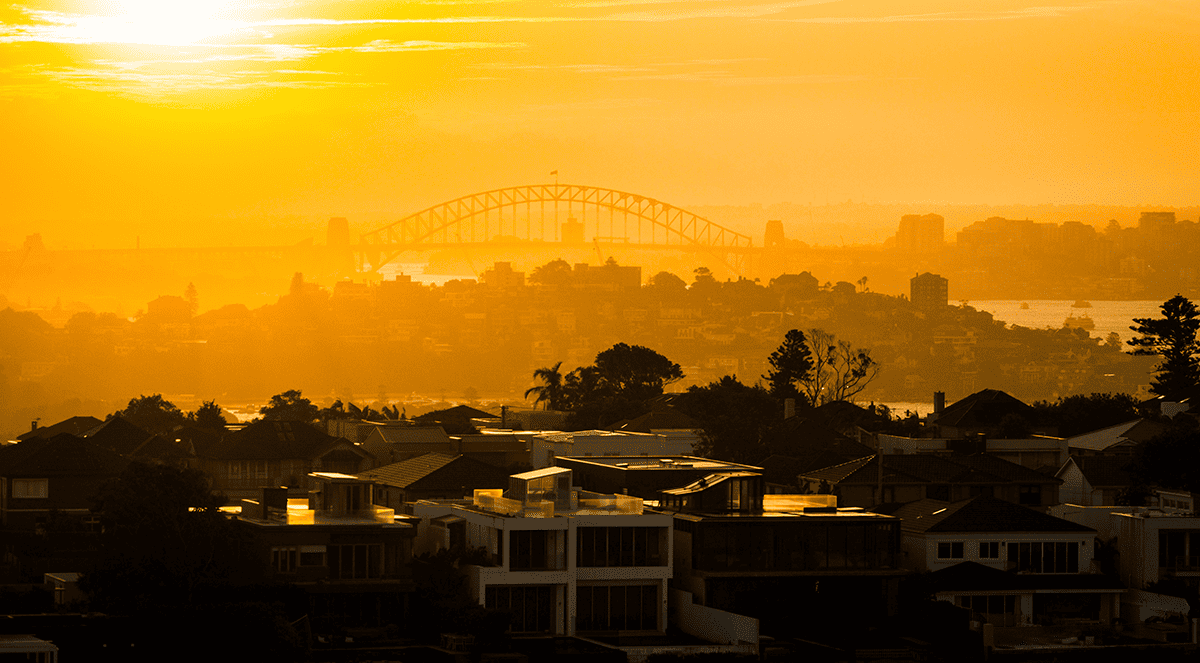
Image from ABC News/Liz Pickering
Recent analysis from Domain Group shows that renters in Australia’s capital cities face a widening gap between the suburbs they aspire to live in and the incomes required to secure them.
The findings are contained in “Renting in 2026: The income you need to earn to live where you want”.
The report suggests city renters increasingly require a six-figure household income if they want to have plenty of choice as to where they live.
It also shows that housing affordability generally improves with distance from CBDs, with Domain concluding tenants who want to avoid so-called “rental stress” would need to set their sights on properties in suburbs around 30-40 kilometres from city centres.
The details
Domain says, in 2026, “renters are set to navigate some of the toughest trade-offs in a decade.”
The property listings and analysis group says that many inner-city and premium suburbs remain out of reach for median-income renters.
However, it finds that middle and outer-ring areas “continue to offer genuine lifestyle appeal, space and opportunity without overwhelming financial strain”.
The “Renting in 2026” report says rental affordability has deteriorated significantly since 2019, with tenants now spending a growing share of their household income on rent in every capital city.
Rents have also risen faster than wages in every capital city.
Across the combined capitals, a two-person household earning average wages would spend 21.1% of its income renting a typical home.
However, this varies widely between cities, with Sydneysiders needing to dedicate 24.5% of their household income to rent and tenants in Melbourne only 19.4%.
Brisbane, Adelaide, Perth, and Hobart sit between these two extremes.
Domain says this “upward drift” in the amount needed to rent a home reflects one of the longest periods of sustained rental tightness in Australia’s history.
“Vacancy rates have remained below 1.5% in all capitals for an extended period – a level considered critically tight – keeping upward pressure on rents and limiting choice for tenants,” the report says.
It says lower-income households are particularly exposed, with the bottom 20% of earners typically spending around 35% of their income on rent, “a level approaching chronic stress”.
Generally, a household spending more than 30% of its pre-tax income on rent is defined as being in “rental stress”.
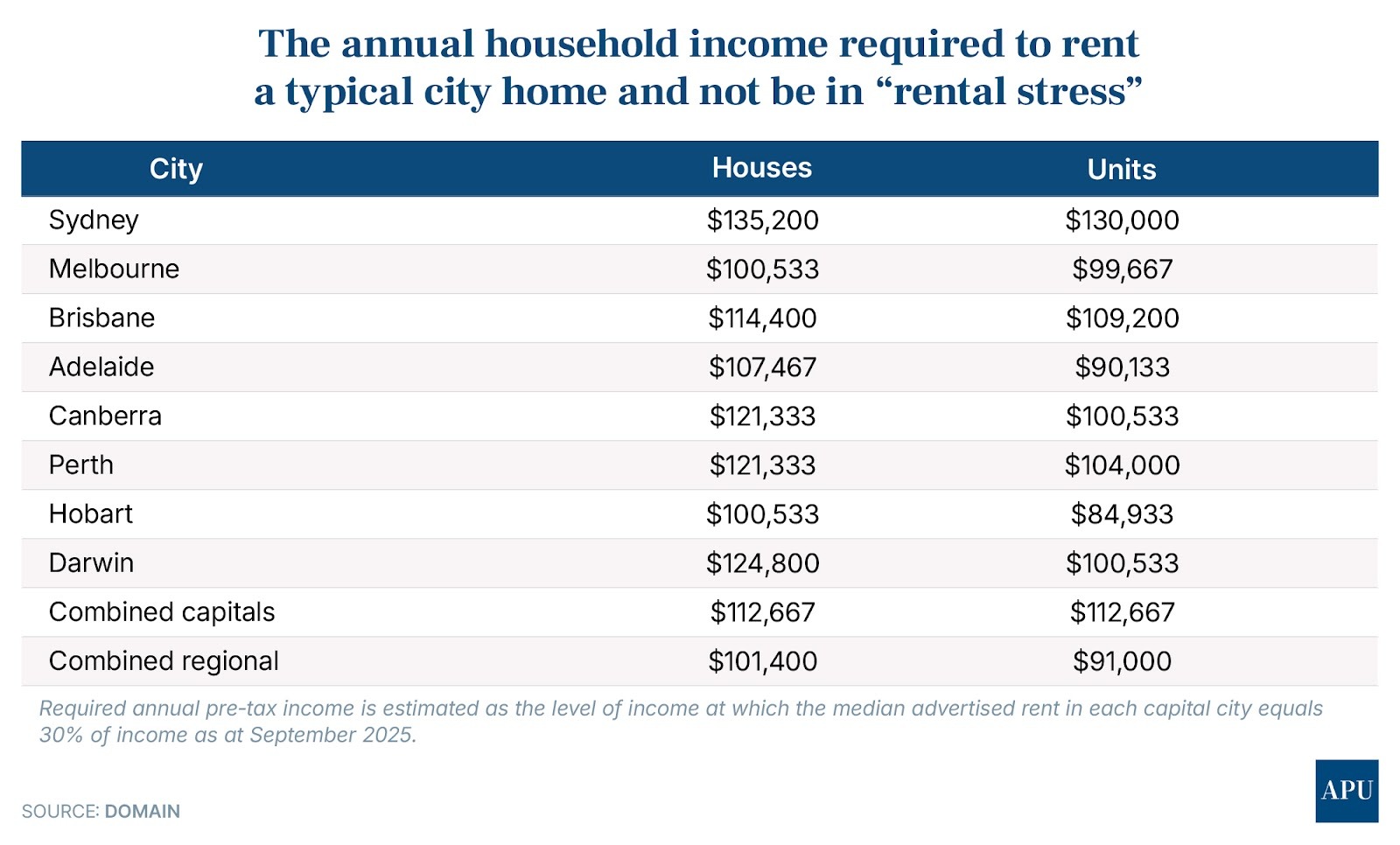
Domain says the household income required to rent a median-priced house without falling into rental stress varies sharply between capitals, ranging from $135,200 in Sydney to $100,500 in Hobart.
“This reflects differences in rental supply, demand, land values, and distribution of dwelling types.”
It also notes that households on lower incomes may secure “more affordable dwellings below the median, but often with trade-offs in location, size or quality.”
Domain’s “Renting in 2026” report notes that one of the clearest divides in rental affordability is the income gap between houses and units.
It says the largest gaps occur in Darwin, Canberra, Adelaide and Perth, where households need an extra $17,300-$24,300 to rent a house rather than a unit.
The smallest gap of around $900 is in Melbourne, due largely to strong high-density supply and premium inner-city apartments pushing unit prices closer to house rents.
Sydney

Domain says Sydney’s rental market is by far the least affordable and uneven.
Not surprisingly, the top five most expensive areas are concentrated in Sydney’s east and north, while more affordable pockets are found in Blacktown and the city’s outer west and south-west.
It says a household would need an annual income of $511,333 to comfortably rent a house in Vaucluse in Sydney’s exclusive inner east, compared with $84,933 in Willmot, which is 50 kms west of the CBD.
Melbourne
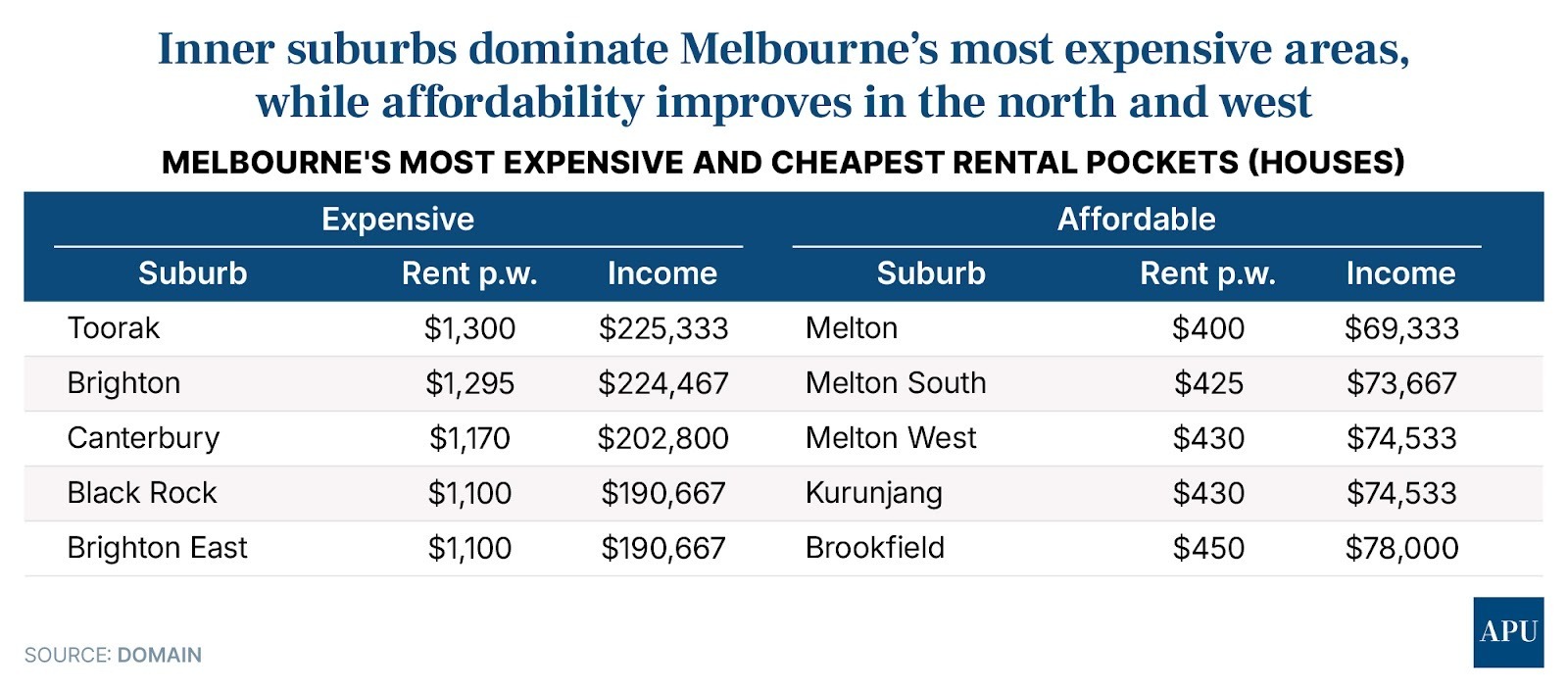
Domain says affordability gaps are narrower in Melbourne, where inner suburbs dominate the city’s most expensive areas, while affordability improves in the north and west.
A household would need an annual income of $225,333 to rent in the premium suburb of Toorak, compared with $69,333 in Melton, 45 kms to the city’s west.
Brisbane
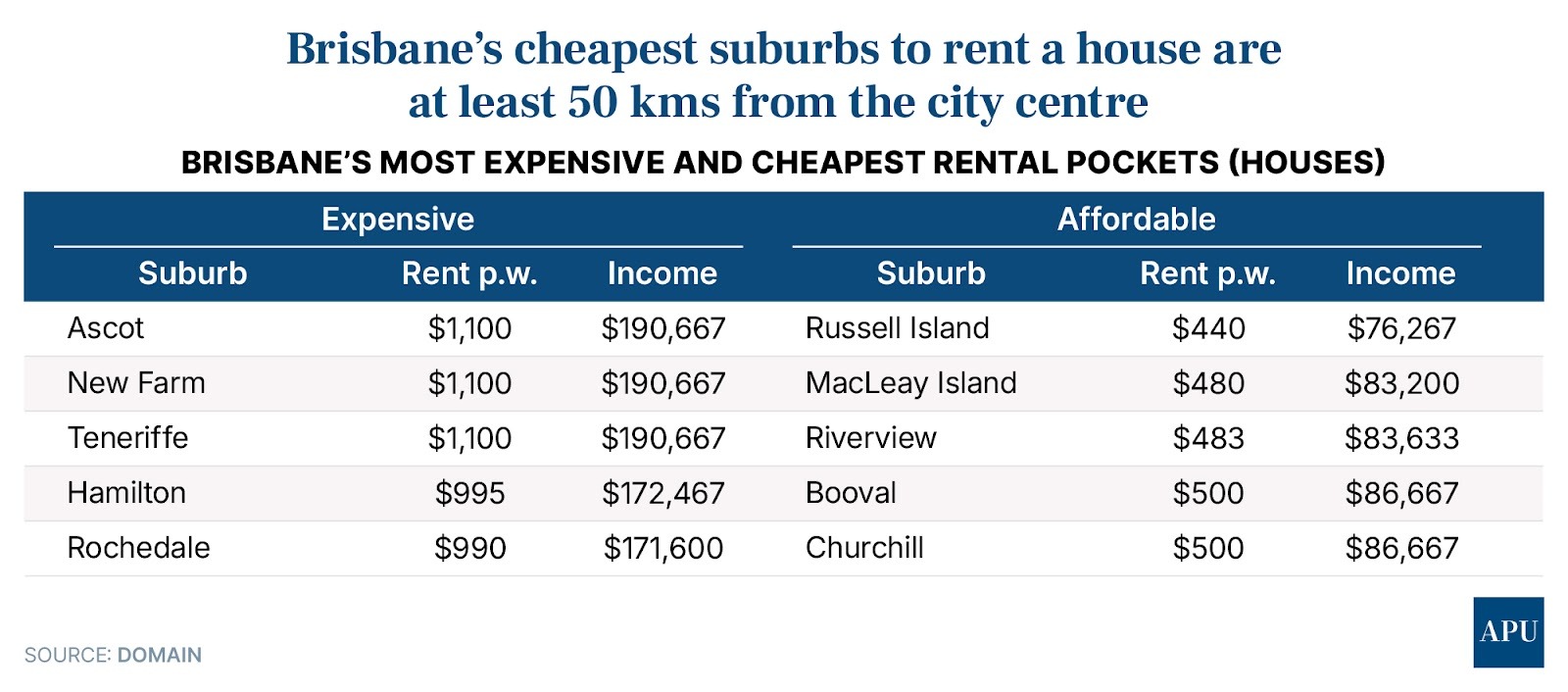
Domain says Brisbane’s most affordable suburbs are found in Ipswich and the Logan-Beaudesert area.
Required household incomes range from $190,667 in Ascot - just 7 kms from central Brisbane - to $76,267 on Russell Island in Moreton Bay - a two-hour drive from the CBD.
The affordability “sweet spot”
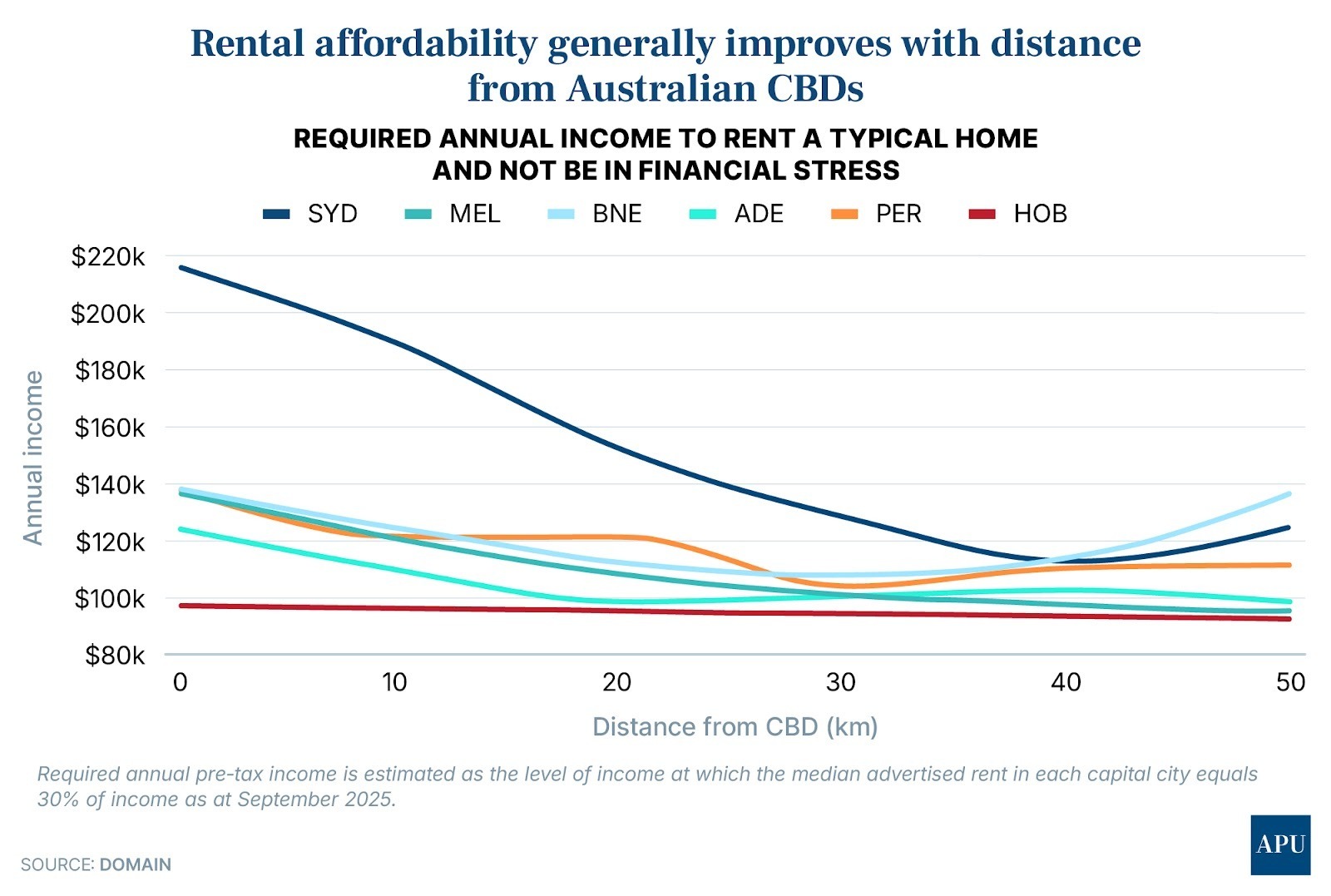
Domain’s report finds rental affordability generally improves with distance from the CBD, though not evenly across all the capitals.
“Rents are typically highest in inner-city areas and decline gradually with distance from the city centre,” it says.
“This reflects the premium placed on access to jobs, transport and lifestyle amenities.”
The “sweet spot” is around 30-40 kilometres from the CBD, where a median income household can rent a median property “comfortably”.
Sydney is a good example.
Domain says required annual household incomes fall from $216,000 near the CBD to $112,000 on the city outskirts – a drop of more than $100,000 – before rising again in outer “lifestyle regions.”
Beyond 40 kilometres, affordability often deteriorates in several cities as lifestyle suburbs - often with larger acreage or proximity to bush or beaches - push rents higher.











.jpg?width=1920&height=1080&name=WTF%20Is%20Happening%20To%20The%20Housing%20Market!%20$500%20Billion%20Wiped%20Out%20As%20Prices%20Fall%20Faster%20Every%20Month%20Scott%20Kuru%20YPU%20027%20(1).jpg)
%20Scott%20Kuru%20YPU%20025.jpg?width=1920&height=1080&name=This%20Is%20Worse%20Than%20A%20Recession%20RBA%20Admits%20Australias%20Wage%20Collapse%20Cant%20Be%20Stopped%20(Prepare%20Now)%20Scott%20Kuru%20YPU%20025.jpg)





















.jpg?width=1920&height=1080&name=EXPOSED%20How%20The%20Govt%20Let%20These%20Oil%20Giants%20Get%20Away%20With%20Paying%20Zero%20Tax%20For%20Aussie%20Gas%20Scott%20Kuru%20DPU%20256%20(1).jpg)






%20Scott%20Kuru%20DPU%20248.jpg?width=1920&height=1080&name=Major%20Banks%20CAUGHT%20Preparing%20For%20Australia%E2%80%99s%20Biggest%20Housing%20Crash%20(Defaults%20%26%20Bankruptcies%20Coming)%20Scott%20Kuru%20DPU%20248.jpg)
%20Scott%20Kuru%20DPU%20247.jpg?width=1920&height=1080&name=This%20Is%20How%20Australia%20Gets%20Pushed%20Into%20the%20Next%20Big%20Reset%20(Trust%20Collapse%20Has%20Officially%20Begun)%20Scott%20Kuru%20DPU%20247.jpg)







%20Scott%20Kuru%20DPU%20239.jpg?width=1920&height=1080&name=URGENT%20Life%20In%20Australia%20Has%20Become%20Impossible%20For%20Millions%20Of%20Aussies%20(It%E2%80%99s%20About%20To%20Get%20Worse)%20Scott%20Kuru%20DPU%20239.jpg)









%20Scott%20Kuru%20DPU%20227.jpg?width=1920&height=1080&name=URGENT%20ALERT%20Australia%E2%80%99s%20Property%20Market%20Is%20Sliding%20Into%20Something%20Much%20Bigger%20(Prepare%20Now)%20Scott%20Kuru%20DPU%20227.jpg)