









.png?width=292&height=292&name=Copy%20Link%20(1).png)

 SIGN UP FOR FREE NEWSLETTER
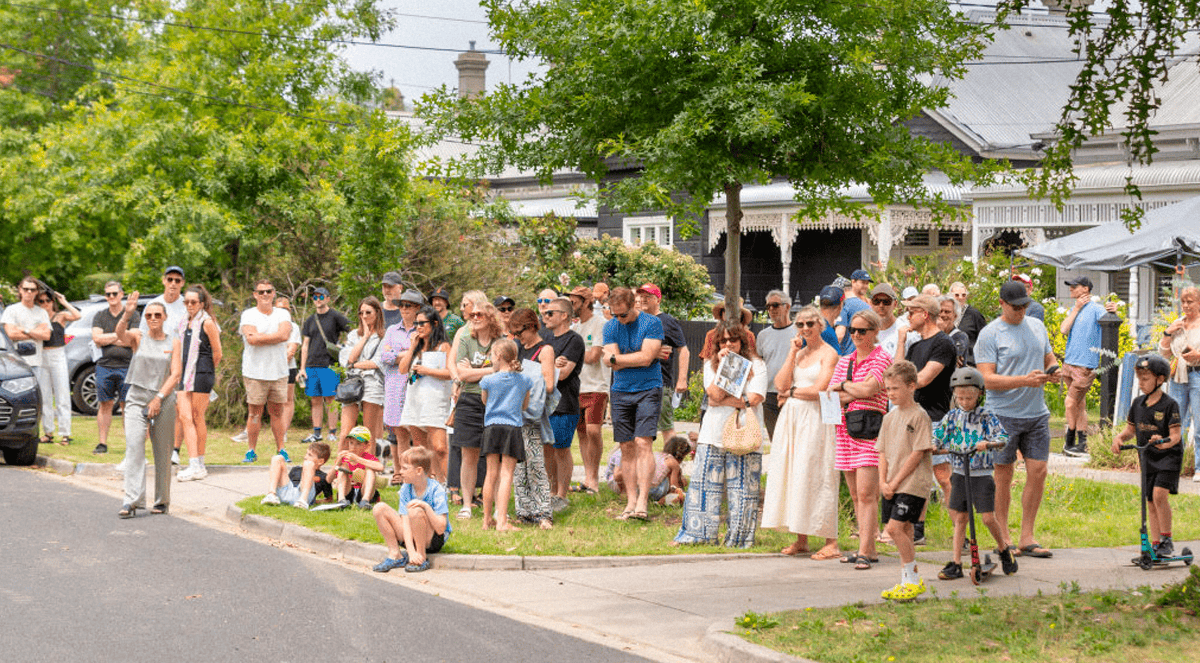
Image from Domain/Jason South
Recent research and anecdotal evidence from Ray White real estate shows how government policies purportedly designed to help lower-income and first-home buyers are actually distorting the property market, hastening the end of affordable housing in many parts of Australia.
Figures from Ray White’s in-house data provider Neoval show that affordable properties are now seeing much stronger price growth than median-priced homes in many areas of Australia.
Meanwhile, a senior Ray White sales manager has suggested the Albanese government’s expanded 5% deposit scheme is actually helping to price many of the lower-income first-home buyers it’s supposed to help out of the property market, while entrenching the wealth of existing owners.
The details
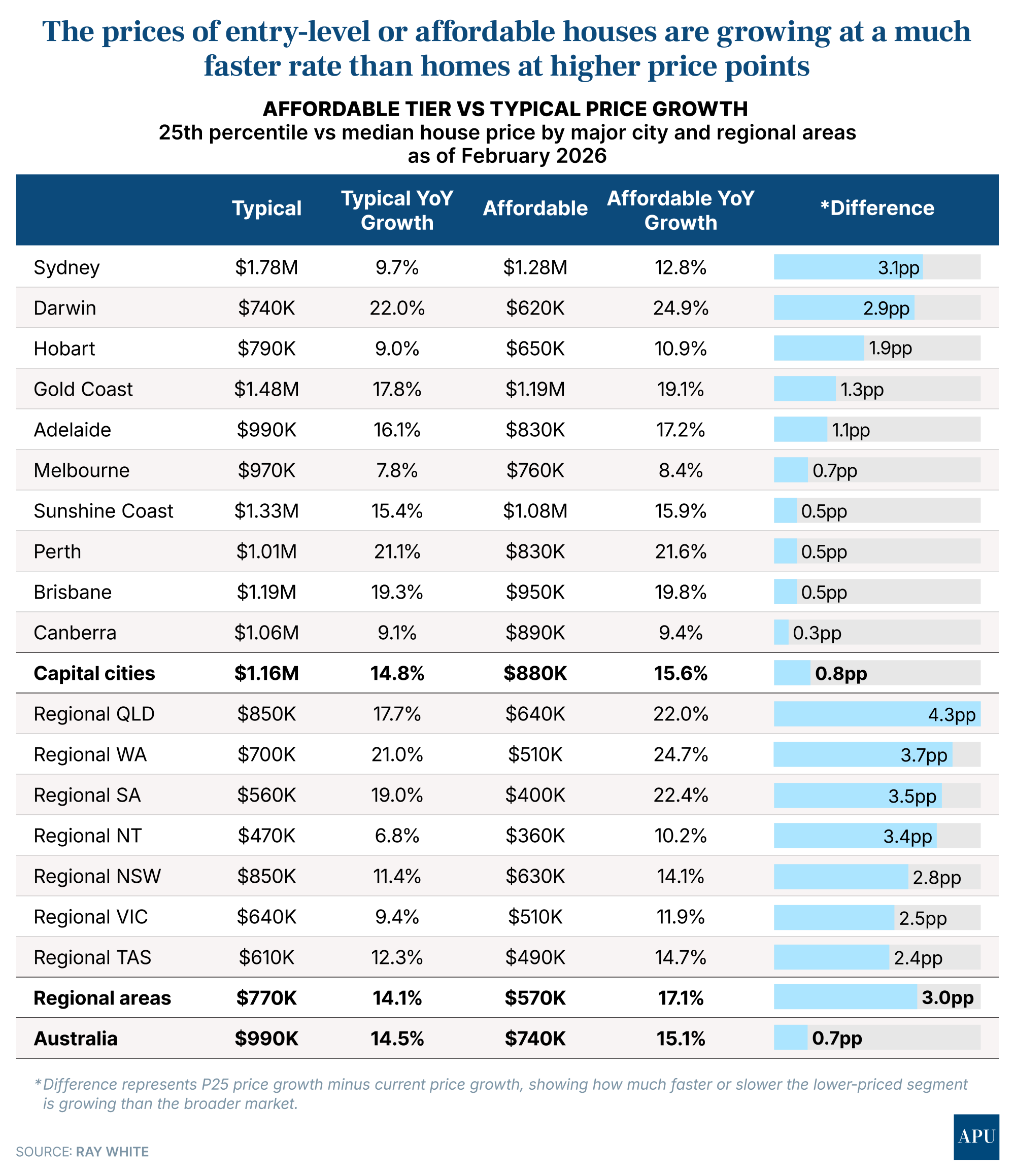
Ray White’s research team says there’s a clear shift unfolding in Australia’s property market.
“Across Australia, more affordable homes are now seeing stronger price growth than the market average,” says the real estate giant’s Chief Economist, Nerida Conisbee.
“Homes at the 25th percentile are growing faster than median-priced homes in most major cities, and the difference is even more pronounced in regional markets,” she says.
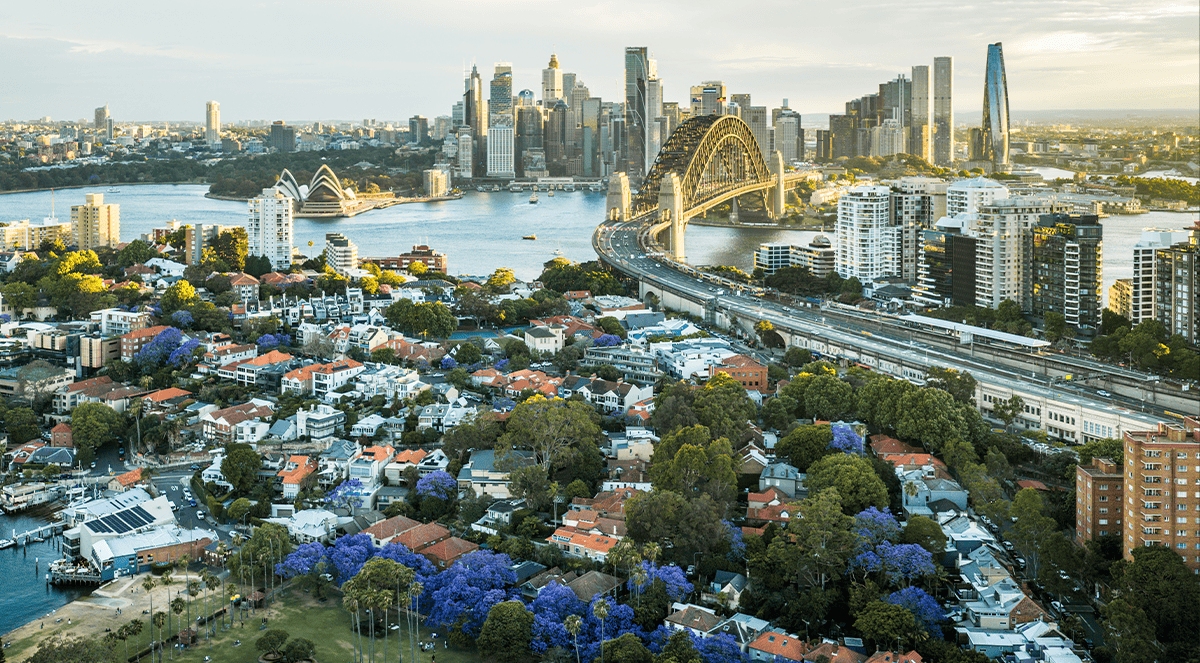
Neoval data shows that in Sydney, Regional Queensland, Regional Western Australia, Regional South Australia and the Regional Northern Territory, affordable house prices are growing between 3% and 4.5% faster than the median.
“This reflects strong demand at the lower end of the market,” Ms Conisbee says.
The Ray White Chief Economist indicates that much of that demand is being driven by the incentives currently available to first-home buyers, such as the expanded 5% deposit scheme and state government stamp duty holidays.
“Policies designed to help first-home buyers have increased demand in this segment, but housing supply has not kept pace,” Ms Conisbee says.
“As a result, buyers are competing for a shrinking pool of entry-level homes.”
This, of course, has the effect of driving up prices, shutting lower-income buyers out of homeownership and increasing the mortgage debt burden for those who are still able to get into the market.
The sales rep
Mark Bernberg is a Director at Ray White Projects in Western Sydney.
The sales and technology expert specialises in helping developers market and sell new apartments.
The expat South African is also an outspoken critic of government programs like the 5% deposit guarantee.
He argues that when the Albanese government expanded the scheme last year, it actually ceased helping lower-income Australians and essential workers into home ownership.
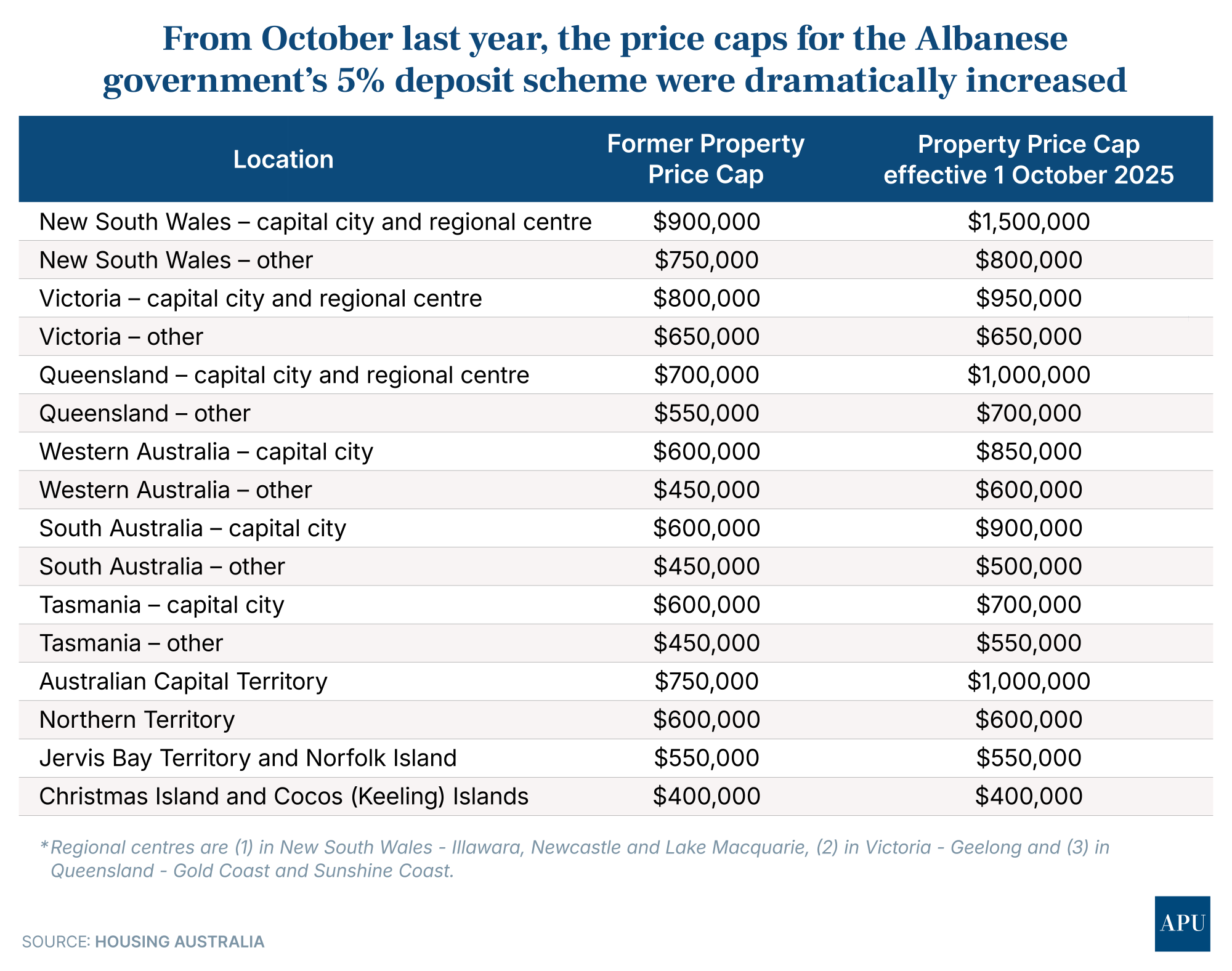
From October the 1st 2025, the 5% deposit scheme was changed, making it much more generous.
No longer were there limited places in the scheme or any income limits for applicants.
In each city and region of Australia, property price caps were also lifted - in some cases dramatically - to better reflect median home prices, rather than entry-level or affordable property prices.
In Sydney, that meant the scheme’s property price cap shot up from $900,000 to $1.5 million.
Mark Bernberg says that change has led to two immediate effects in Western Sydney - creating a $150,000 “Price Floor” on a standard 2-bedroom apartment and a $427 million “wealth transfer” from future buyers to existing owners.
Before the scheme’s expansion, Mark Bernberg says entry-level apartments were priced from $650,000.
He says Western Sydney apartments with exactly the same floor plans now start at $800,000.
“The government didn't lower prices,” he says.
“They raised the floor.”
As Mark Bernberg puts it, the expanded 5% deposit scheme didn't unlock more affordable housing.
“It unlocked more buyers at higher price points,” he says.
“Developers did what developers do; they repriced.”
Mark Bernberg says his team tracked a notable shift in strategy across more than 40 apartment projects marketed in Western Sydney.
Prior to the 5% deposit scheme’s expansion, the pricing strategy was as follows:
• 2-bedder apartment entry point: $650,000
• Target buyer: Genuine first-home buyer on $120,000 household income
• Marketing: "Affordable homeownership"
But after October the 1st 2025, this changed to:
• 2-bedder apartment entry point: $800,000
• Target buyer: High-income couple using scheme as “deposit hack”
• Marketing: "Executive living"
“Same apartments,” he says, “same suburbs… $150K higher.”
Mr Bernberg uses the example of a fictional nurse earning $85,000 annually who would have been able to afford a $650,000 apartment before October the 1st last year.
“She can borrow $700K max,” he says.
“The new floor is $800K.
“She's not priced out by investors.
“She's priced out by a scheme designed to help her.”
Then he takes the example of a couple on a combined household income of $300,000.
They now qualify for the government scheme and can now borrow up to $1.3 million.
“They're buying what used to be her apartment,” he says.
“The government created a price floor, not a price ceiling.”
Mark Bernberg says developers aren't being “villains”.
“They're responding rationally to policy that rewards building for high-income scheme users, not genuine first-home buyers,” he says.
The 5% deposit scheme didn't end up expanding access for those who were locked out of the property market.
“It shifted who gets access.
“Beautiful system we've built,” Mark Bernberg says ironically.
Mr Bernberg says the 5% deposit scheme is also about to create a $427 million wealth transfer from first-home buyers to people who already own property.
“After analysing 100 properties eligible for the scheme, watch this pattern unfold over the next 18 months,” he says.
“Months 1-6: Properties at $1.12 million quietly reprice to $1.2 million
Months 7-12: $1.2 million homes jump to $1.35 million
Months 13-18: Everything under $1.5 million clusters at $1.49 million.”
Mr. Bernberg says this will happen simply because of the laws of supply and demand, creating “a domino effect”.
“Currently,” he says, a “buyer needs a $95,000 deposit for a $950,000 home.
“With the 5% scheme, (the) same buyer needs (just a) $75,000 deposit for a $1.5 million home.
“Developers aren't stupid,” he says.
“They see government-backed buyers with lower deposits and higher borrowing power.
“They reprice accordingly.
“Young families think they're getting help.
“Instead, they bid against each other with government-backed loans, driving prices higher for everyone.”
Meanwhile, he says, existing owners will see their equity explode, a scenario which he believes will add up to “a $427 million transfer from future buyers to current owners”.
“More buyers + same supply = higher prices,” the Ray White Projects Director says.
“The government thinks they're helping first-home buyers compete.
“They're actually turning them into ammunition for the next price surge.”
If Neoval’s figures for entry-priced houses in Sydney are correct, that price surge is already underway.







.jpg?width=1920&height=1080&name=WTF%20Is%20Happening%20To%20The%20Housing%20Market!%20$500%20Billion%20Wiped%20Out%20As%20Prices%20Fall%20Faster%20Every%20Month%20Scott%20Kuru%20YPU%20027%20(1).jpg)
%20Scott%20Kuru%20YPU%20025.jpg?width=1920&height=1080&name=This%20Is%20Worse%20Than%20A%20Recession%20RBA%20Admits%20Australias%20Wage%20Collapse%20Cant%20Be%20Stopped%20(Prepare%20Now)%20Scott%20Kuru%20YPU%20025.jpg)


























.jpg?width=1920&height=1080&name=EXPOSED%20How%20The%20Govt%20Let%20These%20Oil%20Giants%20Get%20Away%20With%20Paying%20Zero%20Tax%20For%20Aussie%20Gas%20Scott%20Kuru%20DPU%20256%20(1).jpg)






%20Scott%20Kuru%20DPU%20248.jpg?width=1920&height=1080&name=Major%20Banks%20CAUGHT%20Preparing%20For%20Australia%E2%80%99s%20Biggest%20Housing%20Crash%20(Defaults%20%26%20Bankruptcies%20Coming)%20Scott%20Kuru%20DPU%20248.jpg)
%20Scott%20Kuru%20DPU%20247.jpg?width=1920&height=1080&name=This%20Is%20How%20Australia%20Gets%20Pushed%20Into%20the%20Next%20Big%20Reset%20(Trust%20Collapse%20Has%20Officially%20Begun)%20Scott%20Kuru%20DPU%20247.jpg)







%20Scott%20Kuru%20DPU%20239.jpg?width=1920&height=1080&name=URGENT%20Life%20In%20Australia%20Has%20Become%20Impossible%20For%20Millions%20Of%20Aussies%20(It%E2%80%99s%20About%20To%20Get%20Worse)%20Scott%20Kuru%20DPU%20239.jpg)










%20Scott%20Kuru%20DPU%20227.jpg?width=1920&height=1080&name=URGENT%20ALERT%20Australia%E2%80%99s%20Property%20Market%20Is%20Sliding%20Into%20Something%20Much%20Bigger%20(Prepare%20Now)%20Scott%20Kuru%20DPU%20227.jpg)