









.png?width=292&height=292&name=Copy%20Link%20(1).png)

 SIGN UP FOR FREE NEWSLETTER

Rents and apartment prices across Australia’s capital cities are set to surge over the next five years, as a chronic housing shortage collides with strong population growth and a lack of new construction.
That’s the main finding of the latest Apartment vacancy, rent and price outlook report from global real estate giant CBRE.
The firm forecasts median rents will rise by 27% between 2025 and 2030 across 53 key capital-city precincts, pushing weekly rents above $700 for the vast majority of two-bedroom apartments.
The details
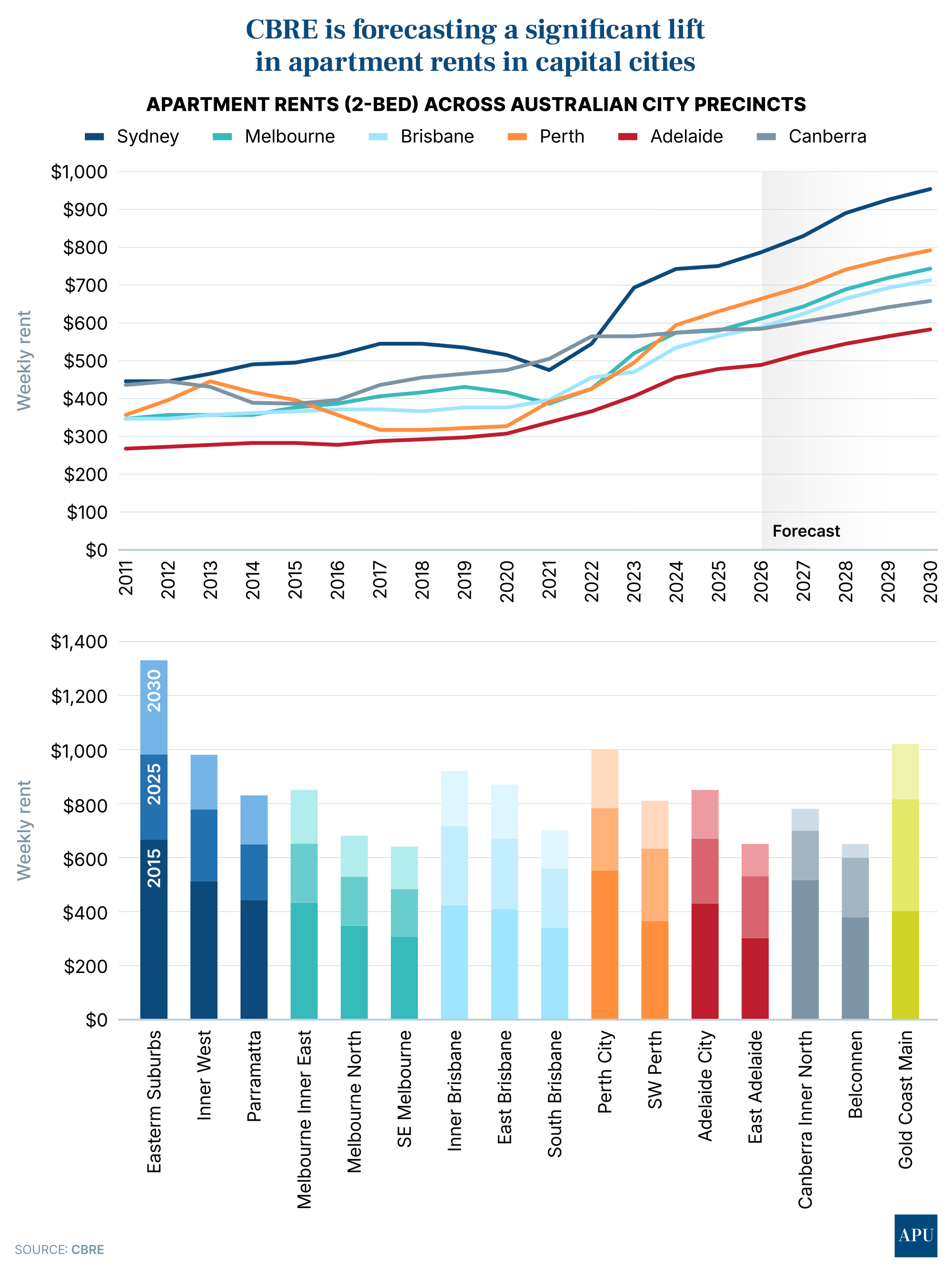
“By 2030, 83% of two-bedroom apartments are forecast to have rents exceeding $700 per week, with 36% exceeding $1000 per week,” CBRE says in its latest Australian apartment outlook report.
At the same time, vacancy rates are expected to tighten even further as housing supply struggles to keep pace with demand.
CBRE predicts capital-city vacancy rates will fall to just 1.1% by 2030, down from 1.8% in 2025 and around half the previous decade’s average of 2.5%.
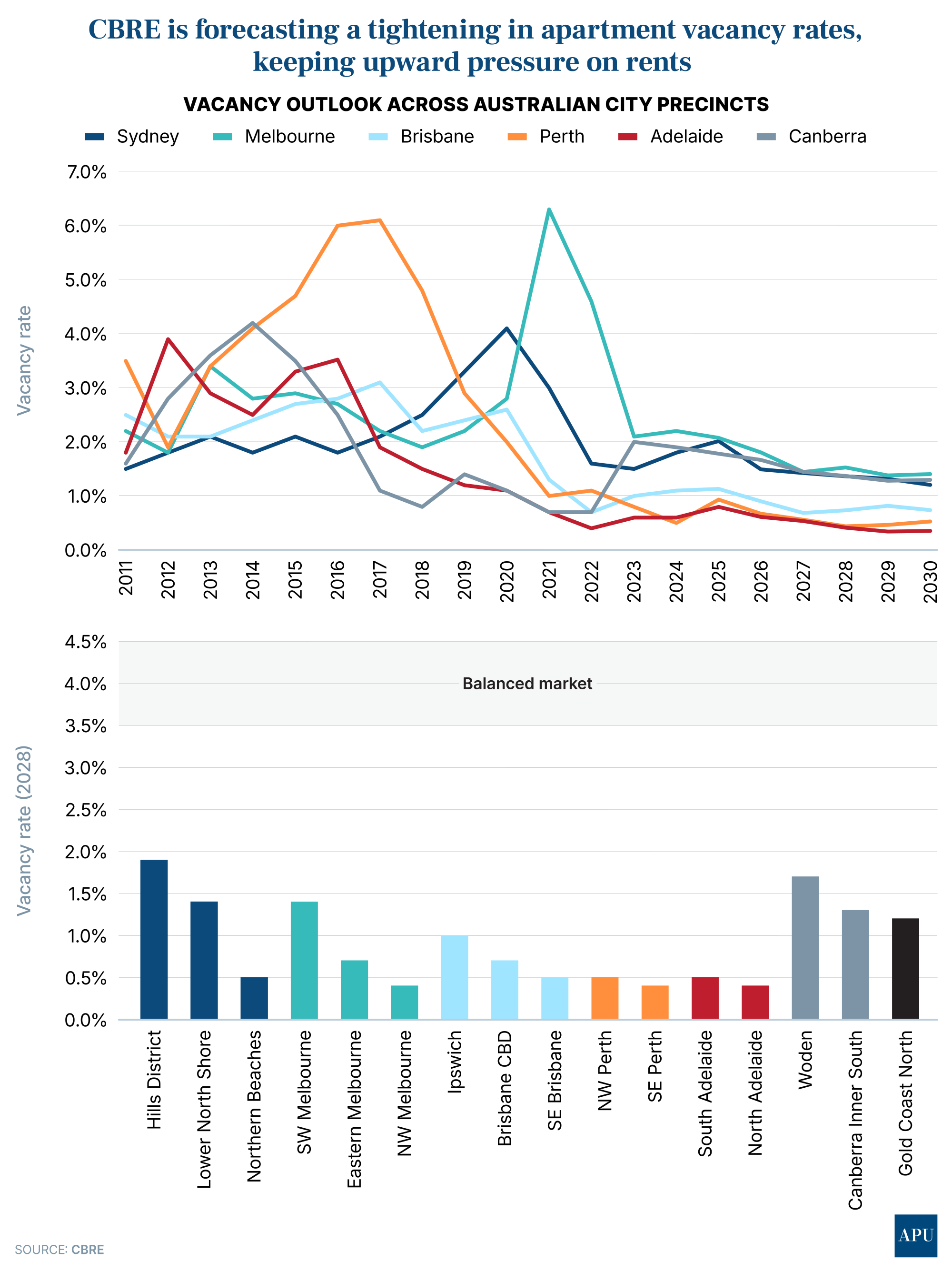
“A balanced market for apartment rentals would typically see vacancy around 4% to 5%,” the report notes, highlighting just how constrained Australia’s rental market has become.
The forecasts in the apartment outlook report underline the scale of Australia’s housing supply challenge.
CBRE expects around 60,000 apartments a year will be built between 2026 and 2030, well below the 75,000 needed annually to keep pace with population growth.
This shortfall is particularly acute in the largest cities.
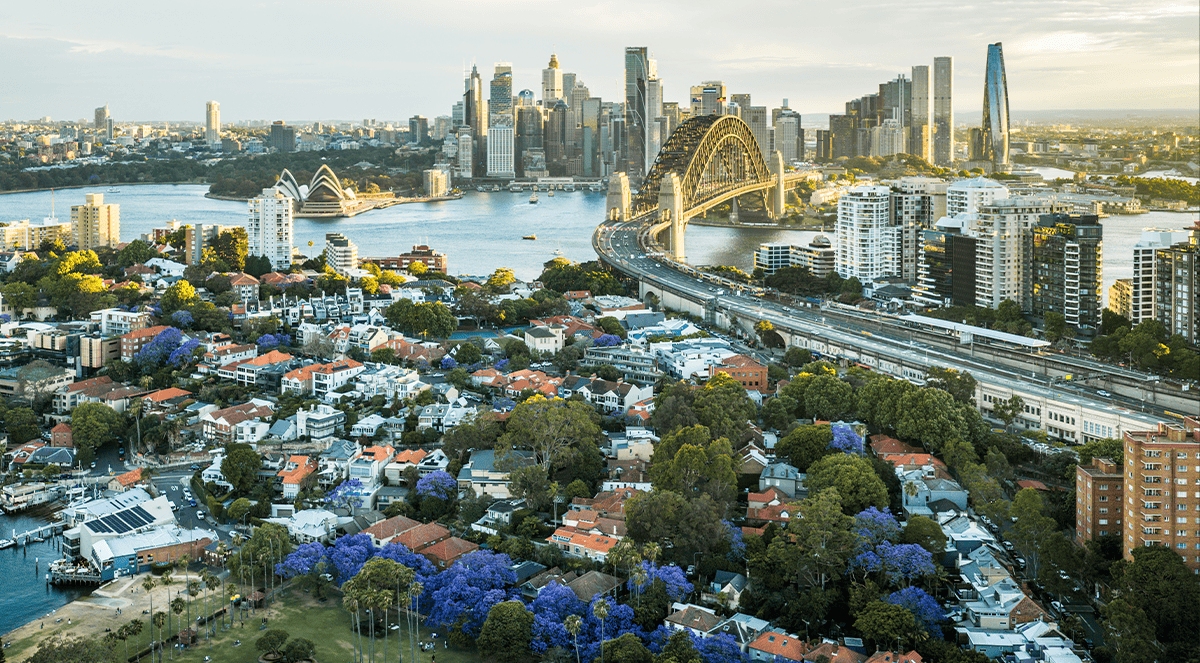
In Sydney, apartment deliveries are expected to average 12,300 per year, compared with demand for 27,000 new homes annually.
Vacancy rates in the Harbour City are forecast to fall from 2.0% to 1.1% over the same period.
CBRE expects the sharpest falls in apartment vacancy rates to occur in Sydney’s Eastern Suburbs, the Lower North Shore, the Northern Beaches and Parramatta regions.
Melbourne faces an even larger mismatch.
Apartment construction is projected to average just 8,200 units annually, while demand for new housing stock (both freestanding houses and apartments) could reach 39,500 homes a year.
Vacancy rates are expected to tighten the most in Melbourne’s Inner East and South-Eastern suburbs, including the popular Bayside area, which takes in the suburbs of Brighton, Hampton, Black Rock, Cheltenham and Mentone.
Brisbane’s supply pipeline is also thin, with around 5,000 apartments expected to come on line each year, against housing demand of about 14,000 homes annually.
Vacancy in the Queensland capital is forecast to drop to an extremely low 0.7% by the end of the decade, with CBRE forecasting particular tightness in Brisbane’s CBD and South East.
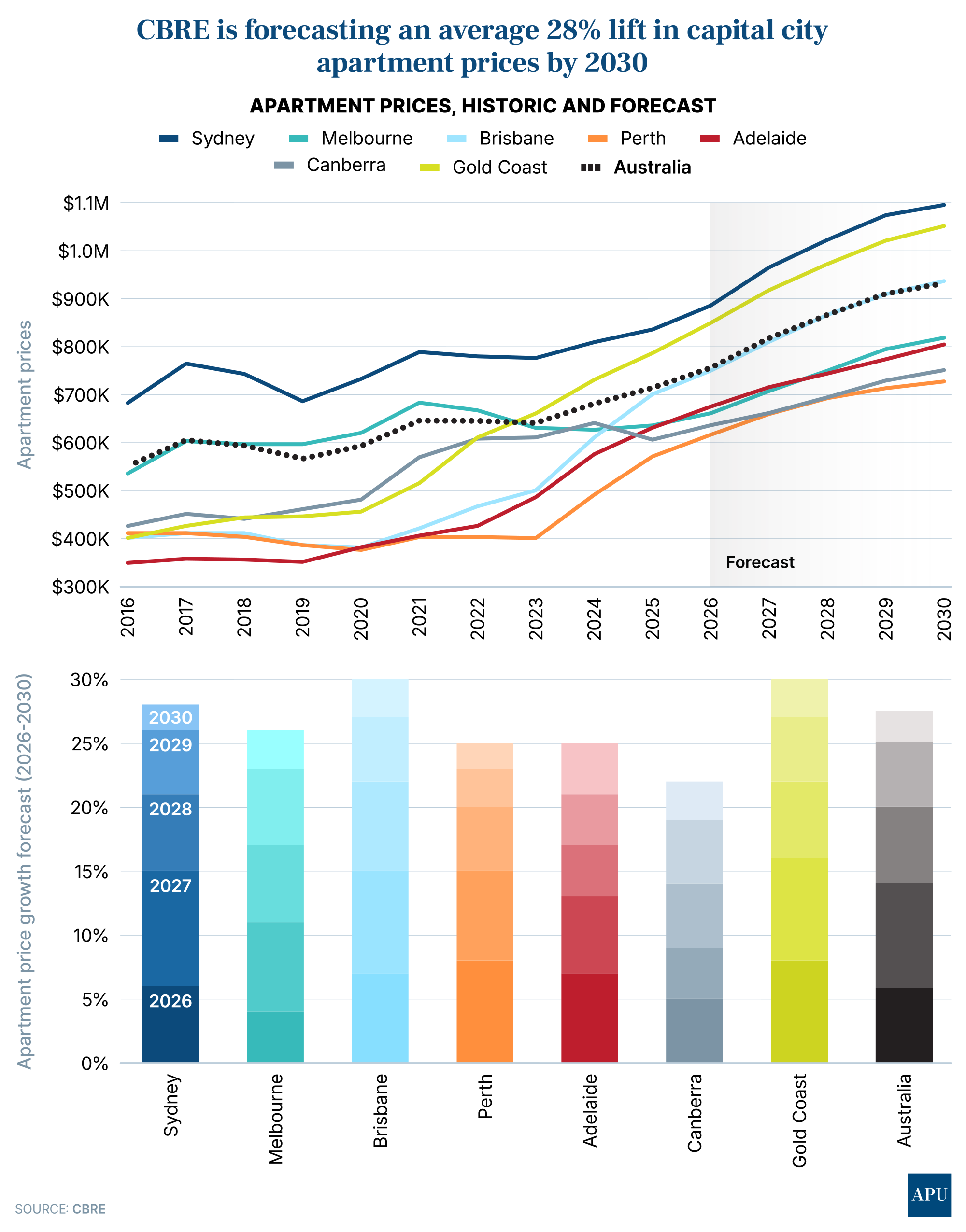
Apartment values are also expected to rise sharply as buyers adapt to higher incomes and limited supply.
CBRE forecasts median apartment prices will increase by 28% between 2025 and 2030, with the strongest gains expected in 2026 and 2027.
The firm believes price growth will accelerate after several years in which surging construction costs have outpaced property values.
“In the last five years, values have not kept pace with construction costs,” CBRE’s report says, noting that the disparity between build costs and prices currently sits at around 20%.
“In our view, capital values for residential projects will accelerate significantly higher to ensure a healthy ecosystem for developers.”
Behind the forecast apartment boom is what CBRE describes as a powerful combination of demographic and economic forces.
Australia’s population is projected to grow by 4.4 million people over the next decade, with immigration accounting for about two-thirds of the increase.
Employment is also expected to expand significantly, with the workforce rising to 17.6 million people by 2035.
At the same time, average annual incomes are forecast to increase from $105,000 today to around $144,000 by 2035.
Together, these forces could add about $1 trillion in additional income to the economy over the next decade.
“The demand for housing is expected to benefit from the triple boost of rising population, rising jobs and rising income,” CBRE says.
Despite rapidly rising rents, CBRE’s apartment outlook report suggests renting remains cheaper than buying in many parts of Australia.
The firm estimates monthly rents are currently 30% to 40% cheaper than mortgage repayments for comparable apartments at today’s prices.
“After accounting for on-costs such as municipal rates and strata fees, it is cheaper to rent in all precincts across Australia,” the report says.
However, for investors, the outlook remains attractive.
CBRE expects apartment investment returns in Sydney and Melbourne to outpace historic levels over the next three years, while Perth and the Gold Coast are forecast to deliver the strongest overall returns.
The firm also expects institutional investors to play a growing role in the sector, with the build-to-rent market accounting for around 10% of new apartment supply over the next five years.
For renters, though, the outlook is less encouraging.
With vacancy rates tightening and supply struggling to catch up with demand, the report suggests the pressure on tenants is unlikely to ease anytime soon.
The take-out
At a time when the headlines are dominated by war in the Middle East, oil shocks, high inflation, interest rate rises and low consumer confidence, CBRE’s sober medium-term assessment of the prospects for well-located apartments in Australian cities is a breath of fresh air.
Savvy investors who can tune out the overwhelmingly negative news that we are being bombarded with daily and focus on the medium to long-term prospects for Australian property are set to reap rich rewards.
The fundamentals are this: Demand for housing in Australia - particularly capital city apartments - will continue to be strong, fuelled by strong population growth, a robust economy and wages growth.
At the same time, the existing ingrained housing shortage is set to worsen.
While this is not great news for tenants, it signals continuing strong rental and capital value growth for investors who lift their focus from today’s bad headlines and look to the medium term.







.jpg?width=1920&height=1080&name=WTF%20Is%20Happening%20To%20The%20Housing%20Market!%20$500%20Billion%20Wiped%20Out%20As%20Prices%20Fall%20Faster%20Every%20Month%20Scott%20Kuru%20YPU%20027%20(1).jpg)
%20Scott%20Kuru%20YPU%20025.jpg?width=1920&height=1080&name=This%20Is%20Worse%20Than%20A%20Recession%20RBA%20Admits%20Australias%20Wage%20Collapse%20Cant%20Be%20Stopped%20(Prepare%20Now)%20Scott%20Kuru%20YPU%20025.jpg)























.jpg?width=1920&height=1080&name=EXPOSED%20How%20The%20Govt%20Let%20These%20Oil%20Giants%20Get%20Away%20With%20Paying%20Zero%20Tax%20For%20Aussie%20Gas%20Scott%20Kuru%20DPU%20256%20(1).jpg)






%20Scott%20Kuru%20DPU%20248.jpg?width=1920&height=1080&name=Major%20Banks%20CAUGHT%20Preparing%20For%20Australia%E2%80%99s%20Biggest%20Housing%20Crash%20(Defaults%20%26%20Bankruptcies%20Coming)%20Scott%20Kuru%20DPU%20248.jpg)
%20Scott%20Kuru%20DPU%20247.jpg?width=1920&height=1080&name=This%20Is%20How%20Australia%20Gets%20Pushed%20Into%20the%20Next%20Big%20Reset%20(Trust%20Collapse%20Has%20Officially%20Begun)%20Scott%20Kuru%20DPU%20247.jpg)







%20Scott%20Kuru%20DPU%20239.jpg?width=1920&height=1080&name=URGENT%20Life%20In%20Australia%20Has%20Become%20Impossible%20For%20Millions%20Of%20Aussies%20(It%E2%80%99s%20About%20To%20Get%20Worse)%20Scott%20Kuru%20DPU%20239.jpg)










%20Scott%20Kuru%20DPU%20227.jpg?width=1920&height=1080&name=URGENT%20ALERT%20Australia%E2%80%99s%20Property%20Market%20Is%20Sliding%20Into%20Something%20Much%20Bigger%20(Prepare%20Now)%20Scott%20Kuru%20DPU%20227.jpg)