









.png?width=292&height=292&name=Copy%20Link%20(1).png)

 SIGN UP FOR FREE NEWSLETTER
Image from REA Group
Australia’s housing market could rebound strongly next year despite rising interest rates, weak consumer confidence and sweeping investor tax changes, according to new forecasts from REA Group.
The owner of realestate.com.au and PropTrack expects capital city dwelling prices to rise 5.5% in 2027 after a largely flat performance this year, with Melbourne, Brisbane, Perth and Hobart tipped to lead the recovery.
The company expects strong growth in 2027 of between 6% and 7% in Melbourne, Brisbane, Perth and Hobart.
The details
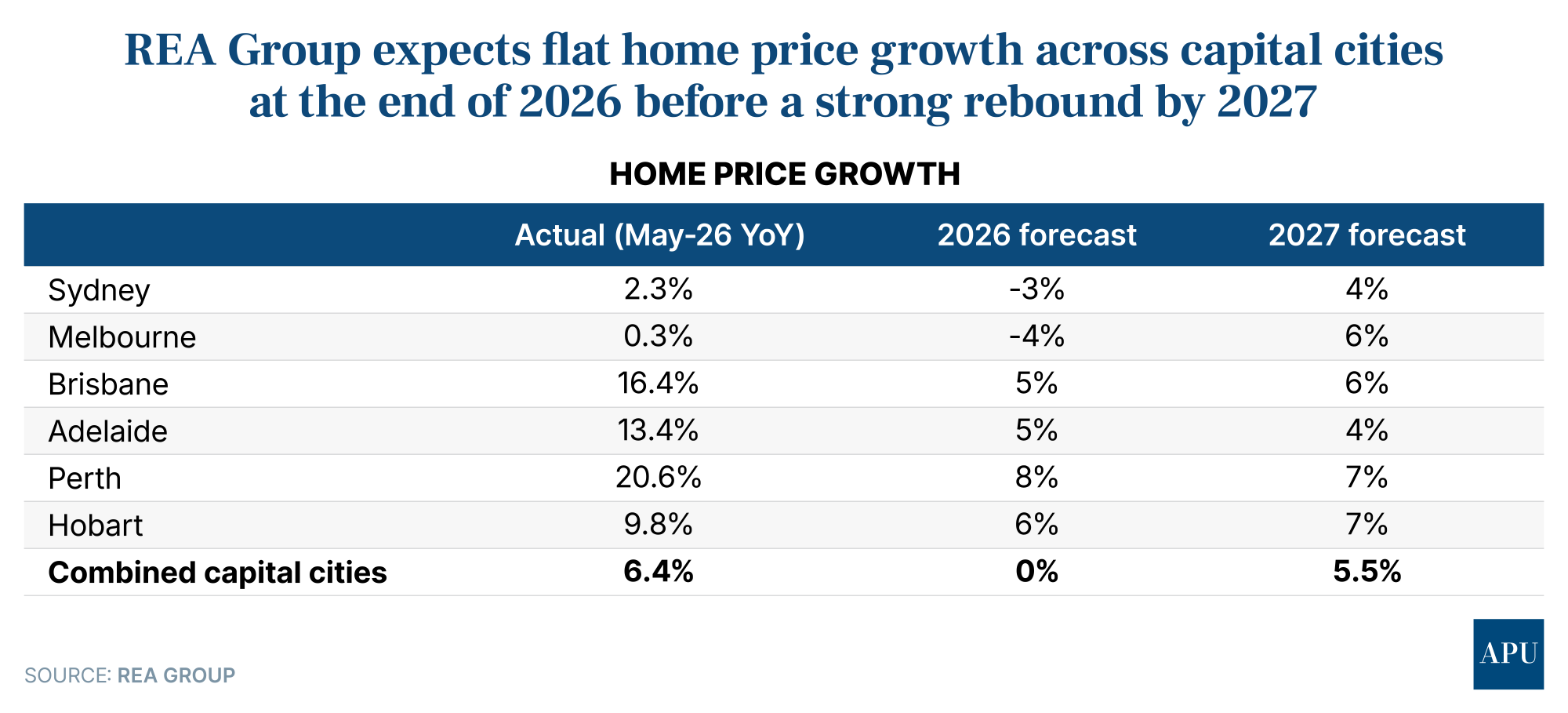
REA Group says it expects home prices will finish 2026 largely flat across Australia’s capital cities, as higher interest rates and strained affordability see soft to falling prices through the second half of 2026.
The Reserve Bank of Australia has raised interest rates three times this year to the current 4.35% in a bid to contain inflation.
“Home price growth has clearly slowed, and market conditions cooled, following the three consecutive rate hikes from the RBA,” says REA Group Senior Economist Angus Moore.
“Home prices in Sydney and Melbourne have declined for three consecutive months, and home prices nationally have stalled.
“This softness is likely to continue through 2026, as the effect of higher rates continue to flow through and tax changes weigh on investor demand,” Mr Moore says, referring to the reforms unveiled in the May Federal Budget.
The tax changes remove negative gearing and the 50% CGT discount for investors who purchase existing properties after Budget night, while retaining both concessions for newly built homes.
“While estimates suggest the effect on home prices from these changes will probably be modest in the long run, the short-run effect is to reduce price growth by a couple percentage points in 2026 and 2027.” Mr Moore says.
“Housing affordability, already challenging before the three rate hikes we’ve seen in 2026, will also continue to be a constraint on home price growth.”
Assuming that interest rates are at their peak in this cycle - a scenario backed by three of Australia’s four major banks - REA Group believes there will be “a turning point and return to growth” late this year.
That would see home price growth of 5.5% in 2027 across the combined capitals, “slightly below the typical growth rate of around 7%, reflecting affordability challenges and diminished investor demand”, REA Group’s Property Outlook Report says.
“Housing demand will continue to be supported by population inflows and income growth, as well as boosted demand from first-home buyers, owing to the expanded Australian Government 5% Deposit Scheme,” REA Group’s Angus Moore says.
“On the supply side, new residential construction remains soft.
“While leading indicators, like building approvals and commencements, have been trending in the right direction for the past couple years, actual completions remain low.
“With rates rising, new commencements may well slow, and that limited flow of new homes will continue to place a floor under home prices,” he says.
However, the outlook across the capital cities is not an even picture.
Sydney
REA Group says home prices have been declining across the Sydney market as a whole in recent months, although “the declines have been modest, with prices down just 1.2% from February.”
It believes prices will finish the year 3% lower than they started, before growth picks up to 4% next year.
“While we expect prices to grow in 2027, growth is likely to be below average for the city, given the high level of interest rates and Sydney’s extremely challenging affordability,” the Property Outlook Report says.
Melbourne
Melbourne’s housing market is expected to remain under pressure through the remainder of 2026 according to REA Group, “with higher interest rates and cost of living challenges weighing on buyer demand and prices” - factors which are expected to see home prices fall by 4%.
However, there will be a sharp turnaround next year, with prices forecast to grow by a strong 6%.
“Melbourne is in the process of transitioning from a market with a relative oversupply of housing to one facing growing supply constraints, supporting its forecasted rebound,” the analysis says.
“Adding to demand, Victoria is forecast to add over one million more people to its population over the coming decade, which is likely to outpace new housing construction.”
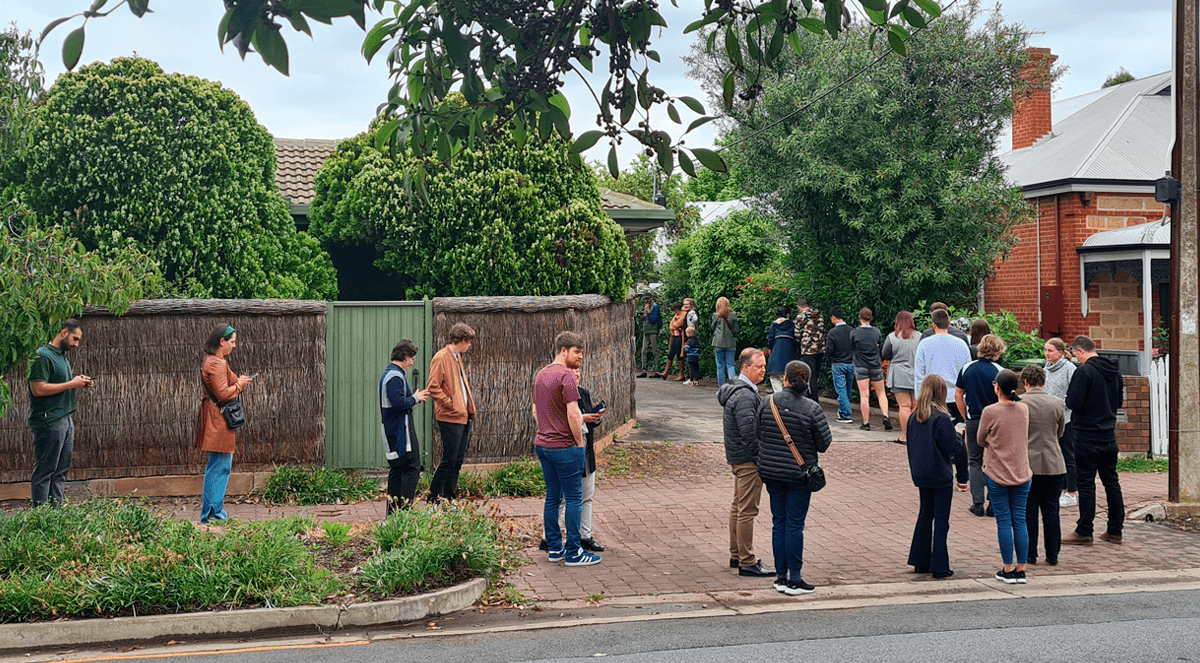
Brisbane
REA Group says Brisbane should continue to see positive home price growth through the rest of 2026, although the strong pace of growth will slow “as affordability constraints intensify following interest rate hikes.”
However, the report points out that new home construction over the past five years has fallen “short of what has been required to accommodate strong population growth, driven by interstate and overseas migration.”
That underlying shortage should see price growth of 5% in 2026 increase slightly to 6% in 2027.
Perth
Perth has been the standout city for price growth in Australia over the past three years, benefitting “from higher wages, primarily driven by mining activity, and strong population growth.”
“As affordability and inflation begin to put pressure on household budgets, price growth is forecast to slow, though it will remain the nation’s leading capital, finishing 2026 8% higher (a further 3.5% from where it is year-to-date),” REA Group says.
“In 2027, growth in Perth is expected to remain above the national average, at 7%.”
Adelaide
REA Group believes “Adelaide faces particularly challenging affordability conditions, with SA falling to the second-least-affordable state in Australia.”
It believes that as these “affordability constraints bite” there will be slower-than-average growth of 5% this year and 4% in 2027.
Hobart
In contrast, relative affordability in Hobart has led to “recent strong price growth… driven by an increase in first-home buyers from the expanded 5% deposit scheme and growth in investor activity.”
While REA Group says the Tasmanian capital is expected to see slower population growth than other cities, “lower price levels and low-deposit policies will likely support owner-occupier demand in the market.”
Interestingly, the state’s strong pipeline of capital works is likely to lead to significant building resources allocated to infrastructure projects, which REA Group says “may soften residential construction and dwelling supply, resulting in above-average price growth.”
“Therefore, prices are forecast to finish up 6% in 2026 and 7% in 2027.”







.jpg?width=1920&height=1080&name=WTF%20Is%20Happening%20To%20The%20Housing%20Market!%20$500%20Billion%20Wiped%20Out%20As%20Prices%20Fall%20Faster%20Every%20Month%20Scott%20Kuru%20YPU%20027%20(1).jpg)
%20Scott%20Kuru%20YPU%20025.jpg?width=1920&height=1080&name=This%20Is%20Worse%20Than%20A%20Recession%20RBA%20Admits%20Australias%20Wage%20Collapse%20Cant%20Be%20Stopped%20(Prepare%20Now)%20Scott%20Kuru%20YPU%20025.jpg)























.jpg?width=1920&height=1080&name=EXPOSED%20How%20The%20Govt%20Let%20These%20Oil%20Giants%20Get%20Away%20With%20Paying%20Zero%20Tax%20For%20Aussie%20Gas%20Scott%20Kuru%20DPU%20256%20(1).jpg)






%20Scott%20Kuru%20DPU%20248.jpg?width=1920&height=1080&name=Major%20Banks%20CAUGHT%20Preparing%20For%20Australia%E2%80%99s%20Biggest%20Housing%20Crash%20(Defaults%20%26%20Bankruptcies%20Coming)%20Scott%20Kuru%20DPU%20248.jpg)
%20Scott%20Kuru%20DPU%20247.jpg?width=1920&height=1080&name=This%20Is%20How%20Australia%20Gets%20Pushed%20Into%20the%20Next%20Big%20Reset%20(Trust%20Collapse%20Has%20Officially%20Begun)%20Scott%20Kuru%20DPU%20247.jpg)







%20Scott%20Kuru%20DPU%20239.jpg?width=1920&height=1080&name=URGENT%20Life%20In%20Australia%20Has%20Become%20Impossible%20For%20Millions%20Of%20Aussies%20(It%E2%80%99s%20About%20To%20Get%20Worse)%20Scott%20Kuru%20DPU%20239.jpg)









%20Scott%20Kuru%20DPU%20227.jpg?width=1920&height=1080&name=URGENT%20ALERT%20Australia%E2%80%99s%20Property%20Market%20Is%20Sliding%20Into%20Something%20Much%20Bigger%20(Prepare%20Now)%20Scott%20Kuru%20DPU%20227.jpg)