









.png?width=292&height=292&name=Copy%20Link%20(1).png)

 SIGN UP FOR FREE NEWSLETTER
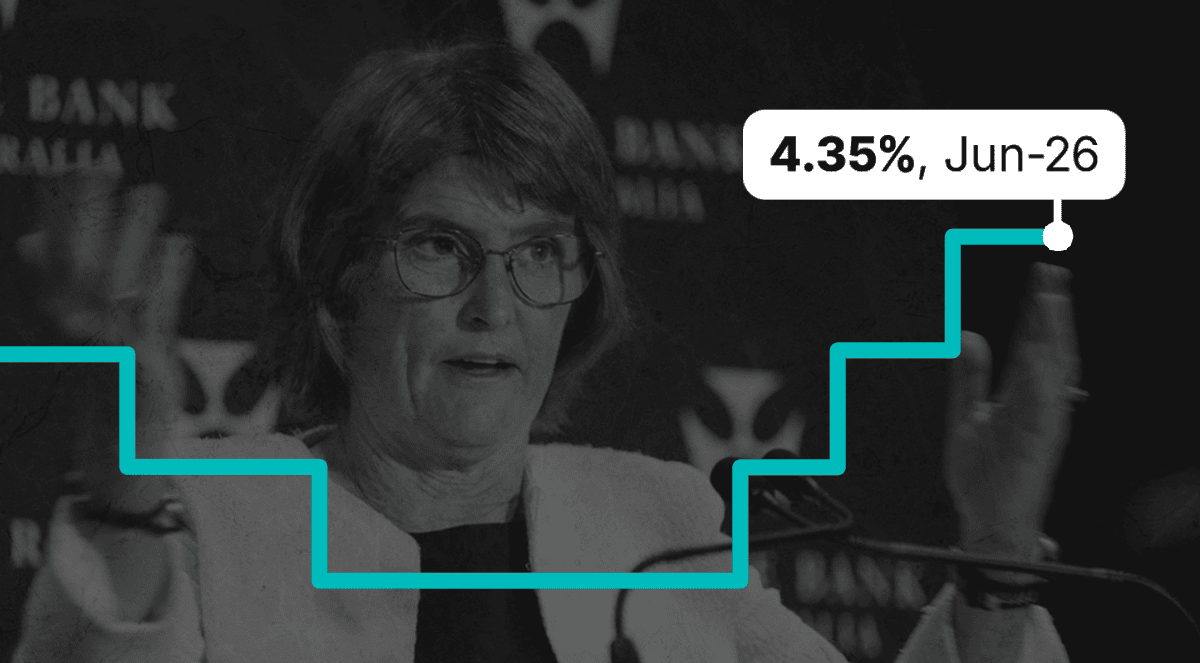
As expected, the Reserve Bank of Australia has left interest rates unchanged at 4.35% following its May 2026 monetary policy board meeting, but it’s made clear that it's still worried about high inflation and could raise rates again if needed.
The central bank has also warned that despite an apparent agreement to end the Middle East conflict, oil supply disruptions could keep fuel and energy prices elevated for some time, leading to higher inflation and weaker economic growth, both in Australia and overseas.
The details
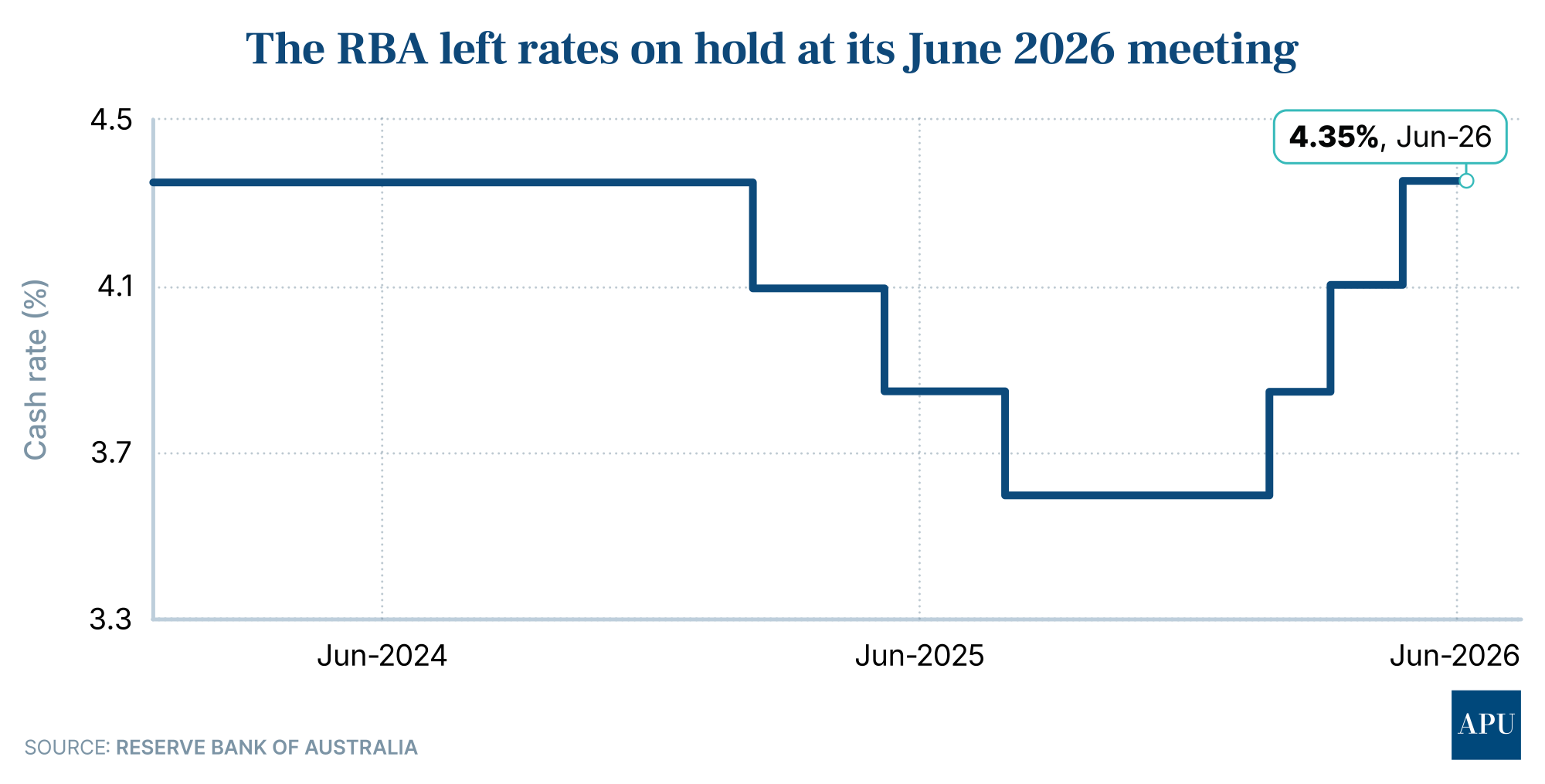
The Reserve Bank of Australia said it has decided to keep rates on hold for now as it assesses how the economy is responding to the three previous 0.25% rate hikes it has handed down so far this year - in February, March and May.
All nine members of its monetary policy board voted to keep rates on hold at its June meeting.
In a statement, the board said that “following the three increases in the cash rate target since the beginning of the year, financial conditions are now tighter than they were, and there are signs that the economy is slowing as expected.
“But inflation is still too high and the board judged that it was appropriate to leave the cash rate target unchanged while it assesses the response to previous interest rate rises and the impact of the oil supply disruption.”
The RBA said it will have no hesitation in raising the cash rate again if it believes Australia is not on the way back to the 2-3% target band the central bank is mandated to try to keep inflation within.
The latest official inflation figures released by the Australian Bureau of Statistics show annual CPI or headline inflation moderating from 4.6% in March to 4.2% in the year to April 2026.
But the RBA’s preferred inflation measure, the trimmed mean, bumped up slightly from 3.3% in March to 3.4% in the 12 months to April.
Market watchers have described the RBA’s June decision as a “hawkish hold.”
Reacting to the decision, the Federal Treasurer Jim Chalmers said the decision to keep rates on hold would be a “welcome reprieve for millions of Australians with a mortgage.”
Mr Chalmers was keen to tie a lot of the blame for higher inflation to developments in the Middle East, saying that Australians “have already paid a really hefty price for this conflict on the other side of the world.”
While welcoming an apparent agreement to end the conflict, the treasurer said he still expected “the situation in the Middle East to put upward pressure on inflation and to weigh heavily on global growth and growth in our own economy as well.”
However, in her regular post-decision press conference, RBA Governor Michele Bullock highlighted the fact that inflation pressures in the Australian economy were significant before the outbreak of hostilities in the Middle East at the end of February.
While she said it was “good news” there was an apparent deal to end the conflict which might “help” to ensure “that inflation doesn't get supercharged…we still have to make sure that that inflation problem we had prior to the conflict, that that is addressed.”
“And that's really what the recent tightening's been about,” she said, referring to the three interest rate hikes so far this year.
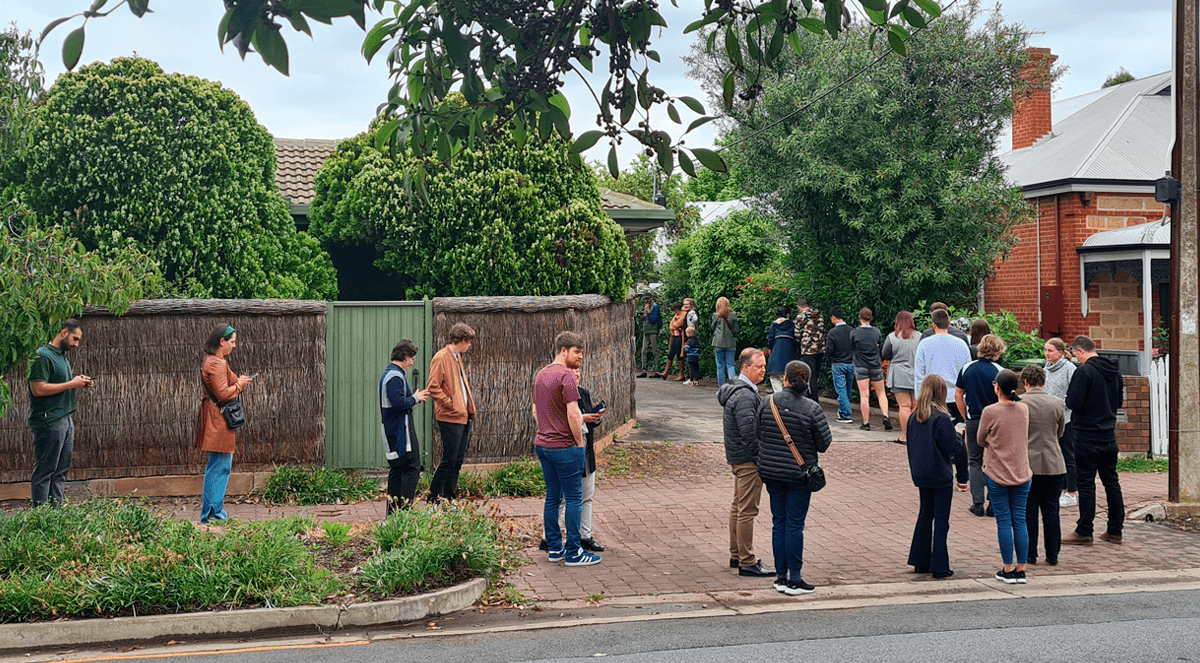
While it has decided to leave rates on hold, the RBA's decision offers little comfort to mortgage holders already grappling with three consecutive rate rises this year.
For an owner-occupier with a typical new average mortgage of around $750,000 and a typical retail interest rate of 6%, monthly repayments have climbed from about $4,125 at the start of the year to $4,500 today.
A further rate hike would have added around another $125 a month to repayments.
Meanwhile, the labour market is showing signs of softening, with unemployment rising to 4.5% in May — its highest level since 2021.
“There are signs household spending growth has slowed down, after a surprisingly strong end to 2025,” said REA Group Senior Economist Angus Moore.
“The housing market has also slowed, with home prices holding flat nationally in May, and modest price declines in Sydney and Melbourne.
“That softness is likely to continue through the rest of 2026, as the full effect of the rate hikes weigh on borrowing capacity and home prices,” he said.
Three of Australia’s big four banks - CBA, NAB and ANZ - all believe the cash rate has now peaked in this cycle, with the next move in interest rates down - but not until next year.




.jpg?width=1920&height=1080&name=WTF%20Is%20Happening%20To%20The%20Housing%20Market!%20$500%20Billion%20Wiped%20Out%20As%20Prices%20Fall%20Faster%20Every%20Month%20Scott%20Kuru%20YPU%20027%20(1).jpg)
%20Scott%20Kuru%20YPU%20025.jpg?width=1920&height=1080&name=This%20Is%20Worse%20Than%20A%20Recession%20RBA%20Admits%20Australias%20Wage%20Collapse%20Cant%20Be%20Stopped%20(Prepare%20Now)%20Scott%20Kuru%20YPU%20025.jpg)























.jpg?width=1920&height=1080&name=EXPOSED%20How%20The%20Govt%20Let%20These%20Oil%20Giants%20Get%20Away%20With%20Paying%20Zero%20Tax%20For%20Aussie%20Gas%20Scott%20Kuru%20DPU%20256%20(1).jpg)






%20Scott%20Kuru%20DPU%20248.jpg?width=1920&height=1080&name=Major%20Banks%20CAUGHT%20Preparing%20For%20Australia%E2%80%99s%20Biggest%20Housing%20Crash%20(Defaults%20%26%20Bankruptcies%20Coming)%20Scott%20Kuru%20DPU%20248.jpg)
%20Scott%20Kuru%20DPU%20247.jpg?width=1920&height=1080&name=This%20Is%20How%20Australia%20Gets%20Pushed%20Into%20the%20Next%20Big%20Reset%20(Trust%20Collapse%20Has%20Officially%20Begun)%20Scott%20Kuru%20DPU%20247.jpg)







%20Scott%20Kuru%20DPU%20239.jpg?width=1920&height=1080&name=URGENT%20Life%20In%20Australia%20Has%20Become%20Impossible%20For%20Millions%20Of%20Aussies%20(It%E2%80%99s%20About%20To%20Get%20Worse)%20Scott%20Kuru%20DPU%20239.jpg)










%20Scott%20Kuru%20DPU%20227.jpg?width=1920&height=1080&name=URGENT%20ALERT%20Australia%E2%80%99s%20Property%20Market%20Is%20Sliding%20Into%20Something%20Much%20Bigger%20(Prepare%20Now)%20Scott%20Kuru%20DPU%20227.jpg)





%20Scott%20Kuru%20DPU%20221.jpg?width=1920&height=1080&name=The%20AI%20Situation%20in%20Australia%20Just%20Hit%20a%20Point%20of%20No%20Return...%20(Major%20Bank%20Proves%20It)%20Scott%20Kuru%20DPU%20221.jpg)