









.png?width=292&height=292&name=Copy%20Link%20(1).png)

 SIGN UP FOR FREE NEWSLETTER
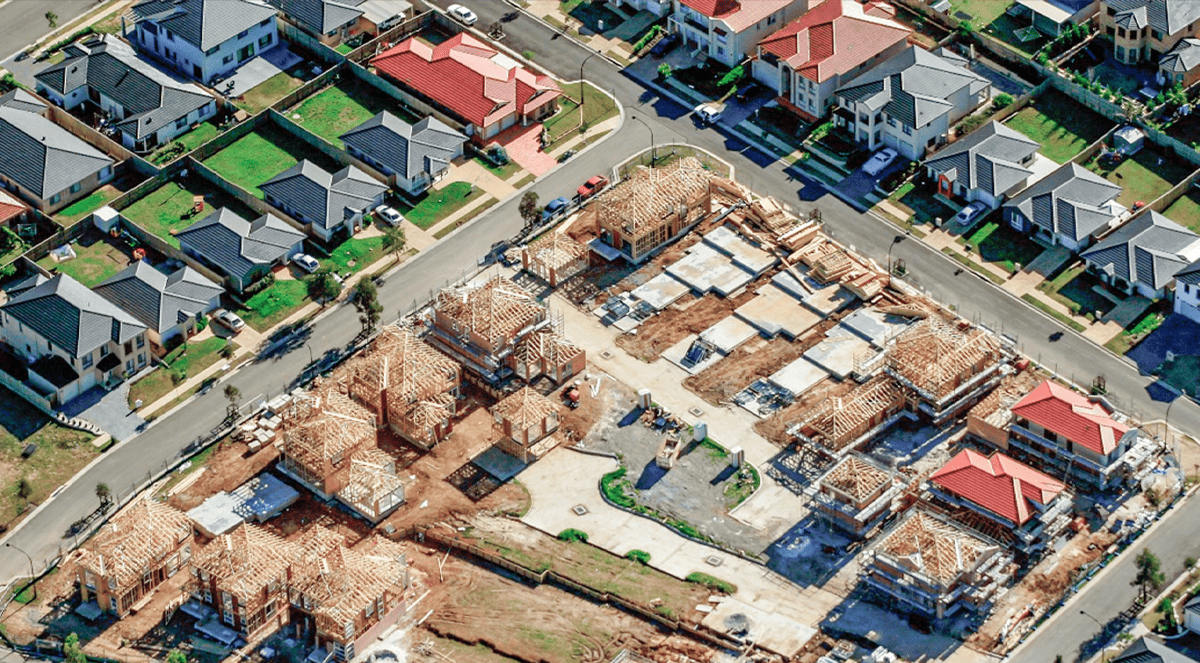
A powerful coalition of building and property groups has warned the Albanese government against changing existing tax arrangements on housing in the upcoming Federal budget.
There’s widespread speculation the government is preparing to pare back the 50% Capital Gains Tax (CGT) discount - possibly to 25% - on sales of investment properties held for more than 12 months.
Other proposals being floated publicly would see negative gearing tax provisions limited to one investment property, or a combination of changes to both tax breaks.
Economic modelling commissioned by Master Builders, the Housing Industry Association, the Property Council and the Real Estate Institute of Australia argues changing the status quo would have a direct impact on economic growth and see even less homes built, at a time when new housing supply is already falling short of national targets.
The groups argue this would only deepen the existing housing crisis, with most of the burden falling on the third of Australians who rent.
The details
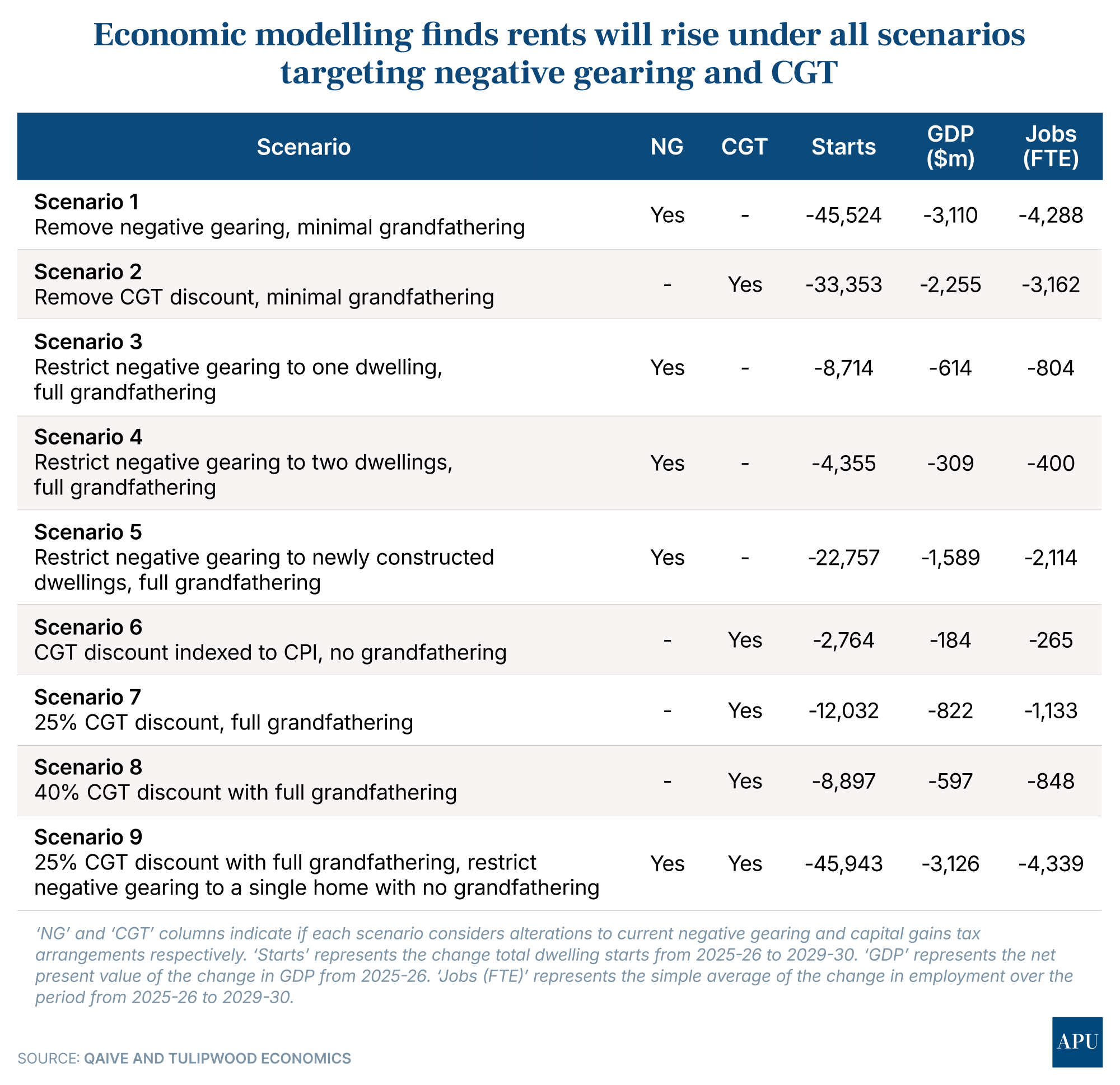
The modelling, carried out by Qaive and Tulipwood Economics, canvasses a range of nine outcomes based on potential alterations to existing housing taxation policy settings.
It considers the removal or restriction of negative gearing provisions and various scenarios around changing the current 50% CGT discount on the sale of property assets.
Looking at the four most likely scenarios the Albanese government is reportedly considering, Qaive and Tulipwood find that removing negative gearing for all new and current rental properties, except for one current property per investor, would reduce Australia’s GDP by $3.1 billion.
This scenario would also reduce dwelling starts by 45,500 over a five-year period, while employment in the construction sector would fall by the equivalent of 4,250 full-time jobs per year.
Rents would also rise by an extra 2% a year on top of normal “business as usual” increases by 2029-30.
Another proposal that has received some support from left-leaning think tanks involves allowing negative gearing only for newly built homes.
This, they argue, would encourage more supply.
Tax arrangements for existing property investors would be protected or “grandfathered”, so the changes would only apply going forward to investors who buy existing properties.
However, the modelling commissioned for the property and real estate groups finds there would still be a negative impact on supply and the broader economy.
Specifically, it’s forecast to reduce economic growth by $1.6 billion and dwelling starts would fall by 22,750 over the five-year modelling period.
Construction employment would fall by the equivalent of 2,000 full-time jobs per year.
Rents would also rise by almost 1% extra per year.
When it comes to tinkering with CGT, Qaive and Tulipwood Economics find halving the current discount when selling an investment property to 25% would reduce GDP by $822 million a year and reduce new dwelling starts by 12,000 over a five-year period.
Around 850 full-time building jobs would be lost each year, but rents would only rise marginally.
A widely-floated “double-whammy” scenario, which would see changes to both negative gearing and the CGT discount, would have the most dramatic impact.
Halving the CGT discount to 25% and restricting negative gearing for investors to a single existing property would lead to a fall in GDP of more than $3 billion, while housing starts would plunge by almost 46,000.
Speaking at a press conference in Canberra to launch the modelling, Master Builders CEO Denita Wawn said the findings were unequivocal.
“Whatever way you cut it, any time you do a tax hike on property, you reduce the supply of our homes,” she said.
“That is not fair to our rental market… at a time when we need to be focusing on uplift.”

The Housing Industry Association’s managing director, Jocelyn Martin, said the country simply cannot afford to deter investors at a time of acute shortage.
“We know that two in five…new homes built in this country are built by investors,” she said.
“We can ill afford to see those investors leave the market for more attractive options.”
The building and property groups argue the burden of any tax changes would ultimately fall on renters, not the property investors they are targeting.
Real Estate Institute President Jacob Caine said the consequences were unavoidable.
“Increasing tax on housing decreases supply,” he said.
“What that translates into is fewer homes being built, fewer jobs in construction, and most significantly, an increase in rents.
“In that context, the inescapable consequences of higher property taxes are that rental home availability decreases, rents increase… and those in our community who can least afford the extra burden, bear that burden.”
The modelling shows rents would rise above “business-as-usual” levels under every scenario tested, as investors pass on higher costs or exit the market altogether.
The Qaive and Tulipwood report also highlights the central role private investors play in Australia’s housing system.
Nearly one-third of Australians rely on rental housing, with private landlords supplying the vast majority of those homes.
Property Council CEO Mike Zorbas said anything that discouraged property investors would have far-reaching consequences.
“The simple fact is this, we won’t get more supply of new homes in this country if we hike taxes on investment in that supply,” he said.
“If you shrink supply by hitting investors, you eventually end up hitting renters.”
The warning from the coalition of building property groups comes at a pivotal moment for housing policy, with Australia already facing a structural shortage of homes and struggling to meet the National Housing Accord target of building 1.2 million new homes over five years.
Industry leaders argue that while tax reform may be warranted in the long term, it should not come at the expense of supply.
“We must first tackle planning constraints, infrastructure charges, construction productivity, workforce challenges and regulatory duplication,” the REIA’s Jacob Caine said.
The message to the government is blunt: with rental vacancy rates near record lows and demand continuing to surge from strong population growth, any policy that risks slowing construction by scaring off property investors could deepen Australia’s existing chronic housing shortage.







.jpg?width=1920&height=1080&name=WTF%20Is%20Happening%20To%20The%20Housing%20Market!%20$500%20Billion%20Wiped%20Out%20As%20Prices%20Fall%20Faster%20Every%20Month%20Scott%20Kuru%20YPU%20027%20(1).jpg)
%20Scott%20Kuru%20YPU%20025.jpg?width=1920&height=1080&name=This%20Is%20Worse%20Than%20A%20Recession%20RBA%20Admits%20Australias%20Wage%20Collapse%20Cant%20Be%20Stopped%20(Prepare%20Now)%20Scott%20Kuru%20YPU%20025.jpg)























.jpg?width=1920&height=1080&name=EXPOSED%20How%20The%20Govt%20Let%20These%20Oil%20Giants%20Get%20Away%20With%20Paying%20Zero%20Tax%20For%20Aussie%20Gas%20Scott%20Kuru%20DPU%20256%20(1).jpg)






%20Scott%20Kuru%20DPU%20248.jpg?width=1920&height=1080&name=Major%20Banks%20CAUGHT%20Preparing%20For%20Australia%E2%80%99s%20Biggest%20Housing%20Crash%20(Defaults%20%26%20Bankruptcies%20Coming)%20Scott%20Kuru%20DPU%20248.jpg)
%20Scott%20Kuru%20DPU%20247.jpg?width=1920&height=1080&name=This%20Is%20How%20Australia%20Gets%20Pushed%20Into%20the%20Next%20Big%20Reset%20(Trust%20Collapse%20Has%20Officially%20Begun)%20Scott%20Kuru%20DPU%20247.jpg)







%20Scott%20Kuru%20DPU%20239.jpg?width=1920&height=1080&name=URGENT%20Life%20In%20Australia%20Has%20Become%20Impossible%20For%20Millions%20Of%20Aussies%20(It%E2%80%99s%20About%20To%20Get%20Worse)%20Scott%20Kuru%20DPU%20239.jpg)








%20Scott%20Kuru%20DPU%20227.jpg?width=1920&height=1080&name=URGENT%20ALERT%20Australia%E2%80%99s%20Property%20Market%20Is%20Sliding%20Into%20Something%20Much%20Bigger%20(Prepare%20Now)%20Scott%20Kuru%20DPU%20227.jpg)