









.png?width=292&height=292&name=Copy%20Link%20(1).png)

 SIGN UP FOR FREE NEWSLETTER
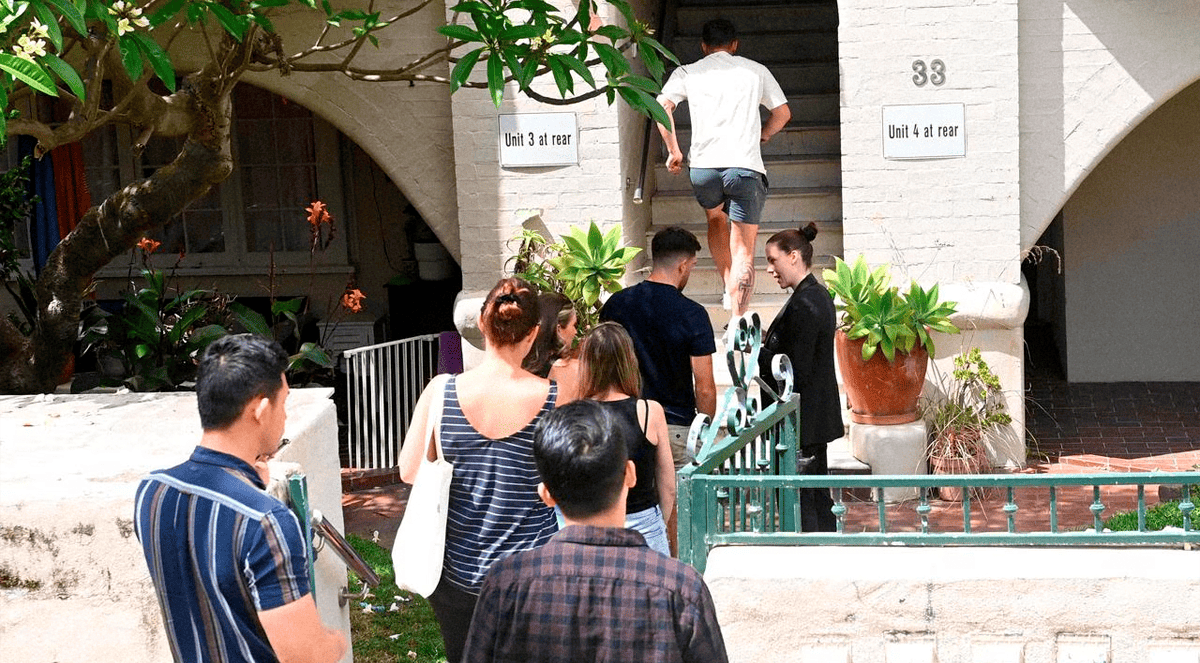
Image from Jeremy Piper/NCA NewsWire
Australia’s residential property market is powering into 2026 with prices, rents and demand climbing.
That’s the picture that emerges from National Australia Bank’s inaugural Housing Monitor report for January 2026.
While the new publication from the “Big 4” bank’s economics team doesn’t offer price forecasts for the year ahead, it shows Australia’s housing system is still under strain, despite signs of moderating growth in some cities.
It also highlights that construction is not keeping up with population growth, baking in a housing shortage for years to come.
The details
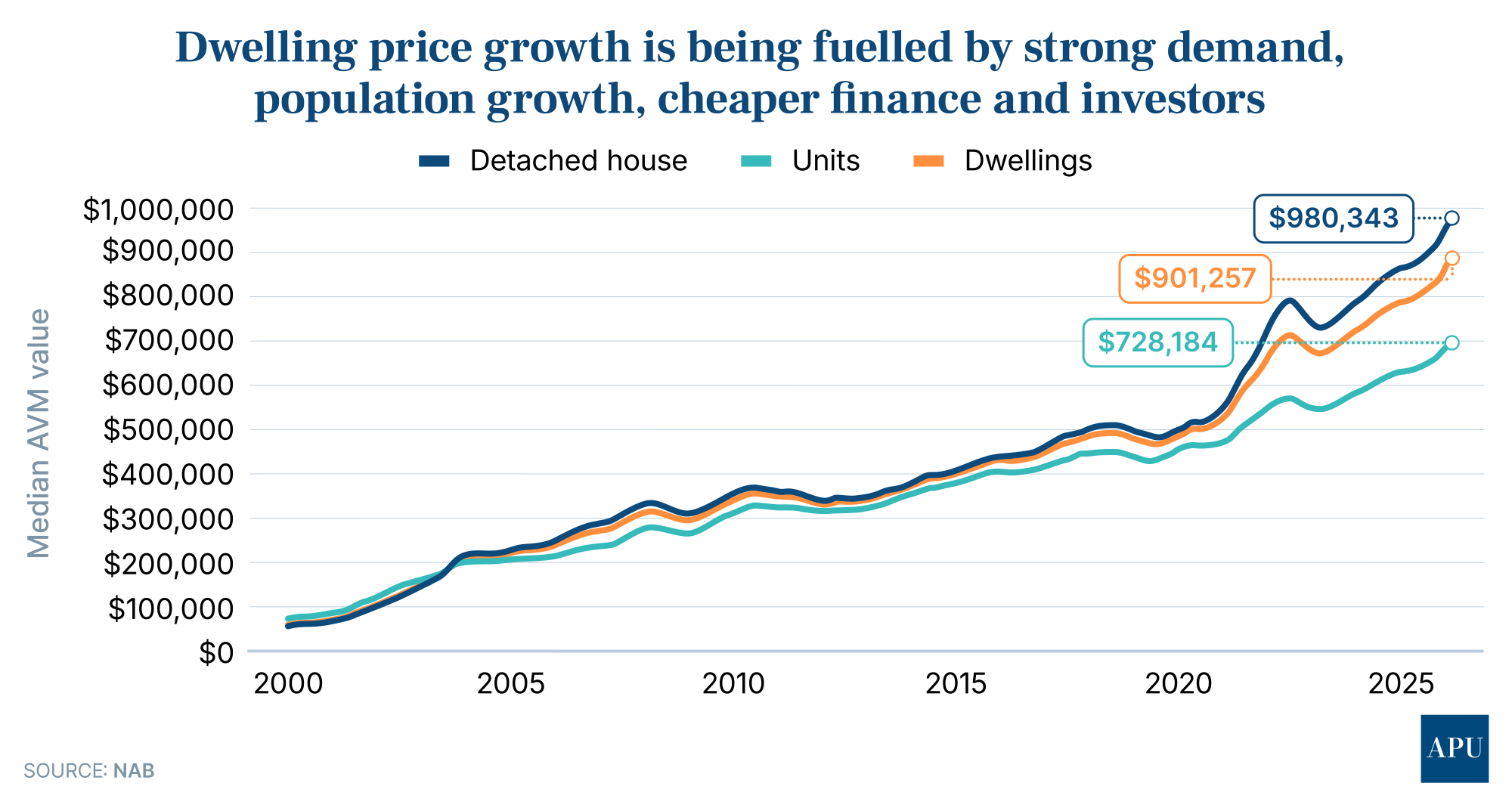
National Australia Bank’s Housing Monitor says dwelling prices across Australia’s capital cities rose 8.2% during 2025, lifting the national median home value to around $900,000.
Prices rose a further 0.5% in December alone, even as momentum cooled in Sydney and Melbourne toward the end of the year.
However, the gains have been anything but uniform.
Price growth has been strongest in Perth (15.9%), Brisbane (14.5%) and Adelaide (8.8%), with the small Darwin market emerging as the year’s standout performer (18.9%).
By contrast, Melbourne (4.8%) and Canberra (4.9%) recorded the weakest growth among the capitals.
Homes outside the capital cities modestly outperformed the combined capitals, reflecting population shifts and the continued pull of relative housing affordability in the regions.
NAB says that despite the slowing pace towards the end of the year in some markets, conditions remain firmly tilted in favour of sellers.
Homes are selling quickly, with median days on market sitting at just 28, a sign that demand is still running well ahead of supply in many regions.
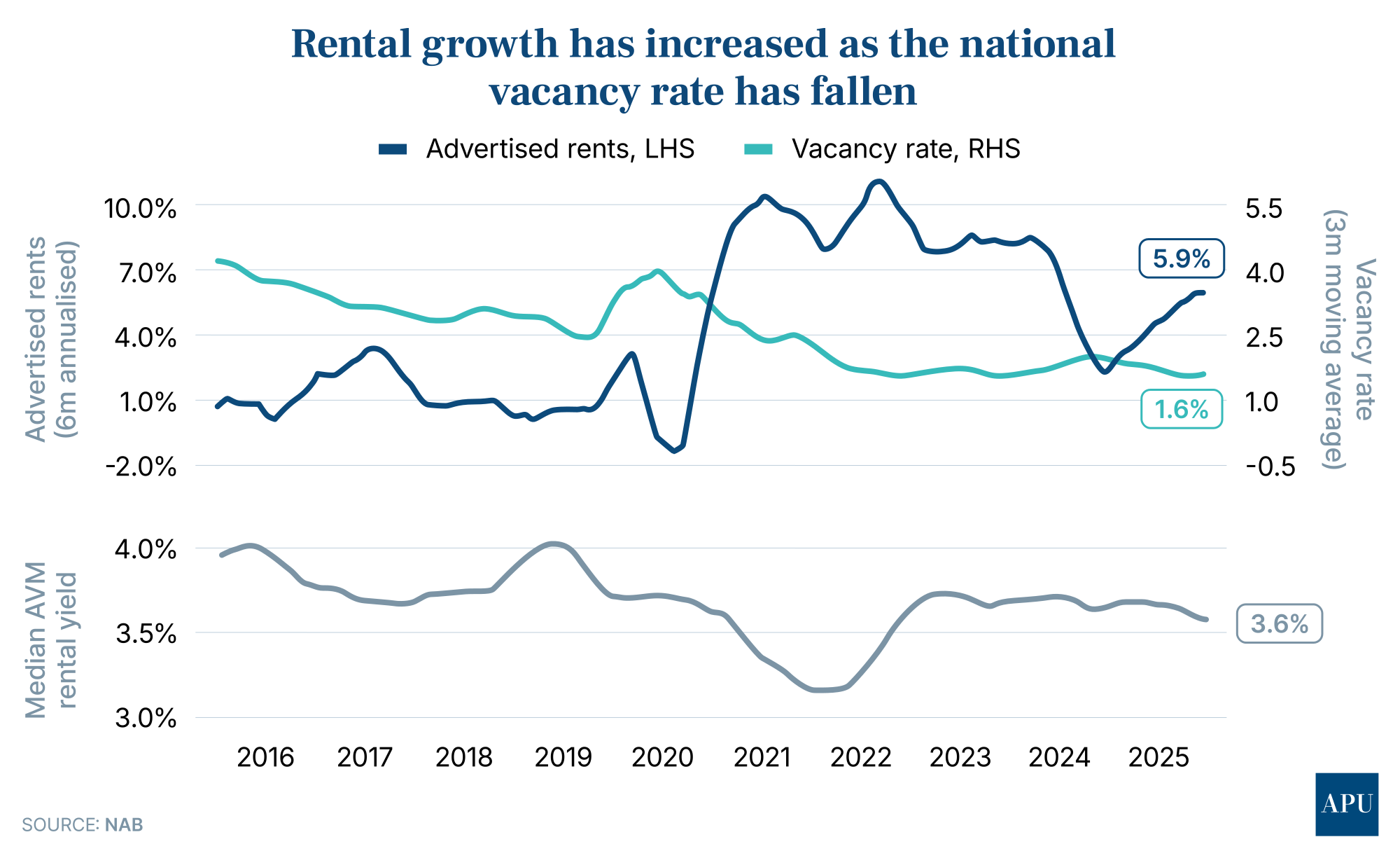
The rental market remains even tighter.
NAB’s report shows advertised rents rose 5.9% on a six-month annualised basis in December, while vacancy rates hovered near record lows at around 1.6% nationally.
This is occurring even as population growth (which has mainly been driven by overseas migration) has begun to cool, highlighting how deeply entrenched Australia’s rental shortage has become.
On the demand side, cheaper finance and rising investor activity are adding fuel to the fire.
New housing loan commitments were 13% higher over the year to the end of the September quarter of 2025, equivalent to an extra $11.5 billion in lending, with investors leading the charge.
Mortgage interest rates have also fallen by 0.75% since early 2025, easing borrowing costs and supporting renewed activity in the property market.
NAB says the average mortgage size for Australian owner-occupiers is now around $640,000.
Encouragingly for financial stability, only a small share of new lending is being written at high debt-to-income or loan-to-valuation ratios.
Housing loan arrears have edged up to around 1% of outstanding loans, but remain relatively low overall and are highest among so-called “low-doc” borrowers.

Housing supply, however, continues to lag.
Net additions to dwelling stock remain well below a peak back in 2015, even though approvals for new builds have lifted.
Those approvals are feeding into an already large construction pipeline, keeping the number of dwellings under construction elevated, particularly in New South Wales and Victoria.
Apartment construction is a key part of that pipeline.
Starts are currently exceeding completions, which is prolonging build times and delaying new supply coming to market.
While completion times for detached houses and townhouses have shortened slightly, they continue to increase for apartments.
National Australia Bank’s Housing Monitor doesn’t explicitly state this, but those conditions don’t bode well for the Federal government’s ambition of building 1.2 million new homes in Australia by mid-2029 - a goal which already looks unachievable based on annual housing targets.
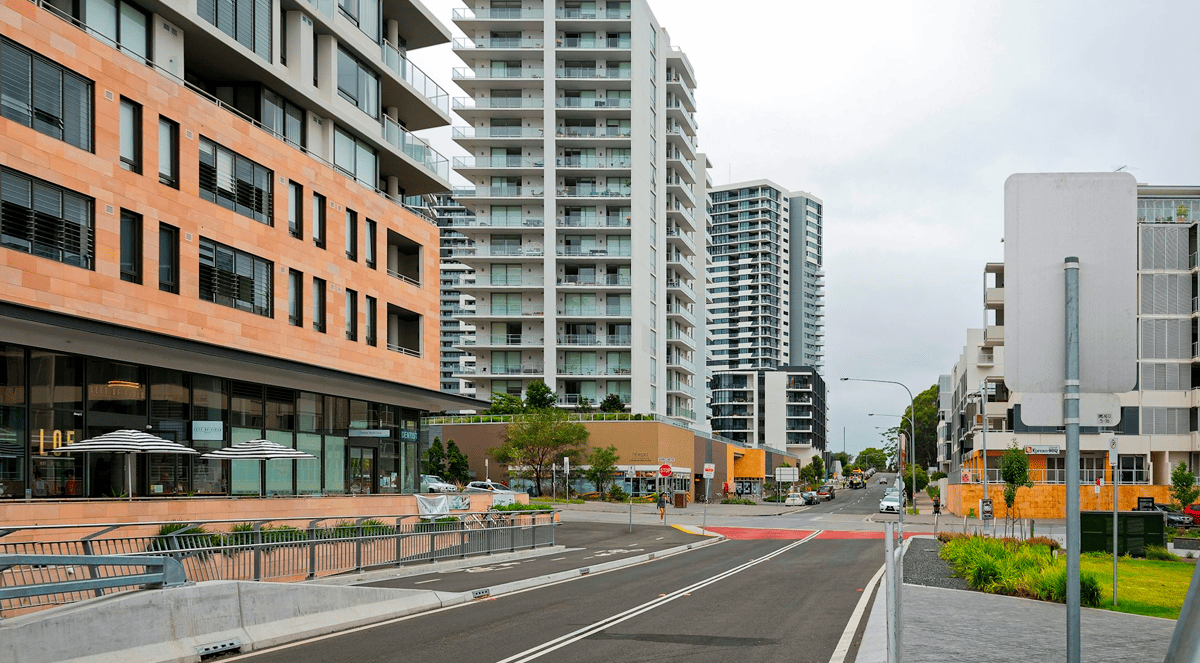

Meanwhile, cost pressures in the construction sector have eased from their mid-2022 peaks, but building output prices and material costs are still high.
Wages for building workers continue to rise, and construction companies report labour shortages remain a persistent constraint.
NAB’s residential property survey concludes construction costs and building permit and planning delays are the main barriers to starting new housing developments.
Taken together, the picture NAB’s inaugural Housing Monitor paints is of a housing market that has cooled at the margins after a period of robust growth, but remains fundamentally tight.
Prices and rents are still rising strongly, demand is being supported - for now - by lower interest rates and investor activity, and supply constraints show little sign of easing quickly.
In short, Australia’s housing crisis is unlikely to resolve in the short to medium term without a sustained lift in the supply of new homes.




.jpg?width=1920&height=1080&name=WTF%20Is%20Happening%20To%20The%20Housing%20Market!%20$500%20Billion%20Wiped%20Out%20As%20Prices%20Fall%20Faster%20Every%20Month%20Scott%20Kuru%20YPU%20027%20(1).jpg)

%20Scott%20Kuru%20YPU%20025.jpg?width=1920&height=1080&name=This%20Is%20Worse%20Than%20A%20Recession%20RBA%20Admits%20Australias%20Wage%20Collapse%20Cant%20Be%20Stopped%20(Prepare%20Now)%20Scott%20Kuru%20YPU%20025.jpg)




























.jpg?width=1920&height=1080&name=EXPOSED%20How%20The%20Govt%20Let%20These%20Oil%20Giants%20Get%20Away%20With%20Paying%20Zero%20Tax%20For%20Aussie%20Gas%20Scott%20Kuru%20DPU%20256%20(1).jpg)






%20Scott%20Kuru%20DPU%20248.jpg?width=1920&height=1080&name=Major%20Banks%20CAUGHT%20Preparing%20For%20Australia%E2%80%99s%20Biggest%20Housing%20Crash%20(Defaults%20%26%20Bankruptcies%20Coming)%20Scott%20Kuru%20DPU%20248.jpg)
%20Scott%20Kuru%20DPU%20247.jpg?width=1920&height=1080&name=This%20Is%20How%20Australia%20Gets%20Pushed%20Into%20the%20Next%20Big%20Reset%20(Trust%20Collapse%20Has%20Officially%20Begun)%20Scott%20Kuru%20DPU%20247.jpg)







%20Scott%20Kuru%20DPU%20239.jpg?width=1920&height=1080&name=URGENT%20Life%20In%20Australia%20Has%20Become%20Impossible%20For%20Millions%20Of%20Aussies%20(It%E2%80%99s%20About%20To%20Get%20Worse)%20Scott%20Kuru%20DPU%20239.jpg)











%20Scott%20Kuru%20DPU%20227.jpg?width=1920&height=1080&name=URGENT%20ALERT%20Australia%E2%80%99s%20Property%20Market%20Is%20Sliding%20Into%20Something%20Much%20Bigger%20(Prepare%20Now)%20Scott%20Kuru%20DPU%20227.jpg)





%20Scott%20Kuru%20DPU%20221.jpg?width=1920&height=1080&name=The%20AI%20Situation%20in%20Australia%20Just%20Hit%20a%20Point%20of%20No%20Return...%20(Major%20Bank%20Proves%20It)%20Scott%20Kuru%20DPU%20221.jpg)