









.png?width=292&height=292&name=Copy%20Link%20(1).png)

 SIGN UP FOR FREE NEWSLETTER
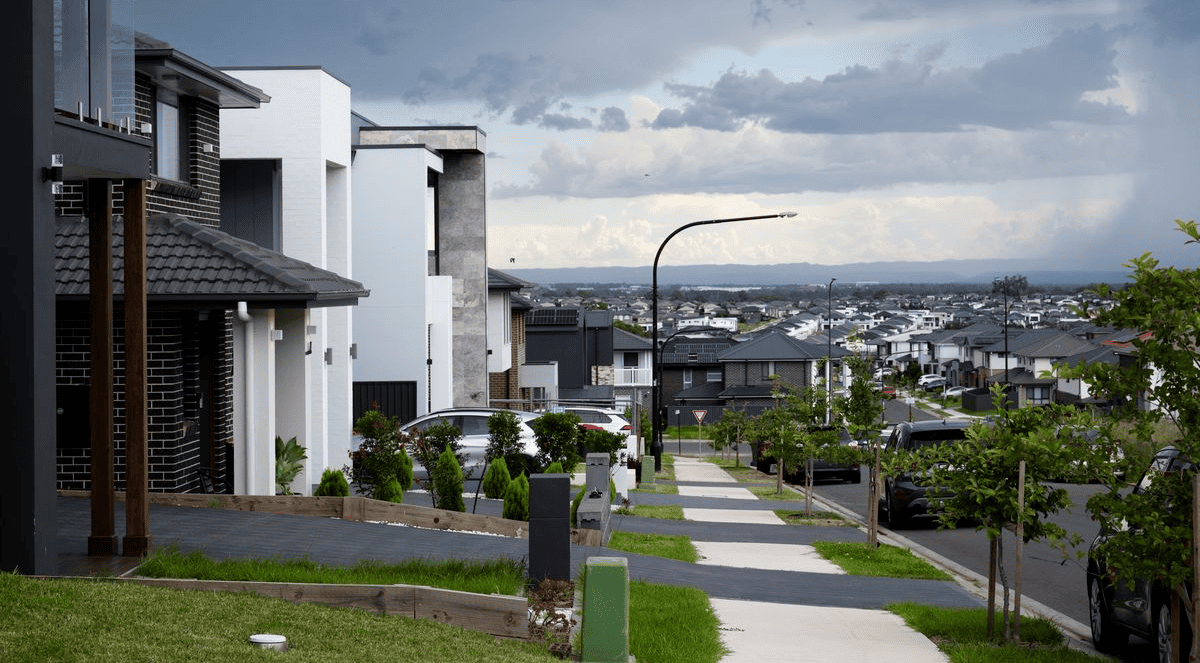
Image by Janie Barrett/9News
New analysis has confirmed the Federal government’s 5% deposit scheme has pushed up home prices faster in the very segment of the property market the program was meant to make more accessible to first-home buyers.
The Cotality research shows that since the scheme was expanded late last year, lower-priced homes have significantly outperformed the rest of the market.
From October the 1st 2025, income caps were scrapped, making the scheme open to all first-home buyers.
Eligible property price caps were also dramatically lifted in most markets, bringing them more in line with median home prices in each city and region.
The details
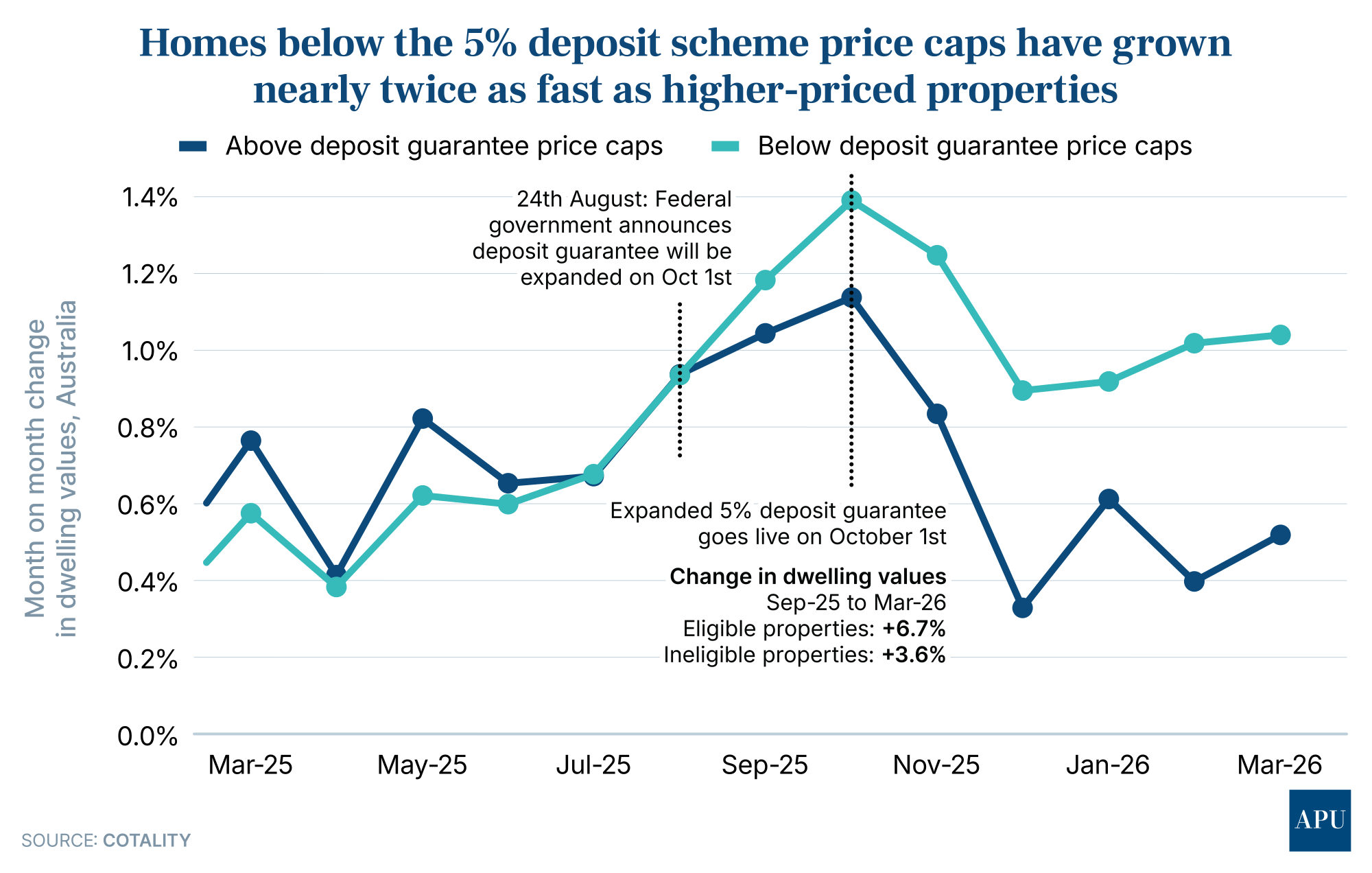
A new analysis by Cotality shows that over the first six months of the Albanese government’s expanded 5% deposit program, properties below the scheme’s price caps have risen 6.7% in value, compared with just 3.6% growth for homes above the caps.
And that widening gap didn’t emerge in a vacuum.
Cotality notes that momentum in lower-priced housing was already building before the policy change, with “the divergence opening around the time of the announcement in late August.”
However the data suggests the scheme’s expansion accelerated that trend, intensifying demand where supply was already tight.
The program has effectively funnelled more buyers into a narrower band of the property market - those properties that sit under the scheme's price caps - at a time when borrowing constraints are already pushing households toward cheaper options.
Cotality points to several factors driving the surge.
One is demand being “brought forward”, as buyers moved early in anticipation of increased competition once the scheme expanded.
Another is serviceability - with interest rates higher and property values elevated, many borrowers simply can’t stretch into more expensive homes, forcing them to concentrate their search at the lower end.
Investors also comprised 40% of mortgage demand in the December quarter of 2025, well above the long-term average of around one-third, adding another layer of competition for entry-level properties - typically favoured by investors.
The combined effect is a crowded field of buyers chasing a limited pool of cheaper homes and prices adjusting accordingly.
“Overall, the expanded deposit guarantee appears to have amplified demand for lower-priced homes, adding to competitive tension for more affordable housing options and contributing to faster growth in this segment compared to higher-priced properties,” Cotality’s report says.
The trend is remarkably consistent across the country.
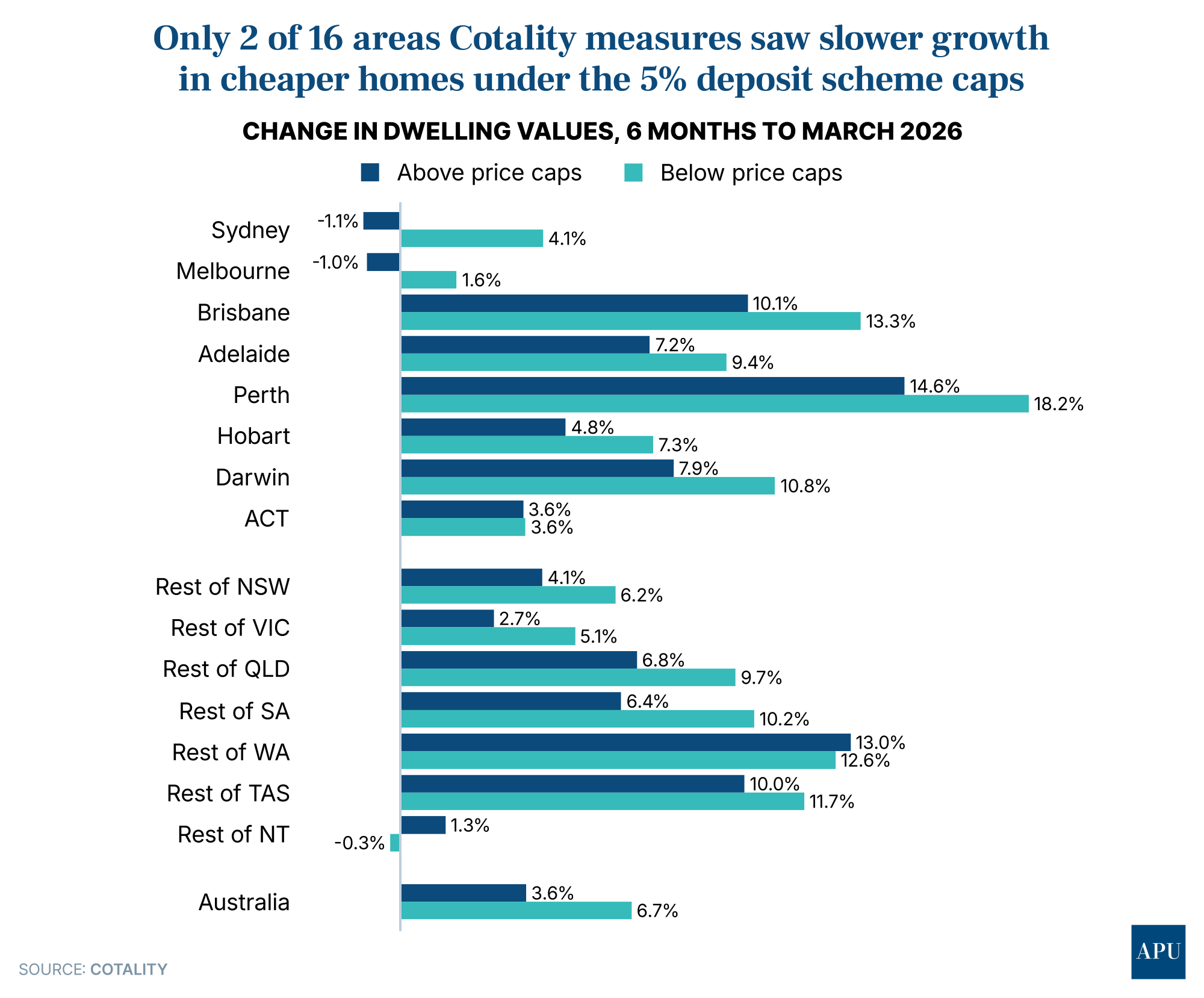
According to Cotality, 81 out of 88 property sub-markets (92%) have recorded stronger growth in properties below the price caps, compared with those above them.
The clearest example is Sydney, where the gap between the two segments is the largest in the nation.
In the New South Wales capital, homes under the cap rose 4.1% over the past six months, while those above the cap actually fell 1.1% - a differential of 5.2 percentage points.
Even in a market known for its high prices, the policy appears to be reshaping demand, concentrating activity in the relatively “affordable” bracket.
But as prices rise, that affordable property price bracket is getting smaller.
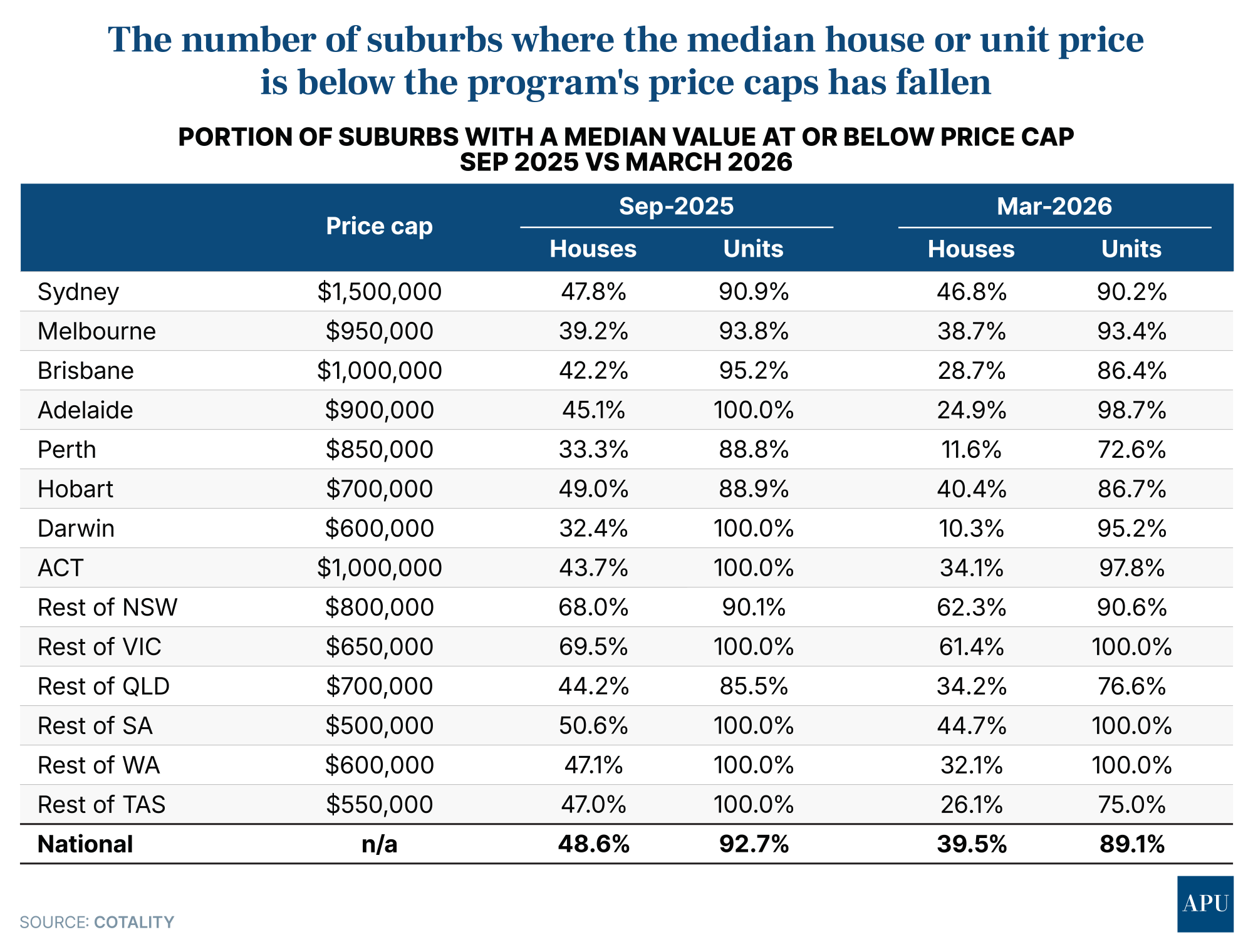
Cotality’s data shows the share of suburbs with median values below the scheme’s price caps is already shrinking.
At the end of September last year, just before the expansion, 48.6% of suburbs nationally had a median house value below the caps.
By the end of March, that had dropped to 39.5%.
The shift is even more pronounced in some cities.
In Perth, just 11.6% of suburbs now sit below the house price cap, down from around a third just six months earlier.
In Darwin, only 10.3% of suburbs remain under the $600,000 cap, a sharp fall from 32.4%.
Units offer more options, with a much larger share of suburbs sitting below the caps, but even here, the pool is beginning to narrow as values rise.
Sydney presents a slightly different picture.
Despite being the most expensive market in the country, the city actually has the highest proportion of suburbs under the house price cap - 46.8% - largely because Sydney’s cap is set much higher at $1.5 million.
Even so, that figure has edged down from 47.8% in six months, reflecting the same underlying pressure.
There’s also a second constraint emerging: finance.
While the scheme reduces the so-called “deposit hurdle” for first-home buyers, it does nothing to ease borrowing capacity - and that’s becoming a bigger issue as interest rates rise.
Cotality notes that the average first-home buyer loan increased by 7.7% in the December quarter of 2025 to more than $600,000.
At the same time, rate increases have reduced borrowing capacity, with Cotality estimating a household earning $100,000 is now able to borrow around $34,300 less.
Add in the standard three percentage point “serviceability buffer”, and many borrowers are now being assessed at mortgage rates of around 9% or higher.
That’s a significant barrier, particularly for buyers already stretching to enter the market with a small deposit.
Cotality’s conclusion is that the policy may become less effective over time.
As more properties rise above the caps and borrowing constraints tighten, fewer buyers will be able to take advantage of the scheme.

“Overall, it is likely first-home buyer deposit guarantee will gradually lose its stimulatory power, with more homes exceeding the price thresholds and a growing portion of prospective buyers running into a finance hurdle that is set to rise further,” the report concludes.
In an interview with the ABC to discuss the report’s findings, Cotality’s Research Director Tim Lawless was blunt.about the 5% deposit scheme’s effectiveness.
"It really just seems to be putting a bandaid over the symptoms of housing affordability, while over the medium to longer term making it worse by driving prices higher at the most affordable end of the market," he says.
The takeout
Rather than easing pressure at the lower end of the market, the 5% deposit scheme appears to be intensifying it - concentrating demand, lifting prices and reducing the pool of affordable options.
For first-home buyers, that creates a paradox.
The policy may be helping a small pool of lucky buyers into the market sooner, but for the majority, it may be pushing their dream of owning their own home further and further away.










.jpg?width=1920&height=1080&name=WTF%20Is%20Happening%20To%20The%20Housing%20Market!%20$500%20Billion%20Wiped%20Out%20As%20Prices%20Fall%20Faster%20Every%20Month%20Scott%20Kuru%20YPU%20027%20(1).jpg)
%20Scott%20Kuru%20YPU%20025.jpg?width=1920&height=1080&name=This%20Is%20Worse%20Than%20A%20Recession%20RBA%20Admits%20Australias%20Wage%20Collapse%20Cant%20Be%20Stopped%20(Prepare%20Now)%20Scott%20Kuru%20YPU%20025.jpg)




























.jpg?width=1920&height=1080&name=EXPOSED%20How%20The%20Govt%20Let%20These%20Oil%20Giants%20Get%20Away%20With%20Paying%20Zero%20Tax%20For%20Aussie%20Gas%20Scott%20Kuru%20DPU%20256%20(1).jpg)







%20Scott%20Kuru%20DPU%20248.jpg?width=1920&height=1080&name=Major%20Banks%20CAUGHT%20Preparing%20For%20Australia%E2%80%99s%20Biggest%20Housing%20Crash%20(Defaults%20%26%20Bankruptcies%20Coming)%20Scott%20Kuru%20DPU%20248.jpg)
%20Scott%20Kuru%20DPU%20247.jpg?width=1920&height=1080&name=This%20Is%20How%20Australia%20Gets%20Pushed%20Into%20the%20Next%20Big%20Reset%20(Trust%20Collapse%20Has%20Officially%20Begun)%20Scott%20Kuru%20DPU%20247.jpg)







%20Scott%20Kuru%20DPU%20239.jpg?width=1920&height=1080&name=URGENT%20Life%20In%20Australia%20Has%20Become%20Impossible%20For%20Millions%20Of%20Aussies%20(It%E2%80%99s%20About%20To%20Get%20Worse)%20Scott%20Kuru%20DPU%20239.jpg)











%20Scott%20Kuru%20DPU%20227.jpg?width=1920&height=1080&name=URGENT%20ALERT%20Australia%E2%80%99s%20Property%20Market%20Is%20Sliding%20Into%20Something%20Much%20Bigger%20(Prepare%20Now)%20Scott%20Kuru%20DPU%20227.jpg)