









.png?width=292&height=292&name=Copy%20Link%20(1).png)

 SIGN UP FOR FREE NEWSLETTER
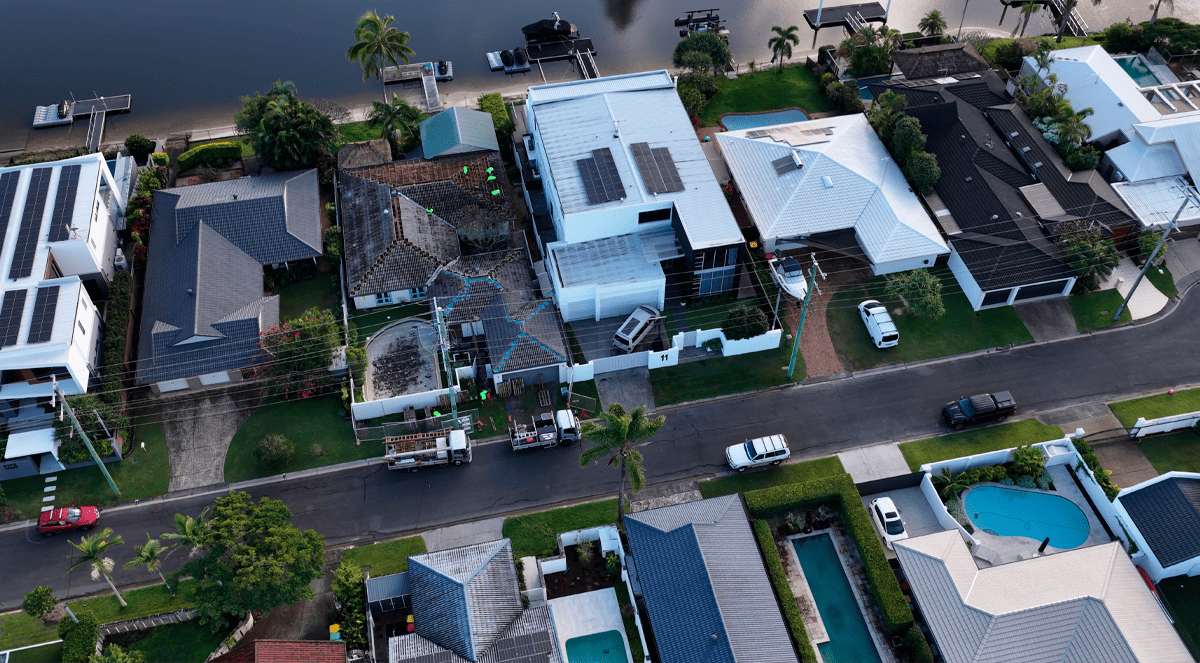
Australian homeowners are still cashing in on the property boom, with new figures showing the share of homes resold for a profit has reached its highest level in more than two decades.
Cotality’s latest Pain & Gain report analysed almost 101,000 residential property resales in the first three months of 2026 and found an astonishing 96.0% delivered a nominal profit.
That was up slightly from 95.9% in the last three months of 2025 and marked the strongest quarterly resale profitability result since 2005.
The details
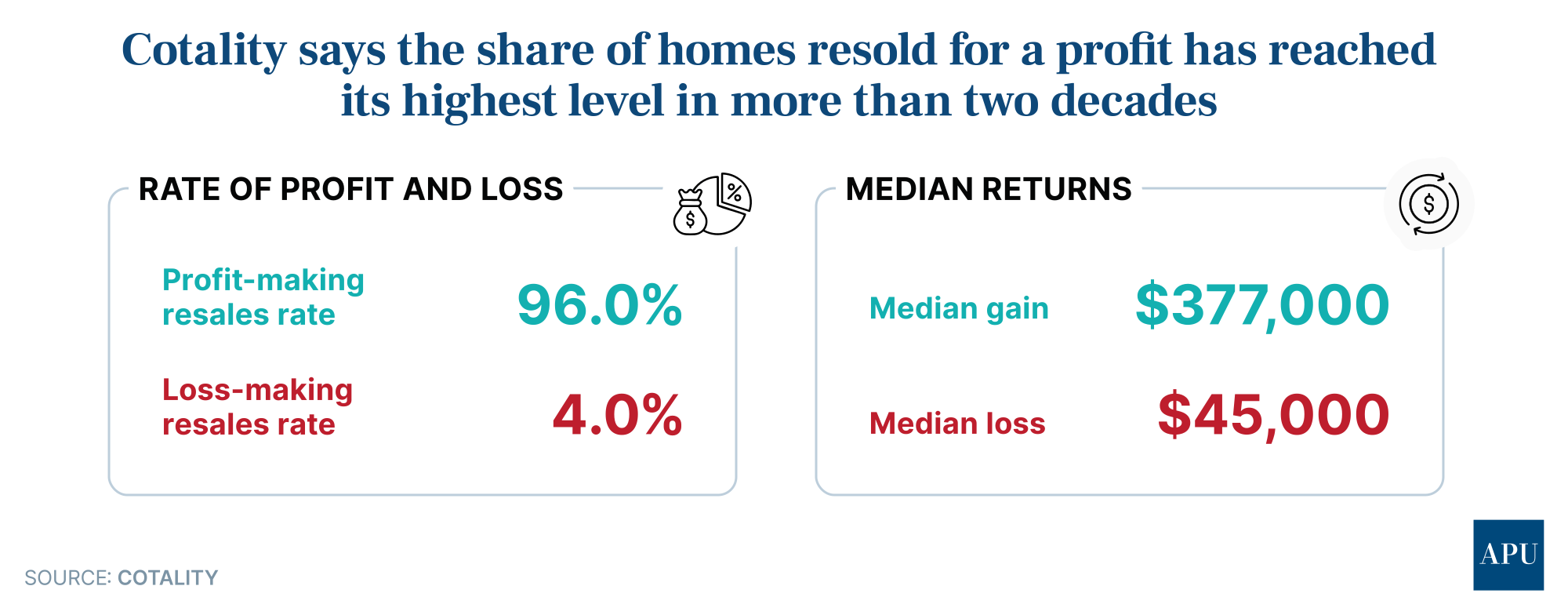
Cotality says the median resale gain for a property sold in January, February or March this year climbed to a record $377,000, while the median loss for the small percentage of properties sold at a loss was unchanged at $45,000.
The result underlines how much wealth has been created through residential property over recent years, even as the housing market now enters a more uncertain phase.
“The strong resale results we’re seeing today largely reflect the substantial value growth accumulated over recent years rather than current market conditions,” Cotality Head of Research Gerard Burg says.
“Housing values continued to rise through most of 2025, and many sellers have benefited from holding their property through multiple growth cycles, which has allowed them to build significant equity over time.”
The findings come as Australia’s housing market shows signs of losing momentum, with Cotality’s national Home Value Index falling 0.4% in June 2026 as conditions become increasingly varied across the country.
Sydney (-1.2%), Melbourne (-1.0%) and Canberra (-0.6%) recorded price falls, while the pace of growth in other markets has slowed.
But the Pain & Gain data shows most sellers remain well ahead, particularly those who have held their homes through several market cycles.
The strongest resale results were recorded in the mid-sized capitals, where values have surged over the past five years.
Brisbane recorded the highest share of profitable resales of any capital city, with 99.8% of sellers making a nominal gain in the March quarter.
The median gain in Brisbane was $525,190, reflecting the powerful combination of interstate migration, housing shortages and above-average value growth.
Adelaide was close behind, with 99.3% of resales delivering a profit and a median gain of $477,000.
Perth also recorded an exceptionally strong result, with 98.9% of resales generating a gain and a median profit of $475,000.
Mr Burg says Brisbane, Perth and Adelaide have all benefited from a shift in buyer demand toward more affordable capital city markets.
“Brisbane, Perth and Adelaide have all benefited from strong population growth, tight housing supply and sustained buyer demand.”
“Many owners who bought before the recent upswing, during a period of affordability and low interest rates, are now selling into a market where values have risen substantially, translating into some very significant resale gains,” he says.
The results show why many owners in those markets are sitting on large equity gains, even if the pace of capital growth is now starting to moderate.
For sellers who bought before the pandemic or in the early stages of the recent upswing, the gains can be substantial.
Some of the strongest resale gains were recorded in coastal “lifestyle” markets, where demand surged during and after the pandemic.
Noosa, on Queensland’s Sunshine Coast, recorded the highest median resale gain in the country at $729,750.
The region has been one of the standout beneficiaries of lifestyle-driven migration, strong household wealth and limited available housing supply.
Western Australia also featured heavily in the strongest-performing regions.
Five WA local government areas ranked among the nation’s top 10 regions for resale profits: Melville, Joondalup, Nedlands, East Fremantle and Chittering.
Mr Burg says the best-performing markets were generally those that had enjoyed sustained demand over several years.
“The regions recording the largest resale gains today are generally the same markets that experienced some of the strongest housing value growth through the pandemic and post-pandemic period.”
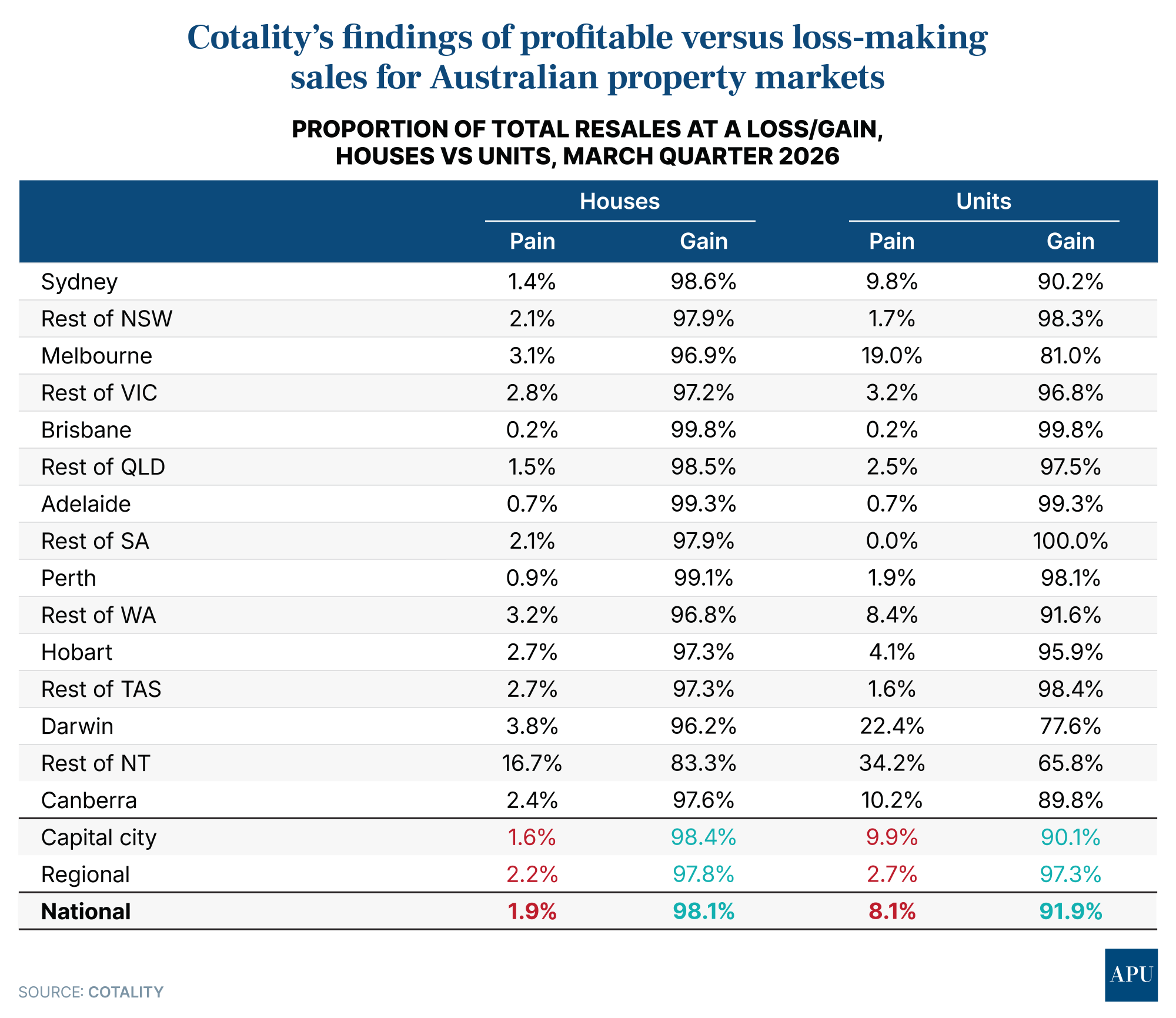
Nationally, 98.1% of house resales recorded a profit in the March quarter, compared with 91.9% of unit resales.
The median gain for houses was $440,000, compared with $256,000 for units.
Cotality says that gap reflects the stronger performance of detached housing through the pandemic and post-pandemic boom, when demand for larger homes and land increased sharply.
But it also reflects weaker conditions in some established apartment markets.
Melbourne’s unit market remained one of the weakest in the country, with only 81.0% of apartment resales generating a profit.
Mr Burg said additional supply in some apartment-heavy markets had weighed on resale performance.
The outlook
While the results are exceptionally strong, Cotality warns that record resale profits should not be read as a forecast of what comes next.
“The resale results for the March (2026) quarter are a reflection of the strong housing conditions experienced across most capital cities over the past five years rather than a forecast of where the market is heading next,” he says.
“Declining values will erode profitability in the coming months, but future performance will increasingly depend on local market conditions, property type and when a property was purchased.”

The take-out
Despite a less certain short-term outlook, the latest Pain & Gain figures still deliver a powerful reminder of how much wealth has been created through Australian residential property.
Even as market momentum cools, most sellers are still leaving the market with substantial gains.
Significantly, Cotality found properties resold at a profit had typically been held for 9.1 years.
By comparison, loss-making house resales had a median hold period of just 4.3 years, suggesting many owners who sold at a loss had bought closer to the market peak in late 2021 and early 2022.
Cotality’s Gerard Burg says the data shows how dramatically outcomes could differ depending on when a property was purchased and how long it was held.
“Most people selling for a profit today are benefiting from years of accumulated value growth, but those who purchased closer to the recent peak have had less time to build equity and are more exposed to market fluctuations,” he says.
“The figures illustrate the value of a buy-and-hold approach to property ownership.
“Time remains one of the most effective ways to absorb market cycles and improve the likelihood of a positive resale outcome.”
And that’s one of the clearest messages in the Pain & Gain report.
Even though housing values can move down over short periods, owners who have held through multiple cycles have overwhelmingly been able to sell for a profit.




.jpg?width=1920&height=1080&name=WTF%20Is%20Happening%20To%20The%20Housing%20Market!%20$500%20Billion%20Wiped%20Out%20As%20Prices%20Fall%20Faster%20Every%20Month%20Scott%20Kuru%20YPU%20027%20(1).jpg)

%20Scott%20Kuru%20YPU%20025.jpg?width=1920&height=1080&name=This%20Is%20Worse%20Than%20A%20Recession%20RBA%20Admits%20Australias%20Wage%20Collapse%20Cant%20Be%20Stopped%20(Prepare%20Now)%20Scott%20Kuru%20YPU%20025.jpg)





























.jpg?width=1920&height=1080&name=EXPOSED%20How%20The%20Govt%20Let%20These%20Oil%20Giants%20Get%20Away%20With%20Paying%20Zero%20Tax%20For%20Aussie%20Gas%20Scott%20Kuru%20DPU%20256%20(1).jpg)







%20Scott%20Kuru%20DPU%20248.jpg?width=1920&height=1080&name=Major%20Banks%20CAUGHT%20Preparing%20For%20Australia%E2%80%99s%20Biggest%20Housing%20Crash%20(Defaults%20%26%20Bankruptcies%20Coming)%20Scott%20Kuru%20DPU%20248.jpg)
%20Scott%20Kuru%20DPU%20247.jpg?width=1920&height=1080&name=This%20Is%20How%20Australia%20Gets%20Pushed%20Into%20the%20Next%20Big%20Reset%20(Trust%20Collapse%20Has%20Officially%20Begun)%20Scott%20Kuru%20DPU%20247.jpg)







%20Scott%20Kuru%20DPU%20239.jpg?width=1920&height=1080&name=URGENT%20Life%20In%20Australia%20Has%20Become%20Impossible%20For%20Millions%20Of%20Aussies%20(It%E2%80%99s%20About%20To%20Get%20Worse)%20Scott%20Kuru%20DPU%20239.jpg)











%20Scott%20Kuru%20DPU%20227.jpg?width=1920&height=1080&name=URGENT%20ALERT%20Australia%E2%80%99s%20Property%20Market%20Is%20Sliding%20Into%20Something%20Much%20Bigger%20(Prepare%20Now)%20Scott%20Kuru%20DPU%20227.jpg)





%20Scott%20Kuru%20DPU%20221.jpg?width=1920&height=1080&name=The%20AI%20Situation%20in%20Australia%20Just%20Hit%20a%20Point%20of%20No%20Return...%20(Major%20Bank%20Proves%20It)%20Scott%20Kuru%20DPU%20221.jpg)