








.png?width=292&height=292&name=Copy%20Link%20(1).png)

 SIGN UP FOR FREE NEWSLETTER
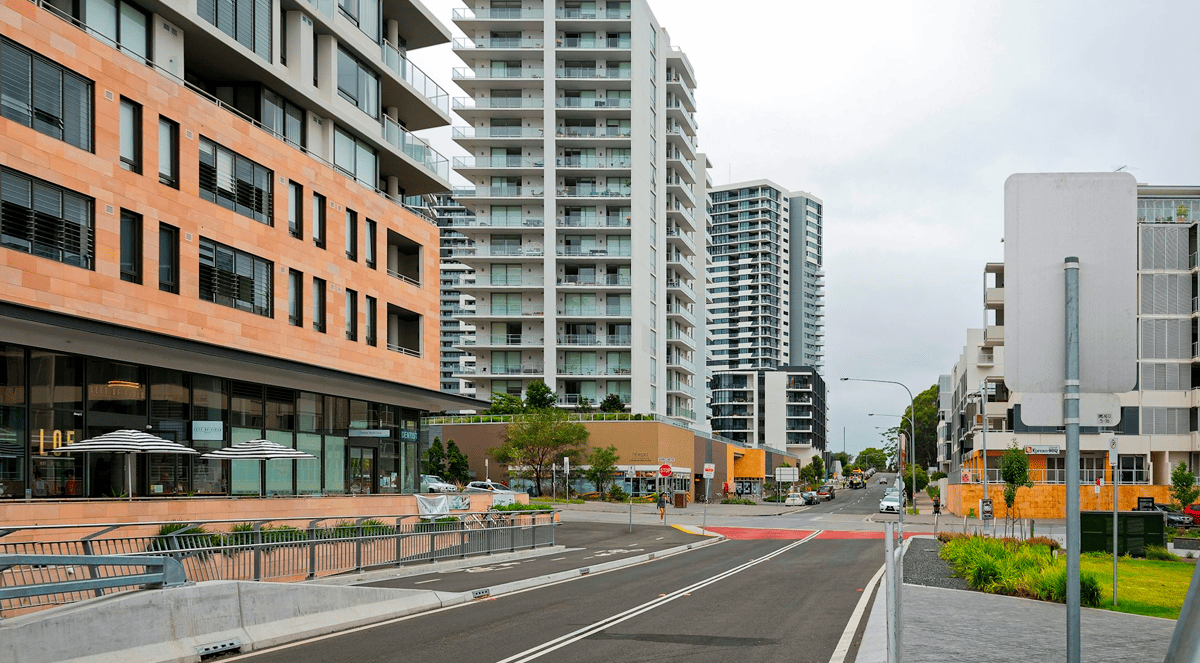
Image by Steven Siewert/The Sydney Morning Herald
Australia's housing market cooled further in June 2026, with home prices recording their biggest monthly decline in more than two years as higher interest rates, stretched affordability and weaker buyer confidence weighed on demand.
But while capital growth is losing momentum, Australia's rental market remains remarkably resilient, with rents continuing to climb, vacancy rates still near historic lows and rental yields gradually improving.
The latest Cotality Home Value Index suggests the market is becoming increasingly divided: tougher conditions for sellers, but continued strength in the fundamentals that underpin long-term residential property investment.
The details
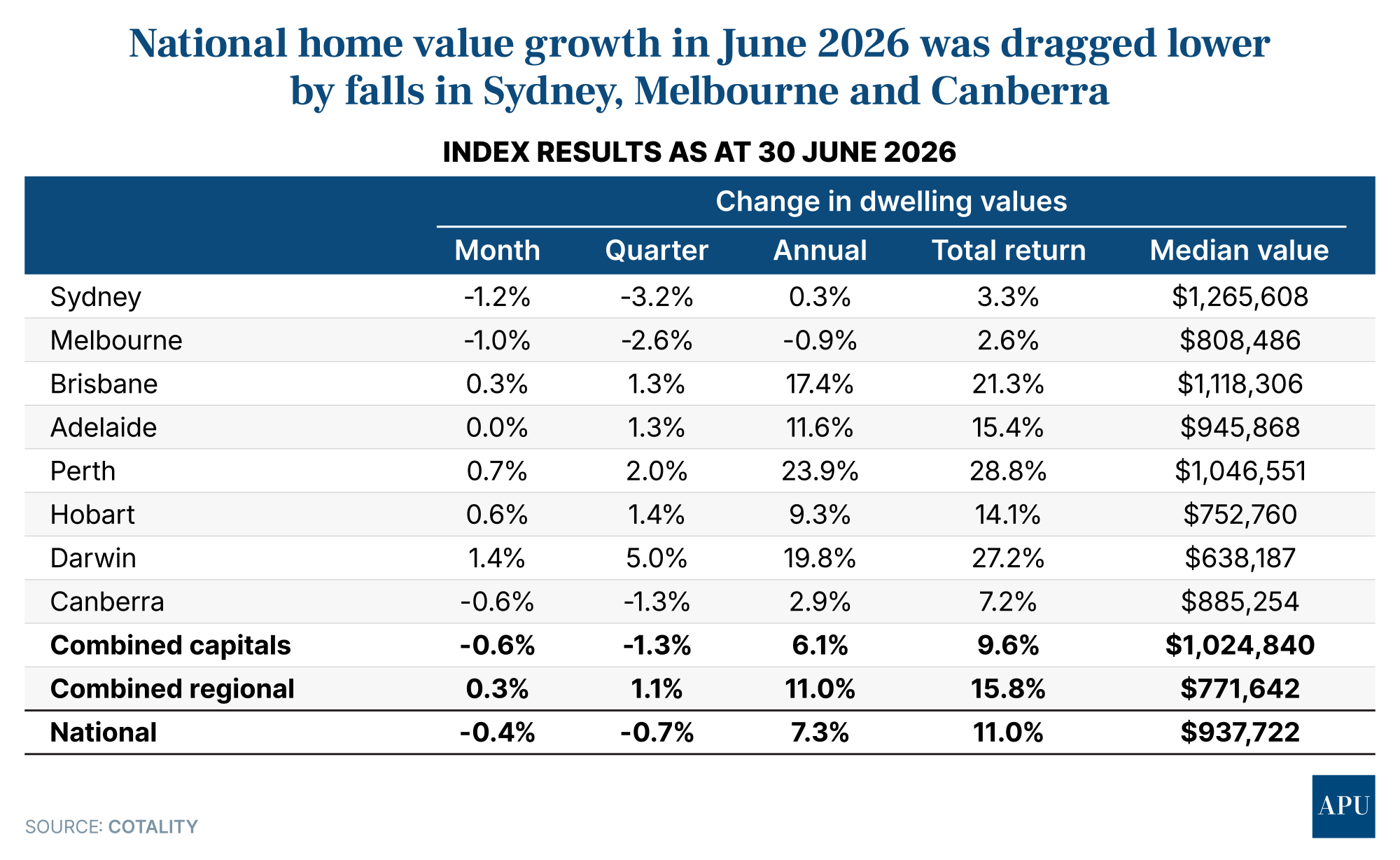
Cotality's national Home Value Index fell 0.4% in June, the largest monthly decline since December 2022.
Sydney recorded the largest monthly decline, with dwelling values down 1.2%, followed by Melbourne, down 1.0%.
Canberra also weakened.
Brisbane and Perth continued to record modest gains, albeit at a much slower pace than earlier this year, while Adelaide values were unchanged.
"The downward revision reflects a market that is changing rapidly," Cotality Research Director Tim Lawless says.
"Most regions have seen values revise lower over recent months, with the largest downgrades occurring in Perth and Brisbane."
National home values have now fallen 0.7% since peaking in March, while capital city values declined 1.3% over the June quarter.
Sydney has led the downturn, with values falling 3.2% over the quarter, followed by Melbourne, down 2.6%.
Cotality now values the median Sydney home at $1,265,608, which is still 0.3% higher than this time last year.
Melbourne is the only capital to record negative growth (-0.9%) over the past 12 months, taking the median value home in the Victorian capital to $808,486.
Perth has been the standout annual performer, with the median home increasing in value by an extraordinary 23.9% to $1,046,551.
The small Darwin market has seen just under 20% annual growth, while Brisbane has continued its stellar run, lifting 17.4% over the past year to see a median home value of $1,118,306.
Mr Lawless says several factors were combining to weaken previously strong buyer demand.
"Even before interest rates rose by seventy-five basis points, we were seeing affordability hurdles weighing on buyer demand.”
“Higher cost-of-living pressures, deeply pessimistic sentiment and a further dampening of demand via property taxation changes announced in the federal budget are all contributing to weaker housing conditions," he says.
Cotality says auction clearance rates across the combined capitals have remained below 50% since late May, home sales are estimated to be 16.2% lower than a year ago, while the number of homes advertised for sale has risen to around 11% above last year's level.
"Such low clearance rates indicate a mismatch between buyer and seller pricing expectations," Mr Lawless says.
"Buyers now have more stock to choose from and less urgency in their decision-making."
Rental market remains resilient
While housing values are weakening, the rental market continues to move in the opposite direction.
Cotality says national rents rose another 0.5% in June 2026, matching May's increase and keeping annual rental growth at 5.9%, equivalent to about $40 a week on the median rent.
Over the past five years, capital city rents have surged 41.7%, adding around $217 a week to the typical lease.
Sydney remains Australia's most expensive rental market, with median weekly rents of $883 for houses and $783 for units.
The continued strength reflects an ongoing shortage of rental housing.
National vacancy rates edged up only slightly to 1.6% in June, still well below the decade average of 2.5% and roughly half the average vacancy rates seen before the pandemic.
The combination of softer home prices and steadily rising rents is also improving investment yields.
Gross rental yields across the combined capitals have increased to 3.50%, up from a recent low of 3.34% late last year.
"Higher yields might help motivate investors into the established housing market without the crutch of negative gearing," Mr Lawless says.
"But yields will need to rise significantly before rental income comes close to outweighing holding costs for a leveraged investor."
He noted that investor mortgage rates remain around 6.4%, while maintenance, insurance and strata costs have also increased.
Cotality estimates that only 0.8% of Australian suburbs currently offer the potential for a cash flow-positive investment using a typical 20% deposit and prevailing mortgage rates.
Long-term fundamentals remain intact
Despite the softer market in June, Cotality says the structural drivers supporting Australian housing have not disappeared.
New supply remains constrained, population growth continues to support underlying demand and rental markets remain exceptionally tight, even as affordability pressures, higher interest rates and weaker consumer confidence weigh on buyer activity.
More homes are available for sale, properties are taking longer to sell and softer auction results are giving buyers - either owner-occupiers “trading up”, first-home buyers, or investors - greater negotiating power than they have enjoyed for several years.
“The main positive is that conditions are improving for buyers who are prepared to move against the current,” Cotality’s June report says.
“More advertised stock, longer selling times and softer auction results are providing more choice and better negotiating conditions.
“For buyers with secure employment, strong deposits and sufficient borrowing capacity, the market is becoming less competitive.
“The improvement in affordability is likely to be gradual, but the shift in negotiating power is already more apparent,” the report says.
Overall, Cotality expects housing values to continue drifting lower rather than experiencing a sharp correction.
"Tight labour markets, low new supply and population growth should help to limit the downside," Mr Lawless says.
While Australia's housing boom has clearly cooled, Cotality's latest report suggests the country's long-term housing shortage continues to underpin one of residential property's strongest fundamentals: a rental market where demand still comfortably exceeds supply.




.jpg?width=1920&height=1080&name=WTF%20Is%20Happening%20To%20The%20Housing%20Market!%20$500%20Billion%20Wiped%20Out%20As%20Prices%20Fall%20Faster%20Every%20Month%20Scott%20Kuru%20YPU%20027%20(1).jpg)
%20Scott%20Kuru%20YPU%20025.jpg?width=1920&height=1080&name=This%20Is%20Worse%20Than%20A%20Recession%20RBA%20Admits%20Australias%20Wage%20Collapse%20Cant%20Be%20Stopped%20(Prepare%20Now)%20Scott%20Kuru%20YPU%20025.jpg)





















.jpg?width=1920&height=1080&name=EXPOSED%20How%20The%20Govt%20Let%20These%20Oil%20Giants%20Get%20Away%20With%20Paying%20Zero%20Tax%20For%20Aussie%20Gas%20Scott%20Kuru%20DPU%20256%20(1).jpg)






%20Scott%20Kuru%20DPU%20248.jpg?width=1920&height=1080&name=Major%20Banks%20CAUGHT%20Preparing%20For%20Australia%E2%80%99s%20Biggest%20Housing%20Crash%20(Defaults%20%26%20Bankruptcies%20Coming)%20Scott%20Kuru%20DPU%20248.jpg)
%20Scott%20Kuru%20DPU%20247.jpg?width=1920&height=1080&name=This%20Is%20How%20Australia%20Gets%20Pushed%20Into%20the%20Next%20Big%20Reset%20(Trust%20Collapse%20Has%20Officially%20Begun)%20Scott%20Kuru%20DPU%20247.jpg)







%20Scott%20Kuru%20DPU%20239.jpg?width=1920&height=1080&name=URGENT%20Life%20In%20Australia%20Has%20Become%20Impossible%20For%20Millions%20Of%20Aussies%20(It%E2%80%99s%20About%20To%20Get%20Worse)%20Scott%20Kuru%20DPU%20239.jpg)








%20Scott%20Kuru%20DPU%20227.jpg?width=1920&height=1080&name=URGENT%20ALERT%20Australia%E2%80%99s%20Property%20Market%20Is%20Sliding%20Into%20Something%20Much%20Bigger%20(Prepare%20Now)%20Scott%20Kuru%20DPU%20227.jpg)





%20Scott%20Kuru%20DPU%20221.jpg?width=1920&height=1080&name=The%20AI%20Situation%20in%20Australia%20Just%20Hit%20a%20Point%20of%20No%20Return...%20(Major%20Bank%20Proves%20It)%20Scott%20Kuru%20DPU%20221.jpg)