









.png?width=292&height=292&name=Copy%20Link%20(1).png)

 SIGN UP FOR FREE NEWSLETTER
Image from ABC News/Crystalyn Brown
New analysis from data analytics firm Cotality shows Australia’s housing market is increasingly splitting along price lines, with lower-priced homes now clearly outperforming the rest of the market, following the expansion of the Federal Government’s Home Guarantee Scheme.
Cotality says that since September last year, properties priced under the scheme’s expanded price caps have recorded materially stronger growth than higher-priced homes, highlighting how policy settings and affordability are reshaping buyer behaviour.
The details
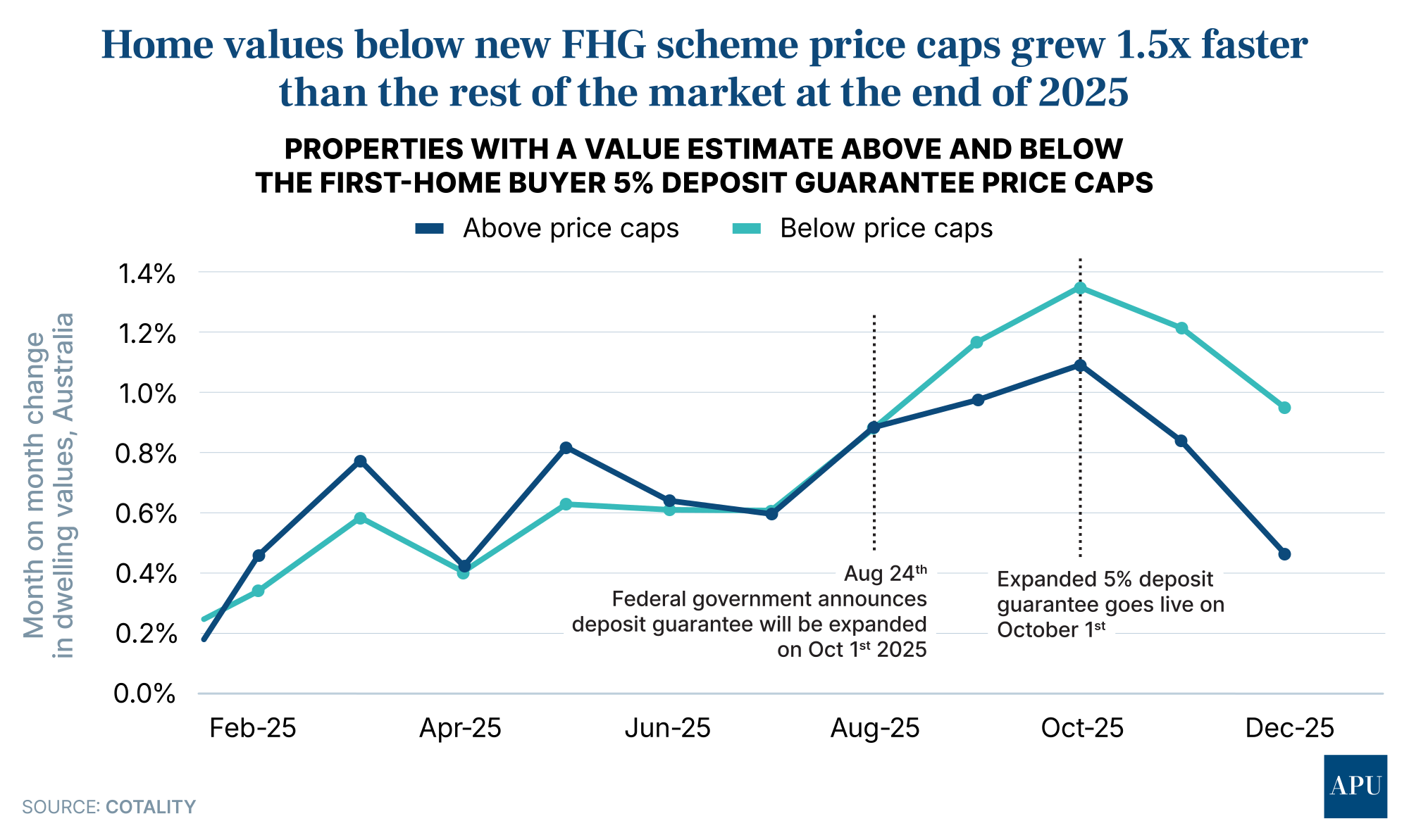
The Federal Government’s First Home Guarantee scheme allows people to buy a home with just a 5% deposit and no lenders’ mortgage insurance (LMI).
From October the 1st 2025 the scheme was expanded, with the government lifting the maximum purchase price (based on locality) and scrapping income caps for participants.
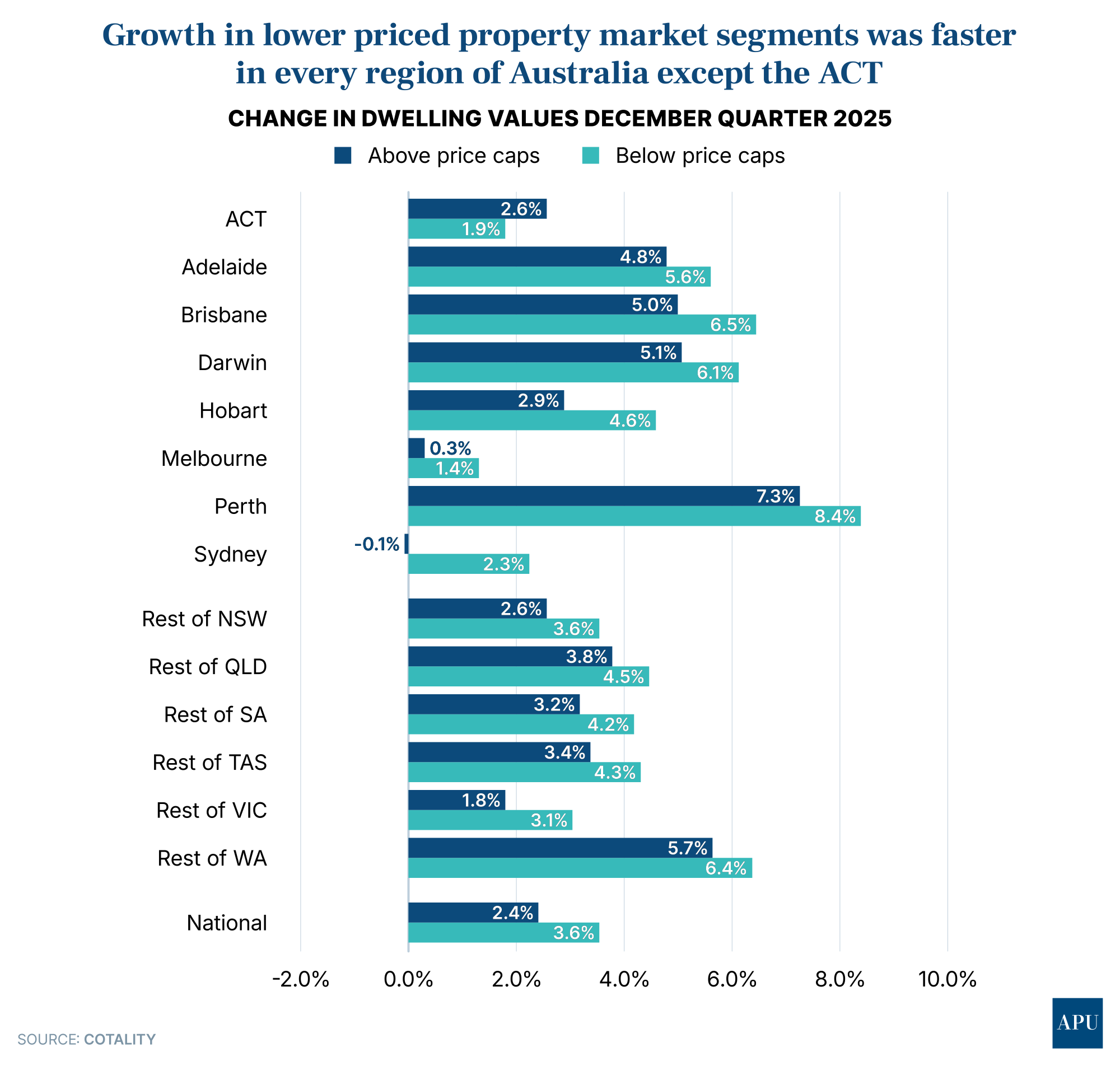
Data shows that in the December quarter of 2025, home values for properties under the new price caps rose 3.6%, compared with growth of 2.4% for homes priced above the caps.
In other words, prices are rising one and a half times faster for properties with an estimated value under the scheme’s new price caps.
Cotality says the divergence has been consistent across most of the country, pointing to a shift in momentum towards more affordable segments of the property market.
The company’s Research Director, Tim Lawless, says the revamped scheme has had a measurable impact on demand at the lower end of the market.
“The expanded 5% deposit guarantee has sharpened demand at lower price points, with under-cap markets outperforming across almost nine-in-ten regions,” he says.
“We’re seeing a clear shift in momentum, with buyers increasingly targeting homes that fall under the new price caps - especially in Sydney, where the value gap is most pronounced.”
Notably, the trend appears to have taken hold even before the new thresholds came into effect.
“This trend was already visible before the scheme’s official start on October 1, suggesting some buyers acted early to secure properties before competition increased,” Mr Lawless says.
As Mr Lawless notes, Sydney stands out as the clearest example of the divide.
During the December quarter of 2025, homes valued below the price cap rose 2.3% in the New South Wales capital, while properties above the cap slipped 0.1%.
That 2.4% gap is the largest growth differential recorded in any capital city.
The pattern has been consistent nationwide.
Cotality’s analysis shows that 89% of the Australian Bureau of Statistics’ SA4 sub-regions recorded stronger growth for homes under the price caps, with 78 of the 88 regions analysed showing outperformance in the lower-priced segment.
The ACT was the only jurisdiction to buck the trend.
Tim Lawless says the lift in the pace of growth of lower value segments can’t be attributed solely to the First Home Guarantee, although Cotality notes anticipation of heightened competition following the scheme’s expansion appears to have brought forward demand, including from buyers who may not have actually needed to rely on the deposit guarantee itself.
At the same time, elevated interest rates and tighter serviceability assessments are pushing buyers towards more affordable properties, as borrowing capacity remains constrained.
Growing investor activity is also adding pressure to the lower-priced segment.


Investors accounted for 41% of mortgage demand in the September quarter, while annual investor credit growth is rising at its fastest pace since December 2015, placing first-home buyers and investors in direct competition for the same stock.
“There is also increased competition from investors around the middle to lower-priced end of the market, as well as mainstream demand deflecting towards more affordable housing options amid stretched serviceability,” Mr Lawless says.
“But.. I think it’s fair to say the expanded scheme has added fuel to the fire across the lower-priced segment of the market, where competition was already stiff leading into October 1st and supply persistently scarce.”
Taken together, the data suggests the expanded First Home Guarantee scheme has amplified demand at the affordable end of the market - or added “fuel to the fire” to quote Tim Lawless - accelerating price growth for lower-priced homes and deepening the divide between properties that sit under and above the scheme’s price caps.
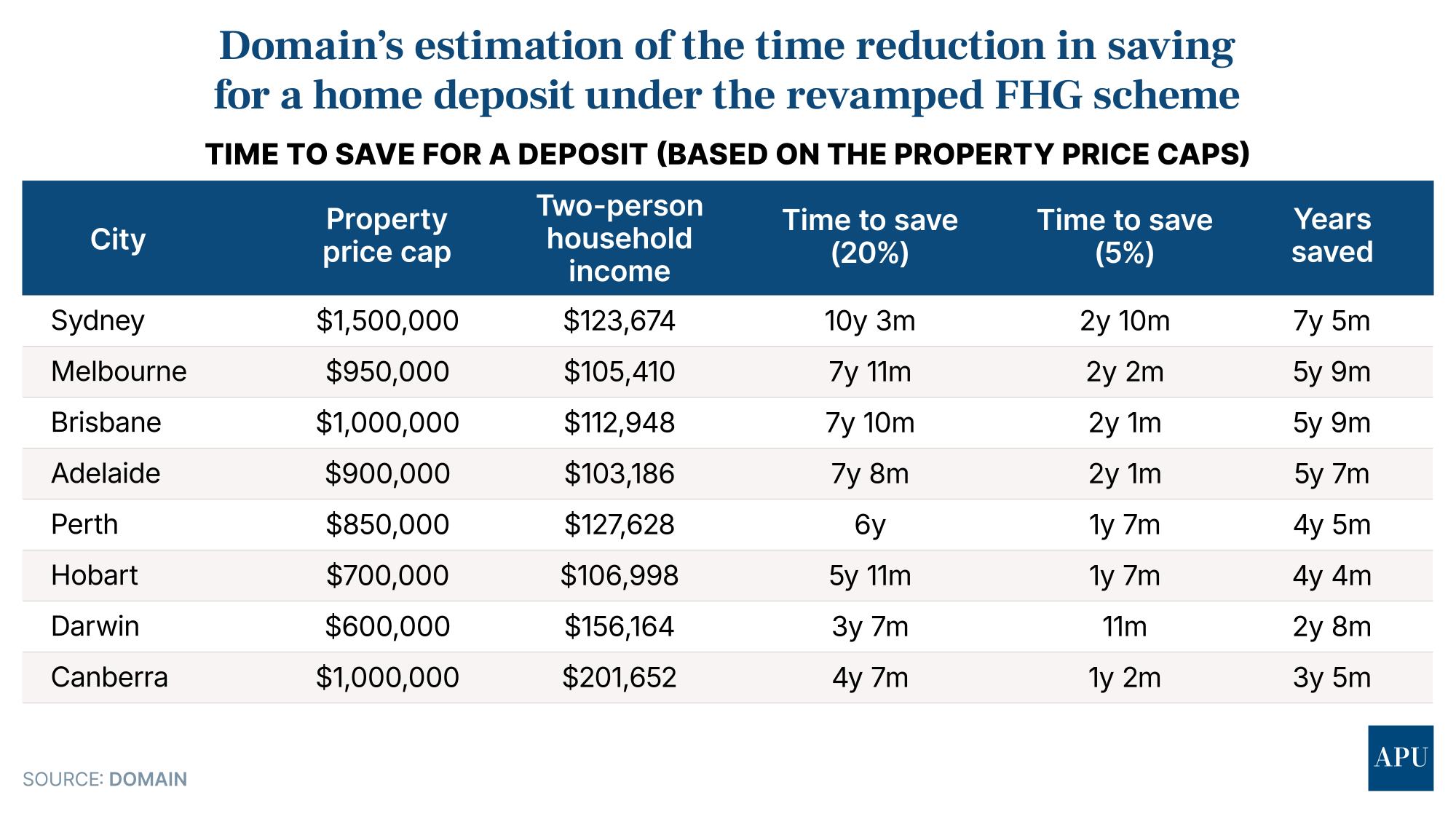
Cotality’s analysis backs up recent research by Domain Group that showed the effect the revamped FHG scheme could have in enabling home purchases to be brought forward.
For example, Domain found that in Sydney, a first-home buyer couple taking advantage of the FHG scheme and aiming to buy a $1.5 million home could now save a deposit in around three years, compared to the more than 10 years of “disciplined” saving they would have previously needed for a standard 20% deposit.
In Melbourne, the savings period drops from almost eight years to just over two, while in Brisbane and Adelaide, first-home buyers stand to get into a home five and a half years earlier.
The Domain research paper predicted that the extra demand from more first-home buyers “at the entry level (cheaper properties) can put upward pressure on prices if supply doesn’t keep pace.”
Cotality’s new analysis seems to show that’s exactly what is happening.













.jpg?width=1920&height=1080&name=WTF%20Is%20Happening%20To%20The%20Housing%20Market!%20$500%20Billion%20Wiped%20Out%20As%20Prices%20Fall%20Faster%20Every%20Month%20Scott%20Kuru%20YPU%20027%20(1).jpg)

%20Scott%20Kuru%20YPU%20025.jpg?width=1920&height=1080&name=This%20Is%20Worse%20Than%20A%20Recession%20RBA%20Admits%20Australias%20Wage%20Collapse%20Cant%20Be%20Stopped%20(Prepare%20Now)%20Scott%20Kuru%20YPU%20025.jpg)





























.jpg?width=1920&height=1080&name=EXPOSED%20How%20The%20Govt%20Let%20These%20Oil%20Giants%20Get%20Away%20With%20Paying%20Zero%20Tax%20For%20Aussie%20Gas%20Scott%20Kuru%20DPU%20256%20(1).jpg)







%20Scott%20Kuru%20DPU%20248.jpg?width=1920&height=1080&name=Major%20Banks%20CAUGHT%20Preparing%20For%20Australia%E2%80%99s%20Biggest%20Housing%20Crash%20(Defaults%20%26%20Bankruptcies%20Coming)%20Scott%20Kuru%20DPU%20248.jpg)
%20Scott%20Kuru%20DPU%20247.jpg?width=1920&height=1080&name=This%20Is%20How%20Australia%20Gets%20Pushed%20Into%20the%20Next%20Big%20Reset%20(Trust%20Collapse%20Has%20Officially%20Begun)%20Scott%20Kuru%20DPU%20247.jpg)







%20Scott%20Kuru%20DPU%20239.jpg?width=1920&height=1080&name=URGENT%20Life%20In%20Australia%20Has%20Become%20Impossible%20For%20Millions%20Of%20Aussies%20(It%E2%80%99s%20About%20To%20Get%20Worse)%20Scott%20Kuru%20DPU%20239.jpg)











%20Scott%20Kuru%20DPU%20227.jpg?width=1920&height=1080&name=URGENT%20ALERT%20Australia%E2%80%99s%20Property%20Market%20Is%20Sliding%20Into%20Something%20Much%20Bigger%20(Prepare%20Now)%20Scott%20Kuru%20DPU%20227.jpg)