









.png?width=292&height=292&name=Copy%20Link%20(1).png)

 SIGN UP FOR FREE NEWSLETTER
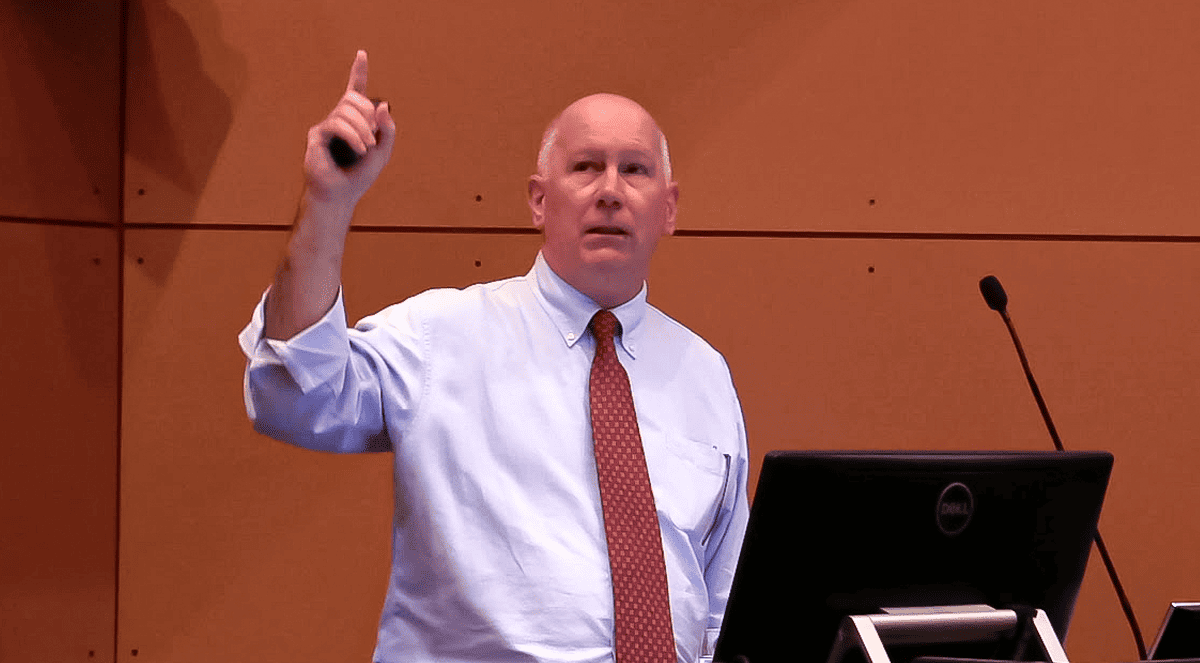
Image from Architecture, Design & Planning’s YouTube
For years, Australian governments have announced first-home buyer grants, shared-equity schemes, rent assistance increases and billions of dollars for social housing.

Yet homes keep getting more expensive.
Former Reserve Bank economist Peter Tulip believes that’s because governments have been aiming at the wrong target.
In a submission to the Productivity Commission’s inquiry into housing supply regulation, the Centre for Independent Studies economist argues Australia has focused too much on helping people buy expensive homes, rather than tackling the reason they are expensive in the first place.
And that reason is simple: the country is not building enough of them.
The details
Peter Tulip is one of Australia’s leading authorities on housing.
The former RBA and US Federal Reserve economist is now Chief Economist at the Sydney-based, centre-right think tank, the Centre for Independent Studies.
Mr Tulip argues planning restrictions in Australian cities have made housing much more expensive than it needs to be.
He says the best way to improve affordability is to allow substantially more homes to be built, particularly in well-located areas close to transport, jobs and services.
His submission to the Productivity Commission inquiry has a central premise: reward states that actually deliver more homes.
Rather than relying mainly on grants, subsidies and political promises, Mr Tulip argues the Commonwealth Grants Commission should make GST distributions partly dependent on housing completions.
In other words, states that build more homes should get more money, while states that fail to deliver enough housing should lose out.
Mr Tulip argues this would create stronger incentives than the Federal Government’s existing New Homes Bonus, which offers states payments for meeting housing targets.
He says the problem with the current bonus is that the targets are so high, the payments are relatively small and the money arrives too late to change behaviour today.
The CIS submission also backs tying federal infrastructure funding directly to new housing.
That includes programs such as the $2 billion Local Infrastructure Fund, which the submission says is expected to unlock 65,000 new homes at an average budget cost of about $31,000 per dwelling.
Mr Tulip also argues Commonwealth funding for rail projects should come with a condition: more homes must be allowed near train stations.
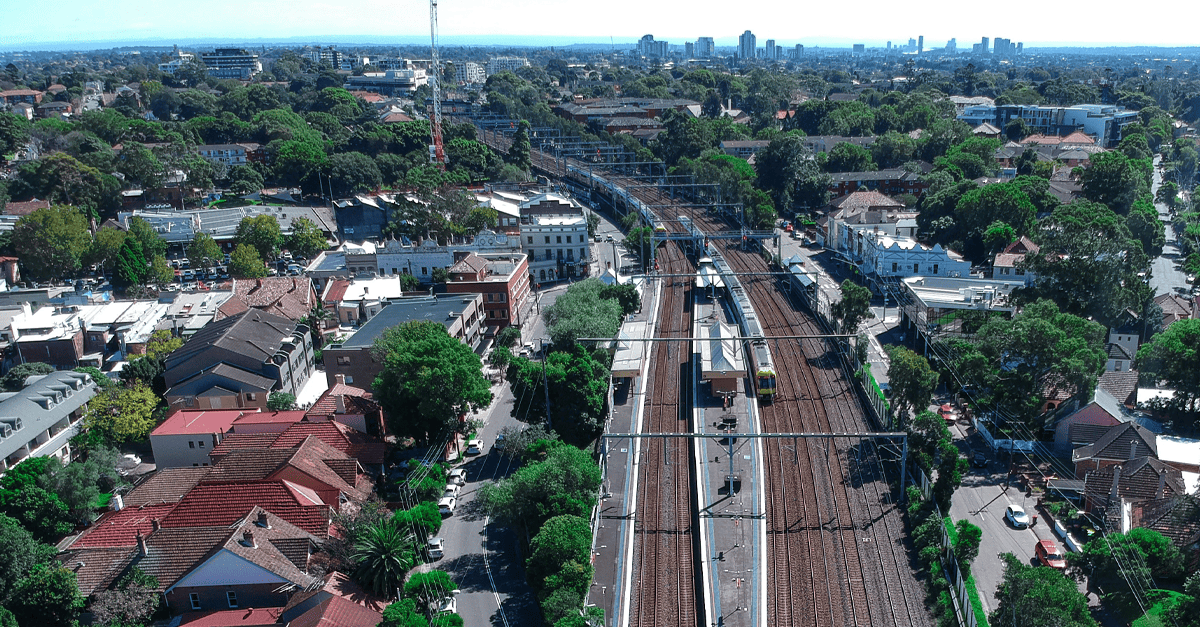
“Housing density and public transport are complements; each increases the return to the other,” the submission says.
Another of Peter Tulip’s major themes is that Australia has spent too long making it easier to buy homes without making it easier to build them.
First-home buyer assistance schemes, “Help to Buy” and increases in Commonwealth Rent Assistance may help some individual households, but Mr Tulip argues they also increase competition for a limited number of homes.
Unless supply rises as well, prices and rents are pushed higher.
Demand-side policies are "costly, distortionary and ineffective", Mr Tulip argues, because "lucky recipients bid up prices and rents, worsening affordability for everyone else."
By contrast, he says more recent supply-focused policies, including the Local Infrastructure Fund and the 100,000 Homes for First Home Buyers program, are more likely to help affordability because they increase the number of homes available.
The submission is especially critical of the balance between market housing and subsidised social housing.
Mr Tulip argues policies that increase overall housing supply can help renters across the entire market at a much lower cost to taxpayers.
This goes to one of the CIS submission's more controversial proposals — getting rid of mandatory "affordable housing" requirements.
These are rules that typically require developers to set aside a share of new apartments or homes in new developments that are pitched and priced for low-income earners.
On the surface, this sounds like an obvious way to improve housing affordability, but Mr Tulip argues the opposite.
“Affordable housing requirements are counter-productive,” the CIS submission says.
“They are a tax on development that worsens overall affordability.”
The argument is that these affordable housing requirements make projects less feasible, reduce total housing supply and ultimately put upward pressure on rents.
Mr Tulip points to examples from Portland, Seattle and Pennsylvania in the United States, where affordable housing requirements imposed on developers were followed by sharp falls in construction.
He argues the key issue is not whether a small number of subsidised homes are cheaper, but whether the policy results in fewer homes being built overall.

The CIS submission puts it simply: “It is the quantity of new supply that drives affordability, not its price.”
The submission also takes aim at one of the most politically sensitive parts of the housing debate: urban density.
Every time a new apartment block is proposed, nearby residents tend to raise familiar concerns — more traffic, more noise, more shadows, less parking and a loss of neighbourhood character.
Mr Tulip argues those concerns should be considered, but they should not dominate the debate.
He says the benefits of density are often ignored because the people who would benefit from more housing in well-located areas usually do not get a say.
“Local governments represent the aggrieved neighbours, not the outsiders who would benefit from more density,” the CIS submission says.
Mr Tulip argues denser cities support higher wages, stronger productivity, more innovation, better public transport and more affordable housing.
"The externalities of housing density are positive, not negative," he concludes.
“Instead of restricting density, we should be encouraging it.”
That means state governments should be prepared to override local planning controls where councils consistently fail to approve enough housing.
Mr Tulip argues NSW and Victoria have moved in the right direction by allowing more housing near transport hubs, but says councils need firm targets and consequences if they fail to meet them.


The take-out
The politics of Mr Tulip’s argument are difficult.
Overriding councils, allowing more apartments in established suburbs and tying GST payments to housing completions would all provoke resistance.
But his submission argues the evidence is becoming increasingly hard to ignore.
Australia has spent years trying to help households afford expensive housing.
Mr Tulip's argument is that governments should focus far more on making housing less expensive in the first place.
And that means building many more homes, in the places where people actually want to live.








.jpg?width=1920&height=1080&name=WTF%20Is%20Happening%20To%20The%20Housing%20Market!%20$500%20Billion%20Wiped%20Out%20As%20Prices%20Fall%20Faster%20Every%20Month%20Scott%20Kuru%20YPU%20027%20(1).jpg)

%20Scott%20Kuru%20YPU%20025.jpg?width=1920&height=1080&name=This%20Is%20Worse%20Than%20A%20Recession%20RBA%20Admits%20Australias%20Wage%20Collapse%20Cant%20Be%20Stopped%20(Prepare%20Now)%20Scott%20Kuru%20YPU%20025.jpg)





























.jpg?width=1920&height=1080&name=EXPOSED%20How%20The%20Govt%20Let%20These%20Oil%20Giants%20Get%20Away%20With%20Paying%20Zero%20Tax%20For%20Aussie%20Gas%20Scott%20Kuru%20DPU%20256%20(1).jpg)







%20Scott%20Kuru%20DPU%20248.jpg?width=1920&height=1080&name=Major%20Banks%20CAUGHT%20Preparing%20For%20Australia%E2%80%99s%20Biggest%20Housing%20Crash%20(Defaults%20%26%20Bankruptcies%20Coming)%20Scott%20Kuru%20DPU%20248.jpg)
%20Scott%20Kuru%20DPU%20247.jpg?width=1920&height=1080&name=This%20Is%20How%20Australia%20Gets%20Pushed%20Into%20the%20Next%20Big%20Reset%20(Trust%20Collapse%20Has%20Officially%20Begun)%20Scott%20Kuru%20DPU%20247.jpg)







%20Scott%20Kuru%20DPU%20239.jpg?width=1920&height=1080&name=URGENT%20Life%20In%20Australia%20Has%20Become%20Impossible%20For%20Millions%20Of%20Aussies%20(It%E2%80%99s%20About%20To%20Get%20Worse)%20Scott%20Kuru%20DPU%20239.jpg)











%20Scott%20Kuru%20DPU%20227.jpg?width=1920&height=1080&name=URGENT%20ALERT%20Australia%E2%80%99s%20Property%20Market%20Is%20Sliding%20Into%20Something%20Much%20Bigger%20(Prepare%20Now)%20Scott%20Kuru%20DPU%20227.jpg)