









.png?width=292&height=292&name=Copy%20Link%20(1).png)

 SIGN UP FOR FREE NEWSLETTER
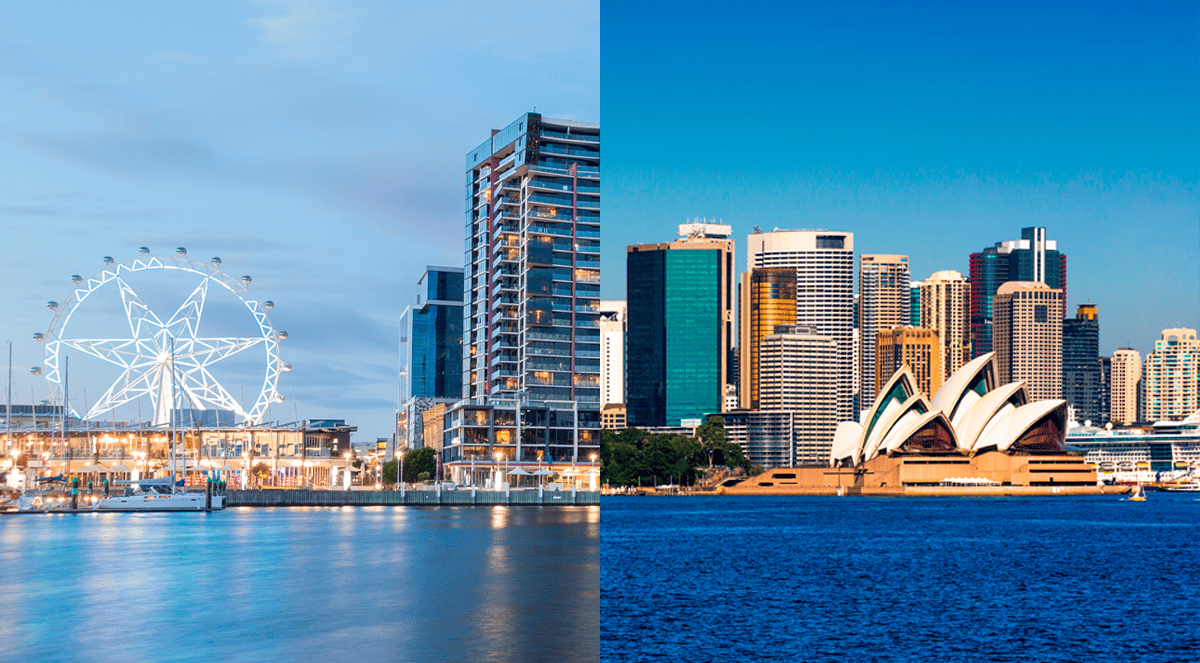
The pace of price growth in Australia’s housing market picked up in January 2026, defying mounting affordability pressures and the prospect of an interest rate hike as early as tomorrow.
Data analytics firm Cotality says national dwelling values rose 0.8% over the month, as measured by its Home Value Index, marking a modest acceleration from December’s 0.6% gain.
Every capital city and broad “rest of state” region recorded price growth.
The Cotality data also shows a turnaround in Australia’s two largest housing markets - Sydney and Melbourne.
After recording small declines in median home values in December, both cities have moved back into positive territory to begin 2026, with Sydney up 0.2% in the month and Melbourne up 0.1%.
Though the January gains are small, they may indicate the so-called “slingshot” effect is underway, setting up Australia’s big two property markets for a new home price boom.
The details
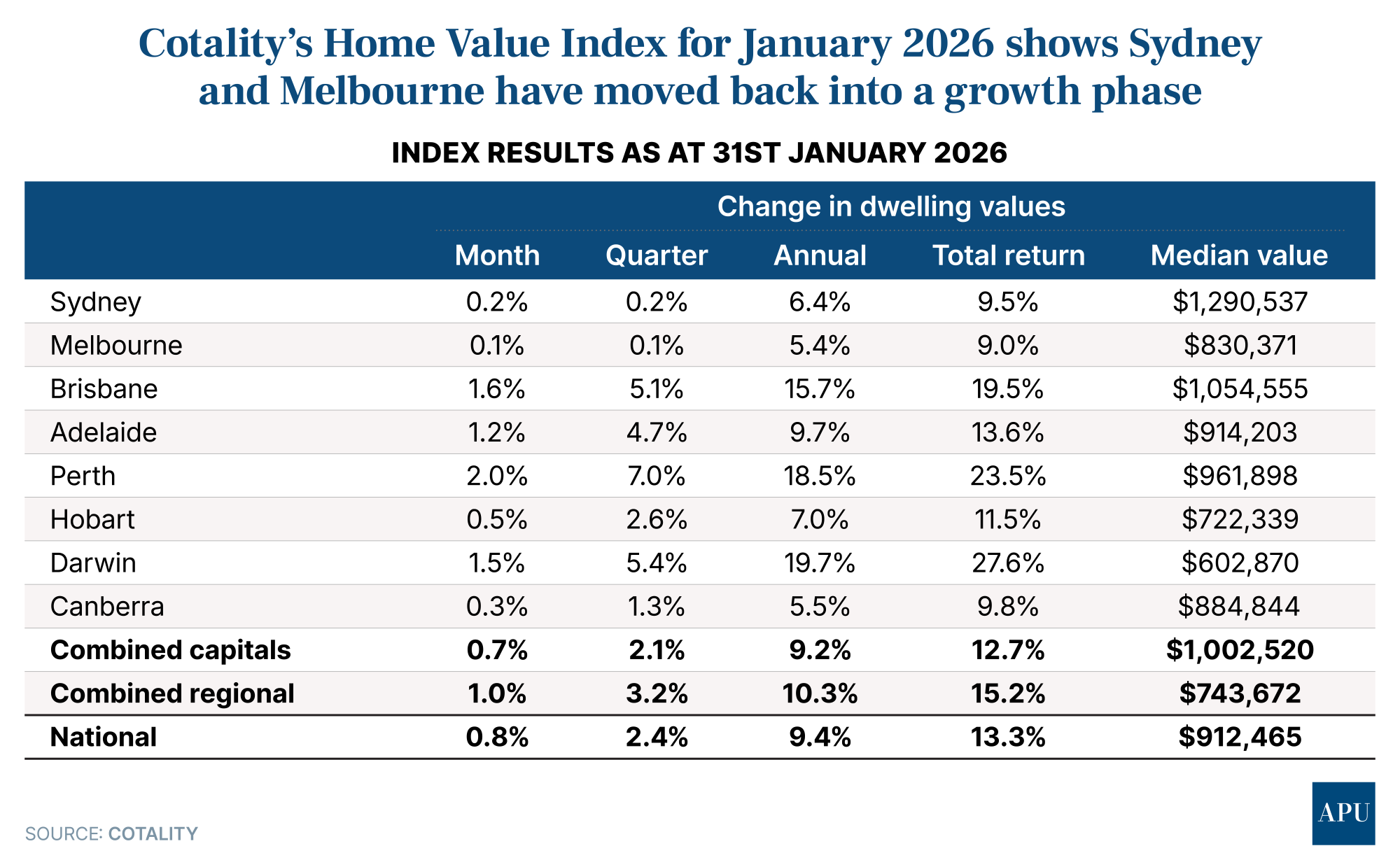
Cotality says the median dwelling in Australia is now valued at $912,465, up 0.8% since the start of January 2026 and 9.4% over the past 12 months.
The January figures show Sydney and Melbourne both bounced back to positive growth after small declines in December last year.
Cotality says the median dwelling price in Sydney is now $1,290,537, up 0.2%, while Melbourne managed to eke out a 0.1% gain for the month, taking the median dwelling value in the Victorian capital to $830,371.
However, Cotality points out that prices in both cities remain below their previous peaks, with Sydney values sitting 0.1% below its record high in November 2025 and Melbourne still 0.7% below its March 2022 record.
By contrast, the mid-sized capitals continued to post solid gains, although momentum appears to be easing.
Perth led the capitals with a 2.0% increase in January, but this was well below its cyclical peak monthly growth rate of 2.9%, recorded in November 2025.
Brisbane’s slowed to 1.6%, down from 2.0% in October last year, while Adelaide’s monthly growth rate eased to 1.2% after a stronger 1.8% rise in December.
Cotality’s Research Director, Tim Lawless, says the housing market’s resilience is striking, given the headwinds facing buyers.
“Despite the most unaffordable conditions on record in many cities, along with a rebound in cost of living pressures and prospect of a rate hike as early as this Tuesday, we are still seeing a broad-based rise in housing values,” he says.
At the same time, sales activity has held up, with the rolling quarterly number of home sales estimated to be 1% higher than a year ago and only 3% below the five-year average.
Flight to affordability
Cotality says home price growth is increasingly being driven by more affordable segments of the market.
Across its Combined Capitals measure, lower quartile house values rose 1.3% in January, compared with a 0.3% increase across more expensive properties in the upper quartile.
“This trend of stronger growth conditions at lower price points is supported by intense competition for more affordable houses,” says Mr Lawless.
“This is where first-home buyers, investors and, progressively, mainstream demand is most concentrated.”
Regional markets again outperformed the capitals, with combined regional values rising 1.0% over the month, compared with a 0.7% increase across the combined capital cities.
Mr Lawless says tight supply continues to underpin prices.
“The ongoing capital gains reflect persistently low inventory in the face of above-average housing demand, however we are likely to see demand-side pressures gradually ease in 2026.
“Affordability and serviceability constraints are likely to naturally dampen demand, but also renewed cost-of-living pressures and a strong chance that interest rates will rise.
“There is also slowing population growth to consider.”
Listings remain historically low, with the number of homes advertised for sale estimated to be 19% below levels at the same time last year and 25% below the five-year average.
Looking ahead, Cotality is cautious, saying the year ahead “is shaping up to be one of softer, more uneven growth” with overall demand likely to be dampened by affordability and more difficulty in buyers obtaining credit.
Nevertheless, the data analytics firm says the continuing housing shortage and a still-resilient labour market will help offset these challenges.
“In this environment, a slowdown in value growth, rather than a sharp reversal, appears the more probable path, unless economic or credit conditions deteriorate more than expected,” Tim Lawless says.
The “slingshot effect”
The turnaround from negative to positive value growth in Sydney and Melbourne, combined with increased demand for more affordable properties at lower price points, might indicate the “slingshot effect” is underway.
This is a price phenomenon coined by long-time property investor and author, John Lindeman, which indicates that a price boom may be about to start.
It’s what history shows happens when there's a huge increase in the number of buyers in lower-priced markets.
And that’s exactly what’s happening right now, particularly in the large markets of Sydney and Melbourne, where affordable properties - particularly houses - are being aggressively targeted by first-home buyers, trying to take advantage of stamp duty holidays and incentives like the Federal government’s 5% deposit guarantee and “Help-to-buy” schemes.
“So when we look at those suburbs where they're (first-home buyers) doing all the buying - the outer western suburbs of Sydney - you see the median house price there… it's about $850,000, which is well below the median in Sydney,” John Lindeman explains.
“But prices have gone up by over 10% in those locations.
“The same in Melbourne, where the median (house) price is about $950,000.
“In the lower price suburbs, you can buy houses for around $600,000-$650,000, and that's where all the growth has occurred - in the suburbs in Melton, Pakenham, Cranbourne, Frankston - growth of over 10% in the last year.”
John Lindeman says all that buyer activity in outer, more affordable suburbs ends up pulling down median home prices across the city as a whole, before they snap forward again.
“So like a slingshot, you can see it's pulling the median (price) down,” he says.
“But when all those cheapies and more affordable suburbs are gone, the demand will continue and that will send prices shooting up.”
Mr Lindeman says that means more first-home buyers bidding up the prices of the cheapest properties, as less and less come onto the market.
“Investors are going to join in,” he says, “as they are scared of missing out on the growth that's occurring, and of course, people who already own homes will be selling them, and they'll be upgrading to better homes in more suitable suburbs.”
John Lindeman says that demand and accompanying price pressure will ripple up through the market.
“So it means that rather than being at the end of a (property) boom, Sydney and Melbourne are right at the beginning of one.”










.jpg?width=1920&height=1080&name=WTF%20Is%20Happening%20To%20The%20Housing%20Market!%20$500%20Billion%20Wiped%20Out%20As%20Prices%20Fall%20Faster%20Every%20Month%20Scott%20Kuru%20YPU%20027%20(1).jpg)
%20Scott%20Kuru%20YPU%20025.jpg?width=1920&height=1080&name=This%20Is%20Worse%20Than%20A%20Recession%20RBA%20Admits%20Australias%20Wage%20Collapse%20Cant%20Be%20Stopped%20(Prepare%20Now)%20Scott%20Kuru%20YPU%20025.jpg)





















.jpg?width=1920&height=1080&name=EXPOSED%20How%20The%20Govt%20Let%20These%20Oil%20Giants%20Get%20Away%20With%20Paying%20Zero%20Tax%20For%20Aussie%20Gas%20Scott%20Kuru%20DPU%20256%20(1).jpg)






%20Scott%20Kuru%20DPU%20248.jpg?width=1920&height=1080&name=Major%20Banks%20CAUGHT%20Preparing%20For%20Australia%E2%80%99s%20Biggest%20Housing%20Crash%20(Defaults%20%26%20Bankruptcies%20Coming)%20Scott%20Kuru%20DPU%20248.jpg)
%20Scott%20Kuru%20DPU%20247.jpg?width=1920&height=1080&name=This%20Is%20How%20Australia%20Gets%20Pushed%20Into%20the%20Next%20Big%20Reset%20(Trust%20Collapse%20Has%20Officially%20Begun)%20Scott%20Kuru%20DPU%20247.jpg)







%20Scott%20Kuru%20DPU%20239.jpg?width=1920&height=1080&name=URGENT%20Life%20In%20Australia%20Has%20Become%20Impossible%20For%20Millions%20Of%20Aussies%20(It%E2%80%99s%20About%20To%20Get%20Worse)%20Scott%20Kuru%20DPU%20239.jpg)









%20Scott%20Kuru%20DPU%20227.jpg?width=1920&height=1080&name=URGENT%20ALERT%20Australia%E2%80%99s%20Property%20Market%20Is%20Sliding%20Into%20Something%20Much%20Bigger%20(Prepare%20Now)%20Scott%20Kuru%20DPU%20227.jpg)