









.png?width=292&height=292&name=Copy%20Link%20(1).png)

 SIGN UP FOR FREE NEWSLETTER
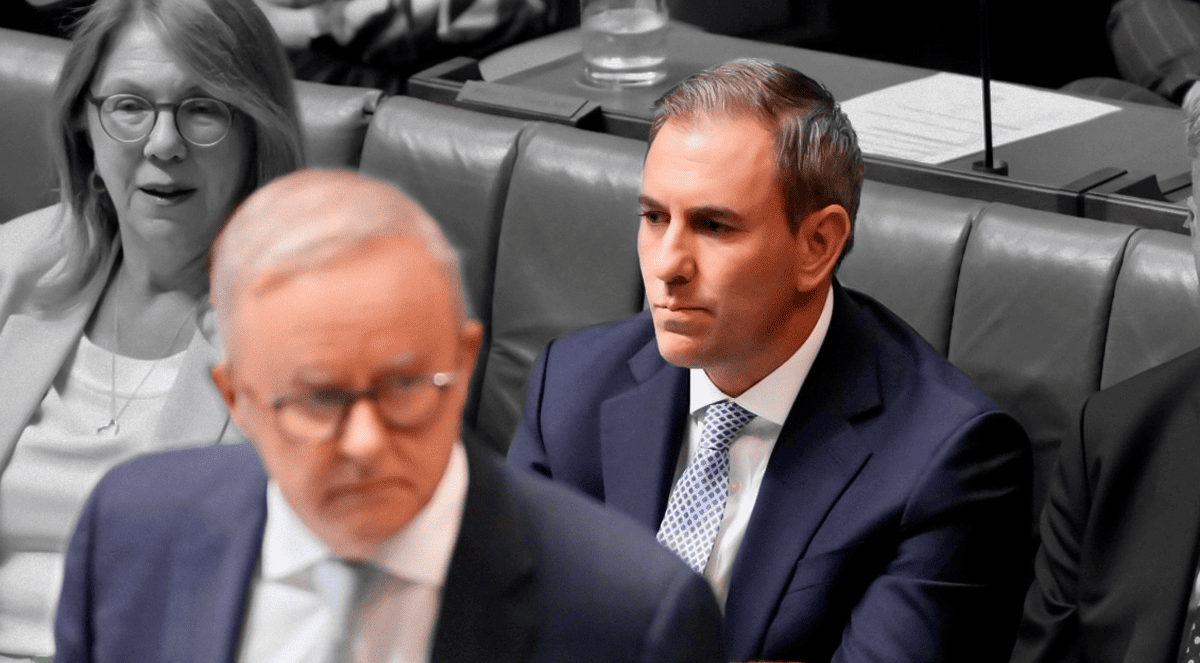
Image by Callum Flinn/ABC News
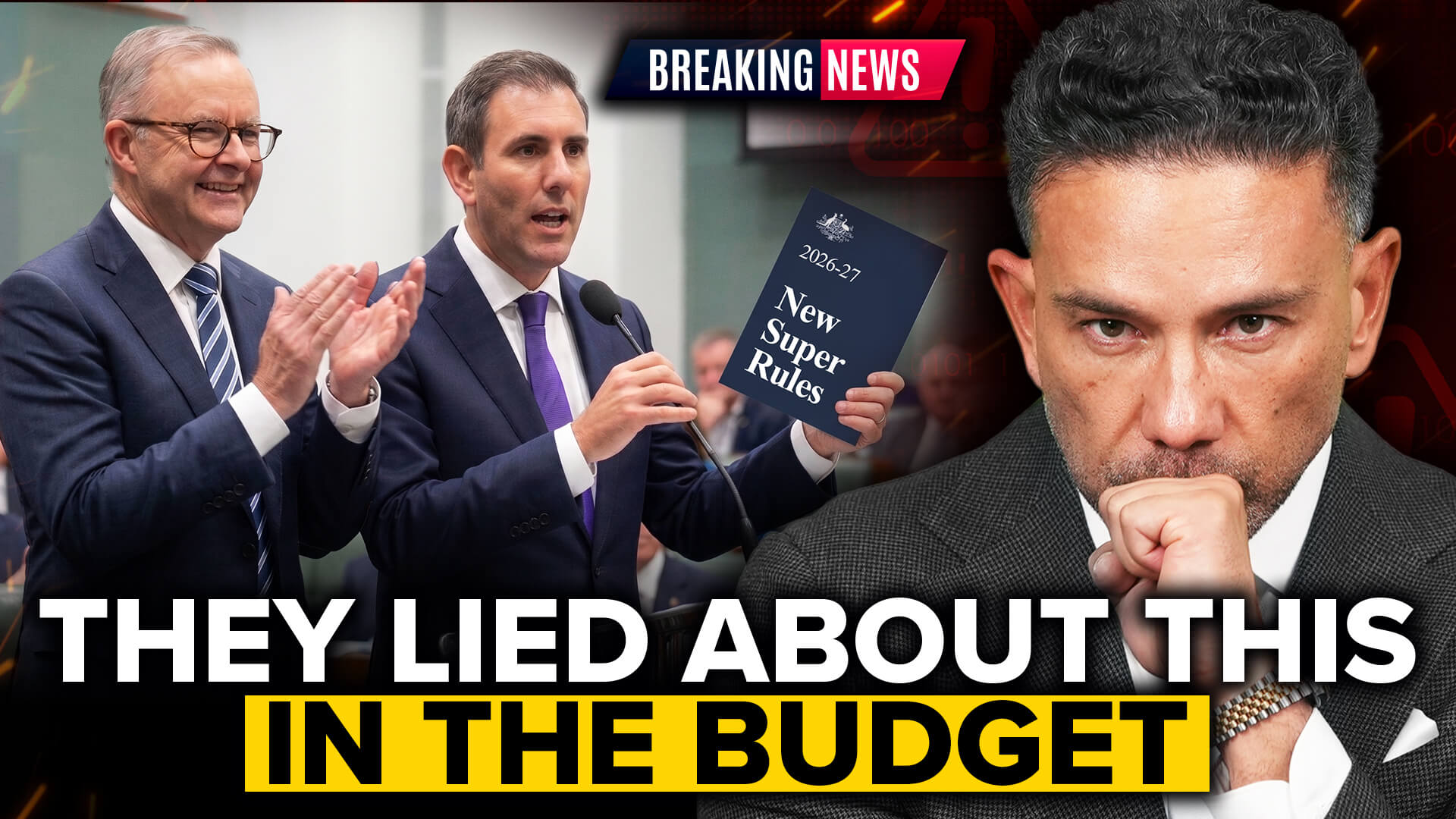
Changes to tax breaks used by property investors are at the centre of Federal Treasurer Jim Chalmers 5th budget, handed down at Parliament House in Canberra on the evening of May the 12th, 2026.
The date is important, because after budget night, investors will not be eligible to take advantage of negative gearing on property purchases unless it’s a newly built home.
In what it billed as the biggest reforming budget in decades, the Albanese government also confirmed that the 50% Capital Gains Tax discount regime would be scrapped, with CGT returning to the pre-1999 system, where assets will be taxed for so-called “real gains” - profits minus inflation, with a minimum 30% rate.
The big picture
Handing down what he described as a budget “for first-home buyers”…”for workers”...”for small business” and “for future generations”, Treasurer Jim Chalmers said the war in the Middle East had “been pushing up prices, pushing down growth, and punishing Australians.”
The question then, he told the ABC, was:
“Do we use what's happening in the Middle East as a reason to do less, to just focus on fuel security and some of the near-term issues— measures? Or do we understand that all of this global volatility and uncertainty is a reason to accelerate reform, to act with more decisiveness and more urgency? And we decided on the latter path, and I'm proud that we did.”
The budget papers show the Iran war is projected to have a substantial effect on the economy, with the Treasury predicting inflation will peak at 5% this year - and 7% in a worst case scenario, where the war drags on and oil prices spike again.
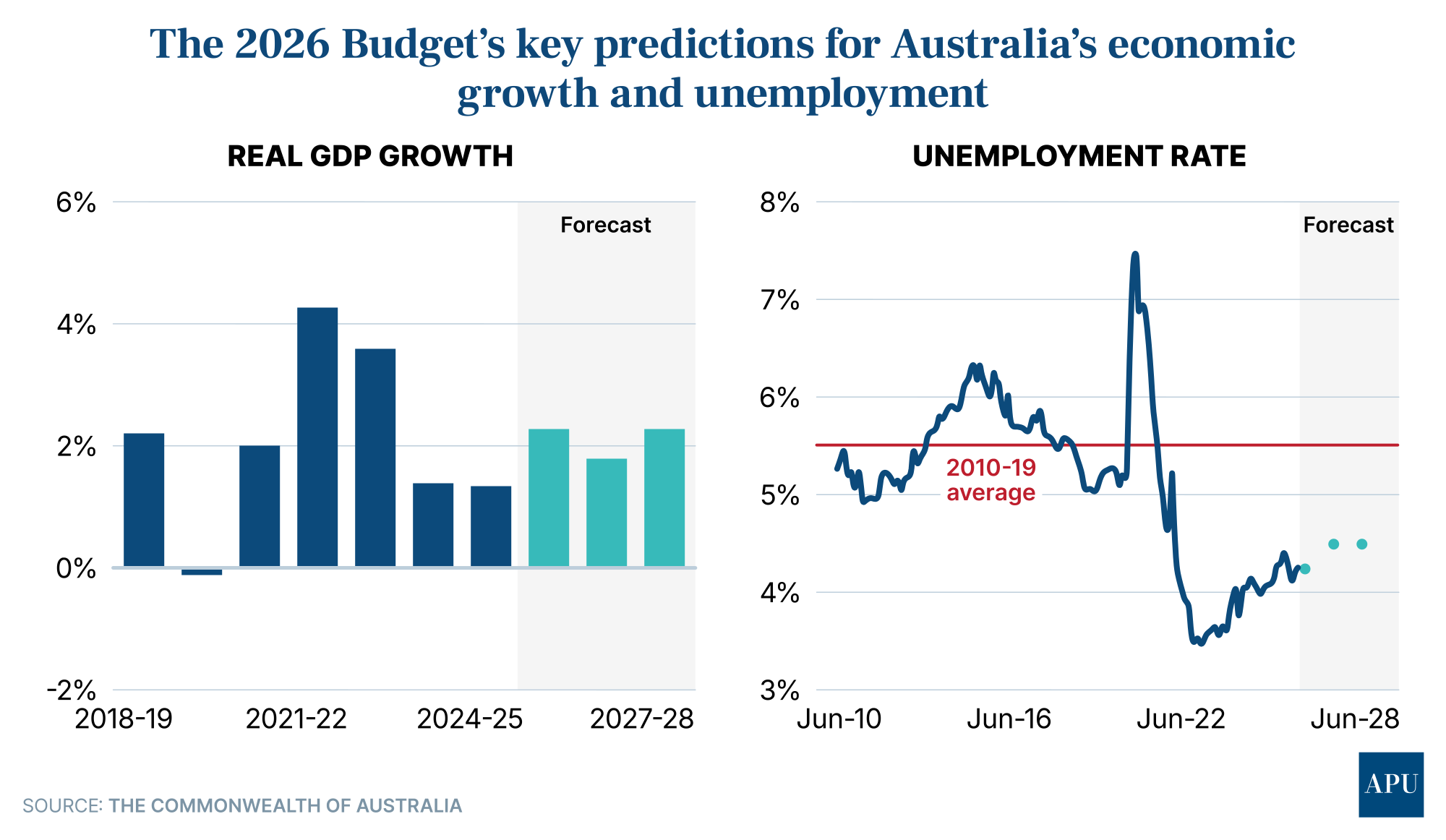
Economic growth will fall from 2.25% in 2025-26 to 1.75%, but unemployment is only predicted to edge up to 4.5%
Despite the uncertain backdrop of the Middle East conflict, this budget ushers in sweeping changes, particularly when it comes to taxation.
A mixture of tax cuts and tax offsets should make the average worker up to $2,816 better off in two years’ time, according to Jim Chalmers, but it’s the revenue-raising side of the tax equation that’s drawn the most attention.
These include big changes to property taxes and a crackdown on trusts being used for tax minimisation, in the biggest raid on asset wealth in more than a quarter of a century.
Property tax changes
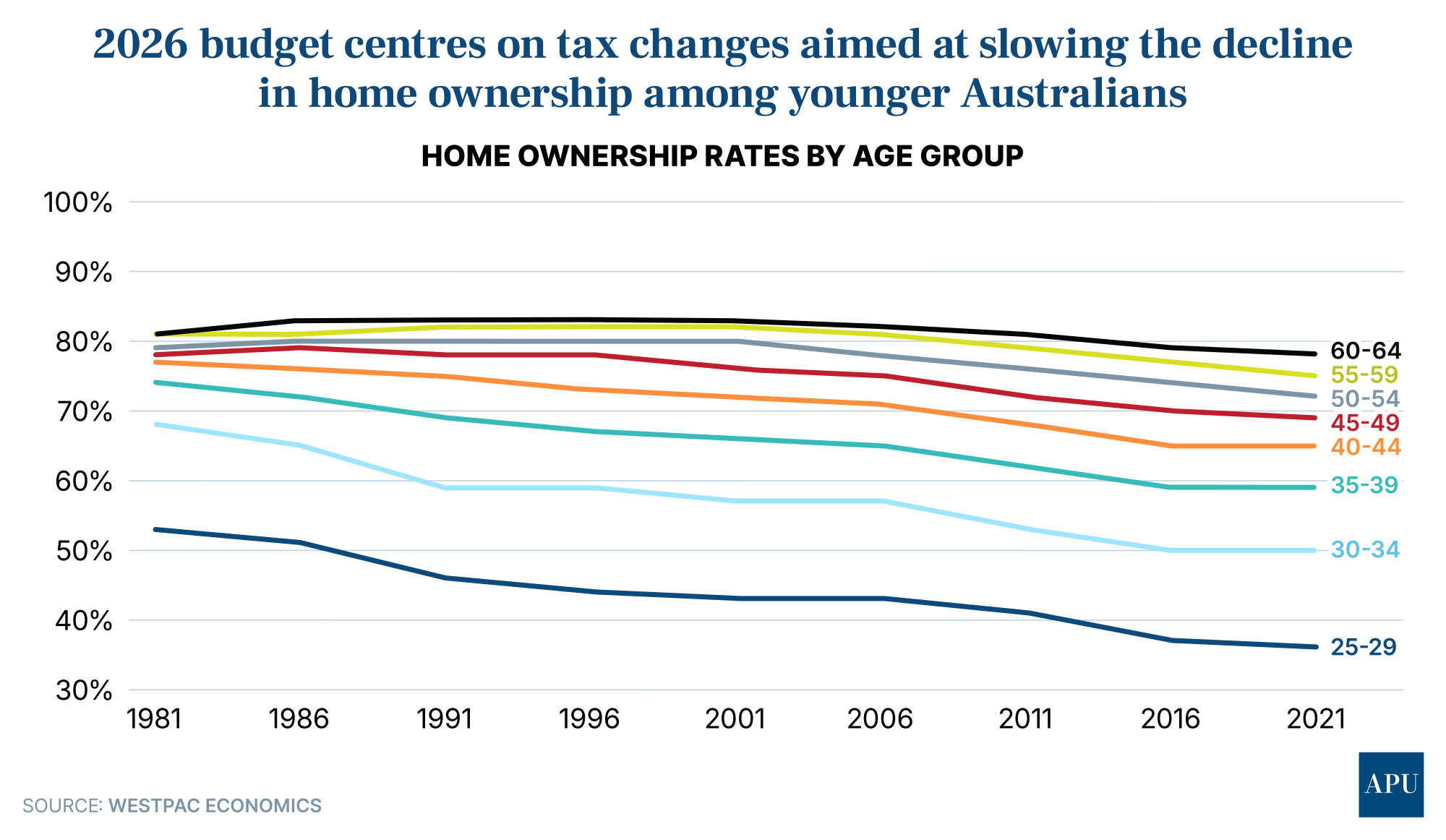
In a budget “aimed squarely at improving housing affordability for growing numbers of Millennial and Gen Z voters,” as the Australian Financial Review put it, negative gearing has been scrapped for buyers of existing housing stock.
That means that from 7:30pm on the evening of 12th May 2026, investors who purchase an existing property and rent it out will not be able to claim any shortfall between their outgoings and the rent against their personal income.
They can still deduct losses from their property income, and can carry forward losses into future years.
But in a move aimed at boosting housing supply, investors who build or purchase new properties will still be able to use negative gearing, as well as existing investors.
The other big change is to the Capital Gains Tax discount.
Since 1999, when an asset like an investment property or shares held for more than 12 months was sold, any capital gain was immediately discounted by 50% before being taxed.
In a “Back to the Future” move, Jim Chalmers has returned to the CGT system unveiled by Paul Keating in the mid 1980s, where capital gains are taxed after being discounted for inflation, with a minimum 30% tax rate applying.
This taxes the so-called “real gains” after inflation.
This is where it gets complicated.
People who hold existing assets and offload them before the 1st of July 2027 still get the advantage of the 50% deduction when it comes to CGT.
If they are sold after that date, the new CGT regime applies to any capital gains judged to have been accrued after that date.
Housing affordability
So, how will this improve housing affordability?
The government clearly believes the changes to negative gearing and the CGT discount will discourage many from using property as a wealth-building asset, and better allow first-home buyers “to get a toe-hold” in the market, as they will possibly be competing against less investors.
In a budget fact sheet, Treasury says that “modelling suggests that the reforms will increase the owner-occupier share of the housing market, resulting in around 75,000 additional owner-occupiers over the next decade.”
The government also claims that the tax moves - clearly designed to make investment property look less attractive - will lead to slower home price growth, which Treasury estimates as “around 2% less over a couple of years relative to no tax policy change.”
Jim Chalmers admits less investors in the property market will affect rents, making them more expensive, but claims this would be equivalent to less than $2 a week extra for a household paying the median rent.



My take
Clearly, the changes to the CGT regime are disappointing, as many Australians have invested in property and other assets, understanding the “risk” of their investment would be rewarded by only having half the gains of their asset taxed when they sell.
I see negative gearing changes as less of a problem.
As you might know, my business partner Lianna Pan and I only invest in brand new property in areas we believe are poised for growth.
It’s a strategy that has seen Freedom Property Investors help put more than 10,000 members on the road to financial freedom, while also doing something really positive for housing supply in this country.
So, it’s good that owners of newly built property will still be eligible to negatively gear their investments.
More generally though, the government’s changes to the property tax regime are really unwise.
First, as a basic principle, any time you tax something, you get less of it.
The clearest example is smoking.
When I grew up, about 40% of Australians smoked.
These days, it's about 10% or less - even with all that illegal tobacco being sold under the counter.
Successive governments decided to make smoking less and less appealing by taxing it more and more and more… and it worked.
If you tax property investors more, the same thing will happen.
You’ll simply get less people investing in property - and that means less rental homes to choose from for the one-third of Australians that rent.
Rental vacancy rates are already low and rents have begun rising again.
The government’s claim that median rents would only go up by $2 a week more than otherwise would have been the case is just laughable.
Expect rents for the properties that remain on the market to soar.
Now, the government and some economists say - “Ah, but those ex-rental houses and apartments sold by frightened off investors don’t disappear. They’ll get bought up by young first-home buyers instead.”
Yes, that may be so, but they’ll be bought up by young first-home buyers from wealthy families - backed by the Bank of Mum and Dad - because they are the ones who will have the big deposit and be able to afford the big repayments you have to make on pretty much any home loan these days, especially in the current high-interest rate climate.
If you are young and haven’t got the backing of rich parents, forget it.
Now that’s intergenerational and INTRA-generational inequity.
Curbing the wealth creation rules that have been used by Boomers and Gen Xers like me is also not fair to younger Australians who are in a position to invest and build their wealth.
You could argue that will actually entrench the wealth dividend of older Australians and the wealth dividend of some families with deep pockets at the expense of others.
Of course, changing the CGT discount and negative gearing goes directly against what Anthony Albanese and Jim Chalmers said before and immediately after the last Federal election.
The pair won’t describe their about-face as a “broken promise”, with Jim Chalmers telling the ABC that he acknowledges “that the government's come to a different view about some really important policy areas.”
While the pair may have been able to get away with reneging on an earlier promise not to fiddle with the Stage 3 tax cuts, this time around, there’s clearly more political risk.
Any change on the tax regime affecting property - an industry which directly or indirectly is said to employ 1.5 million Australians (that’s about one-tenth of the total working age population) - could have much broader repercussions than not giving a handful of extremely rich people a generous tax cut.
The electorate has made clear they’re sick of “politics as usual” and governments that don’t keep their word risk being punished at the ballot box.










.jpg?width=1920&height=1080&name=WTF%20Is%20Happening%20To%20The%20Housing%20Market!%20$500%20Billion%20Wiped%20Out%20As%20Prices%20Fall%20Faster%20Every%20Month%20Scott%20Kuru%20YPU%20027%20(1).jpg)

%20Scott%20Kuru%20YPU%20025.jpg?width=1920&height=1080&name=This%20Is%20Worse%20Than%20A%20Recession%20RBA%20Admits%20Australias%20Wage%20Collapse%20Cant%20Be%20Stopped%20(Prepare%20Now)%20Scott%20Kuru%20YPU%20025.jpg)





























.jpg?width=1920&height=1080&name=EXPOSED%20How%20The%20Govt%20Let%20These%20Oil%20Giants%20Get%20Away%20With%20Paying%20Zero%20Tax%20For%20Aussie%20Gas%20Scott%20Kuru%20DPU%20256%20(1).jpg)







%20Scott%20Kuru%20DPU%20248.jpg?width=1920&height=1080&name=Major%20Banks%20CAUGHT%20Preparing%20For%20Australia%E2%80%99s%20Biggest%20Housing%20Crash%20(Defaults%20%26%20Bankruptcies%20Coming)%20Scott%20Kuru%20DPU%20248.jpg)
%20Scott%20Kuru%20DPU%20247.jpg?width=1920&height=1080&name=This%20Is%20How%20Australia%20Gets%20Pushed%20Into%20the%20Next%20Big%20Reset%20(Trust%20Collapse%20Has%20Officially%20Begun)%20Scott%20Kuru%20DPU%20247.jpg)







%20Scott%20Kuru%20DPU%20239.jpg?width=1920&height=1080&name=URGENT%20Life%20In%20Australia%20Has%20Become%20Impossible%20For%20Millions%20Of%20Aussies%20(It%E2%80%99s%20About%20To%20Get%20Worse)%20Scott%20Kuru%20DPU%20239.jpg)










%20Scott%20Kuru%20DPU%20227.jpg?width=1920&height=1080&name=URGENT%20ALERT%20Australia%E2%80%99s%20Property%20Market%20Is%20Sliding%20Into%20Something%20Much%20Bigger%20(Prepare%20Now)%20Scott%20Kuru%20DPU%20227.jpg)