









.png?width=292&height=292&name=Copy%20Link%20(1).png)

 SIGN UP FOR FREE NEWSLETTER

The rise of Artificial Intelligence has changed everything from how we work to how we shop, and it’s even being touted as a game-changer for one of Australia’s biggest obsessions: property investment.
But does the evidence stack up?
Melbourne-based property depreciation specialists MCG Quantity Surveyors decided to put ChatGPT to the test to help identify suburbs around Australia in which to invest, emphasising metrics the AI tool should look for.
However, the results were alarming.
Why ChatGPT?
“Australians are rapidly experimenting with AI for money management, with the strongest tilt among younger cohorts,” says Mike Mortlock, MCG Quantity Surveyors’ Managing Director.
He cites Experian research that 67% of Gen Z and 62% of Millennials are using or considering AI tools for money management and also World Economic Forum findings that 41% of younger investors would even let AI manage their investments directly.
But can a chatbot really be trusted to choose an investment property?
The $1 million test
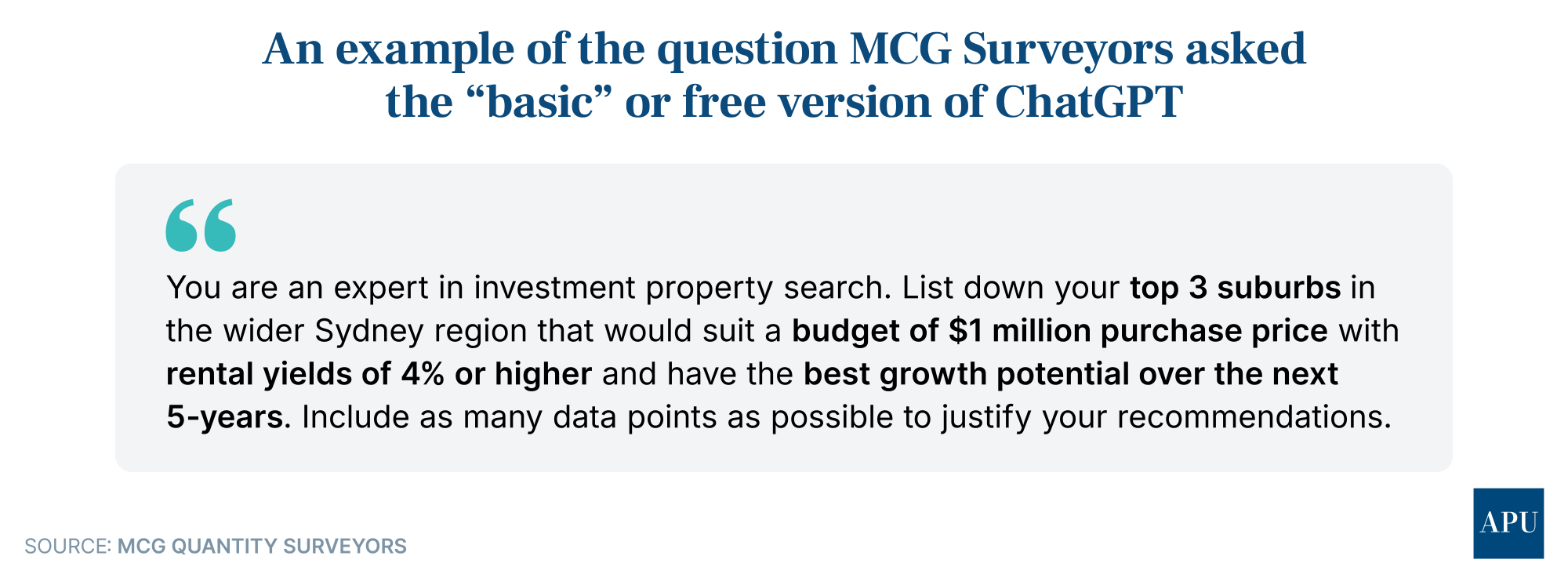
MCG’s research team asked ChatGPT to recommend investment-grade suburbs around Australia with a $1 million budget.
The amount is at the upper end of most property investors’ budgets, while big enough to test whether AI would favour houses or units.
The team ran two versions of the test: a “Basic” prompt that mimicked an everyday user’s query in the free version of ChatGPT, and a “Deep Research” version that provided ChatGPT Pro with detailed property data in a CSV file.
The expectation was that the more “professional” setup would outperform the free one.
Surprisingly, it didn’t.
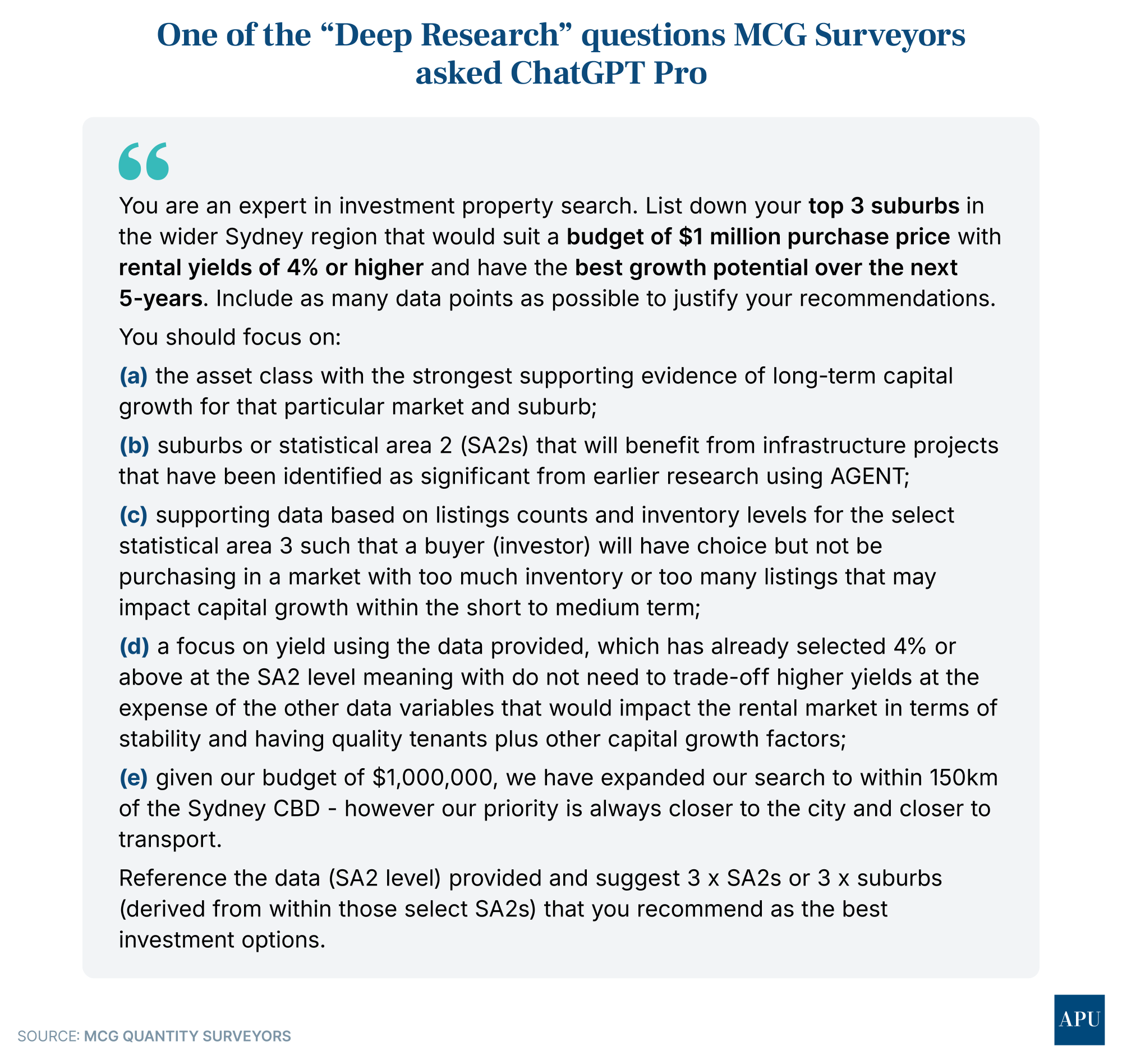
What AI got right
It turns out ChatGPT excelled at identifying infrastructure-driven growth areas, frequently highlighting big-ticket projects such as Perth’s METRONET train line, Brisbane’s Cross River Rail, Melbourne’s new Footscray Hospital and Western Sydney Airport.
These are the kinds of job-rich infrastructure assets property experts often flag as catalysts for long-term value growth in an area.
AI also did what Mike Mortlock says was a “reasonable job” of pulling basic data, such as median prices and vacancy rates and helping to identify markets with strong rental demand.
But that’s where the good news ends.
“Investors treating AI as an autopilot risk buying the wrong asset in the right postcode,” Mr Mortlock warns.
MCG’s analysis revealed that ChatGPT’s property recommendations failed fact-checking more than half the time, exposing major weaknesses in its decision-making.
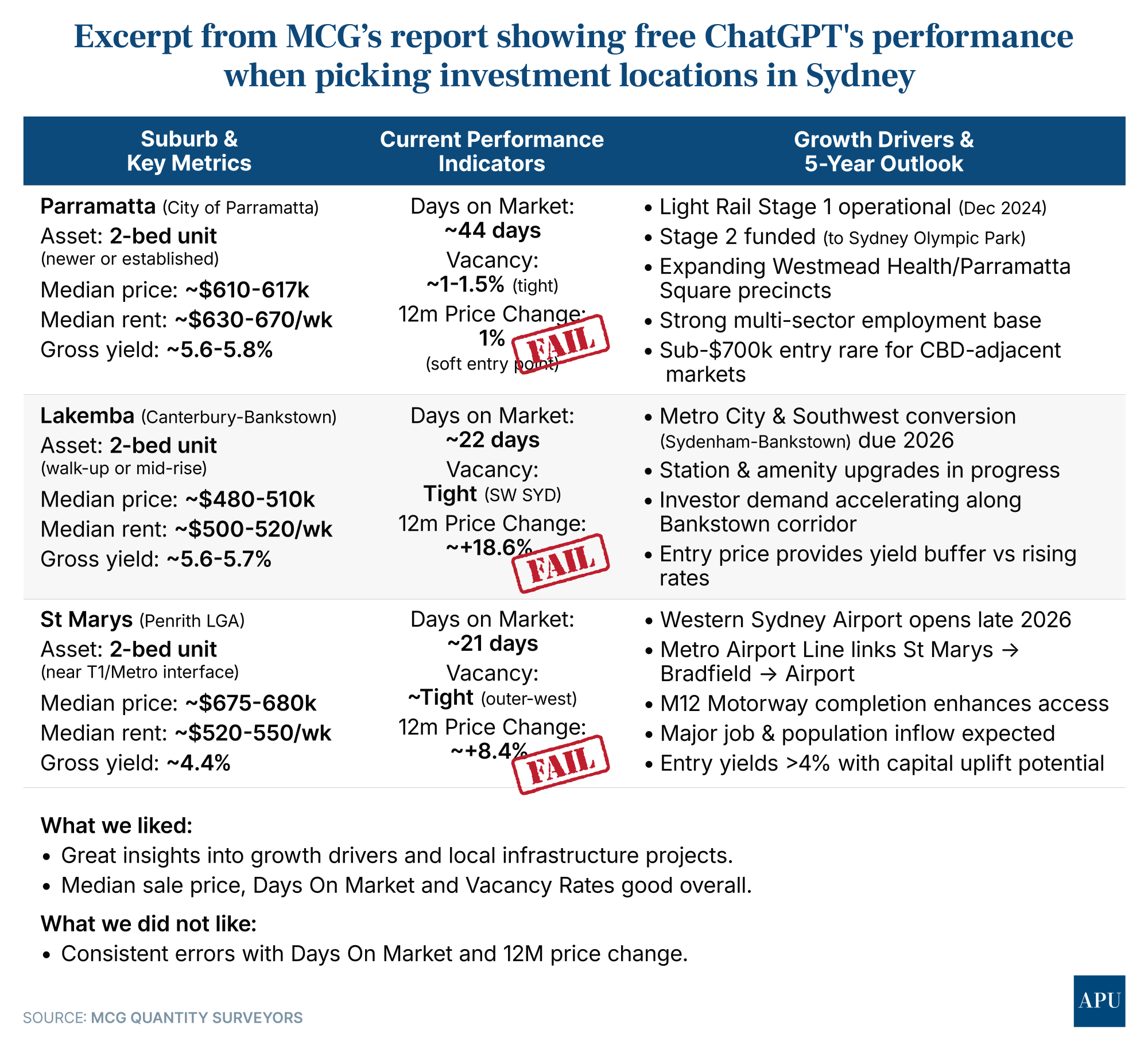
Four ways AI got it wrong
1. A bias for units
For MCG Quantity Surveyors, the biggest red flag was ChatGPT’s consistent preference for units over houses, even with a $1 million budget.
It tended to fixate on achieving higher rental yields, often leading it toward apartments, whereas human investors typically prioritise houses for their superior long-term capital growth - a key factor AI missed.
2. Data “hallucinations”
ChatGPT repeatedly generated incorrect or invented data - confidently citing fake numbers for “days on market” and “12-month price change” in Sydney and Melbourne.
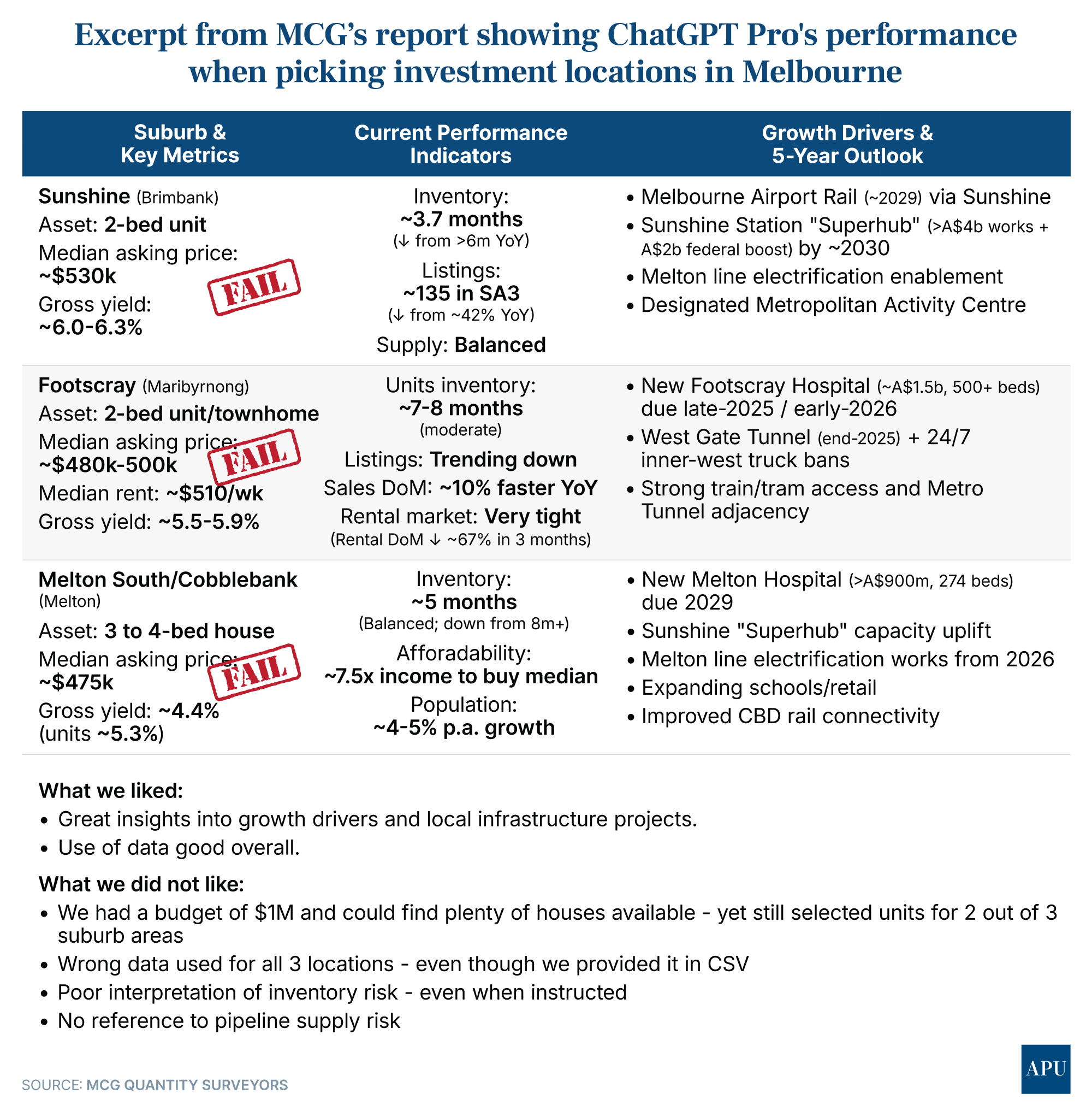
Even when provided with correct data for Brisbane and Adelaide, AI often ignored it, and in one Perth test, it recommended suburbs that didn’t even exist in the supplied dataset.
3. Ignoring market risk
AI struggled to grasp key risk indicators such as inventory levels and housing pipeline supply, key metrics which indicate the number of properties coming onto the market in an area.
In the Perth “Deep Research” test, it failed to flag the risk of oversupply from new apartment projects, a mistake that could easily catch out a real investor.
4. The “smarter” test performed worse
Perhaps the most surprising finding was that the “Deep Research” version using ChatGPT Pro - the one armed with detailed data - often produced worse results.
The experiment found that giving ChatGPT more information sometimes amplified its biases and errors.
“This is the ultimate proof that AI cannot be trusted on autopilot,” Mike Mortlock says.
“Simply feeding it more information does not guarantee a safer or more accurate answer.”
The verdict
In the end, MCG’s team concluded that ChatGPT can be a useful research tool, but it can’t be relied on for investment decisions.
“The model showed a clear bias towards yield at the expense of asset selection - particularly houses versus units - even when the budget and local evidence pointed the other way,” Mike Mortlock says.
“Keep humans in the loop, validate every number, and use AI to accelerate due diligence - not replace it,” he says.



The takeaway
AI is rapidly becoming part of the property investor’s toolkit, but this experiment by MCG Surveyors proves it’s a starting point, not a strategy.
Used wisely, AI models and research can save valuable time.
Used blindly, they could cost a fortune.
As Mike Mortlock sums up, “AI is a tool to accelerate research, not replace it.”













.jpg?width=1920&height=1080&name=WTF%20Is%20Happening%20To%20The%20Housing%20Market!%20$500%20Billion%20Wiped%20Out%20As%20Prices%20Fall%20Faster%20Every%20Month%20Scott%20Kuru%20YPU%20027%20(1).jpg)

%20Scott%20Kuru%20YPU%20025.jpg?width=1920&height=1080&name=This%20Is%20Worse%20Than%20A%20Recession%20RBA%20Admits%20Australias%20Wage%20Collapse%20Cant%20Be%20Stopped%20(Prepare%20Now)%20Scott%20Kuru%20YPU%20025.jpg)





























.jpg?width=1920&height=1080&name=EXPOSED%20How%20The%20Govt%20Let%20These%20Oil%20Giants%20Get%20Away%20With%20Paying%20Zero%20Tax%20For%20Aussie%20Gas%20Scott%20Kuru%20DPU%20256%20(1).jpg)







%20Scott%20Kuru%20DPU%20248.jpg?width=1920&height=1080&name=Major%20Banks%20CAUGHT%20Preparing%20For%20Australia%E2%80%99s%20Biggest%20Housing%20Crash%20(Defaults%20%26%20Bankruptcies%20Coming)%20Scott%20Kuru%20DPU%20248.jpg)
%20Scott%20Kuru%20DPU%20247.jpg?width=1920&height=1080&name=This%20Is%20How%20Australia%20Gets%20Pushed%20Into%20the%20Next%20Big%20Reset%20(Trust%20Collapse%20Has%20Officially%20Begun)%20Scott%20Kuru%20DPU%20247.jpg)







%20Scott%20Kuru%20DPU%20239.jpg?width=1920&height=1080&name=URGENT%20Life%20In%20Australia%20Has%20Become%20Impossible%20For%20Millions%20Of%20Aussies%20(It%E2%80%99s%20About%20To%20Get%20Worse)%20Scott%20Kuru%20DPU%20239.jpg)











%20Scott%20Kuru%20DPU%20227.jpg?width=1920&height=1080&name=URGENT%20ALERT%20Australia%E2%80%99s%20Property%20Market%20Is%20Sliding%20Into%20Something%20Much%20Bigger%20(Prepare%20Now)%20Scott%20Kuru%20DPU%20227.jpg)