









.png?width=292&height=292&name=Copy%20Link%20(1).png)

 SIGN UP FOR FREE NEWSLETTER
Image by Stefani Reynolds/Getty Images
A leading international financial institution says Australian state governments should consider scrapping stamp duty as part of a “holistic” strategy to boost housing supply.
The International Monetary Fund has also warned the Albanese government’s popular 5% Deposit Guarantee scheme for first-home buyers risks driving up home prices, and has advised the program should be limited to the purchase of new homes only.
And as the debate continues about winding back the 50% Capital Gains Tax discount, the IMF has urged the Federal government to phase it out, along with a number of other tax breaks.
The details
Image by Karen Bleier/Getty Images
The IMF is a global financial body made up of more than 190 members, including Australia.
Each year, its staff produces a report on Australia after extensive consultations with government departments, the Reserve Bank and other local economic and financial bodies.
In its latest report, the Washington-based organisation praises the nation for emerging from the Covid-19 pandemic without a recession and notes economic progress towards what it describes as a “soft landing”.
It declares that Australian financial institutions, corporations and households have healthy balance sheets.
However, going forward, the IMF is clear in its warnings that tax reform is needed to maintain financial and housing stability.
“Despite easing cyclical conditions, the long-standing imbalance between housing demand and supply persists,” the IMF states.
“Growth in underlying housing demand has eased somewhat with slower population growth, and a slight increase in average household size.

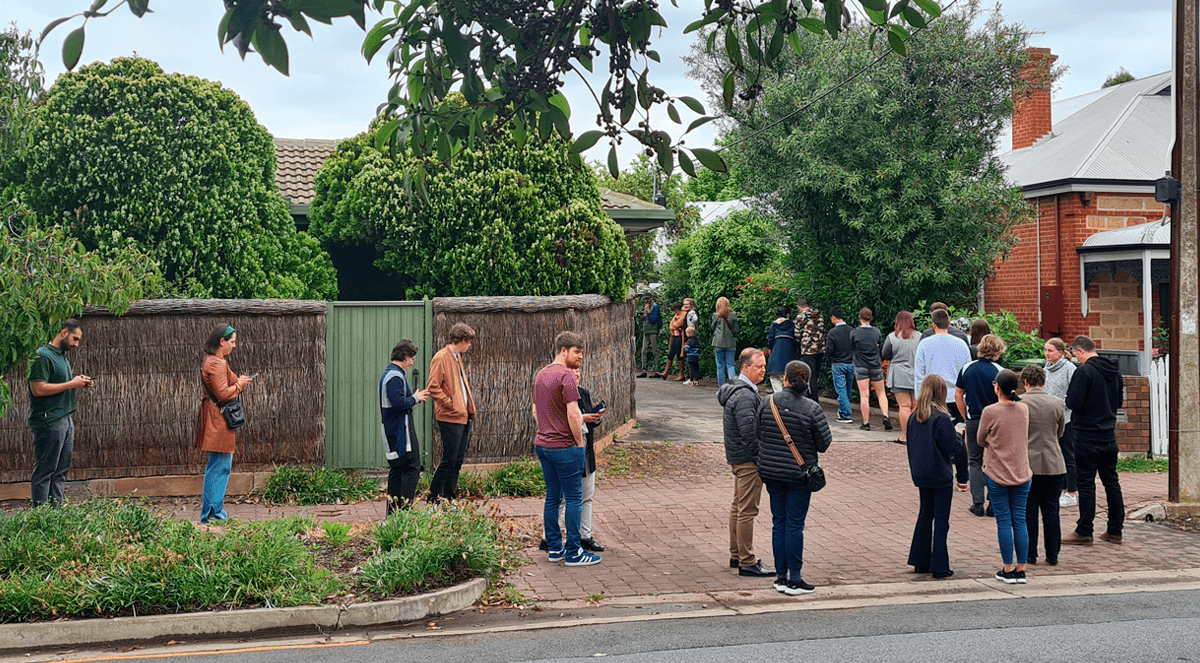
“However, long-standing structural barriers to increasing supply remain, including a shortage of skilled workers, limited and costly land for development, low productivity and innovation in construction, and complex regulations and approval processes.
“Constrained housing supply, coupled with recent reductions in mortgage rates, is likely to continue exerting upward pressure on dwelling prices, further exacerbating affordability challenges,” IMF staff conclude.
The IMF only has faint praise for the Albanese government’s response to the housing crisis.
It notes the government’s commitment of $10 billion over eight years to provide 100,000 new homes for first-home buyers and the expansion of the 5% Deposit Scheme.
But it points out that annualised new dwelling completions remain “well below the peak levels seen in 2016 and the needed pace to achieve the authorities’ target of 1.2 million new homes over five years.”
The IMF notes Federal financial support provided to state and territory governments to help deliver essential housing infrastructure, as well as new social and affordable homes.
But it’s critical of moves to further restrict foreign purchases of existing homes.
“Although there has not been a recent surge in foreign capital inflows into Australia’s residential property sector, a new temporary ban on foreign purchases of established dwellings—for at least 2 years from April 1, 2025 to March 31, 2027, unless an exception applies—was introduced by the Commonwealth Government with an aim to ensure foreign investment in housing is consistent with the government’s agenda to boost housing supply.”
The organisation says this is “inconsistent with the IMF’s Institutional View” and it encourages it to be replaced “with measures that support housing supply and affordability without discriminating by residency.”
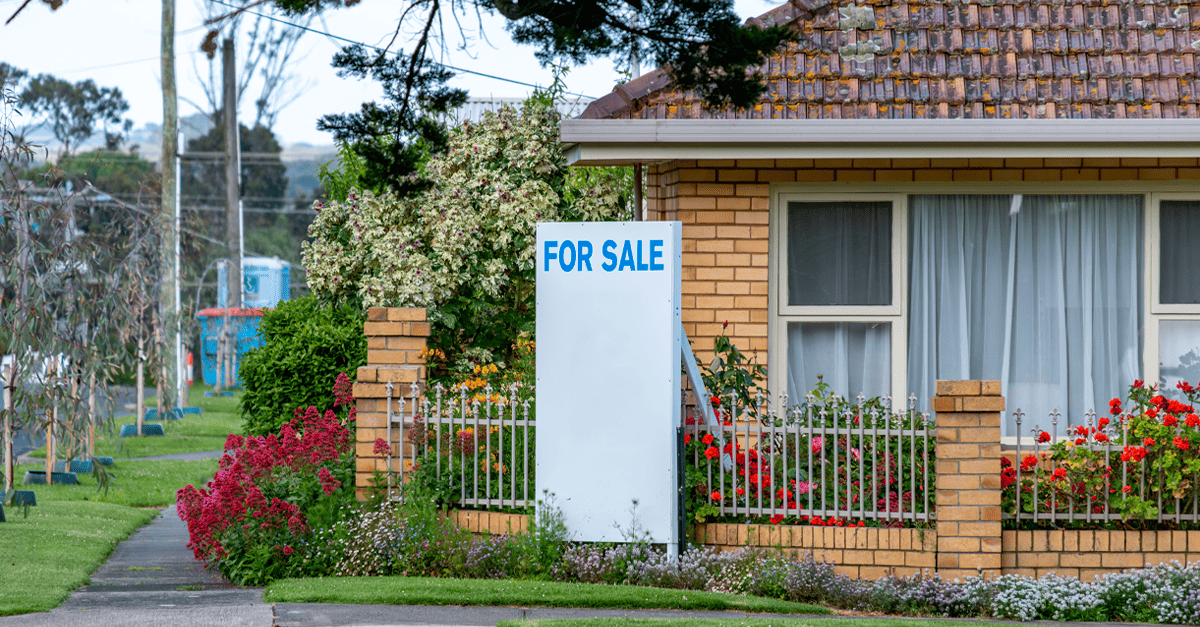
It also warns that “the 5% Deposit Scheme to improve affordability for first-home buyers may contribute to price pressures in the near-term by pulling forward home purchases while financial conditions ease.”
Although the IMF report has just been released, most of the data and consultations undertaken by staff occurred late last year.
There’s already clear evidence that the IMF’s warnings about the 5% Deposit Guarantee scheme have come true.
Recent lending data from the Australian Bureau of Statistics shows the number of new first-home buyer loans jumped 6.8% in the three months to the end of December 2025, with the ABS noting the lift coincided with the expansion of Federal government’s 5% Deposit Guarantee and the launch of its “Help to Buy” scheme.
Separate data from Cotality covering the same period confirms that intense competition pushed up “affordable” home values significantly more than prices in more expensive market segments.
You can read more about that here.
The IMF says for the 5% Deposit Guarantee scheme to work as intended, housing supply needs to be boosted, or the government should consider “limiting the guarantee program to the purchase of new dwellings” only.
The international body says there needs to be “a holistic strategy” to overcome “the structural barriers that impede new housing supply.”
It wants the Federal government to focus on “carrying through its supply-boosting initiatives on social housing, supporting infrastructure and advanced construction methods,” while all levels of government should concentrate “on easing zoning and building restrictions, expediting land release and approval processes, and enhancing construction productivity.”
But the IMF is also clear that tax reform is needed to boost housing supply.
It says state and territory governments are “encouraged to consider shifting away from stamp duties to recurring property taxes and reviewing other housing tax arrangements as part of a comprehensive tax reform.”
At the Federal level, it says the Albanese government could phase out tax breaks, “including superannuation concessions and capital gains tax discount”.
This, the IMF says, would generate a more equitable and efficient tax system.







.jpg?width=1920&height=1080&name=WTF%20Is%20Happening%20To%20The%20Housing%20Market!%20$500%20Billion%20Wiped%20Out%20As%20Prices%20Fall%20Faster%20Every%20Month%20Scott%20Kuru%20YPU%20027%20(1).jpg)

%20Scott%20Kuru%20YPU%20025.jpg?width=1920&height=1080&name=This%20Is%20Worse%20Than%20A%20Recession%20RBA%20Admits%20Australias%20Wage%20Collapse%20Cant%20Be%20Stopped%20(Prepare%20Now)%20Scott%20Kuru%20YPU%20025.jpg)



























.jpg?width=1920&height=1080&name=EXPOSED%20How%20The%20Govt%20Let%20These%20Oil%20Giants%20Get%20Away%20With%20Paying%20Zero%20Tax%20For%20Aussie%20Gas%20Scott%20Kuru%20DPU%20256%20(1).jpg)







%20Scott%20Kuru%20DPU%20248.jpg?width=1920&height=1080&name=Major%20Banks%20CAUGHT%20Preparing%20For%20Australia%E2%80%99s%20Biggest%20Housing%20Crash%20(Defaults%20%26%20Bankruptcies%20Coming)%20Scott%20Kuru%20DPU%20248.jpg)
%20Scott%20Kuru%20DPU%20247.jpg?width=1920&height=1080&name=This%20Is%20How%20Australia%20Gets%20Pushed%20Into%20the%20Next%20Big%20Reset%20(Trust%20Collapse%20Has%20Officially%20Begun)%20Scott%20Kuru%20DPU%20247.jpg)







%20Scott%20Kuru%20DPU%20239.jpg?width=1920&height=1080&name=URGENT%20Life%20In%20Australia%20Has%20Become%20Impossible%20For%20Millions%20Of%20Aussies%20(It%E2%80%99s%20About%20To%20Get%20Worse)%20Scott%20Kuru%20DPU%20239.jpg)










%20Scott%20Kuru%20DPU%20227.jpg?width=1920&height=1080&name=URGENT%20ALERT%20Australia%E2%80%99s%20Property%20Market%20Is%20Sliding%20Into%20Something%20Much%20Bigger%20(Prepare%20Now)%20Scott%20Kuru%20DPU%20227.jpg)