









.png?width=292&height=292&name=Copy%20Link%20(1).png)

 SIGN UP FOR FREE NEWSLETTER
Image from ABC News
New lending data from the Australian Bureau of Statistics shows the number of new first-home buyer loans jumped 6.8% in the three months to the end of December 2025, with the ABS noting the lift coincided with the expansion of Federal government’s 5% Deposit Guarantee and the launch of its “Help to Buy” scheme.
Lending to property investors was also up 5.5% on the previous quarter.
With first-home buyers and investors usually chasing similar entry-level properties, separate data from Cotality covering the same period confirms that intense competition pushed up “affordable” home values significantly more than prices in more expensive market segments.
ABS data
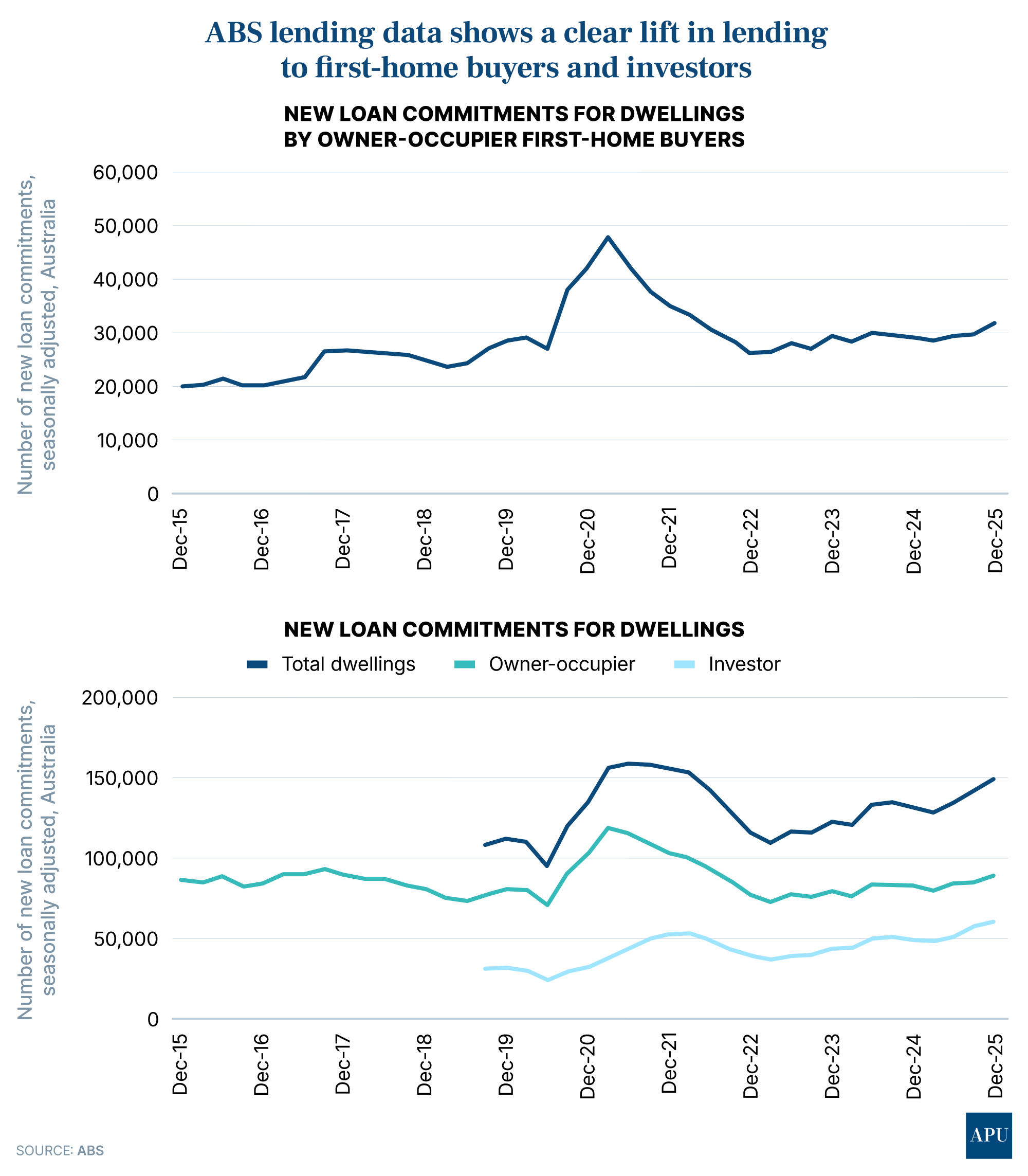
The ABS says the number of first-home buyer owner-occupied loans rose by 2,011 loans (6.8%) to 31,783 in the December quarter of 2025, and 9.1% through the year.
The Bureau says there were rises in New South Wales (up 10.9%), Queensland (6.4%), Victoria (3.5%), Western Australia (9.8%), South Australia (4.8%), the Australian Capital Territory (7.1%) and the Northern Territory (3.2%).
Tasmania was the only state or territory to see a fall (-1.7%).
The ABS Head of Finance Statistics, Mish Tan, says the size of loans being taken out also increased in the December quarter of 2025.
“The size of the average first-home buyer loan rose by a record 8.5% to $607,624 this quarter and was largely driven by first-home buyers in NSW,” Dr Tan says.
“The Australian Government 5% Deposit Scheme has increased the eligibility criteria for first-home buyers and we are seeing the early effects of this in our data.
“This was the largest rise in the number of first-home buyer loans since the December quarter 2023, and their value increased by 15.5%.”
Comparison website Canstar says the expanded 5% Deposit scheme has “fired up the first-home buyer market”.
However, the company’s Data Insights Director, Sally Tindall, has a stark warning:
“A surge in buyers, a rise in borrowing power, thanks to the three cash rate cuts in 2025, and a government proactively encouraging Australians to borrow with as little as 5% deposit, can only mean higher prices and more debt.
“While the federal scheme makes it easier for many first-home buyers to get on the ladder with a small deposit, it certainly doesn’t mean the commitment and responsibility of repayments is any easier, particularly now we’ve had a U-turn back to interest rate hikes,” she says.
The ABS data also shows the number of owner-occupier non-first-home buyer loans rose 3.6%.
Ms Tindall says the record ABS’ loan size figures are worrying.
“The average new loan size for an owner-occupier now sits at an astronomical $736,000.
“That’s not the property price, but the size of the debt people are agreeing to take on,” she says.
“If loan sizes continue to escalate at this pace, generations to come whose families aren’t yet on the property ladder could well see themselves locked out permanently.”
The ABS also says there were 60,445 new investment loans approved in the December quarter of 2025, a 5.5% rise on the previous quarter, and 23.6% higher than the December quarter of 2024.
The total value of new investment loans was $43.0 billion in the December quarter, a rise of 7.9%, with the average investor loan size rising by $31,008 over the quarter to $716,711.
Tasmania led the way for new investment lending with a 28.2% rise on the previous quarter, followed by Victoria (8.8%), Western Australia (4.6%), New South Wales (4.1%), Queensland (3.3%) and South Australia (2.8%)
The Northern Territory and the Australian Capital Territory both recorded falls of -9.3% and -4.3% respectively.
Cotality value bracket data
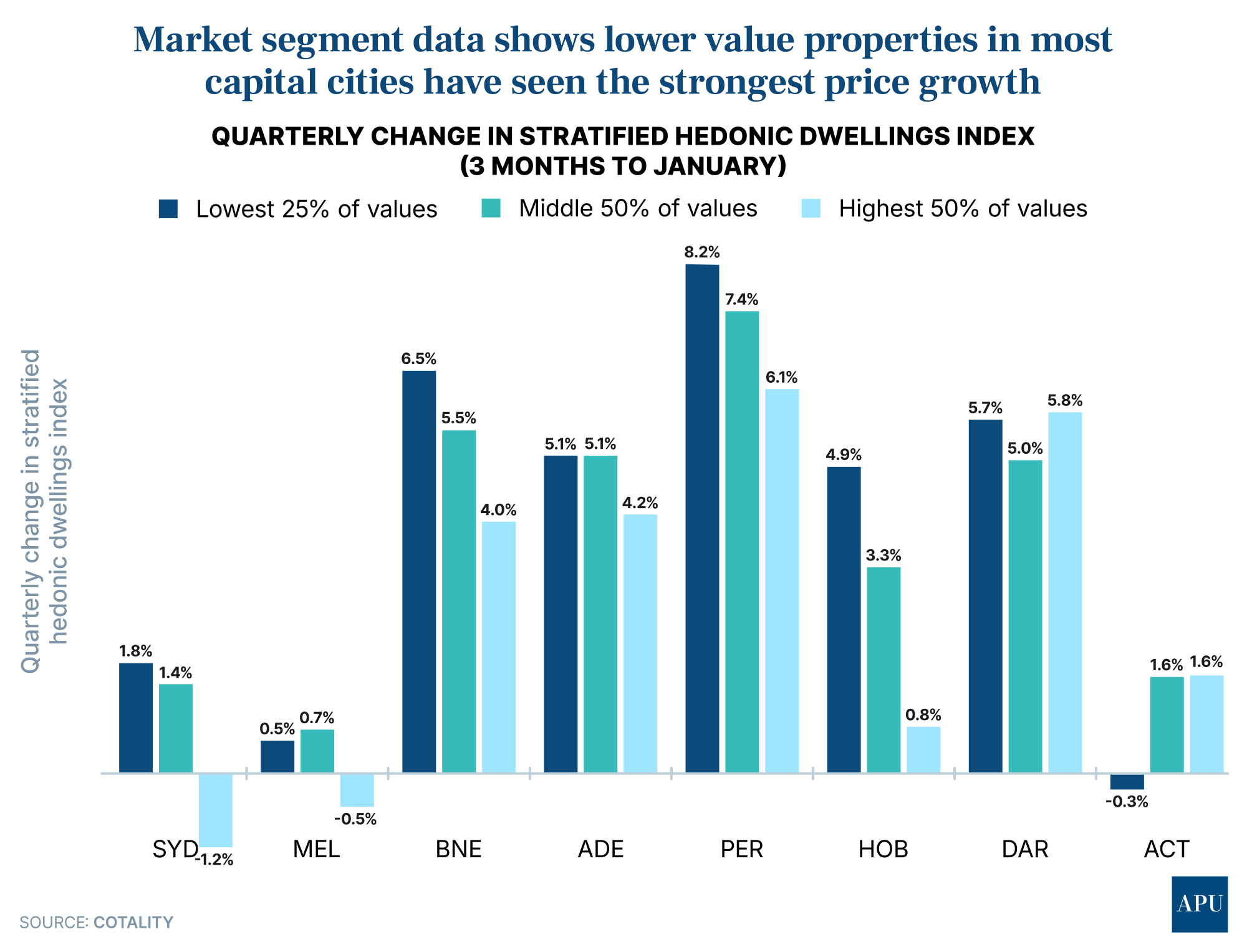
Separately, property analytics company Cotality has released data which shows the change in home values in the capital cities over the December quarter of 2025 - the same period covered by the latest ABS lending data.
It shows that in all capital cities, except in Melbourne and Canberra, the lowest value properties saw the strongest growth, while the highest value properties saw the smallest price rises.
Lower-value properties are typically targeted by first-home buyers.
As they tend to be younger, they haven’t had time to build up significant wealth and equity to purchase in more expensive market segments.
However, the Federal government’s expanded 5% Deposit scheme and other generous first-home buyer incentives have enabled many would-be first-home buyers to bring forward property purchases - often by years.
This has dramatically increased demand for entry-level properties.
“Didn't everyone say FHB (first-home buyer) demand-side stimulus would push up home values?” says independent housing analyst Cameron Kusher.
“I believe we did and that's exactly what we're seeing - the more affordable properties essentially becoming less affordable.
“Ultimately, the most affordable properties will end up more expensive and future first-home buyers will need more government assistance to access them in future and they will be taking on more debt in order to enter into home ownership,” he says.
Lower-value properties are also typically targeted by investors, as these tend to have better rental yields than more expensive homes.
Rather than be put off by the increased competition from first-home buyers with government help, Canstar’s Sally Tindall points to the ABS lending figures, which appear to show investors joining the fierce battle at the lower end of the market.
“Investors haven’t been deterred by this fresh wave of new property owners,” Ms Tindall says, “they’re buoyed by it - because more buyers typically equals greater opportunity for capital growth.”
Cameron Kusher says, in a head-to-head battle for a dwindling pool of affordable homes, it’s clear who will win.
“Even though lending to first-home buyers increased a lot over the quarter, lending to non-first-home buyers and investors continues to rise.
“Based on average loan sizes, they have the capacity and willingness to borrow a lot more than a first-home buyer can,” he says.
“I expect first-home buyers to continue to be active in the market, but with the investor segment in particular remaining so active, they are likely to face stiff competition and struggle with the ability to pay more than these investors for the best quality properties.”







.jpg?width=1920&height=1080&name=WTF%20Is%20Happening%20To%20The%20Housing%20Market!%20$500%20Billion%20Wiped%20Out%20As%20Prices%20Fall%20Faster%20Every%20Month%20Scott%20Kuru%20YPU%20027%20(1).jpg)
%20Scott%20Kuru%20YPU%20025.jpg?width=1920&height=1080&name=This%20Is%20Worse%20Than%20A%20Recession%20RBA%20Admits%20Australias%20Wage%20Collapse%20Cant%20Be%20Stopped%20(Prepare%20Now)%20Scott%20Kuru%20YPU%20025.jpg)



























.jpg?width=1920&height=1080&name=EXPOSED%20How%20The%20Govt%20Let%20These%20Oil%20Giants%20Get%20Away%20With%20Paying%20Zero%20Tax%20For%20Aussie%20Gas%20Scott%20Kuru%20DPU%20256%20(1).jpg)







%20Scott%20Kuru%20DPU%20248.jpg?width=1920&height=1080&name=Major%20Banks%20CAUGHT%20Preparing%20For%20Australia%E2%80%99s%20Biggest%20Housing%20Crash%20(Defaults%20%26%20Bankruptcies%20Coming)%20Scott%20Kuru%20DPU%20248.jpg)
%20Scott%20Kuru%20DPU%20247.jpg?width=1920&height=1080&name=This%20Is%20How%20Australia%20Gets%20Pushed%20Into%20the%20Next%20Big%20Reset%20(Trust%20Collapse%20Has%20Officially%20Begun)%20Scott%20Kuru%20DPU%20247.jpg)







%20Scott%20Kuru%20DPU%20239.jpg?width=1920&height=1080&name=URGENT%20Life%20In%20Australia%20Has%20Become%20Impossible%20For%20Millions%20Of%20Aussies%20(It%E2%80%99s%20About%20To%20Get%20Worse)%20Scott%20Kuru%20DPU%20239.jpg)










%20Scott%20Kuru%20DPU%20227.jpg?width=1920&height=1080&name=URGENT%20ALERT%20Australia%E2%80%99s%20Property%20Market%20Is%20Sliding%20Into%20Something%20Much%20Bigger%20(Prepare%20Now)%20Scott%20Kuru%20DPU%20227.jpg)