









.png?width=292&height=292&name=Copy%20Link%20(1).png)

 SIGN UP FOR FREE NEWSLETTER
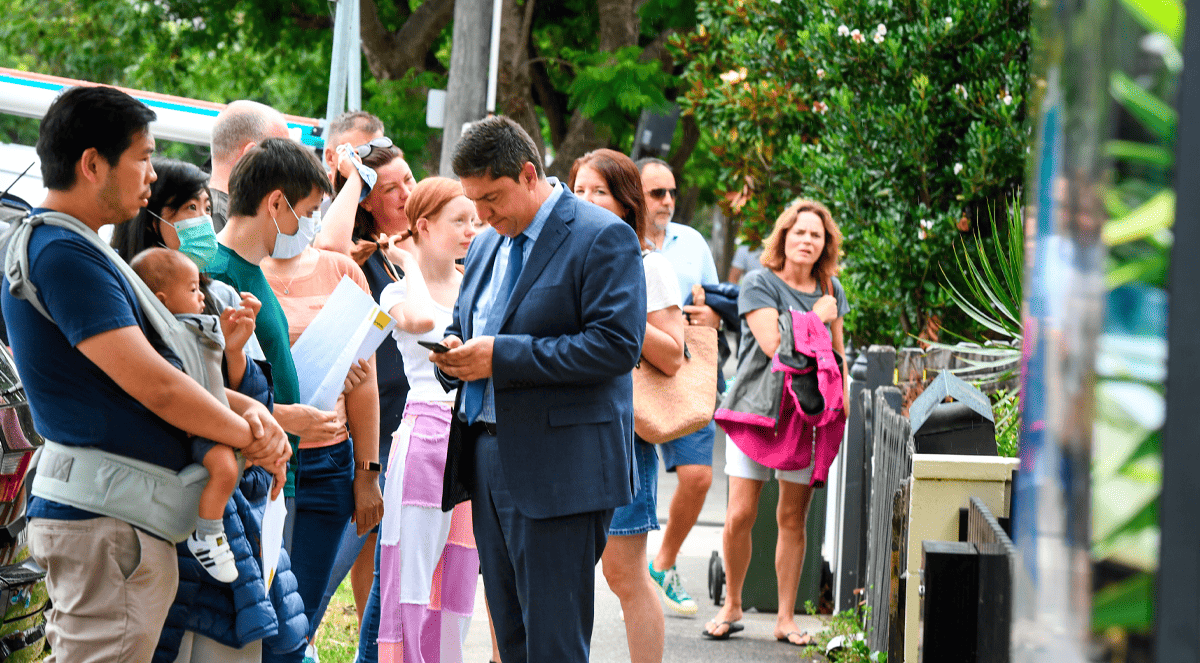
Image from Domain/Peter Rae
New research on the experience of tenants appears to show that for a growing number of Australians, renting is becoming a deliberate and sustainable lifestyle choice.
That’s one of the key takeaways from the Australian Renter Survey 2026, produced by real estate giants CBRE and REA Group.
The findings challenge the established view that renting is merely a stepping stone on the path to home ownership and they also conclude that many renters are more financially resilient than often assumed.
The details
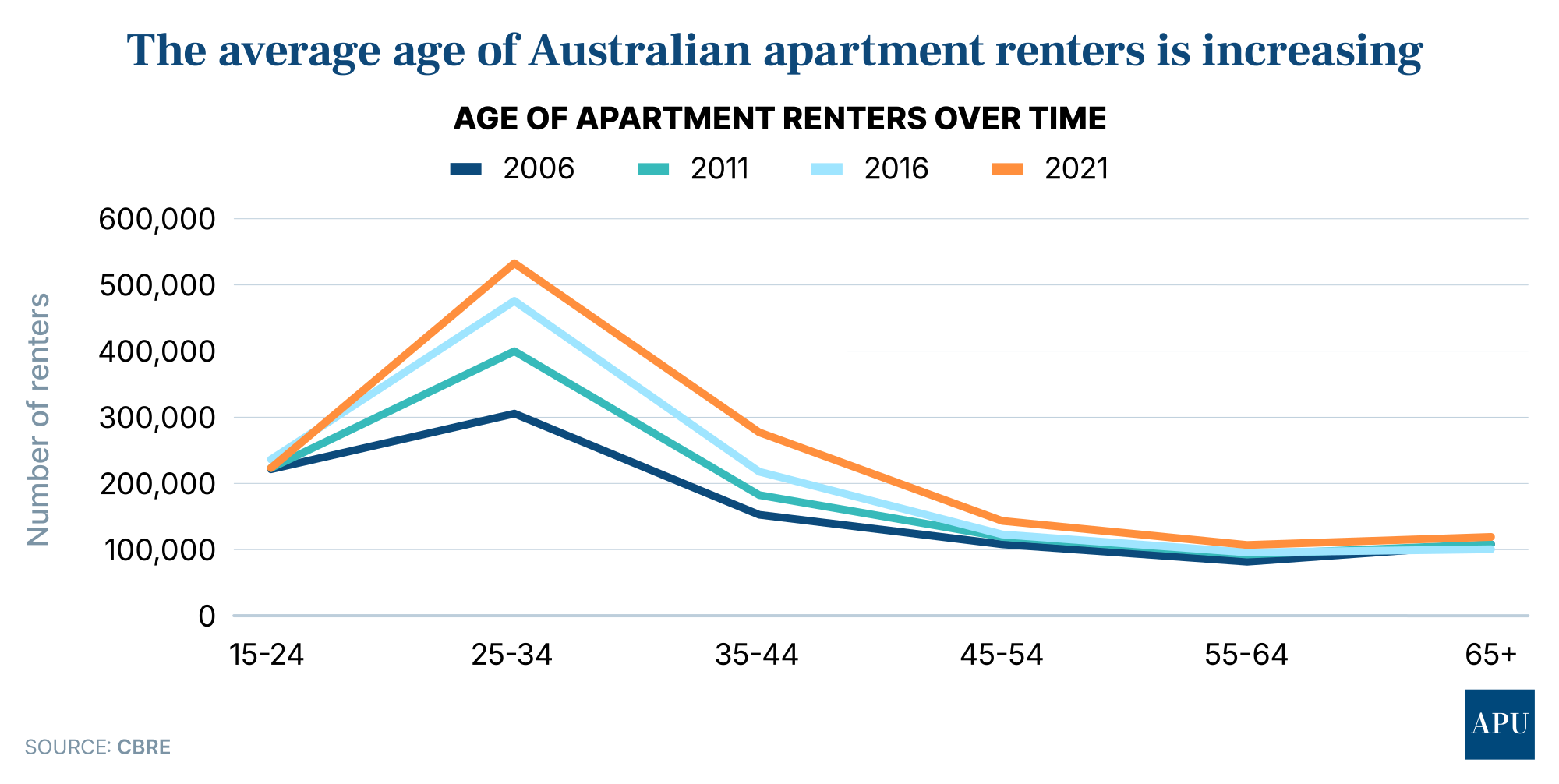
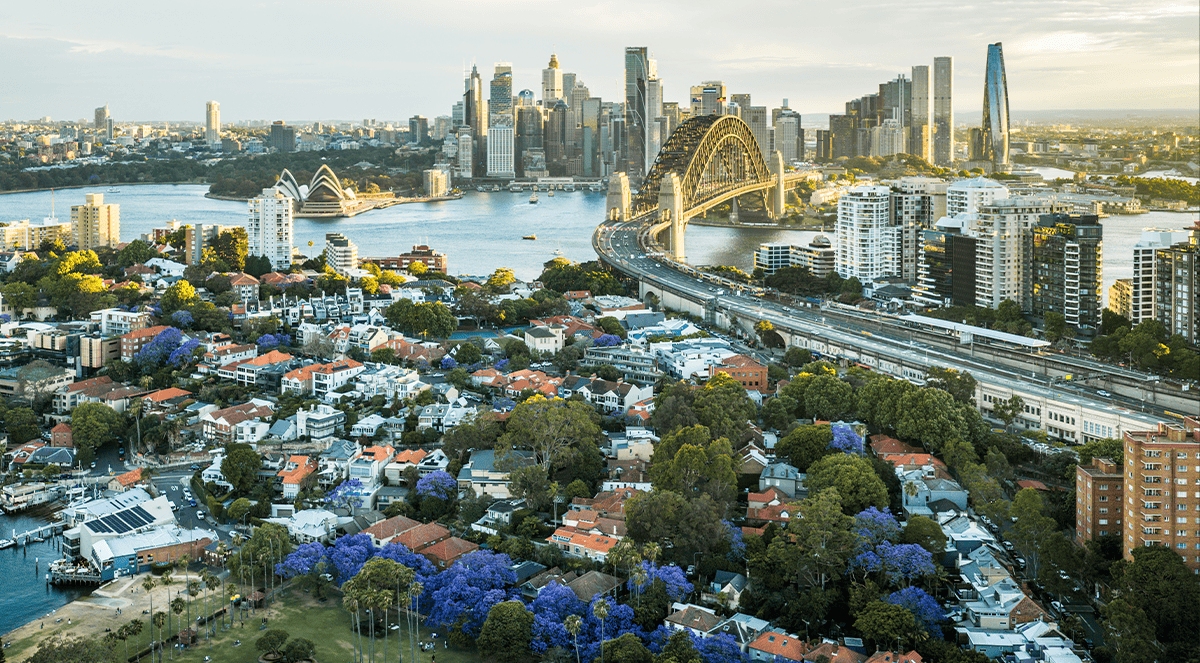
The Australian Renter Survey says around 1.6 million Australians now rent apartments or flats, with the profile of renters shifting well beyond the traditional image of younger, transient tenants.
Close to 300,000 Australian renters are aged between 35 and 44, reflecting what the report says is “a trend toward later household formation”.
But there’s also a growing acceptance that renting can be a long-term housing solution.
At the same time, renters are more financially diverse than many assume.
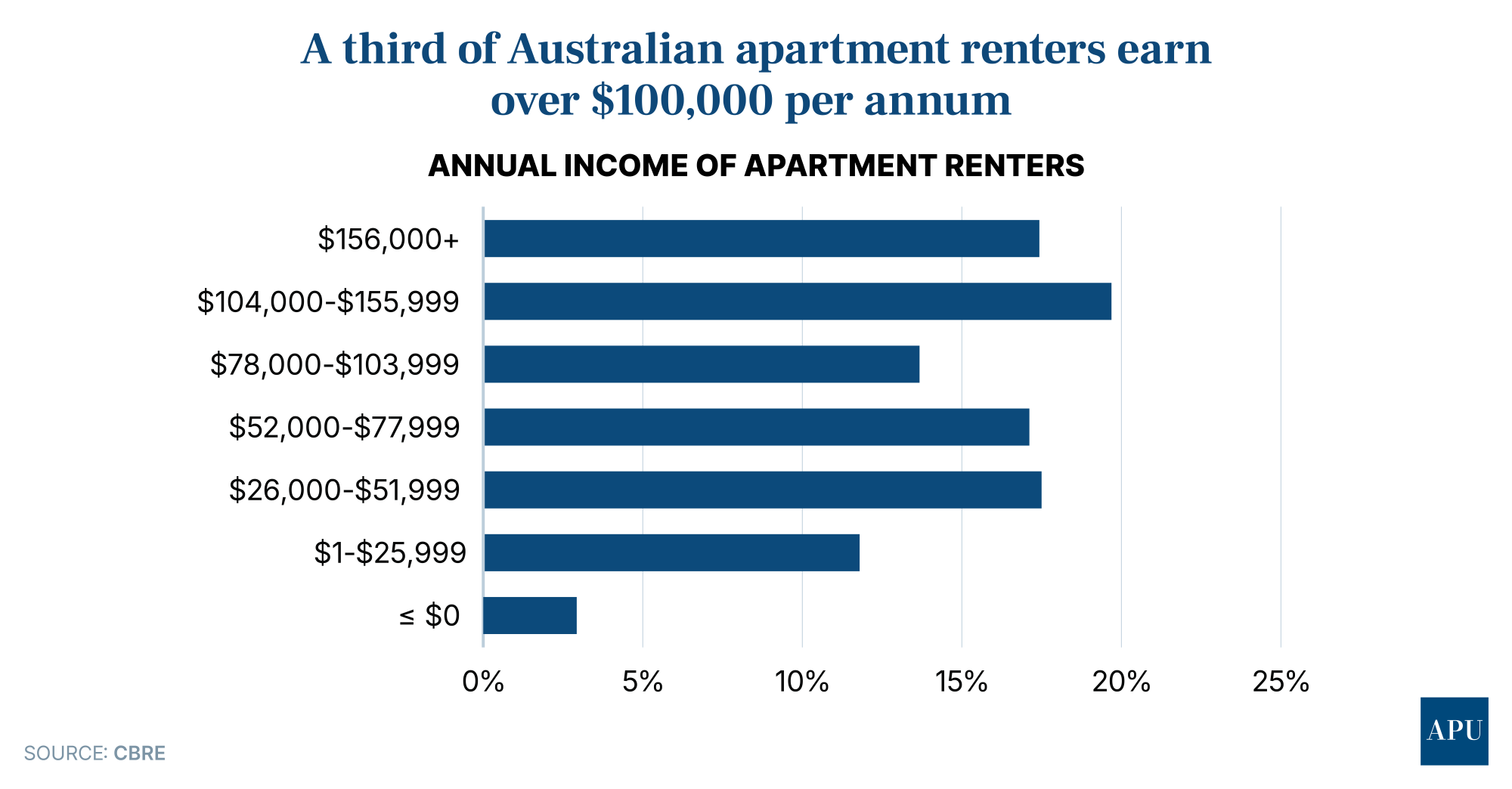
More than a third are earning over $100,000 a year, suggesting a significant portion of the market has the capacity to sustain their housing choices over time.
Household structures reinforce this shift.
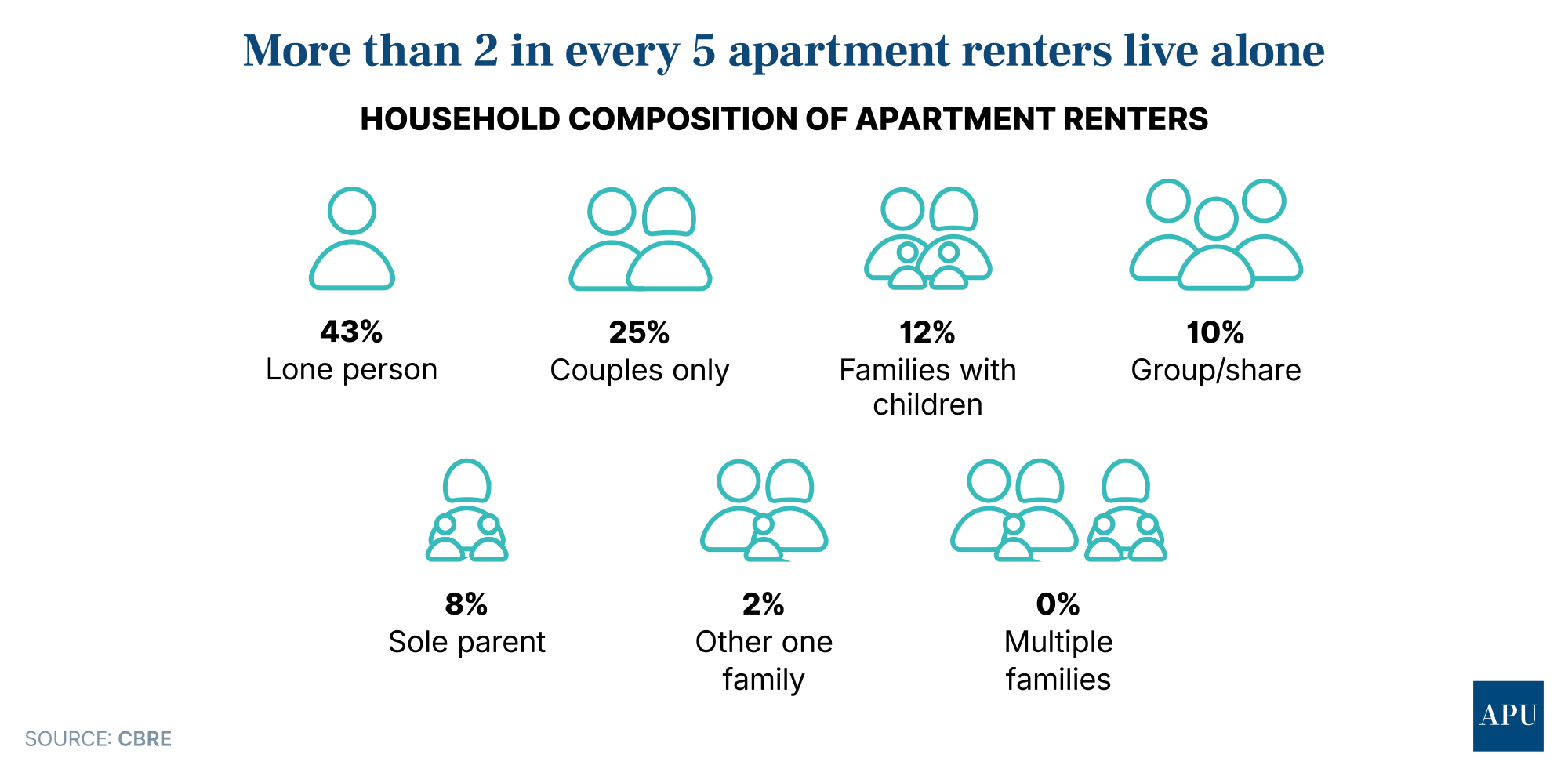
Lone-person and single-parent households account for just over half of apartment renters, while couples and flatmates make up another 35% - a mix that reflects both independence and flexibility in how Australians are choosing to live.
Desirability
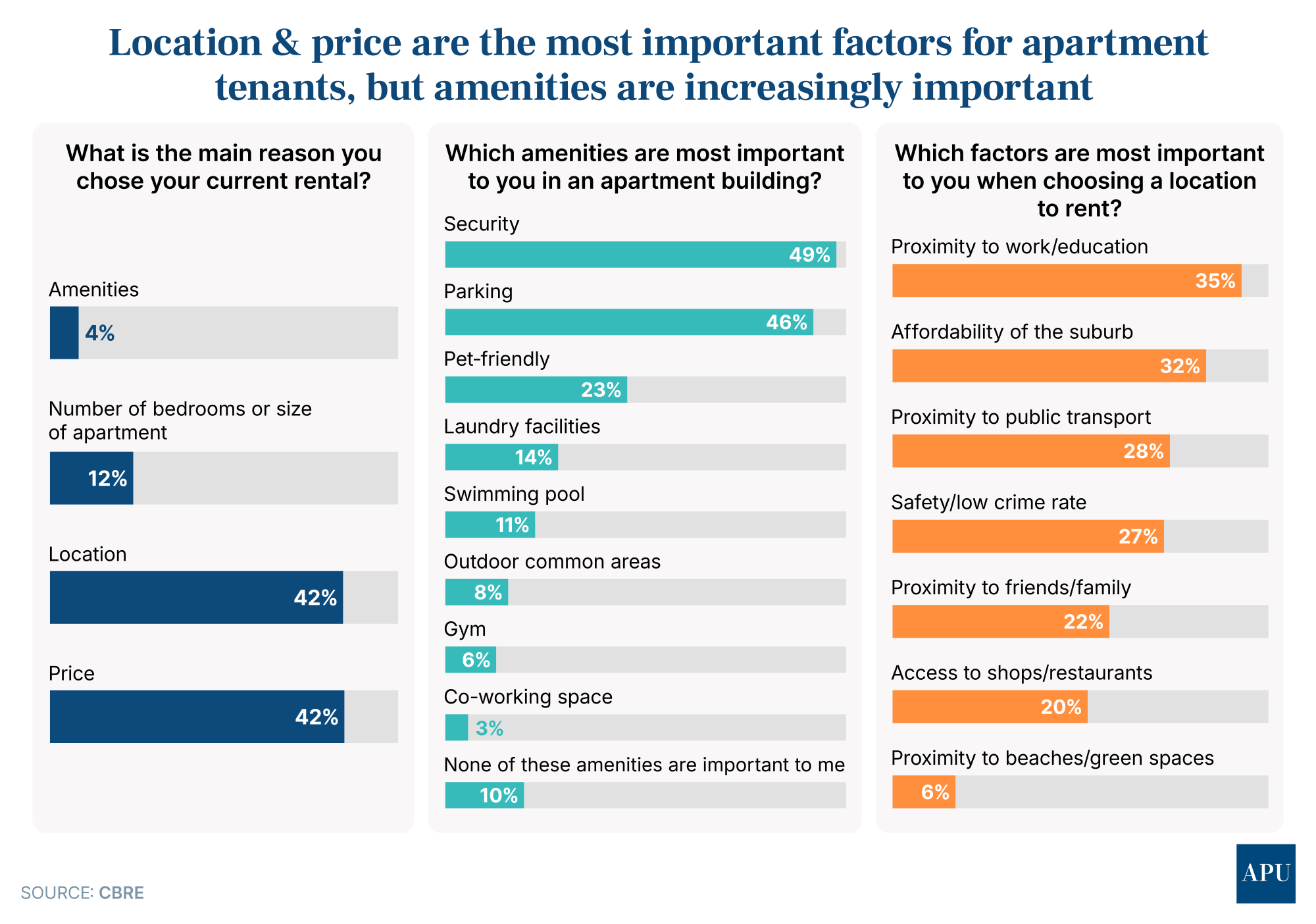
When it comes to choosing a rental property, the survey finds price and location are equally important, sitting side by side as the primary drivers of decision-making.
But renters are increasingly prioritising lifestyle factors that enhance day-to-day living.
REA Group search data shows building security and parking rank highly, while “pet-friendly” is now one of the most searched features nationally, alongside “furnished properties” and “undercover parking”.
Where people want to live also reflects this lifestyle focus.
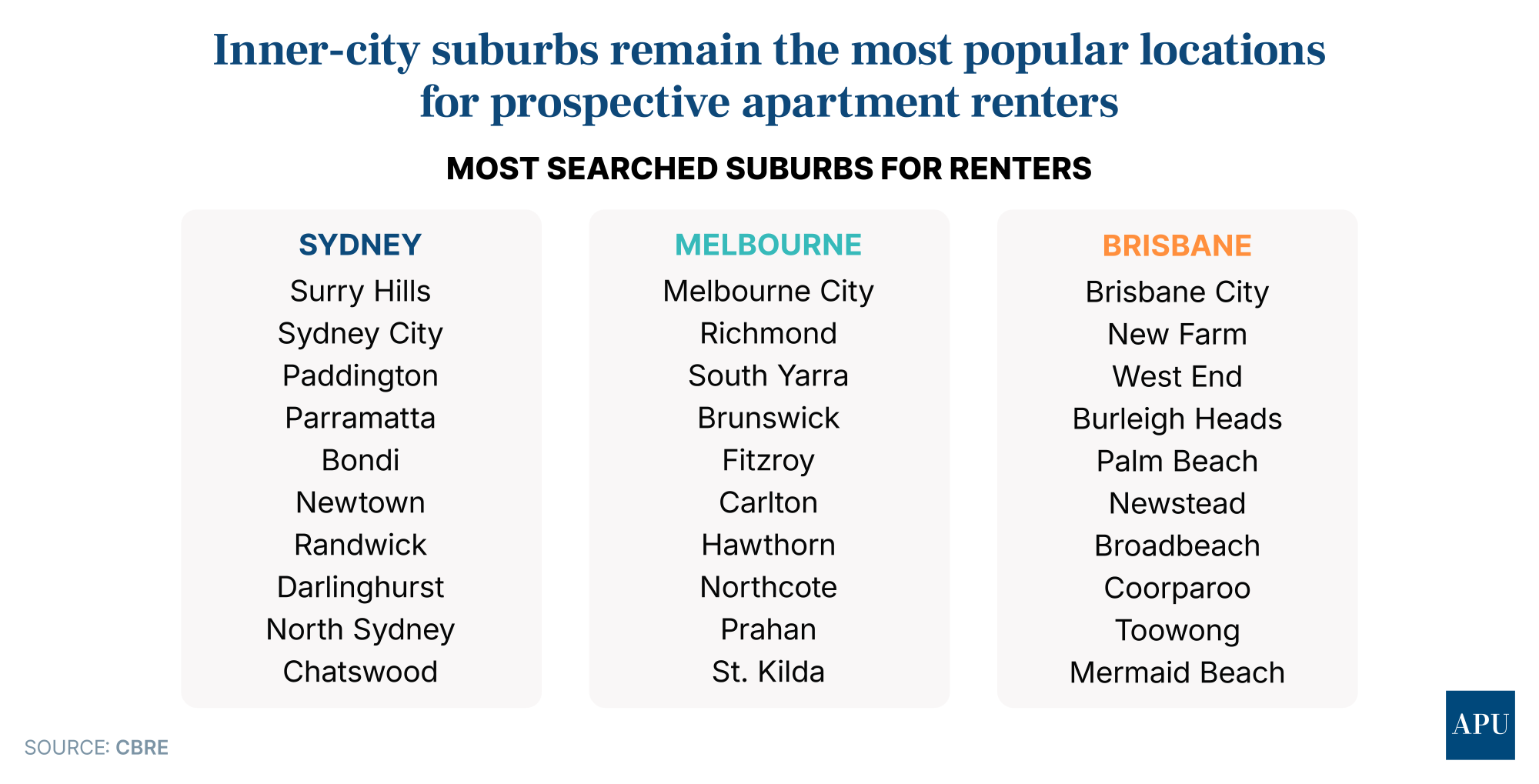
Established suburbs with good access to amenities continue to dominate apartment demand by tenants across major markets.
“Proximity to work, schools and transport are driving suburb selection, with established inner-city locations continuing to dominate search activity across Sydney, Melbourne and Brisbane,” says Anne Flaherty, a Senior Economist at REA Group.
Suburbs like Surry Hills and Sydney CBD, Melbourne City and Richmond, Brisbane City and New Farm remain consistently popular.
Financial resilience
Perhaps one of the most striking findings from the survey is the degree of financial resilience among renters.
Despite several years of rising rents, 68% of tenants are funding their housing through salary alone or with supplementary income, without relying on family support.
That suggests a large share of renters are managing their housing costs within their means and, importantly, are prepared to maintain that commitment.
More than half say they would remain in their current property even if rents increased by an extra $50 per week, while nearly a quarter expect to stay put for five years or more.
Stability
That growing sense of stability is a defining feature of today’s rental market.
“This survey reinforces what we're hearing on the ground,” says Sameer Chopra, Head of Research, Pacific at CBRE.
“With nearly a quarter of renters planning to stay put for five or more years, households are viewing renting as a long-term solution.”
The survey also highlights how renters are adapting to a market that has seen meaningful price growth over the past five years.
Cities like Perth, Sydney, Brisbane and Adelaide have recorded significant rental increases, while Melbourne and Canberra have seen more moderate growth.
“Rent growth over the past decade has been significant across most markets, and renters are feeling it,” REA Group’s Anne Flaherty says.
Share housing
Affordability emerges as a key factor for tenants in share housing.
The Australian Renter Survey finds 45% of share house tenants say they entered such arrangements because living alone was not financially viable.
There were some who mentioned a desire for flexibility, community and access to locations that might otherwise be out of reach if they rented on their own.
However, 65% of share house tenants indicated they would prefer to live alone if possible.
The takeout
What emerges most clearly from the CBRE and REA Group data is that renting in Australia is evolving into a more established part of the housing system, with many tenants viewing it as a long-term housing choice.
For many, it reflects a combination of flexibility and financial pragmatism, particularly for people who value mobility, lifestyle and access to key locations.







.jpg?width=1920&height=1080&name=WTF%20Is%20Happening%20To%20The%20Housing%20Market!%20$500%20Billion%20Wiped%20Out%20As%20Prices%20Fall%20Faster%20Every%20Month%20Scott%20Kuru%20YPU%20027%20(1).jpg)
%20Scott%20Kuru%20YPU%20025.jpg?width=1920&height=1080&name=This%20Is%20Worse%20Than%20A%20Recession%20RBA%20Admits%20Australias%20Wage%20Collapse%20Cant%20Be%20Stopped%20(Prepare%20Now)%20Scott%20Kuru%20YPU%20025.jpg)


























.jpg?width=1920&height=1080&name=EXPOSED%20How%20The%20Govt%20Let%20These%20Oil%20Giants%20Get%20Away%20With%20Paying%20Zero%20Tax%20For%20Aussie%20Gas%20Scott%20Kuru%20DPU%20256%20(1).jpg)






%20Scott%20Kuru%20DPU%20248.jpg?width=1920&height=1080&name=Major%20Banks%20CAUGHT%20Preparing%20For%20Australia%E2%80%99s%20Biggest%20Housing%20Crash%20(Defaults%20%26%20Bankruptcies%20Coming)%20Scott%20Kuru%20DPU%20248.jpg)
%20Scott%20Kuru%20DPU%20247.jpg?width=1920&height=1080&name=This%20Is%20How%20Australia%20Gets%20Pushed%20Into%20the%20Next%20Big%20Reset%20(Trust%20Collapse%20Has%20Officially%20Begun)%20Scott%20Kuru%20DPU%20247.jpg)







%20Scott%20Kuru%20DPU%20239.jpg?width=1920&height=1080&name=URGENT%20Life%20In%20Australia%20Has%20Become%20Impossible%20For%20Millions%20Of%20Aussies%20(It%E2%80%99s%20About%20To%20Get%20Worse)%20Scott%20Kuru%20DPU%20239.jpg)











%20Scott%20Kuru%20DPU%20227.jpg?width=1920&height=1080&name=URGENT%20ALERT%20Australia%E2%80%99s%20Property%20Market%20Is%20Sliding%20Into%20Something%20Much%20Bigger%20(Prepare%20Now)%20Scott%20Kuru%20DPU%20227.jpg)





%20Scott%20Kuru%20DPU%20221.jpg?width=1920&height=1080&name=The%20AI%20Situation%20in%20Australia%20Just%20Hit%20a%20Point%20of%20No%20Return...%20(Major%20Bank%20Proves%20It)%20Scott%20Kuru%20DPU%20221.jpg)