









.png?width=292&height=292&name=Copy%20Link%20(1).png)

 SIGN UP FOR FREE NEWSLETTER
Image from Bloomberg/Getty Images
Australia’s current housing downturn is likely to be short-lived and relatively shallow, with new data suggesting forced selling remains limited.
It also points to buyers becoming more selective, rather than abandoning the market.
A new report from RW Capital, part of the Ray White group, argues the current correction is better understood as a “repricing event” than the start of a prolonged national property downturn.
The analysis, Inside the Housing Cycle: The Behavioural Signals Shaping Australia’s Housing Outlook, draws on proprietary data from Ray White - Australia’s largest real estate chain - which has over 1000 offices nationwide.
The figures cover inspections, registered bidders, active bidders, appraisals, listing authorities and auction results.
These are time-sensitive indicators that can reveal shifts in buyer and seller behaviour before they become visible in conventional property price indices, which tend to be backward-looking.
The details
RW Capital Head of Research and Institutional Capital Luke Dixon says residential property is an increasingly fragmented market in which investors will need to choose cities, suburbs and property types more carefully.
But his assessment is blunt.
“The current repricing event is going to be short-lived,” he says.
“The structural lack of housing supply, growing demand and cautious vendors will ultimately tilt the market back in the vendors’ favour.”
The report says Australia’s three major east coast housing markets are now at very different points in the cycle.
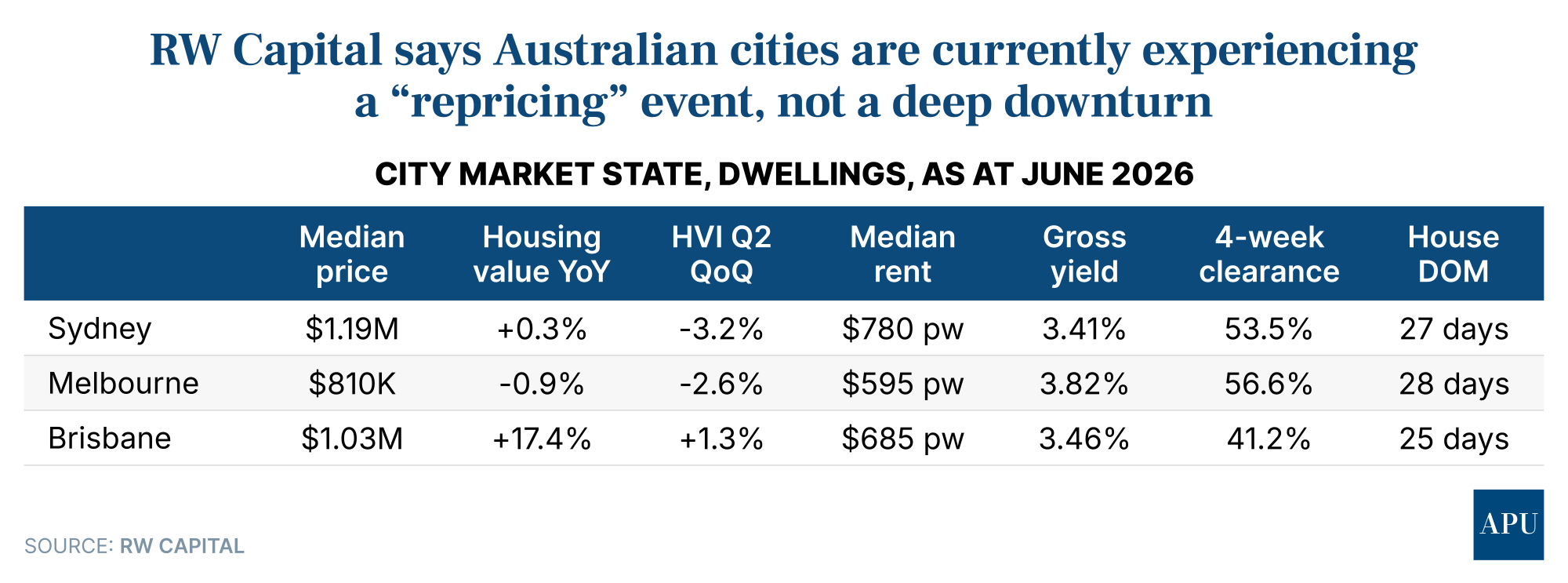
At the time of the analysis, Brisbane dwelling values were 17.4% higher than a year earlier, while Sydney was broadly flat at 0.3% growth and Melbourne was 0.9% lower.
RW Capital argues that divergence means Australian residential property has shifted from what investment professionals call a “beta” market - where simply owning housing broadly captures rising values - to an “alpha” market, where returns increasingly depend on selecting the right location and property.
“Australian housing is no longer moving as one national market,” the report says.
“The gap between cities, and between overpriced and fairly priced homes within each one, is now wide enough that returns will come from picking the right properties, not simply being in the market.”
Sydney and Melbourne appear further into the cooling phase, while Brisbane retains stronger medium-term demand, despite a slowdown from last year’s rapid growth.
RW Capital’s central forecast is for Sydney dwelling values to move between a 1% fall and 1% rise over the next 12 months, Melbourne between minus 1% and plus 2%, and Brisbane to continue growing by between 3% and 6%.
Rents are forecast to rise another 4% to 6% across the three cities.
Less buyers, faster sales
One of the strongest signals in the report is the decline in bidder competition.
Active bidders have fallen to around 1.7 to 2.5 per auction from three to four a year ago, while open-home attendance has normalised to roughly two groups per inspection.
Yet other indicators do not resemble a distressed market.
Homes are generally selling faster, not slower, and vendor discounts remain contained at around 3% in Sydney and Melbourne and below 3% in Brisbane.
RW Capital describes that as “orderly price discovery, not forced selling”.
Sydney houses were taking a median 27 days to sell in the data set, Melbourne 28 days and Brisbane 25 days.
“A market shedding value in disorder does not sell faster,” the report says.
It argues demand has cooled, but buyers do remain.
They’re just simply less willing to overpay.
Correctly priced homes are still selling, while ambitious vendors are being forced to reset expectations.
RW Capital expects that adjustment to take another two or three quarters, after which clearance rates could strengthen even without interest-rate cuts.
Supply
The other factor expected to put a floor under prices is a tightening supply of homes for sale.
Ray White’s appraisal and listing-authority data - measures that typically precede properties actually reaching the market - are falling across the major cities.
In Sydney, appraisals were down 24.8% from a year earlier and listing authorities fell 32.4%.
RW Capital says that suggests fewer properties are likely to come onto the market in the second half of 2026.
With little evidence of widespread forced selling, a decline in new listings could quickly rebalance supply and demand as vendors adjust their asking prices.
“The falling supply of stock for sale will shorten the price correction period, particularly in Brisbane and Sydney, as buyers remain liquid,” the RW Capital report says.
Rents
For investors, the strongest takeaway from the RWC analysis is increasing income rather than capital growth.
RW Capital says rents are rising at annual rates of around 5% to 7% across the major capitals, even as dwelling values soften.
Sydney rents were up 5.9% over the year in its analysis, Melbourne 4.9% and Brisbane 6.4%.
At the same time, softer purchase prices in Sydney and Melbourne have pushed gross rental yields higher for buyers entering the market now.
“The rental thesis is the cleanest trade in the pack,” the report says.
“With vacancy tight and set to tighten further as investor sentiment absorbs shifting negative-gearing expectations, the income leg of total return is strengthening precisely as the capital leg pauses.”
Mr Dixon goes further, arguing rental growth could accelerate to around 10% to 15% in some markets over the next six to nine months.
He says reduced investor activity following the Federal Government’s negative gearing changes could restrict the flow of new rental stock and place further upward pressure on rents.

Opportunities
The RWC report identifies different strategies for each major market.
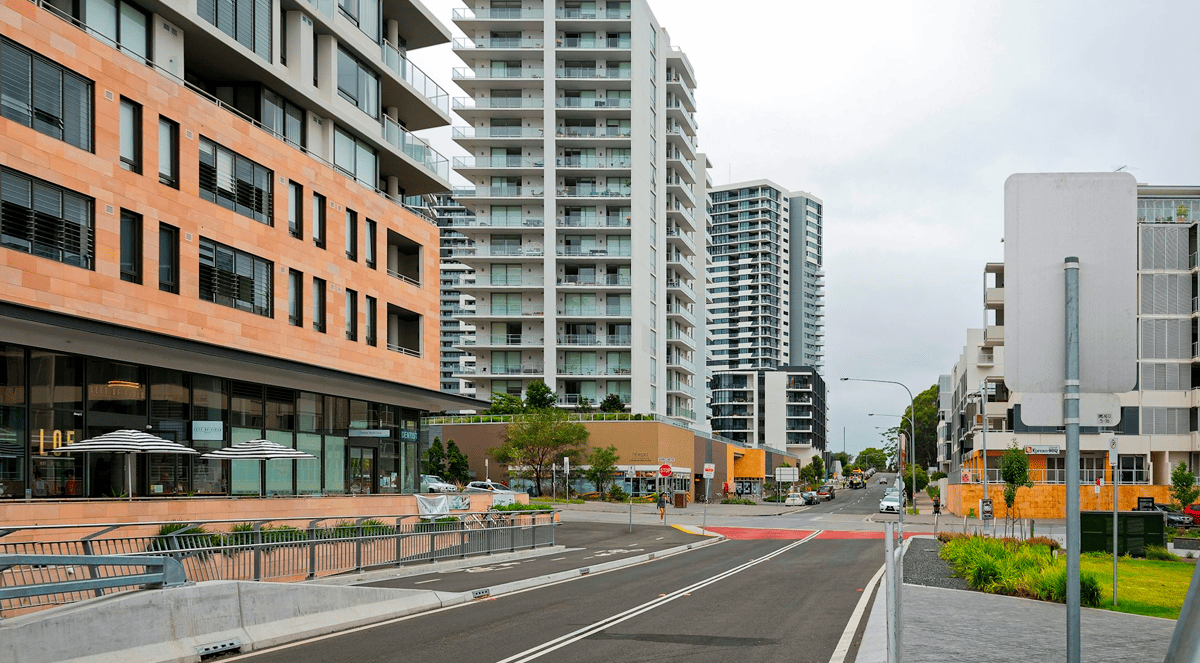
The company says Sydney offers the greatest market depth and liquidity, with the strongest auction results concentrated in areas including North Sydney and Hornsby, the Inner West and Inner South West.
RW Capital suggests investors “accumulate into the reset”, particularly in deep inner-ring markets where any eventual improvement in borrowing conditions could quickly lift demand.
Melbourne is described as the strongest value opportunity, especially for units.
The city has the lowest entry price of the three major capitals and higher rental yields, while unit values have been more resilient than houses.
Brisbane retains the strongest population and rental fundamentals, but the report warns investors to maintain pricing discipline after the city’s extraordinary recent growth.
The take-out
RW Capital’s broader message is that there is no longer a market where almost any property benefits equally from a rising price tide.
But with buyers still active, distress limited, rental income rising and vendors increasingly reluctant to sell, RW Capital argues the conditions for a deep or prolonged downturn simply are not there.
“The correction visible in the June 2026 data is a repricing event rather than a downturn,” the report concludes.
“It is shallow, orderly, and underwritten by rents and a housing shortage that has not gone away.”




.jpg?width=1920&height=1080&name=WTF%20Is%20Happening%20To%20The%20Housing%20Market!%20$500%20Billion%20Wiped%20Out%20As%20Prices%20Fall%20Faster%20Every%20Month%20Scott%20Kuru%20YPU%20027%20(1).jpg)
%20Scott%20Kuru%20YPU%20025.jpg?width=1920&height=1080&name=This%20Is%20Worse%20Than%20A%20Recession%20RBA%20Admits%20Australias%20Wage%20Collapse%20Cant%20Be%20Stopped%20(Prepare%20Now)%20Scott%20Kuru%20YPU%20025.jpg)






















.jpg?width=1920&height=1080&name=EXPOSED%20How%20The%20Govt%20Let%20These%20Oil%20Giants%20Get%20Away%20With%20Paying%20Zero%20Tax%20For%20Aussie%20Gas%20Scott%20Kuru%20DPU%20256%20(1).jpg)





%20Scott%20Kuru%20DPU%20248.jpg?width=1920&height=1080&name=Major%20Banks%20CAUGHT%20Preparing%20For%20Australia%E2%80%99s%20Biggest%20Housing%20Crash%20(Defaults%20%26%20Bankruptcies%20Coming)%20Scott%20Kuru%20DPU%20248.jpg)
%20Scott%20Kuru%20DPU%20247.jpg?width=1920&height=1080&name=This%20Is%20How%20Australia%20Gets%20Pushed%20Into%20the%20Next%20Big%20Reset%20(Trust%20Collapse%20Has%20Officially%20Begun)%20Scott%20Kuru%20DPU%20247.jpg)







%20Scott%20Kuru%20DPU%20239.jpg?width=1920&height=1080&name=URGENT%20Life%20In%20Australia%20Has%20Become%20Impossible%20For%20Millions%20Of%20Aussies%20(It%E2%80%99s%20About%20To%20Get%20Worse)%20Scott%20Kuru%20DPU%20239.jpg)







%20Scott%20Kuru%20DPU%20227.jpg?width=1920&height=1080&name=URGENT%20ALERT%20Australia%E2%80%99s%20Property%20Market%20Is%20Sliding%20Into%20Something%20Much%20Bigger%20(Prepare%20Now)%20Scott%20Kuru%20DPU%20227.jpg)





%20Scott%20Kuru%20DPU%20221.jpg?width=1920&height=1080&name=The%20AI%20Situation%20in%20Australia%20Just%20Hit%20a%20Point%20of%20No%20Return...%20(Major%20Bank%20Proves%20It)%20Scott%20Kuru%20DPU%20221.jpg)