








.png?width=292&height=292&name=Copy%20Link%20(1).png)

 SIGN UP FOR FREE NEWSLETTER
Image by Nikki Short
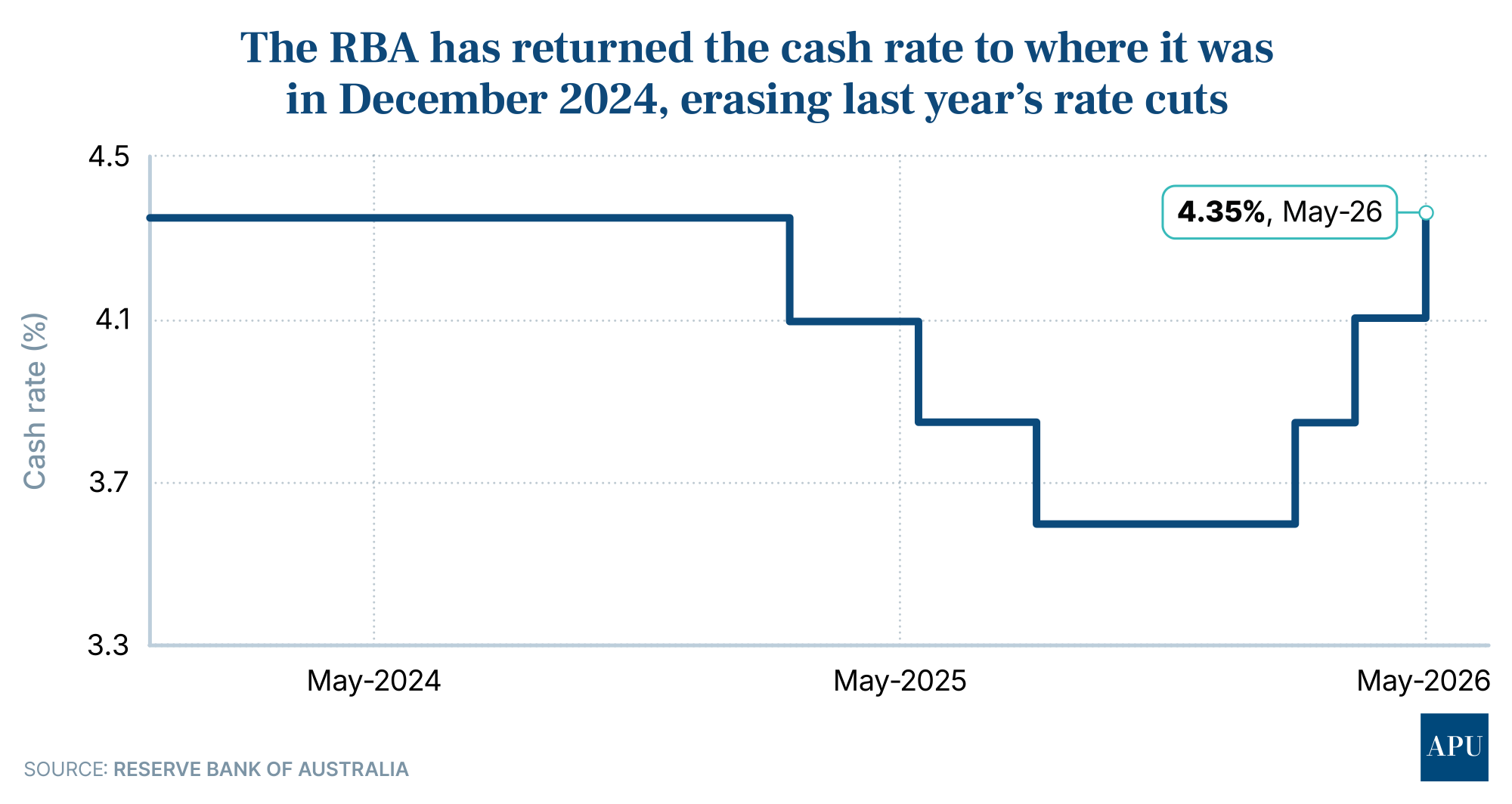
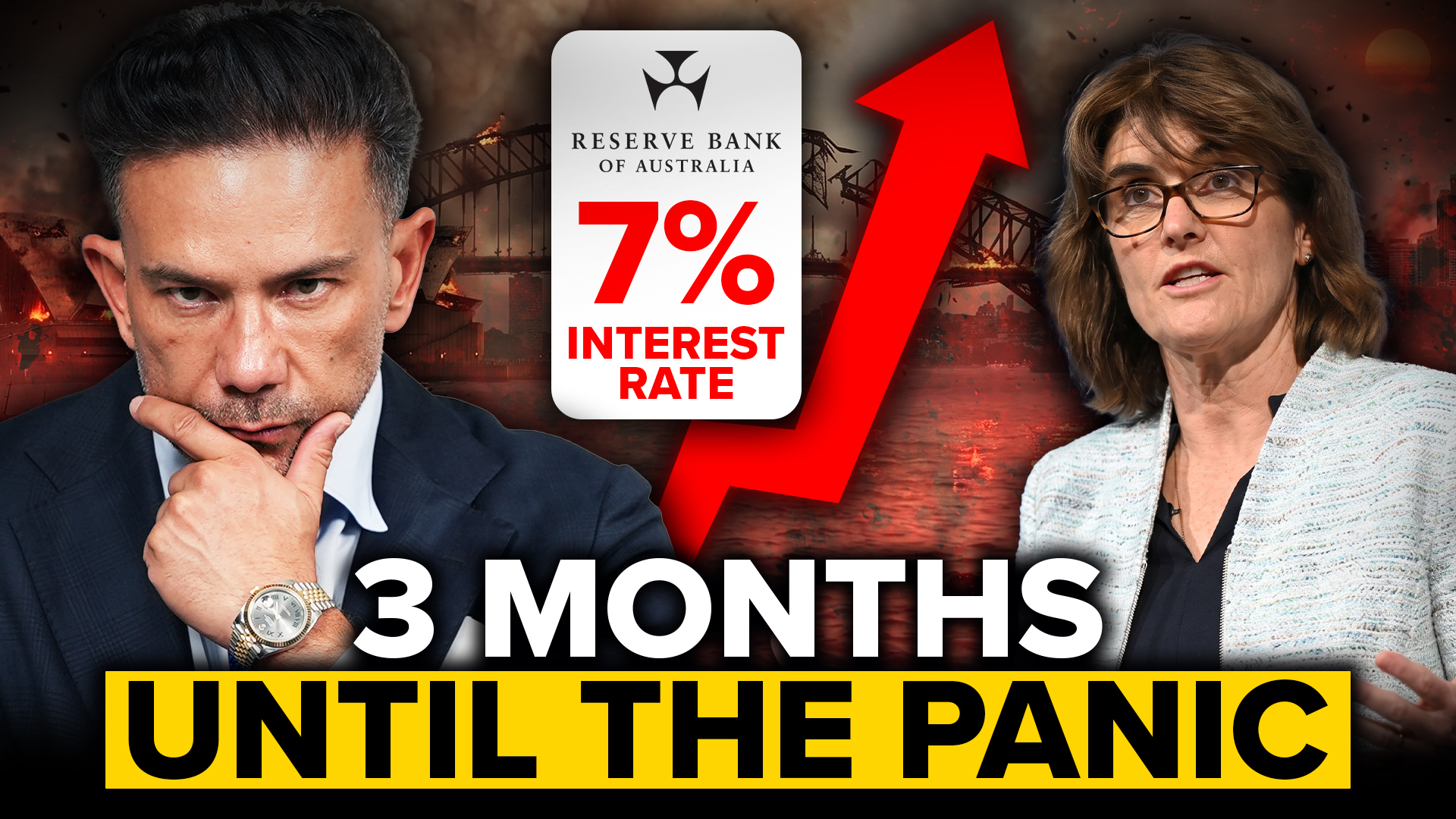
As expected, the Reserve Bank of Australia has increased the cash rate by 0.25% for the third time this year, returning rates to where they were at the end of 2024 and erasing the effect of last year’s three rate cuts.
The Bank said the war in the Middle East - which has led to higher fuel prices - is having an impact on inflation as expected.
However, the RBA makes it clear this development came on top of already stubborn inflation.
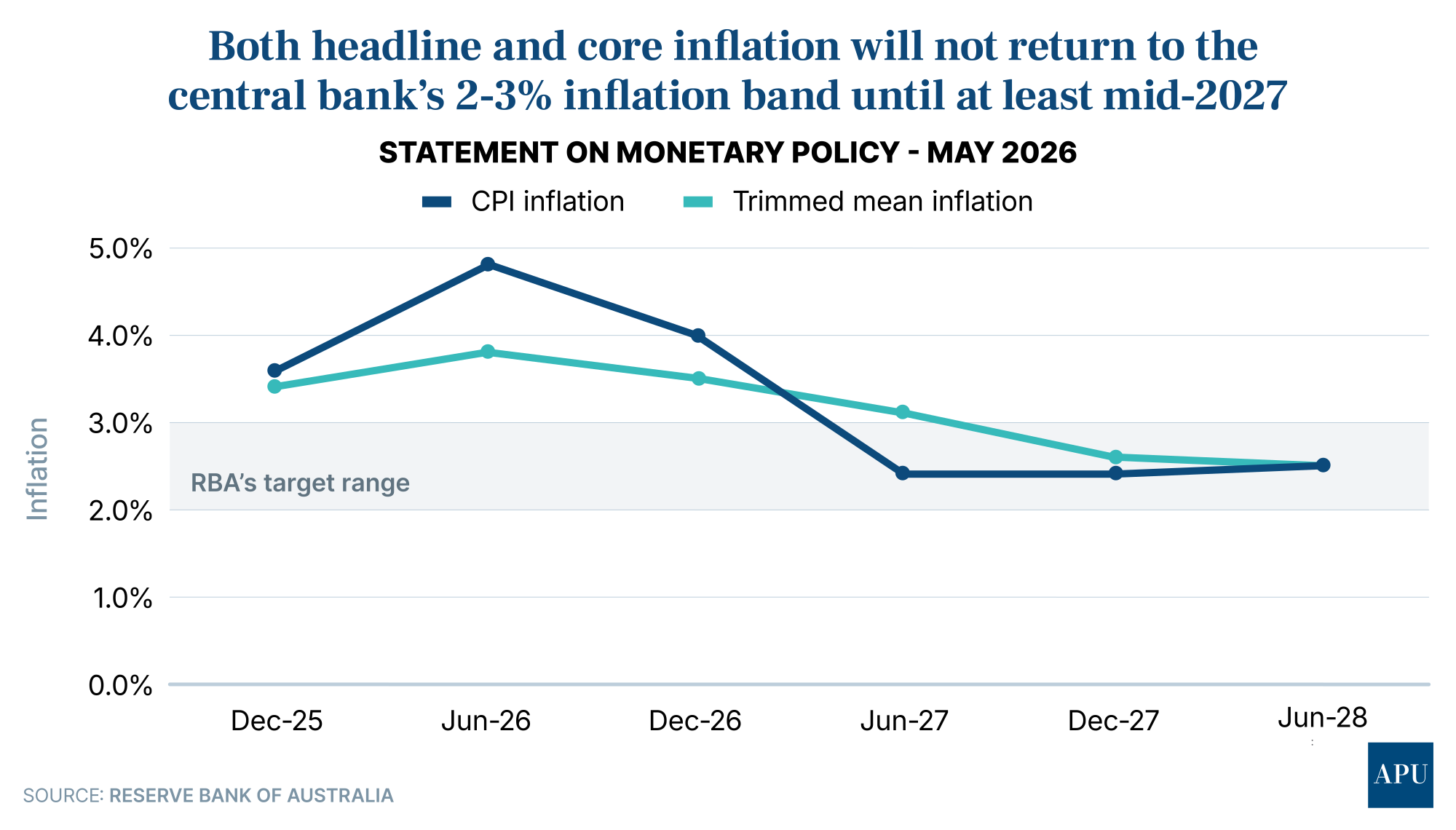
In its latest Statement of Monetary Policy, released at the same time as the interest rate decision, the central bank also indicated that rates may have to return to levels not seen since 2011 in order to bring inflation back to the bank’s 2-3% inflation target.
Notably, the decision by the bank’s monetary policy committee wasn’t unanimous, with one of the 9-member panel voting against a rate rise.
The details
In a media release accompanying its latest rates decision, the Reserve Bank said inflation in Australia “picked up materially in the second half of 2025” before the effects of the Middle East conflict showed up in the economy, resulting “in sharply higher fuel and related commodity prices, which are already adding to inflation.”
With annual headline inflation already at 4.6% in March 2026 and underlying inflation at 3.3%, the central bank made clear it is worried about a major inflation breakout.
“There are early signs that many firms experiencing cost pressures are looking to increase prices of their goods and services,” the media release said, and “short-term measures of inflation expectations have also risen.
“In light of these considerations, the Board assessed that inflation is likely to remain above target for some time and that the risks remain tilted to the upside, including to inflation expectations.
“It was therefore judged appropriate to increase the cash rate target,” the bank said.
However, speaking at her regular post-decision media conference, Governor Michele Bullock ominously said that the latest rate hike was “not going to do anything for inflation in the next six months”.
She was also blunt about the impact of the Iran war on Australia.
“We've had this shock which has lowered our real income,” she said.
“So yes, we are all feeling poorer.
“That's what this has done, this war on the other side of the world.
“Even if it is resolved quite quickly, the effects are going on for the rest of this year and the oil price does not get back to where it was pre-war, we’re still in a worse position than we were in terms of the cost to society,” she told journalists in Sydney.
Reacting to the RBA’s decision to hike rates, the Federal Treasurer, Jim Chalmers, made clear he believed the Middle East conflict was to blame for higher interest rates.
“The Australian economy is getting absolutely pummeled by this war in the Middle East, and Australians are paying the price for that,” he said.
Mortgage pain
The RBA Governor acknowledged that things were “really tough”, particularly for households with a mortgage who were facing the “double whammy” of higher prices and higher interest payments.
But she said the alternative of higher inflation for longer was worse.
If banks pass on this latest rate rise in full to customers on variable retail mortgages, numbers crunched by REA Group show residents of a median home in Australian capital cities stand to pay between $79 (Darwin) and $161 (Sydney) extra a month.
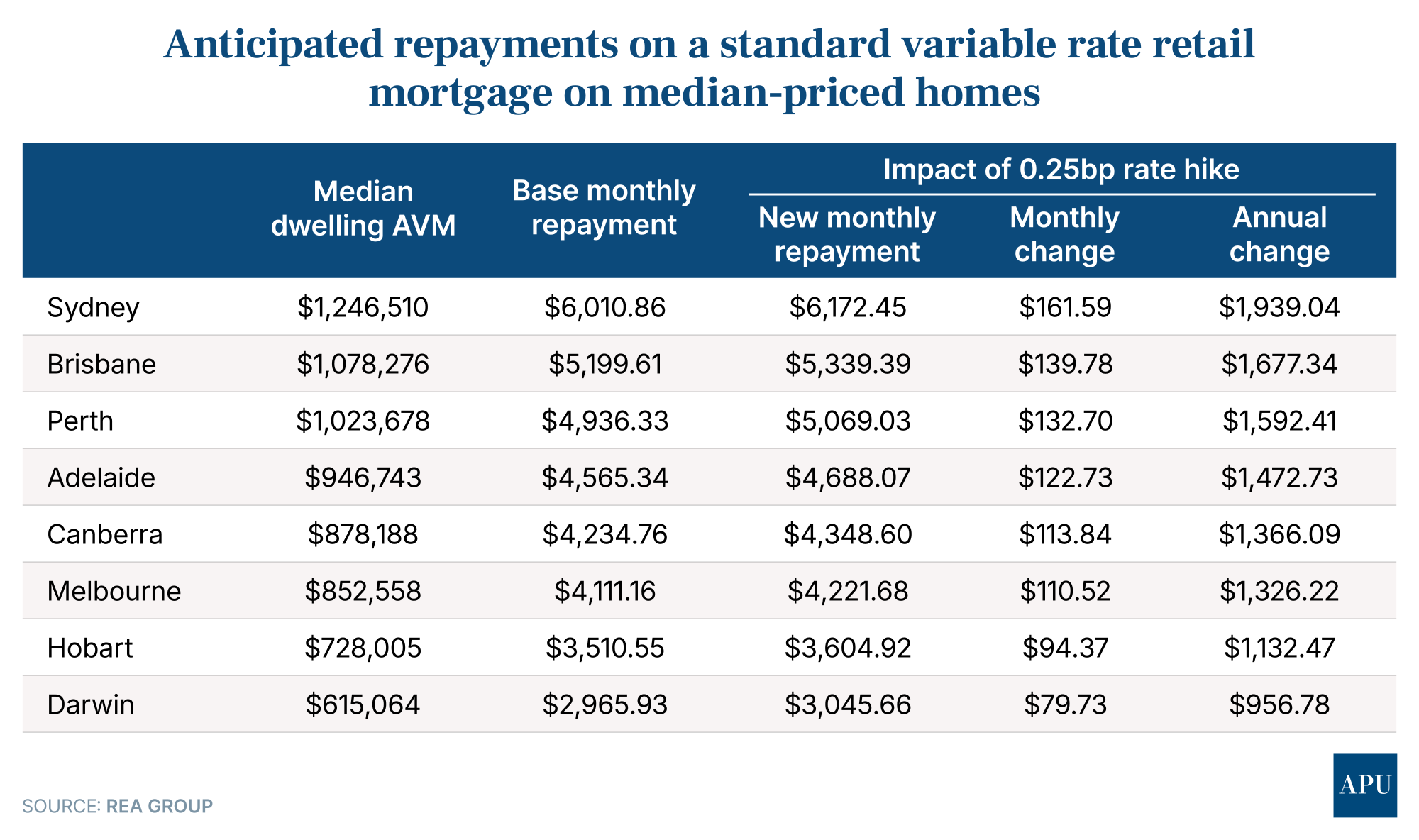
“With inflation expected to remain elevated, there is a strong possibility that interest rates could move even higher in 2026,” said REA Group Senior Economist Anne Flaherty.
“For mortgage holders on variable rates, this will add further pressure to already stretched household budgets.”
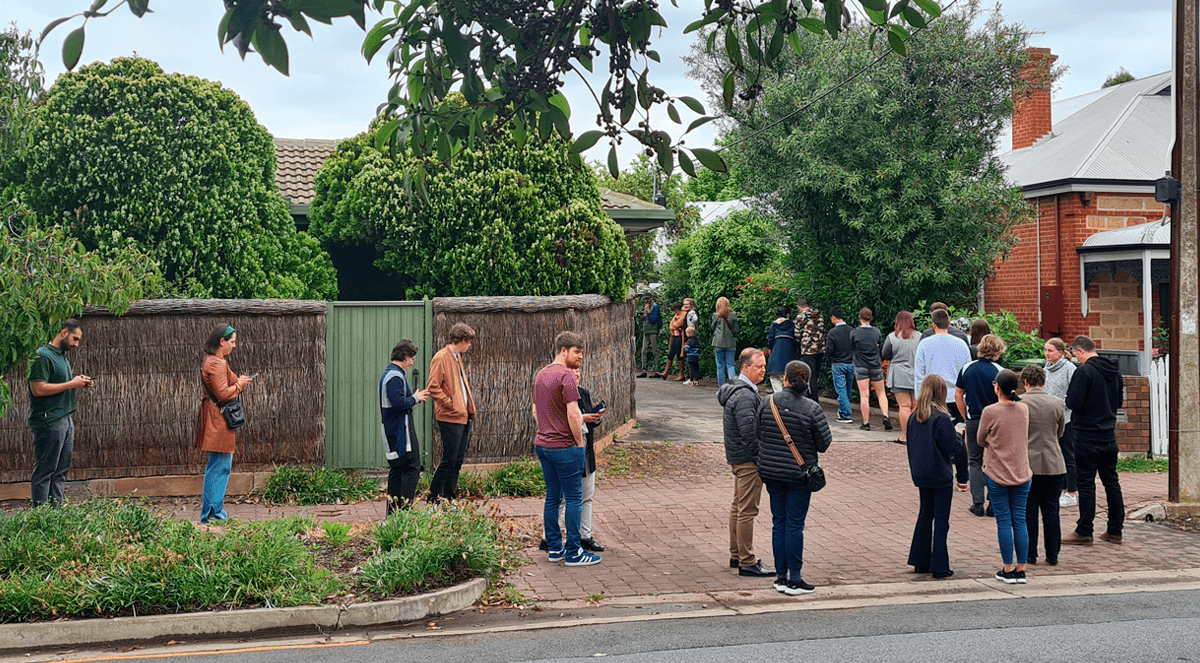
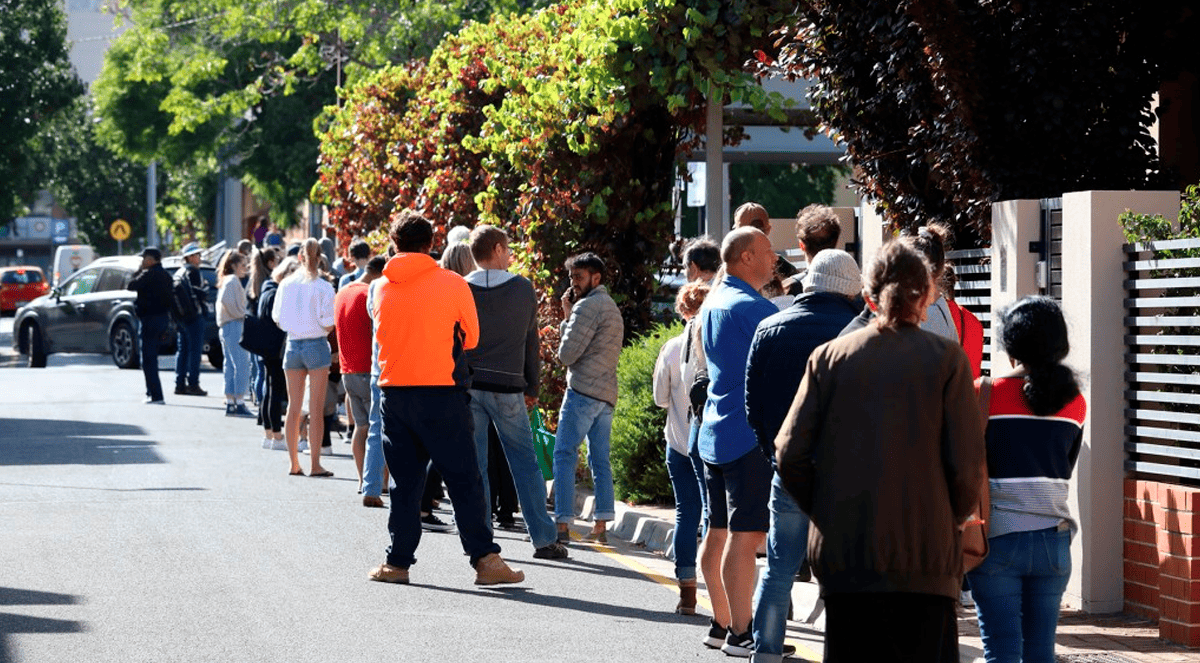
Gerard Burg, Head of Research at rival property analytics firm Cotality, believes the latest tightening by the RBA “is likely to further dampen overall housing demand, a trend that has been evident since late 2025.”
However, he said higher interest rates could “further deflect demand into the lower value segments of the housing market, where policy support for first-home buyers has seen much more competition and continued growth in home values.”
As for new housing supply, Governor Michele Bullock made clear the Iran war would make the existing crisis worse.
“I think there's an essential problem with supply and the inflation in building costs, which is going to be worse out of this shock, quite frankly, is going to make the situation worse,” she said.
“The only thing we (the RBA) can do is think more medium-term and think about trying to bring inflation down so that we don't have high-cost growth in the construction industry.
“That gives certainty to builders, it gives certainty to homebuyers, and that is the thing that we can offer in the medium term,” she said.
“But it's not something we can offer in the next 12 months.
“This is a shock completely out of our control.”



.jpg?width=1920&height=1080&name=WTF%20Is%20Happening%20To%20The%20Housing%20Market!%20$500%20Billion%20Wiped%20Out%20As%20Prices%20Fall%20Faster%20Every%20Month%20Scott%20Kuru%20YPU%20027%20(1).jpg)
%20Scott%20Kuru%20YPU%20025.jpg?width=1920&height=1080&name=This%20Is%20Worse%20Than%20A%20Recession%20RBA%20Admits%20Australias%20Wage%20Collapse%20Cant%20Be%20Stopped%20(Prepare%20Now)%20Scott%20Kuru%20YPU%20025.jpg)

















.jpg?width=1920&height=1080&name=EXPOSED%20How%20The%20Govt%20Let%20These%20Oil%20Giants%20Get%20Away%20With%20Paying%20Zero%20Tax%20For%20Aussie%20Gas%20Scott%20Kuru%20DPU%20256%20(1).jpg)




%20Scott%20Kuru%20DPU%20248.jpg?width=1920&height=1080&name=Major%20Banks%20CAUGHT%20Preparing%20For%20Australia%E2%80%99s%20Biggest%20Housing%20Crash%20(Defaults%20%26%20Bankruptcies%20Coming)%20Scott%20Kuru%20DPU%20248.jpg)
%20Scott%20Kuru%20DPU%20247.jpg?width=1920&height=1080&name=This%20Is%20How%20Australia%20Gets%20Pushed%20Into%20the%20Next%20Big%20Reset%20(Trust%20Collapse%20Has%20Officially%20Begun)%20Scott%20Kuru%20DPU%20247.jpg)




%20Scott%20Kuru%20DPU%20239.jpg?width=1920&height=1080&name=URGENT%20Life%20In%20Australia%20Has%20Become%20Impossible%20For%20Millions%20Of%20Aussies%20(It%E2%80%99s%20About%20To%20Get%20Worse)%20Scott%20Kuru%20DPU%20239.jpg)





%20Scott%20Kuru%20DPU%20227.jpg?width=1920&height=1080&name=URGENT%20ALERT%20Australia%E2%80%99s%20Property%20Market%20Is%20Sliding%20Into%20Something%20Much%20Bigger%20(Prepare%20Now)%20Scott%20Kuru%20DPU%20227.jpg)




%20Scott%20Kuru%20DPU%20221.jpg?width=1920&height=1080&name=The%20AI%20Situation%20in%20Australia%20Just%20Hit%20a%20Point%20of%20No%20Return...%20(Major%20Bank%20Proves%20It)%20Scott%20Kuru%20DPU%20221.jpg)